
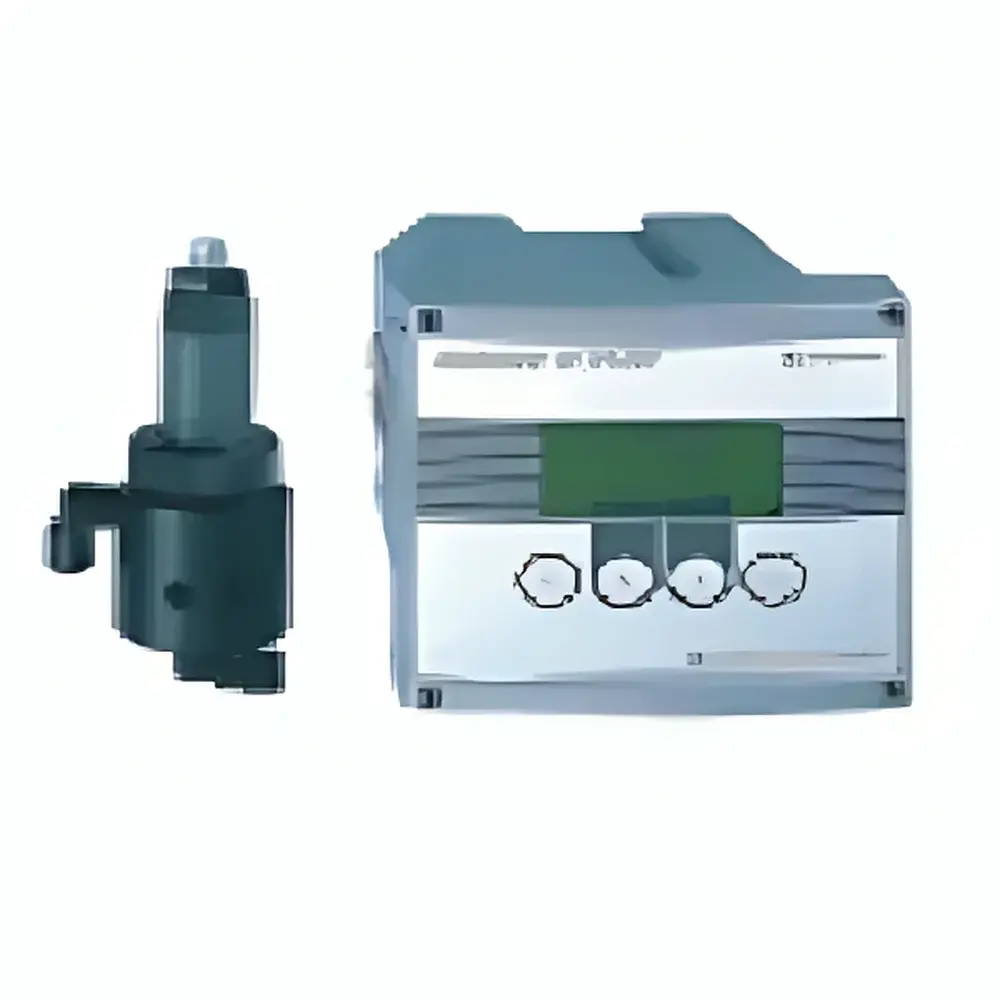
HACH Polymetron 9184 HOCl Analyzer
| Brand | HACH |
|---|---|
| Origin | USA |
| Manufacturer Type | Original Equipment Manufacturer (OEM) |
| Origin Category | Imported Instrument |
| Model | 9184 HOCl |
| Pricing | Upon Request |
Overview
The HACH Polymetron 9184 HOCl Analyzer is a membrane-based amperometric sensor system engineered for continuous, real-time measurement of hypochlorous acid (HOCl) — the dominant biocidal species in chlorinated water — in drinking water treatment plants, distribution networks, and industrial cooling systems. Unlike total free chlorine analyzers that respond to both HOCl and hypochlorite ion (OCl⁻), the 9184 employs a selective pH-stabilized membrane and optimized electrode geometry to isolate and quantify only the undissociated HOCl fraction. This selectivity is critical for process control where disinfection efficacy correlates directly with HOCl concentration—not total oxidant load—enabling precise dosing, regulatory compliance (e.g., US EPA Guidance Manual for Disinfection By-Products), and minimization of disinfection byproduct (DBP) formation. The analyzer operates on a three-electrode amperometric principle: HOCl diffuses through a gas-permeable hydrophobic membrane into an electrolyte-filled chamber, where it undergoes electrochemical reduction at the working electrode, generating a current linearly proportional to HOCl concentration.
Key Features
- Selective HOCl measurement independent of chloramine interference — validated per ASTM D7511-20 for chloramine-rich waters
- Low detection limit of <10 ppb HOCl, supporting compliance with stringent residual monitoring requirements (e.g., WHO Guidelines for Drinking-water Quality)
- Fast response time: T90 < 90 seconds under nominal flow conditions (10–30 L/h), enabling dynamic feedback control
- High reproducibility: ±2% of reading across the full 0–5 ppm range, traceable to NIST-traceable HOCl calibration standards
- Two programmable 4–20 mA analog outputs with automatic sensor status identification (“Smart Output” protocol), compatible with legacy PLCs and DCS systems
- Intuitive menu-driven interface with multilingual support (English, Spanish, French, German), configurable via front-panel keypad or remote HART communication
- Robust field housing rated IP66/NEMA 4X, suitable for outdoor and wet-location installation
Sample Compatibility & Compliance
The 9184 HOCl Analyzer is designed for use with potable water, filtered surface water, and low-turbidity recirculating cooling water (NTU < 5). It tolerates ambient temperature fluctuations from 0 °C to 45 °C and requires no sample filtration when inlet turbidity remains below 10 NTU. The sensor complies with ISO 9001-certified manufacturing processes and meets electromagnetic compatibility (EMC) requirements per IEC 61326-1. For regulated environments, the instrument supports audit-ready operation: all calibration events, zero/span adjustments, and maintenance logs are timestamped and stored onboard. When integrated with HACH’s SCADA-compatible software platforms (e.g., HACH DataSuite), it enables 21 CFR Part 11-compliant electronic records, including user authentication, change tracking, and electronic signatures.
Software & Data Management
Data acquisition and configuration are managed via the built-in LCD interface or remotely using HACH’s Polymetron Configuration Tool (PCT), a Windows-based utility supporting firmware updates, diagnostic testing, and alarm threshold programming. The analyzer supports multiple industrial protocols natively: Modbus RTU (JBUS), Profibus DP-V0, and RS-485 serial output. All digital communications include CRC error checking and configurable polling intervals. Historical data (up to 30 days of 1-minute averages) is retained in non-volatile memory. For enterprise-level integration, the 9184 exports time-stamped HOCl concentration, temperature, sensor status flags (e.g., “membrane dry”, “electrolyte low”), and diagnostic codes via OPC UA or MQTT to cloud-based asset management systems (e.g., Siemens MindSphere, Schneider EcoStruxure).
Applications
- Final effluent monitoring at municipal drinking water treatment plants to ensure minimum HOCl residuals per local health department mandates
- Real-time control of chlorine dosing pumps in distribution network booster stations to maintain consistent disinfectant levels while minimizing THM/HAA formation
- Monitoring of HOCl decay kinetics in aging cast-iron mains to assess biofilm control efficacy
- Cooling tower water management where rapid HOCl depletion indicates organic loading or ammonia breakthrough
- Validation of UV/chlorine advanced oxidation process (AOP) performance in pilot-scale studies
FAQ
What distinguishes HOCl measurement from total free chlorine measurement?
HOCl is the most effective disinfectant form of chlorine; its concentration depends strongly on pH and temperature. Total free chlorine includes both HOCl and OCl⁻, which has ~80–100× lower biocidal activity. The 9184 isolates HOCl specifically using pH-controlled diffusion and selective membrane chemistry.
How often does the sensor require maintenance?
The chlorination membrane and internal electrolyte must be replaced every 3–6 months depending on water quality (e.g., higher silt or organic content shortens service life). No daily reagents or consumables beyond these components are required.
Can the 9184 be calibrated without removing it from the process stream?
Yes — zero and span calibrations can be performed in-situ using certified HOCl standard solutions introduced via the sample inlet port, with automatic temperature compensation and drift correction algorithms active during calibration.
Is the instrument suitable for wastewater applications?
It is not recommended for raw or secondary-treated wastewater due to high suspended solids, sulfide interference, and membrane fouling risk. It is validated for clarified, filtered, low-organic-content water only.
Does the analyzer support predictive diagnostics?
Yes — onboard diagnostics monitor membrane hydration status, electrode polarization resistance, and baseline current drift, triggering maintenance alerts before measurement accuracy degrades beyond specification limits.
Related Products







