
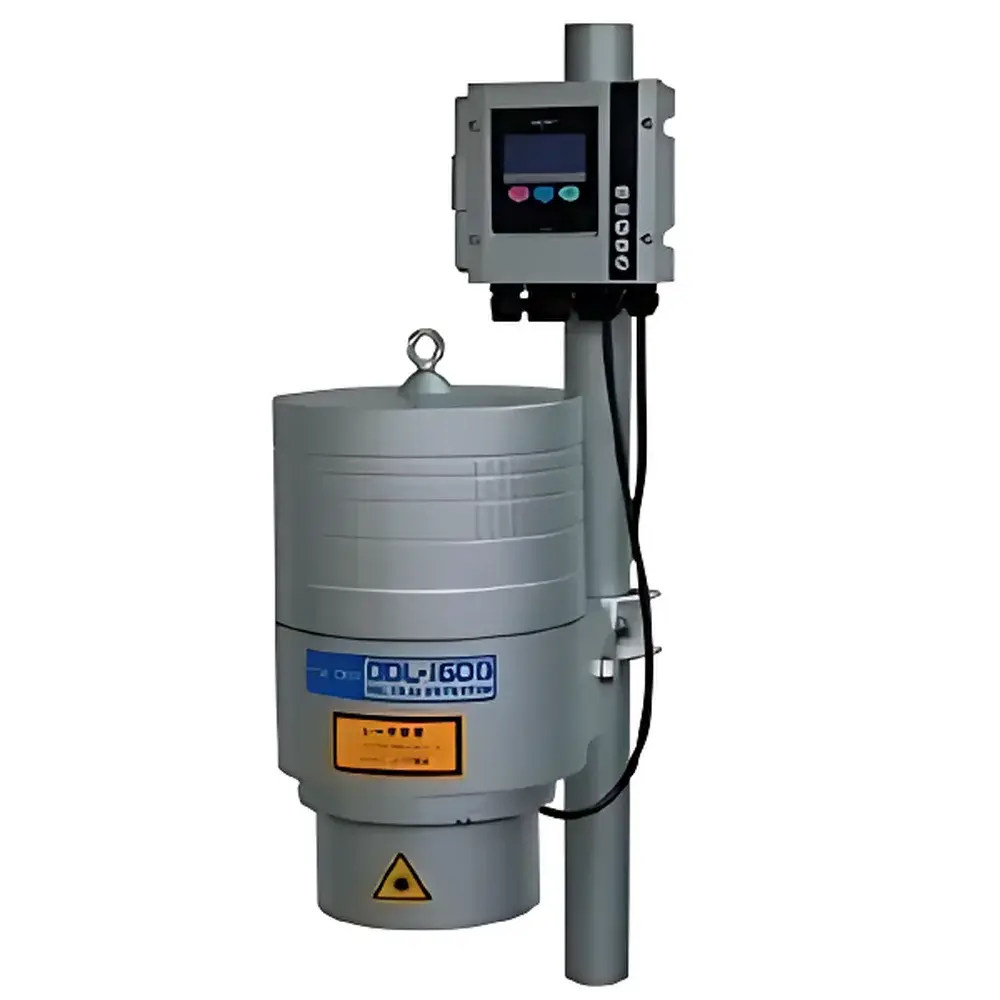
HACH DKK ODL-1600 Oil Film Detector
| Brand | HACH |
|---|---|
| Manufacturer | DKK Toa Corporation |
| Model | ODL-1600 |
| Origin | Japan |
| Instrument Type | Surface Oil Film Detection System |
| Compliance | Designed for continuous oil-in-water monitoring in industrial discharge and intake protection applications |
| Pricing | Available upon request |
Overview
The HACH DKK ODL-1600 Oil Film Detector is an optical surface oil detection system engineered for real-time, non-contact identification of floating hydrocarbon films on water surfaces. It operates on the principle of reflected light interference and spectral analysis: when incident visible light strikes a thin oil layer (typically ≥0.1 µm thickness) on water, wavelength-dependent constructive and destructive interference occurs, producing characteristic iridescent color patterns. The ODL-1600 captures these spectral signatures using a high-stability LED illumination source and a calibrated CMOS imaging sensor with narrow-band spectral response. Unlike fluorescence-based or conductivity-based methods, this optical interference technique requires no reagents, zero sample extraction, and delivers immediate detection—enabling proactive containment before oil-laden effluent breaches regulatory discharge limits or contaminates intake channels.
Key Features
- Non-invasive optical detection: No immersion probes, no consumables, minimal maintenance
- Real-time continuous monitoring: 24/7 operation with configurable alarm output (relay, 4–20 mA, Modbus RTU)
- High-sensitivity film detection: Capable of identifying hydrocarbon films as thin as 0.1 µm—well below the EPA’s 10 ppm (≈10 mg/L) threshold for visible sheen
- Rugged IP66-rated housing: Stainless steel enclosure with tempered glass viewport; rated for outdoor installation in industrial wastewater environments
- Environmental resilience: Operational temperature range: −10 °C to +50 °C; resistant to humidity, rain, and ambient lighting variations via adaptive background compensation algorithm
- Integrated self-diagnostic function: Automatic lens contamination detection, LED intensity monitoring, and sensor drift compensation
Sample Compatibility & Compliance
The ODL-1600 is optimized for open-channel flow, retention ponds, stormwater outfalls, cooling water intakes, and industrial effluent weirs. It detects free-phase petroleum hydrocarbons—including diesel, gasoline, lubricating oils, and crude oil fractions—on freshwater, brackish, or seawater surfaces. While not a quantitative analyzer for dissolved oil concentration, it serves as a critical early-warning device aligned with regulatory frameworks such as the U.S. Clean Water Act (CWA) Section 402 NPDES permit requirements, EU Water Framework Directive (WFD) monitoring objectives, and ISO 12946-2 (petroleum hydrocarbons in water). Its design supports integration into facility-wide environmental management systems compliant with ISO 14001 and facilitates audit-ready event logging required under EPA SPCC (Spill Prevention, Control, and Countermeasure) plans.
Software & Data Management
The detector interfaces with HACH’s IntelliLink™ or third-party SCADA/HMI platforms via standard analog and digital outputs. Optional local data logging (up to 30 days at 1-minute intervals) is supported through an internal microSD card slot. All alarm events—including timestamp, image thumbnail (stored in JPEG format), and detection confidence index—are recorded with embedded metadata (UTC time, device ID, firmware version). Data export adheres to CSV and XML formats compatible with LIMS and EHS reporting tools. For regulated facilities, the system supports basic audit trail functionality (user login history, configuration changes, alarm acknowledgments), meeting foundational GLP documentation expectations—though full 21 CFR Part 11 compliance requires external validation and electronic signature integration at the supervisory control layer.
Applications
- Prevention of unauthorized oil discharge from manufacturing plants, refineries, and vehicle maintenance facilities
- Protection of municipal water intake structures from upstream hydrocarbon contamination
- Monitoring of oily water separator (OWS) overflow weirs and API separator effluent channels
- Stormwater management at airports, ports, and logistics hubs where fuel spills pose high-risk exposure
- Compliance verification during routine inspections by environmental agencies or corporate EHS auditors
- Integration into automated spill response protocols triggering valve closure, pump shutdown, or sump activation
FAQ
Does the ODL-1600 measure oil concentration in parts per million (ppm)?
No. It detects the physical presence and spatial extent of surface oil films—not dissolved or emulsified oil concentration. Quantitative oil-in-water analysis requires laboratory GC-FID or field-portable IR spectrophotometry.
Can it distinguish between mineral oil and vegetable oil?
Not reliably. The system responds to optical interference characteristics common to most hydrophobic organic films; differentiation requires complementary analytical methods.
Is calibration required?
The ODL-1600 is factory-calibrated and does not require user-performed calibration. Periodic verification using certified reference oil films (e.g., ASTM D7464 test oil) is recommended annually.
What is the maximum detection distance?
Optimal performance is achieved at 0.5–2.0 m standoff distance from the water surface; field-of-view covers up to 1.2 m width at 1.5 m distance.
Does it work under direct sunlight or low-light conditions?
Yes. The system employs active LED illumination synchronized with image capture and includes dynamic ambient light rejection algorithms to maintain stable detection across diurnal cycles.







