
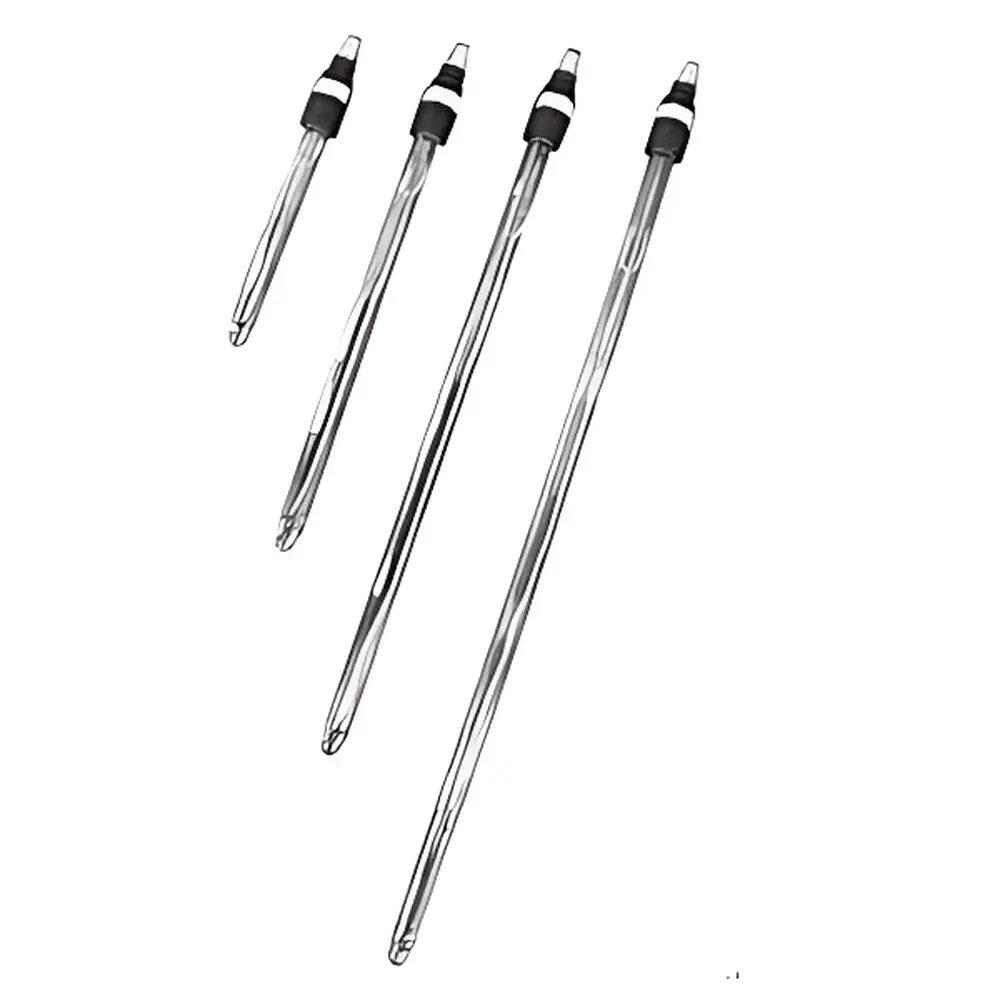
HACH DKK ELP Bioprocess pH Electrode
| Brand | HACH |
|---|---|
| Origin | Imported |
| Manufacturer Type | Manufacturer |
| Model | ELP |
| Pricing | Upon Request |
Overview
The HACH DKK ELP Bioprocess pH Electrode is an engineered solution for continuous, high-reliability pH measurement in demanding biopharmaceutical and industrial fermentation processes. Designed specifically for in-situ sterilization and long-term operation under autoclave conditions, the ELP electrode employs a robust electrochemical architecture grounded in glass-membrane potentiometry—where pH is determined via the Nernstian potential difference across a hydrogen-ion-selective glass membrane relative to a stable internal reference system. Its core application domain includes upstream bioprocessing (e.g., mammalian cell culture, microbial fermentation), clean-in-place (CIP) and steam-in-place (SIP) environments, and GMP-compliant manufacturing lines where sensor integrity, calibration stability, and contamination control are non-negotiable.
Key Features
- High-Strength “Strong Glass” Membrane: Utilizes a proprietary borosilicate glass formulation delivering mechanical strength approximately 10× greater than conventional pH-sensitive glass, significantly reducing fracture risk during handling, SIP cycling, or agitation-induced probe contact.
- Dual-Salt-Bridge Reference System: Incorporates a two-chambered liquid junction design with outer and inner electrolyte compartments, minimizing ion migration interference and enhancing resistance to fouling by proteins, lipids, or precipitated media components.
- Chelating Resin-Based Silver Ion Trap: Integrated within the outer salt bridge, this functionalized polymer matrix sequesters Ag⁺ ions released from the silver/silver chloride reference element, preventing AgCl precipitation at the liquid junction—a primary cause of drift and response lag in bioprocess applications.
- Gelled Electrolyte Fill Solution: Eliminates the need for periodic KCl refilling; the immobilized electrolyte ensures consistent junction potential and stable long-term output even under thermal cycling and pressure fluctuations.
- Lead-Free Construction: Complies with RoHS Directive 2011/65/EU; all glass membranes, solder joints, and housing materials are certified free of lead, cadmium, mercury, and other restricted substances—critical for regulatory audits and product safety documentation.
- Autoclavable Design: Rated for repeated steam sterilization at 135 °C for up to 30 minutes per cycle, validated per ISO 17664-1:2017 for reprocessing of reusable medical and process sensors.
Sample Compatibility & Compliance
The ELP electrode is compatible with aqueous biological media including complex nutrient broths, cell culture supernatants, buffer solutions, and low-conductivity process streams (≥50 µS/cm). It maintains accuracy and reproducibility across pH 0–14, with optimal performance between pH 2–12 under continuous monitoring. The electrode meets key international standards for process instrumentation: IEC 60746-1 (pH measurement principles), ASTM D1293 (standard test method for pH of water), and supports compliance with FDA 21 CFR Part 11 when integrated with HACH SC1000 or HQd-series controllers featuring audit-trail-enabled software. Its DIN PG13.5 threaded connection ensures secure, leak-tight mounting in standard bioreactor ports and sanitary fittings per ISO 2852 and ASME BPE-2022.
Software & Data Management
When paired with HACH’s IQ SensorNet platform or SC200/SC1000 controllers, the ELP delivers digitally compensated, temperature-corrected pH values with optional diagnostics—including junction impedance monitoring, glass membrane resistance trending, and sterilization cycle logging. All measurements support GLP/GMP data integrity requirements: timestamps, operator IDs, calibration history, and change logs are stored with cryptographic hashing and exportable in CSV or PDF formats. Firmware updates and configuration backups are performed via USB or Ethernet, ensuring traceability throughout instrument lifecycle management.
Applications
- Real-time pH control in stainless-steel and single-use bioreactors (0.5–20,000 L scale)
- In-line monitoring during seed train expansion and production-phase fermentation
- CIP/SIP validation studies requiring post-sterilization sensor functionality verification
- Continuous quality verification in purified water (PW) and water-for-injection (WFI) distribution loops
- Environmental monitoring of anaerobic digesters and activated sludge systems subject to thermal cycling
FAQ
What is the maximum recommended sterilization temperature and cycle count?
The ELP electrode is validated for up to 100 autoclave cycles at 135 °C for 30 minutes each, provided cooling rates comply with ASME BPE-2022 thermal shock limits.
Can the ELP be used in low-ionic-strength media such as deionized water?
While functional, prolonged exposure to media with conductivity below 50 µS/cm may increase measurement drift; use with a flow-through housing and regular calibration is advised.
Is recalibration required after each SIP cycle?
No—calibration stability is maintained post-sterilization due to the gelled electrolyte and thermally stable glass formulation; however, a verification check using two-point buffer calibration is recommended before process initiation.
Does the ELP support digital communication protocols?
Yes—when connected to HACH’s IQ SensorNet or SC-series transmitters, it supports Modbus RTU over RS-485 and HART 7.0 for integration into DCS/SCADA systems.
How is the silver ion trap regenerated or replaced?
The chelating resin is not user-serviceable; its service life is rated for ≥2 years under typical bioprocess conditions and is factored into the electrode’s specified operational lifetime of 24 months.
Related Products







