
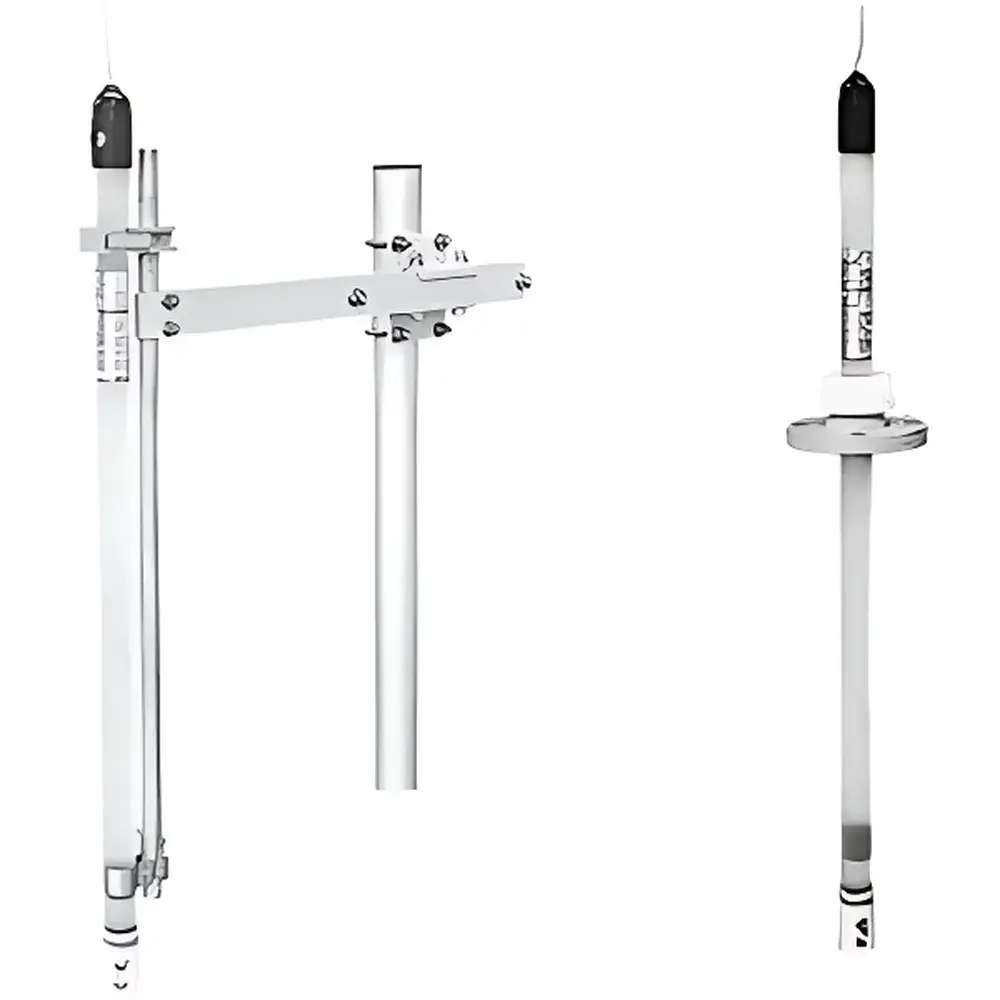
Hach HC-7 Series Submersible pH/ORP Sensor
| Brand | Hach |
|---|---|
| Origin | Imported |
| Manufacturer Type | Manufacturer |
| Model | HC-7 |
| Pricing | Upon Request |
| Enclosure Material Options | PP, PVC, PVDF, PFA |
| Pressure Rating | Up to 0.15 MPa (pressurized models) |
| Max Flow Rate | ≤2 m/s |
| Reference Electrolyte Volume | ~500 mL (at 1.0 m sleeve length) |
| IP Rating | Rainproof (JIS C 0920 compliant) |
| Operating Temperature Range | Varies by electrode/sleeve combination (–5°C to 120°C) |
| Electrode Types | KCl-refillable pH and ORP electrodes (e.g., models 5600–5615, 2600–2615) |
| Junction Materials | FPM (Viton®), perfluoroelastomer |
| Sleeve Length Options | 0.5–4.0 m (in 0.5 m increments) |
Overview
The Hach HC-7 Series Submersible pH/ORP Sensor is an industrial-grade, direct-insertion electrochemical measurement system engineered for continuous, in-situ monitoring of aqueous process streams, open-channel flows, and wastewater treatment basins. Based on potentiometric measurement principles, the sensor integrates a KCl-refillable reference electrode with interchangeable pH or ORP sensing elements—ensuring stable liquid junction potential and high reproducibility across variable ionic strength, temperature, and chemical exposure conditions. Unlike flow-through or inline configurations, the HC-7 operates via true submersion: the probe is mounted directly into the process medium using a threaded or flanged sleeve assembly, eliminating sample transport delays and minimizing maintenance-induced downtime. Its modular architecture supports four primary sleeve material families—polypropylene (PP), polyvinyl chloride (PVC), polyvinylidene fluoride (PVDF), and perfluoroalkoxy alkane (PFA)—each selected for compatibility with specific chemical, thermal, and UV-exposure requirements. Non-pressurized variants (HC-763/HC-703x) are suited for atmospheric-level applications such as effluent monitoring and neutralization control; pressurized versions (HC-753/HC-753x) incorporate sealed reference chambers and reinforced junctions to maintain calibration integrity under elevated backpressure (up to 0.15 MPa), low-conductivity water (<200 µS/cm), or fouling-prone environments.
Key Features
- Modular sleeve design with field-replaceable electrodes and configurable lengths (0.5–4.0 m in 0.5 m increments)
- KCl-refillable reference system with ~500 mL internal electrolyte volume (at 1.0 m sleeve), enabling extended operational stability without frequent recalibration
- Four chemically resistant sleeve materials: PP (heat/chemical resistance up to 80°C), PVC (rigid, cost-effective), PVDF (superior solvent/UV resistance, 120°C max), and PFA (full fluoropolymer compatibility with aggressive organics and acids)
- Pressurized models (HC-753 series) feature dual-seal junctions and pressure-balanced reference chambers—certified for use in sealed tanks, low-ionic-strength feedwater, and high-fouling sludge streams
- Rainproof enclosure compliant with JIS C 0920 (equivalent to IPX5), suitable for outdoor and unsheltered installations
- Electrode compatibility with Hach’s standardized pH (e.g., 5600, 5610, 5601, 5611) and ORP (e.g., 2600, 2610, 2601) series, supporting application-specific selection including high-temperature, hydrofluoric acid-resistant, and platinum-alloy redox elements
Sample Compatibility & Compliance
The HC-7 Series accommodates diverse water matrices—including municipal wastewater, industrial cooling water, chemical process effluents, and pretreated boiler feedwater—without requiring sample conditioning or dilution. Its KCl-filled reference system maintains stable junction potential across conductivity ranges from 50 mS/cm (brine solutions), provided appropriate electrode and sleeve combinations are selected. All models comply with general-purpose environmental instrumentation standards for electrical safety and ingress protection (JIS C 0920). While not certified to IEC 61508 or SIL levels, the sensor is routinely deployed in non-safety-critical process control loops governed by ISO 5667 (water sampling) and ASTM D1293 (pH of water). For regulated pharmaceutical or food-grade applications, users must validate installation against USP , FDA 21 CFR Part 11 (when integrated with compliant data loggers), and site-specific GLP/GMP protocols—particularly regarding electrode calibration traceability, maintenance logs, and change-control documentation.
Software & Data Management
The HC-7 is an analog-output (4–20 mA) or digital (HART® 7) transducer designed for integration into distributed control systems (DCS), programmable logic controllers (PLC), or SCADA platforms. It does not include embedded firmware or local display; instead, it relies on external analyzers (e.g., Hach CL17sc, SC200, or third-party controllers) for signal conditioning, temperature compensation (via integrated Pt100 RTD), and diagnostic reporting. When connected to Hach’s SC200 controller or compatible HART-enabled systems, the sensor supports automated calibration verification, drift alerts, and electrode health diagnostics—including junction resistance monitoring and reference potential deviation tracking. Audit trails, calibration records, and configuration changes are maintained at the host system level, satisfying requirements for FDA 21 CFR Part 11 compliance when paired with validated software and electronic signature workflows.
Applications
- Wastewater neutralization control in equalization tanks and pH adjustment basins
- Continuous monitoring of influent/effluent streams in municipal and industrial WWTPs
- In-line pH/ORP supervision during chemical dosing (e.g., coagulant, chlorine, sodium bisulfite)
- Process water quality assurance in power plant condensate polishing and boiler feed systems
- Chemical manufacturing process streams involving caustic, acidic, or oxidizing agents
- Environmental compliance monitoring at NPDES discharge points and stormwater outfalls
FAQ
What distinguishes pressurized (HC-753) from non-pressurized (HC-763) models?
Pressurized models incorporate a sealed reference chamber with internal pressure equilibrium, preventing electrolyte leakage and junction clogging in closed tanks, low-conductivity water, or high-fouling conditions. Non-pressurized units rely on passive diffusion and are limited to atmospheric-pressure applications.
Can the HC-7 be used in seawater or brine solutions?
Yes—when equipped with PVDF or PFA sleeves and HF-resistant or high-ionic-strength electrodes (e.g., model 5612 or 5613), the HC-7 maintains stable operation in salinities up to 3.5% NaCl. Junction fouling should be mitigated via periodic cleaning or optional wiper accessories.
Is temperature compensation automatic?
The sensor includes an integrated Pt100 RTD element; full automatic temperature compensation requires connection to a compatible transmitter (e.g., SC200 or HART-enabled DCS I/O module) that applies NIST-traceable algorithms per ASTM D1293.
How often must the KCl electrolyte be refilled?
Refill intervals depend on temperature, flow velocity, and ionic strength—but typically range from 3 to 12 months. Visual inspection of electrolyte level through translucent sleeves and routine calibration drift assessment guide maintenance scheduling.
Are replacement electrodes and sleeves available as spare parts?
Yes—Hach supplies all sleeve variants (PP, PVC, PVDF, PFA), electrode models (56xx pH, 26xx ORP), junction seals (FPM and perfluoroelastomer), and mounting hardware as catalogued spares with documented shelf life and lot traceability.
Related Products







