
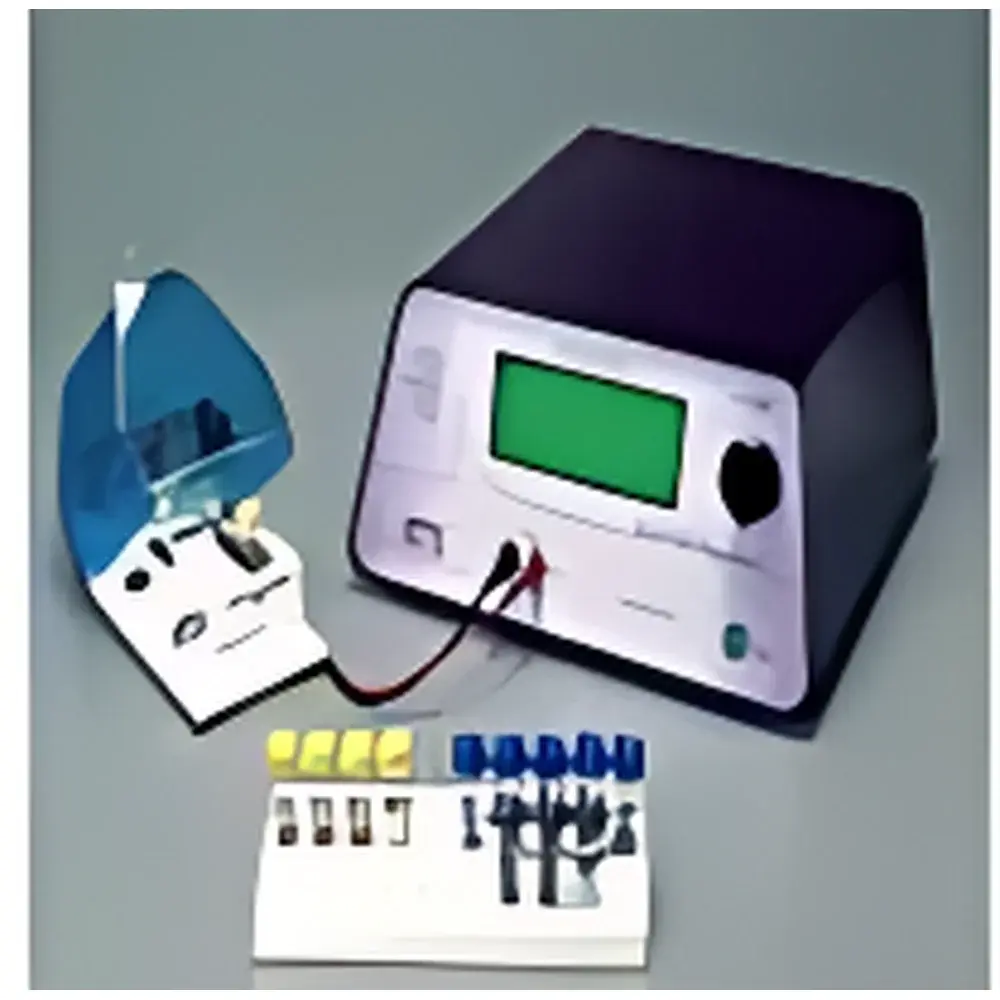
BTX ECM630 Exponential Decay Wave Electroporator
| Brand | Harvard Apparatus |
|---|---|
| Origin | USA |
| Manufacturer Type | Authorized Distributor |
| Origin Category | Imported |
| Model | ECM630 |
| Pricing | Upon Request |
Overview
The BTX ECM630 Exponential Decay Wave Electroporator is a precision-engineered, benchtop electroporation system designed for reproducible and optimized delivery of nucleic acids, proteins, or other macromolecules into prokaryotic and eukaryotic cells. Based on the well-established exponential decay waveform principle—where voltage decays as V(t) = V₀·e−t/RC—the ECM630 delivers controlled, tunable electric pulses that enable systematic optimization of field strength (V/cm) and pulse duration (τ = R·C), critical parameters governing membrane permeabilization efficiency and cell viability. Developed by BTX (now part of Harvard Apparatus), a pioneer in electroporation instrumentation since 1983, the ECM630 represents decades of empirical validation across bacterial transformation, yeast transfection, plant protoplast electroporation, insect cell line transfection, and primary mammalian cell applications—including hard-to-transfect suspension and adherent types.
Key Features
- Two operational modes: High-voltage mode (50–2500 V, 5 V increments; R = 25–1575 Ω, 25 Ω steps; C = 25 µF or 50 µF; τ ≈ 126 µs) and low-voltage mode (10–500 V, 1 V increments; R = 25–1575 Ω, 25 Ω steps; C = 1–3275 µF, 25 µF steps; τ > 8300 µs), enabling broad compatibility with diverse cell types and electroporation buffers.
- High-resolution LCD display showing real-time peak voltage and calculated RC time constant—essential for method development, troubleshooting, and documentation traceability.
- Programmable memory storing two complete pulse protocols (V, n pulses, R, C), supporting rapid protocol recall and inter-lab method standardization.
- Integrated arc suppression and short-circuit protection circuits—minimizing hardware degradation during buffer-related arcing events and safeguarding pulse generator integrity under load mismatch conditions.
- Modular design compatible with BTX PEP™ Pulse Enhancer Platform, safety enclosures, parallel-plate cuvettes (including 0.1 cm, 0.2 cm, and 0.4 cm gap variants), petri dish electrodes (35 mm), and high-throughput MOS™ systems (25-well and 96-well formats).
Sample Compatibility & Compliance
The ECM630 supports validated electroporation workflows for Escherichia coli, Bacillus subtilis, Saccharomyces cerevisiae, plant protoplasts, Sf9/Sf21 insect cells, CHO, HEK293, Jurkat, and primary human T cells—provided appropriate cuvette geometry, buffer conductivity, and temperature control (e.g., pre-chilled samples at 0–4 °C) are maintained. The system complies with IEC 61010-1:2010 for electrical safety in laboratory equipment and meets essential requirements for electromagnetic compatibility (EMC) per EN 61326-1. While not FDA 510(k)-cleared, its operational parameters align with widely cited electroporation protocols published in peer-reviewed journals (e.g., Nature Protocols, Methods in Molecular Biology) and referenced in ISO/IEC 17025-accredited QC labs performing plasmid-based assay validation.
Software & Data Management
The ECM630 operates as a standalone analog-digital hybrid instrument without proprietary software dependency—ensuring long-term operational continuity and audit readiness in regulated environments. All parameter inputs and output metrics (peak voltage, RC value) are manually entered and displayed locally, eliminating electronic record integrity concerns associated with cloud-connected devices. For GLP/GMP-aligned labs, manual logbook entries—including operator ID, date/time, sample identity, cuvette type, buffer lot, and observed arcing behavior—are recommended and fully compatible with 21 CFR Part 11-compliant electronic lab notebook (ELN) integrations via standardized SOP templates. Optional BTX Enhance3000 monitoring system provides oscilloscope-grade pulse waveform visualization for advanced validation studies.
Applications
- Bacterial and yeast transformation with plasmid DNA, requiring precise low-τ pulses to minimize thermal damage while maintaining >10⁷ CFU/µg efficiency.
- Mammalian cell transfection of CRISPR-Cas9 ribonucleoprotein (RNP) complexes, where sub-millisecond pulse durations reduce off-target editing and improve HDR rates.
- Electrofusion of somatic cells for hybridoma generation or plant protoplast fusion, leveraging synchronized exponential decay pulses across multiple electrodes.
- In vivo electroporation support using BTX’s specialized needle electrodes and PEP™ platform for localized gene delivery in rodent models.
- Process development for biomanufacturing—optimizing transfection of CHO pools prior to clone selection, with full parameter traceability for regulatory submissions.
FAQ
What safety precautions are required when operating the ECM630?
Always operate in a dry, non-conductive environment with grounded power outlets. Preheat the unit for 20 minutes in humid conditions before use. Never touch electrodes or cables during pulse delivery. Confirm lid closure and sample preparation completion prior to activation.
Why does arcing occur, and how can it be prevented?
Arcing typically results from excessive buffer conductivity, residual salts on cuvette surfaces, insufficient sample chilling, or incorrect gap-width selection. Always perform blank buffer test pulses first and verify electrode cleanliness and dryness between runs.
Can the ECM630 be used with high-throughput plates?
Yes—when paired with the MOS™ Multi-Well Electroporation System (25-well or 96-well), the ECM630 enables parallelized parameter screening while retaining full RC control per well group.
Is calibration required, and how often?
The ECM630 uses factory-calibrated analog circuitry with no user-serviceable calibration points. Annual verification against NIST-traceable voltmeters and RC standards is recommended for ISO/IEC 17025 compliance.
What is the minimum recommended interval between consecutive pulses?
A minimum 60-second cooling interval is advised to dissipate internal heat and maintain consistent pulse fidelity—especially in high-voltage mode or repeated multi-pulse sequences.




