
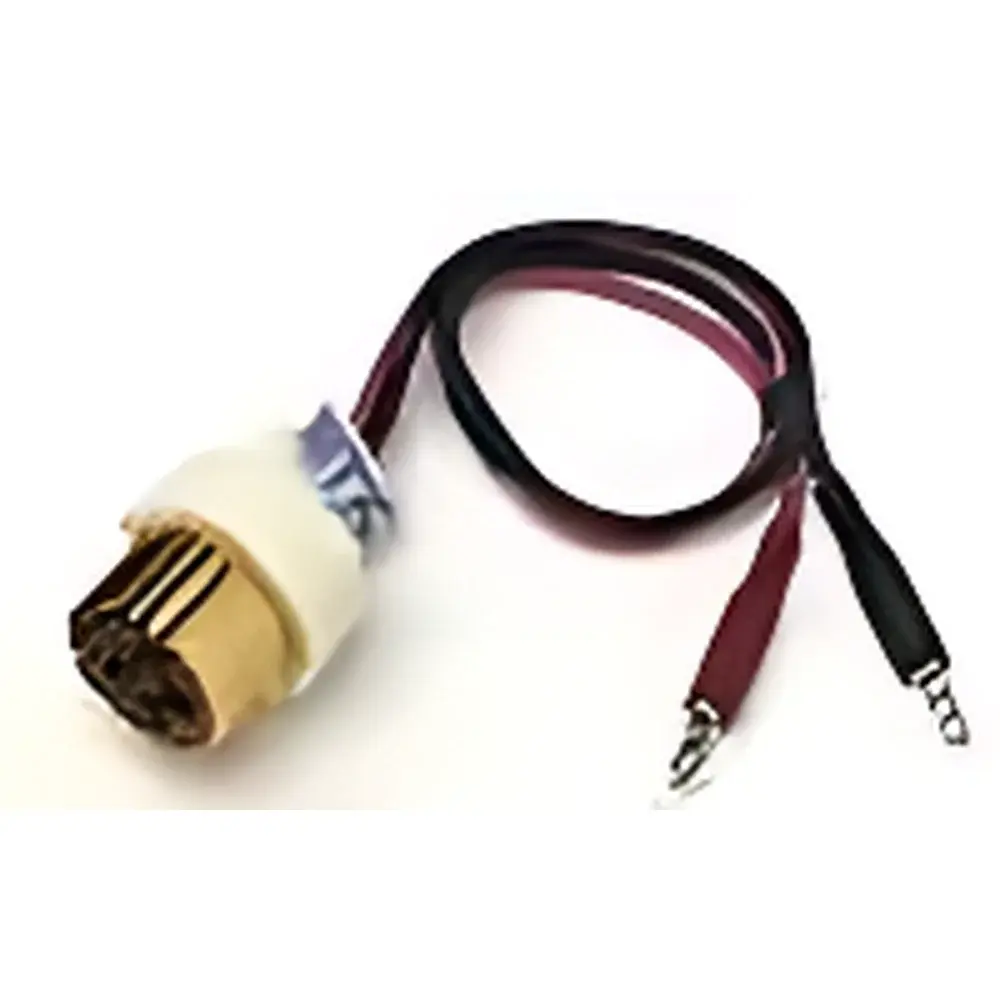
PP35-2P Adherent Cell Electroporation Electrode by Harvard Apparatus
| Key | Brand: Harvard Apparatus |
|---|---|
| Origin | USA |
| Model | PP35-2P |
| Distribution Type | Authorized Distributor |
| Import Status | Imported |
| Pricing | Upon Request |
Overview
The PP35-2P Adherent Cell Electroporation Electrode is a precision-engineered, single-use or reusable electrode system designed specifically for efficient and reproducible electroporation of adherent mammalian cell cultures. Developed by Harvard Apparatus—a U.S.-based leader in life science instrumentation—the PP35-2P integrates seamlessly with compatible electroporators (e.g., ECM 830, BTX ECM 2001+, or other square-wave pulse generators) to deliver controlled electric field exposure directly to monolayer-grown cells without requiring trypsinization or suspension. Its design leverages the fundamental principle of transient membrane permeabilization via high-voltage, low-duration electrical pulses, enabling robust nucleic acid (plasmid DNA, siRNA, mRNA) or protein delivery into sensitive, contact-dependent cell types—including primary neurons, epithelial lines (e.g., HEK293, HeLa, MDCK), and stem-cell-derived monolayers—while preserving cellular integrity and post-transfection viability.
Key Features
- Optimized geometry for uniform electric field distribution across standard 35 mm tissue culture dishes—minimizing edge effects and ensuring consistent transfection efficiency across the entire monolayer.
- Two-point parallel-plate configuration (hence “2P”) with gold-plated stainless-steel electrodes, providing low electrical resistance, corrosion resistance, and minimal electrochemical byproduct generation during pulsing.
- Non-invasive placement: electrodes rest gently on the dish exterior (bottom surface), eliminating physical contact with cells and avoiding mechanical disruption or contamination risk associated with submerged electrodes.
- Compatible with both exponential decay and square-wave pulse protocols; validated for pulse widths from 1 ms to 100 ms and field strengths ranging from 50 to 300 V/cm (dependent on instrument settings and buffer conductivity).
- Autoclavable and ethanol-cleanable construction supports reuse under controlled lab conditions, subject to manufacturer-recommended validation protocols for performance consistency.
- Designed to maintain physiological temperature stability during pulsing—no integrated heating/cooling, but compatible with stage-top incubation systems for time-sensitive transfections.
Sample Compatibility & Compliance
The PP35-2P electrode is validated for use with adherent cell lines cultured in standard DMEM, MEM, or RPMI-based media supplemented with ≤10% FBS. It supports transfection in low-conductivity electroporation buffers (e.g., CytoMix, Opti-MEM™) when higher efficiency is required. The device conforms to ISO 13485–aligned manufacturing practices for laboratory consumables and meets RoHS and REACH material compliance standards. While the electrode itself is not a medical device, its use in research applications aligns with GLP-compliant workflows where traceability, batch documentation, and equipment qualification (IQ/OQ) are maintained per institutional biosafety and quality assurance policies.
Software & Data Management
As a passive hardware component, the PP35-2P does not incorporate embedded firmware or onboard software. However, it operates within the full electroporation data ecosystem of Harvard Apparatus–compatible instruments. When used with systems such as the ECM 830 Electroporation System, pulse parameters (voltage, capacitance, resistance, pulse number/duration) are programmable via front-panel interface or PC-based control software (e.g., Harvard Apparatus ECM Control Suite). All protocol executions are logged with timestamps and parameter sets, supporting audit-ready documentation for internal review or regulatory submissions (e.g., preclinical study reports). Data export is supported in CSV format for integration into LIMS or statistical analysis platforms (e.g., GraphPad Prism, Python pandas).
Applications
- High-efficiency plasmid transfection of hard-to-transfect adherent primary cells—particularly relevant in neurobiology (cortical neuron transfection), immunology (dendritic cell monolayers), and organoid co-culture models.
- CRISPR-Cas9 RNP delivery for precise genome editing without prolonged nuclease expression, reducing off-target effects in confluent epithelial sheets.
- Functional genomics screens using pooled siRNA libraries in arrayed 35 mm dish formats.
- Time-resolved studies of protein localization or signaling dynamics, where synchronized, non-disruptive transfection enables direct comparison of pre- and post-transfection states in the same culture well.
- Pre-clinical development of ex vivo gene therapies—especially for epithelial barrier models (e.g., air-liquid interface cultures of bronchial or intestinal epithelia).
FAQ
Can the PP35-2P be used with suspension cells?
No—this electrode is engineered exclusively for adherent monolayers in 35 mm dishes. Suspension cells require alternative electrode configurations (e.g., cuvette-based or needle-type electrodes) to ensure homogeneous field exposure.
Is sterilization required between uses?
Yes—autoclaving at 121°C for 15 minutes or immersion in 70% ethanol for ≥10 minutes is recommended. Performance verification (e.g., impedance check, control transfection assay) should precede critical experiments after reuse.
Does Harvard Apparatus provide application support for protocol optimization?
Yes—technical application specialists offer protocol consultation, including cell-line-specific voltage/capacitance recommendations and buffer optimization guidance, available through authorized distributors and direct support channels.
What is the typical transfection efficiency range for HEK293 cells using this electrode?
Under optimized conditions (e.g., 150 V, 10 ms pulse, CytoMix buffer), efficiencies of 60–85% GFP+ cells are routinely achieved, with viability >80% as measured by trypan blue exclusion 24 h post-pulse.
Are there compatibility limitations with certain dish brands or coatings?
The PP35-2P is validated for standard polystyrene 35 mm dishes (e.g., Corning, Falcon, Sarstedt). Glass-bottom or polymer-coated dishes (e.g., collagen, fibronectin) may require minor voltage adjustment due to altered dielectric properties; empirical calibration is advised.



