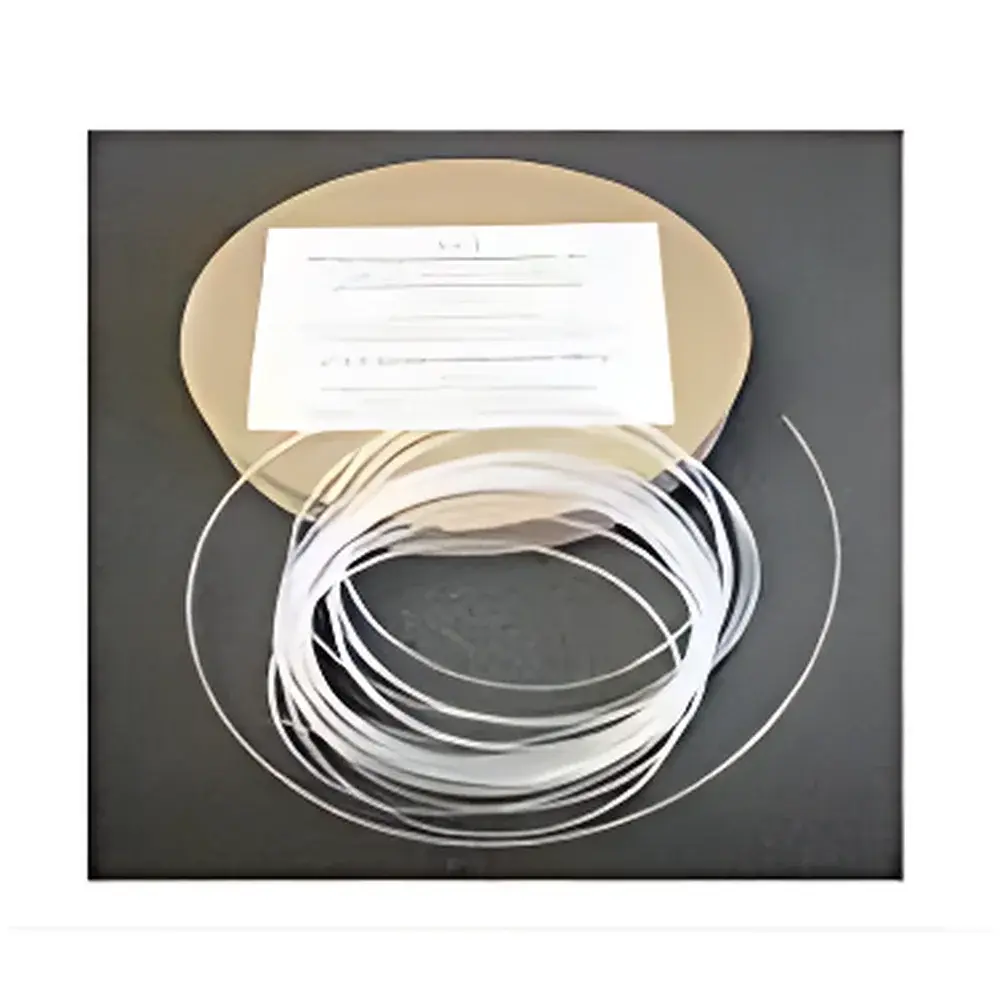
Intravital Polyethylene (PE) Tubing Sets for Physiological, Pharmacological & Neurological Research — PE-10, PE-20, PE-50, PE-90, PE-100, PE-160, PE-190, and Extended Sizes
| Origin | USA |
|---|---|
| Supplier Type | Authorized Distributor |
| Import Status | Imported |
| Models | PE-10, PE-20, PE-50, PE-90, PE-100, PE-160, PE-190, PE-205, PE-240, PE-260, PE-280, PE-320, PE-330, PE-350, PE-380 |
| Length Options | 3 m (10 ft), 30.5 m (100 ft) |
| Material | Medical-Grade Polyethylene (PE), USP Class VI Compliant |
| Inner Diameter Range | 0.28–4.0 mm |
| Outer Diameter Range | 0.61–6.0 mm |
Overview
Intravital polyethylene (PE) tubing sets are precision-engineered fluidic conduits widely employed in preclinical life science research involving acute and chronic physiological monitoring, pharmacokinetic sampling, intracerebral microdialysis, intra-arterial/venous cannulation, and neurophysiological infusion protocols. These tubes operate on the principle of low-resistance, biocompatible fluid transfer under controlled pressure or gravity-driven flow—critical for maintaining hemodynamic stability and minimizing tissue trauma during in vivo rodent, rabbit, and non-human primate studies. Manufactured from medical-grade, USP Class VI-certified polyethylene, each PE tubing variant is extruded to tight dimensional tolerances, ensuring consistent wall thickness, smooth lumen surface finish, and predictable flow resistance across standardized inner and outer diameters. Their inherent flexibility, kink resistance, and chemical inertness toward common biological buffers, saline solutions, and many pharmacological agents make them indispensable components in closed-loop infusion systems, pressure transducer setups, and stereotaxic delivery assemblies.
Key Features
- USP Class VI-compliant polyethylene formulation—validated for biocompatibility per ISO 10993-5 and ISO 10993-10 standards
- Precision extrusion process ensures ±0.01 mm dimensional consistency in both inner diameter (ID) and outer diameter (OD)
- Low extractables profile—suitable for long-term implantation and repeated use in GLP-compliant pharmacology studies
- High tensile strength and abrasion resistance—maintains structural integrity during suture fixation, catheterization, and repeated handling
- Autoclavable (steam sterilization at 121°C, 15 psi, 20 min) and compatible with ethylene oxide (EtO) and gamma irradiation sterilization methods
- Traceable lot numbering and full CoA (Certificate of Analysis) available upon request for audit-ready documentation
Sample Compatibility & Compliance
These PE tubing sets are routinely integrated into experimental workflows governed by FDA-regulated preclinical study designs and OECD Test Guidelines. They demonstrate compatibility with whole blood, plasma, cerebrospinal fluid (CSF), artificial cerebrospinal fluid (aCSF), isotonic saline, dextrose solutions, and most small-molecule drug formulations—including opioids, catecholamines, and neuroactive peptides. All PE variants comply with ASTM D2671 (Standard Specification for Polyethylene Tubing for Medical Applications) and meet the material safety requirements outlined in ISO 13485:2016 for medical device component suppliers. For studies requiring regulatory submission (e.g., IND-enabling toxicology or PK/PD trials), documentation packages include extractables testing reports and endotoxin limits (<0.5 EU/mL per USP ).
Software & Data Management
While PE tubing itself is a passive consumable, its dimensional specifications are directly referenced within instrument calibration and system validation protocols used in conjunction with syringe pumps (e.g., Harvard Apparatus PHD Ultra), pressure transducers (e.g., Millar Mikro-Tip®), and microdialysis analyzers (e.g., BASi CMA Microdialysis Systems). Digital asset management is supported via downloadable CAD models (STEP/IGES), dimensional tolerance sheets (PDF/Excel), and integration-ready product identifiers (GTIN/EAN) for LIMS and ERP systems. Traceability data—including manufacturing date, resin lot number, and QC test records—is archived for ≥10 years and retrievable under FDA 21 CFR Part 11-compliant electronic record systems upon authorized request.
Applications
- Intra-arterial and jugular vein cannulation for continuous blood pressure and heart rate monitoring in conscious or anesthetized rodents
- Chronic intracerebroventricular (ICV) or intraparenchymal microinfusion in behavioral neuroscience models (e.g., Parkinson’s, Alzheimer’s, depression)
- Microdialysis probe interfacing for real-time neurotransmitter sampling (dopamine, serotonin, glutamate) in awake, freely moving animals
- Perfusion circuit assembly in ex vivo organ preparations (Langendorff heart, isolated lung, brain slice interface)
- Delivery of contrast agents or tracers in high-resolution MRI, PET, or optical imaging studies requiring precise bolus timing
- Integration with telemetry systems (e.g., Data Sciences International DSI) for dual-modality physiological + biochemical endpoint correlation
FAQ
Are these PE tubes sterile upon delivery?
Standard packaging is non-sterile; however, sterile versions (EtO or gamma-irradiated) are available under custom order with documented sterility assurance level (SAL) of 10⁻⁶.
Can PE-10 tubing be used for intracranial injections in mice?
Yes—PE-10 (ID 0.28 mm, OD 0.61 mm) is the most commonly selected size for stereotaxic intracerebral infusions in murine models due to optimal balance between flow resistance and minimal tissue displacement.
Do you provide tubing cut-to-length services with heat-sealed ends?
Yes—custom cutting, end-flaring, and laser-marked length coding are offered for high-throughput labs under ISO 13485-controlled production conditions.
Is there batch-to-batch variability in flow resistance?
No—each production lot undergoes hydrodynamic resistance verification using calibrated viscometric flow cells; deviation is maintained within ±2.5% of nominal Hagen–Poiseuille theoretical values.
How should PE tubing be stored to preserve integrity?
Store at 15–25°C in original sealed packaging, away from UV light and ozone-generating equipment; shelf life is 5 years from date of manufacture when stored per IFU guidelines.