
Dynamax FLGS-TDP Granier Thermal Dissipation Sap Flow Meter
| Brand | Dynamax |
|---|---|
| Origin | USA |
| Model | FLGS-TDP |
| Data Logger Memory | 4 MB standard (expandable to 16 GB microSD) |
| Storage Capacity | 400 days at 1-hour interval |
| Input Channels | 32 differential analog inputs |
| Max Probe Support | 128 × TDP10/30/50, 64 × TDP80, or 40 × TDP100 |
| Temperature Accuracy | ±0.03 °C |
| Temperature Resolution | 0.0083 °C |
| AVRD Voltage Regulation | 4 channels (1.5–10 V, 5 A each) |
| System Dimensions | 45 × 35 × 16 cm |
| Weight | 11.5 kg |
| Power Supply | Dual-voltage AC adapter (110–220 V, 50–60 Hz, 4.5 A) |
| Standard Cable Length | 3 m (extendable to 22.8 m) |
| Compliance | Designed for long-term field deployment under GLP-aligned environmental monitoring protocols |
Overview
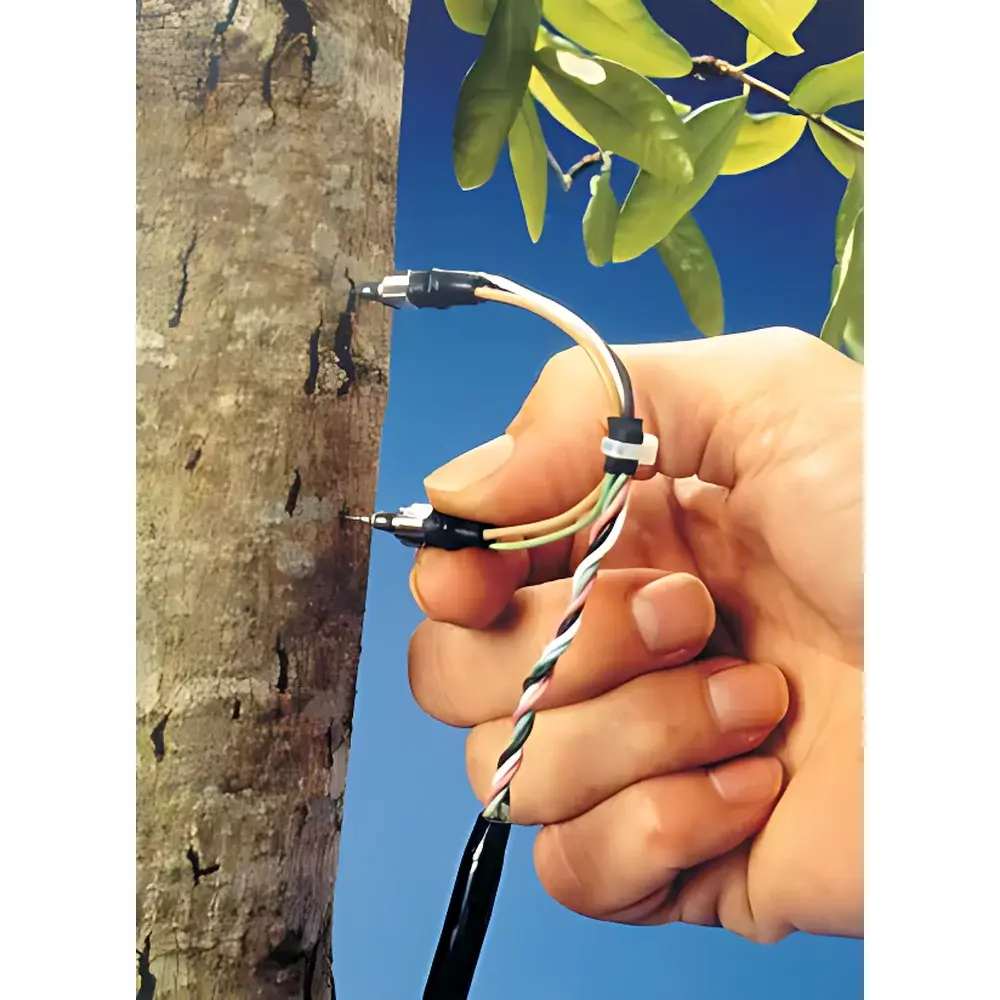
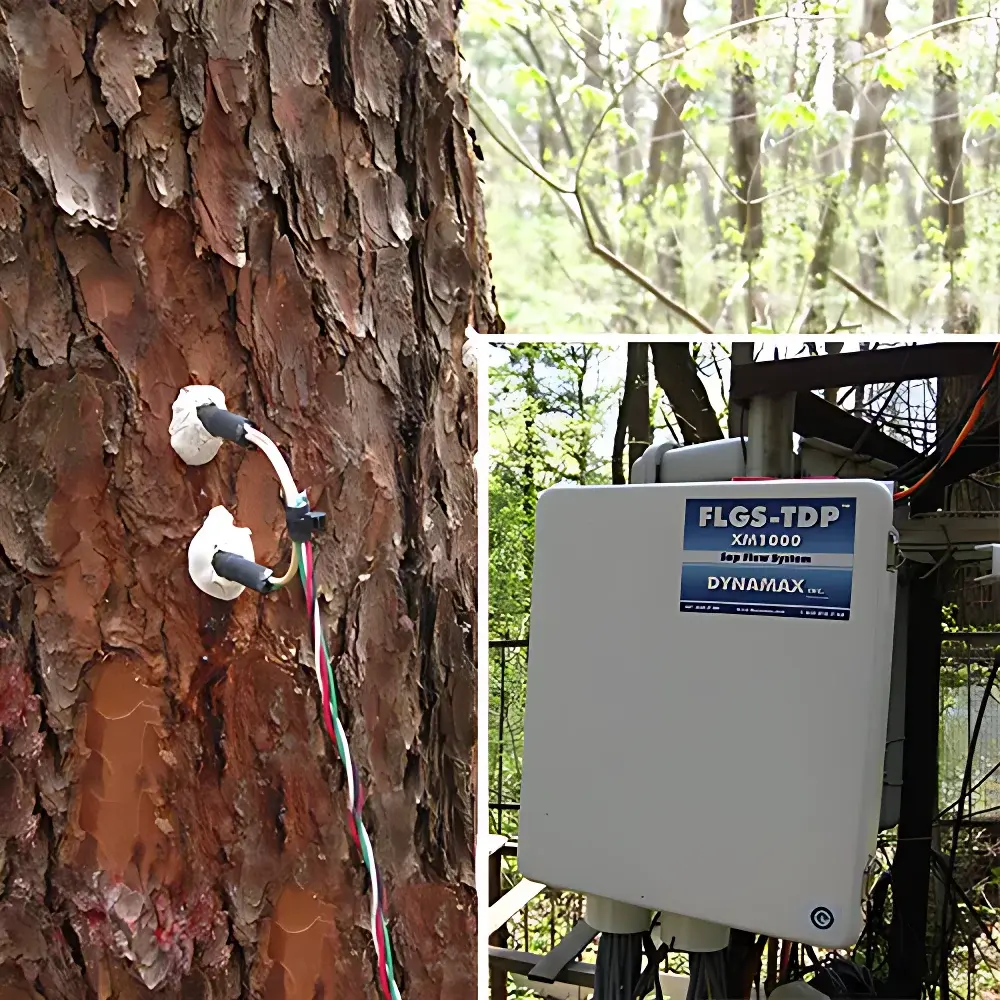
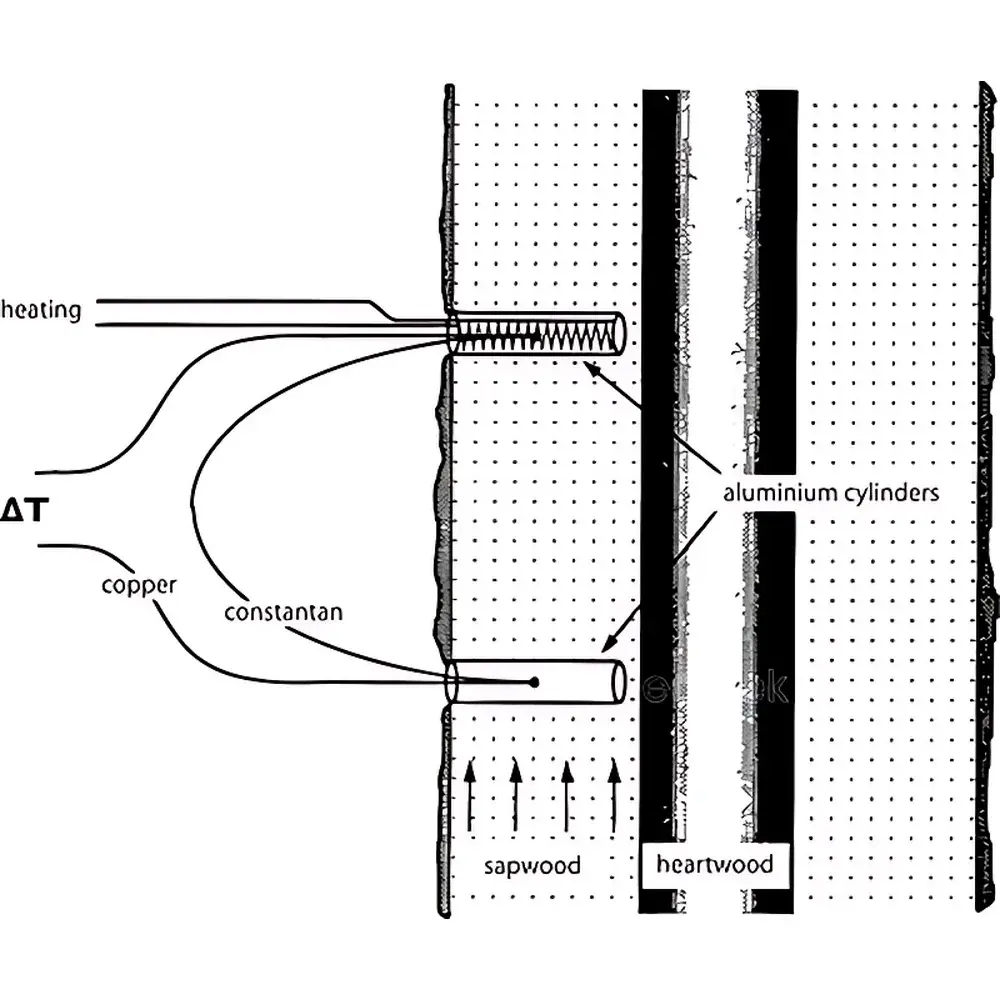
The Dynamax FLGS-TDP Granier Thermal Dissipation Sap Flow Meter is a precision field-deployable instrument engineered for continuous, non-destructive quantification of sap flux density in woody plant stems. It operates on the well-established Granier thermal dissipation principle: two matched thermocouples are inserted radially into the sapwood — one serves as a reference (unheated), while the other is heated at a constant low power. The temperature differential (ΔT) between the probes correlates inversely with sap flow velocity, following the empirical calibration relationship derived from heat balance theory in xylem tissue. Unlike thermal pulse methods—which require mandatory recovery intervals and introduce temporal gaps in data continuity—the FLGS-TDP enables true high-temporal-resolution monitoring (e.g., hourly or sub-hourly sampling) without duty-cycle constraints. Its design targets medium- to large-diameter trees (e.g., mature oaks, pines, eucalypts), where radial heterogeneity in sap flow necessitates multi-point probe deployment (1–4 sensors per trunk depending on diameter and research objectives). As a fully integrated, factory-calibrated system, it eliminates signal degradation associated with field-assembled configurations, ensuring metrological traceability and inter-site comparability critical for ecosystem-scale water budget modeling.
Key Features
- Factory-traceable calibration performed prior to shipment—no user recalibration required for baseline operation
- Dual-probe Granier architecture with robust stainless-steel thermocouple assemblies (type T) optimized for long-term stability in variable moisture and temperature environments
- Adaptive Voltage Regulated Driver (AVRD) modules provide independent, programmable excitation voltage control across four probe groups—enabling simultaneous measurement of heterogeneous species or canopy layers with differing thermal conductivities
- Low-power AVRD sleep mode (AVRD Sleep Mode) dynamically adjusts heating current based on diurnal sap flow patterns, extending battery life without compromising data fidelity
- Modular multiplexer architecture supports up to four expansion multiplexers, scaling total channel capacity to 128 TDP10/30/50 probes—or equivalently 64 TDP80 or 40 TDP100 units—facilitating networked watershed- or forest-plot-level deployments
- Embedded data logger with 4 MB flash memory (upgradeable to 16 GB microSD) stores raw thermocouple voltages, ΔT values, and computed sap flux densities with timestamping compliant with ISO 17025 documentation requirements
- Ruggedized aluminum enclosure (IP65-rated) with integrated desiccant chamber and marine-grade connectors ensures operational integrity across tropical, arid, and temperate biomes
Sample Compatibility & Compliance
The FLGS-TDP accommodates a full suite of Dynamax TDP-series probes—including TDP-10 (10 mm length), TDP-30, TDP-50, TDP-80, and TDP-100—each dimensionally engineered for anatomically appropriate insertion depth across angiosperm and gymnosperm species. Probe selection follows published guidelines for sapwood depth estimation (e.g., USDA Forest Service Technical Report RMRS-GTR-282) and avoids cambial damage when installed using included torque-controlled insertion tools. The system meets functional requirements for long-term ecological monitoring under international frameworks including FLUXNET, NEON, and ICOS. While not certified to IEC 61000-6-2/4 electromagnetic immunity standards, its analog signal conditioning and shielded twisted-pair cabling minimize noise in high-RF environments. All firmware and data handling routines support audit-trail generation aligned with GLP principles, and raw binary output formats (.bin) are compatible with third-party validation pipelines used in peer-reviewed hydroecological studies.
Software & Data Management
Data acquisition and post-processing are supported by Dynamax SapFlow+ software (v5.2+), a Windows-based application providing real-time visualization, automated Granier equation application (with configurable k-coefficient libraries), and batch export to CSV, NetCDF, or HDF5 formats. The software implements built-in quality control flags—including thermocouple open-circuit detection, excessive ΔT drift (>0.5 °C/h), and heater resistance deviation thresholds—to identify sensor degradation or biofouling events. Exported datasets include metadata headers compliant with the Climate and Forecast (CF) Metadata Conventions, enabling direct ingestion into R (sapfluxnetr package), Python (xarray + pandas), or MATLAB workflows. Remote access is enabled via Ethernet or USB-C interface; optional cellular telemetry modules (not included) allow scheduled FTP uploads to institutional servers. All configuration parameters—including sampling interval, AVRD setpoints, and alarm thresholds—are stored in non-volatile memory and survive power loss.
Applications
- Quantifying species-specific transpiration rates to parameterize land surface models (e.g., CLM, Noah-MP)
- Evaluating irrigation scheduling efficacy in orchard and vineyard systems through real-time plant water status feedback
- Assessing drought-induced xylem embolism risk via diurnal hysteresis analysis of sap flux–vapor pressure deficit relationships
- Validating remote-sensing estimates of evapotranspiration (e.g., MOD16, SSEBop) at eddy-covariance tower footprints
- Monitoring restoration success in riparian corridors by tracking seasonal sap flow recovery trajectories
- Investigating carbon–water coupling under elevated CO2 and warming treatments in Free-Air CO2 Enrichment (FACE) experiments
- Supporting urban forestry management through comparative water use analysis across street tree species under impervious surface stress
FAQ
What is the recommended probe spacing for TDP-50 in Quercus robur?
For mature pedunculate oak, insert the TDP-50 at 20 mm radial depth from the cambium, ensuring the heated and reference probes are centered within the active sapwood layer—typically confirmed via resistograph or increment coring prior to installation.
Can the FLGS-TDP operate unattended for more than six months?
Yes—when paired with a 30 W solar panel (MSX30R), 12 V deep-cycle battery, and AVRD sleep-mode optimization, the system achieves >200 days of continuous operation in mid-latitude summer conditions; winter performance depends on insolation and battery thermal management.
Is raw thermocouple voltage data accessible for custom calibration?
Yes—SapFlow+ exports unprocessed mV readings from both heated and reference junctions, enabling user-defined regression models or integration with species-specific k-coefficients published in Tree Physiology or Agricultural and Forest Meteorology.
Does the system comply with FDA 21 CFR Part 11 for regulated agricultural trials?
While not formally validated for Part 11 compliance, the audit-log functionality, electronic signature support, and immutable raw-data archiving meet foundational ALCOA+ (Attributable, Legible, Contemporaneous, Original, Accurate) criteria applicable to Good Agricultural Practice (GAP) and environmental impact assessments.
How is probe-to-probe crosstalk minimized during multiplexer expansion?
Each multiplexer stage employs galvanically isolated analog front-ends and synchronized sampling clocks, reducing inter-channel interference to <0.01% FS—verified per ANSI/ISA-50.00.01-2015 test procedures.





