
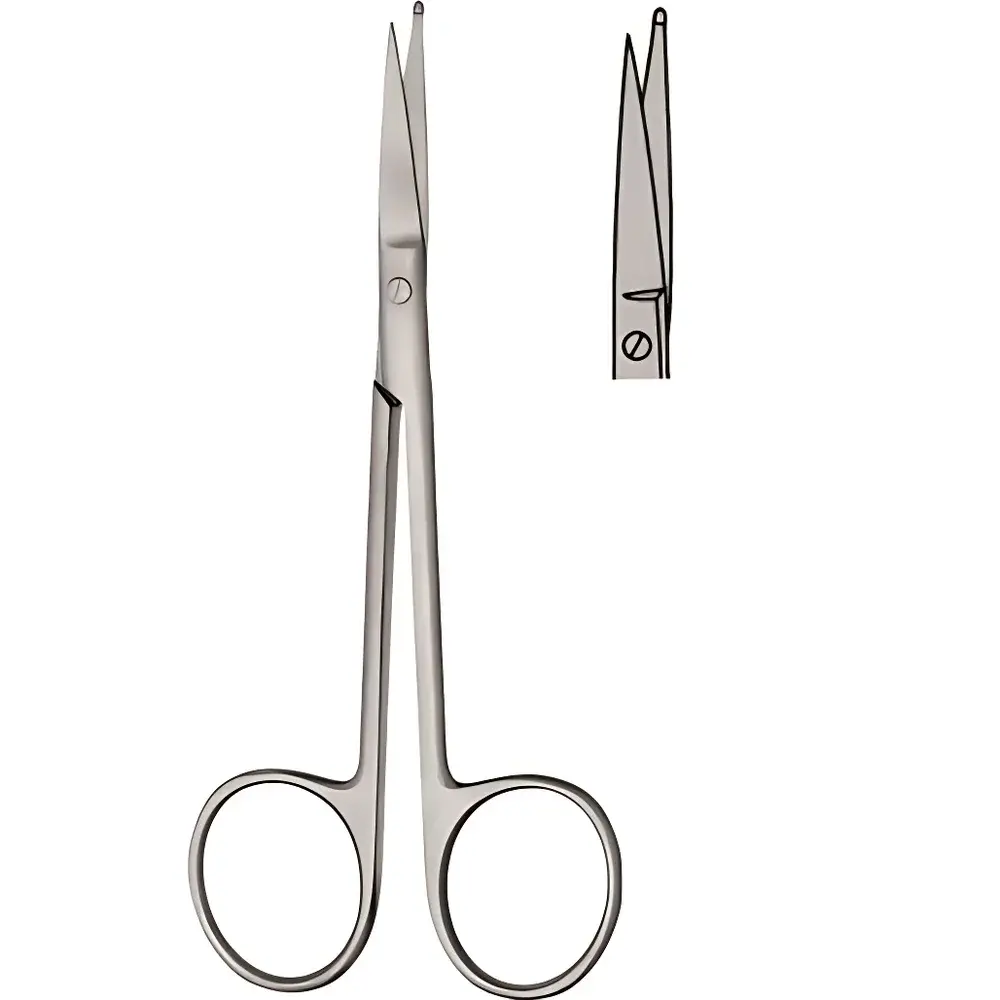
KNOWLES S16017-14 Straight & Ball-Tip Bandage Scissors
| Brand | RWD |
|---|---|
| Origin | Shenzhen, China |
| Manufacturer Type | Direct Manufacturer |
| Country of Origin | China |
| Model | S16017-14 |
| Pricing | Available Upon Request |
Overview
The KNOWLES S16017-14 Straight & Ball-Tip Bandage Scissors are precision-engineered medical-grade cutting instruments designed for controlled, safe, and repeatable tissue and dressing manipulation in clinical, surgical, and laboratory settings. Unlike general-purpose scissors, this dual-tip configuration integrates a straight-blade section for linear incisions and a ball-tipped distal end to prevent accidental puncture or trauma during close-proximity cutting—particularly critical when managing fragile skin, wound dressings, sutures, or biomedical specimens. Constructed from high-carbon stainless steel with electro-polished surfaces, the instrument ensures corrosion resistance, biocompatibility, and compatibility with standard autoclaving cycles (134 °C, 2–3 bar saturated steam). Its ergonomic finger-ring handles are textured for slip-resistant grip under gloved conditions and calibrated to deliver optimal mechanical advantage across repeated use cycles.
Key Features
- Dual-tip design: Combines a sharp, beveled straight blade (14.5 cm total length) with a rounded, non-penetrating ball tip at the distal end—enabling precise cutting while minimizing risk of unintended tissue perforation.
- Material specification: AISI 420 stainless steel (minimum 12% Cr), hardened to 52–55 HRC for edge retention and fatigue resistance; passivated per ASTM A967 for enhanced oxide layer stability.
- Ergonomic handle geometry: Asymmetric ring diameter (larger for thumb, smaller for fingers) reduces hand fatigue during prolonged procedures; surface micro-texturing conforms to ISO 13485 requirements for tactile feedback under wet or lubricated conditions.
- Autoclavable construction: Fully compatible with gravity displacement and prevacuum steam sterilization per EN 285 and ISO 17664; validated for ≥500 sterilization cycles without degradation of blade geometry or handle integrity.
- Traceability-ready: Laser-engraved model identifier (S16017-14) and batch code on the shank support device history file (DHF) documentation per FDA 21 CFR Part 820 and MDR Annex II.
Sample Compatibility & Compliance
These scissors are routinely employed in applications involving gauze, non-woven dressings, adhesive tapes, suture materials (including monofilament nylon and braided polyester), and ex vivo soft-tissue specimens. They are not intended for bone, cartilage, or heavily calcified tissue. The device complies with ISO 7740 (surgical instruments — requirements for scissors), ISO 80369-3 (small-bore connectors for liquids), and meets essential requirements under Regulation (EU) 2017/745 (MDR) Class I. Sterility is provided non-sterile unless specified; reprocessing instructions align with AAMI ST79:2017 and CDC Guideline for Disinfection and Sterilization (2008).
Software & Data Management
As a manually operated mechanical instrument, the S16017-14 does not incorporate embedded electronics, firmware, or software interfaces. However, its design supports integration into digital quality management systems (QMS): lot-specific manufacturing records, material certifications (EN 10088-1), and sterilization validation reports can be linked via QR-coded labels affixed to packaging. Device usage logs, maintenance schedules, and reprocessing verification data may be documented in compliant QMS platforms such as Veeva Vault QMS or MasterControl, satisfying audit requirements under ISO 13485:2016 Clause 7.5.10 and FDA 21 CFR Part 820.70.
Applications
- Clinical wound care: Trimming adherent dressings without disturbing granulation tissue or undermining edges.
- Operating room preparation: Cutting drapes, sutures, and tie tapes prior to incision or closure.
- Pathology specimen handling: Excising biopsy margins or trimming formalin-fixed tissues prior to embedding.
- Preclinical research: Manipulating rodent skin grafts, vascular patches, or hydrogel-based wound models under GLP-compliant protocols.
- Rehabilitation and sports medicine: Adjusting kinesiology tape, compression bandages, and orthopedic strapping systems with controlled tip engagement.
FAQ
Is the S16017-14 approved for sterile field use?
Yes—when supplied sterile (optionally available), it meets ISO 11737-1 bioburden limits and is terminally sterilized using ethylene oxide or steam per ISO 11135 or ISO 17665.
Can these scissors be sharpened after extended use?
Yes—re-sharpening is supported by certified third-party instrument reprocessing services compliant with ANSI/AAMI ST79 and ISO 17664; however, tip geometry must be verified post-sharpening to maintain ball-tip radius tolerance (±0.1 mm).
What is the recommended cleaning protocol between uses?
Immediate manual cleaning with enzymatic detergent (pH 7–8) followed by ultrasonic agitation (40 kHz, 5 min), thorough rinsing with deionized water, and drying prior to packaging for sterilization.
Does RWD provide technical documentation for regulatory submissions?
Yes—CE Technical File, FDA Establishment Registration, and ISO 13485:2016 Certificate of Conformance are available upon request for qualified customers engaged in regulatory filing.




