
Workswell WIC Infrared Thermal Imaging Camera for Animal Science
| Brand | Workswell |
|---|---|
| Origin | Czech Republic |
| Model | WIC Infrared Thermal Imaging Camera for Animal Science |
| Resolution | 640 × 512 pixels |
| Thermal Sensitivity | 30 mK |
| Temperature Range | −25 °C to +150 °C (standard), optional up to +550 °C or +1500 °C with spectral filter |
| Accuracy | ±2 °C or ±2% of reading |
| Frame Rate | 9 Hz / 30 Hz |
| Spectral Band | 7.5–13.5 µm |
| Lens Options | 5°–69° FOV (9 mm–100 mm focal length) |
| Interface | USB 3.0 or GigE Vision compliant |
| IP Rating | IP65 |
| Software | WIRIS Suite with ROI analysis, multi-parameter environmental compensation, 14 color palettes, and time-synchronized imaging |
| Compliance | GenICam, USB3 Vision, IEEE 1588 Precision Time Protocol |
Overview
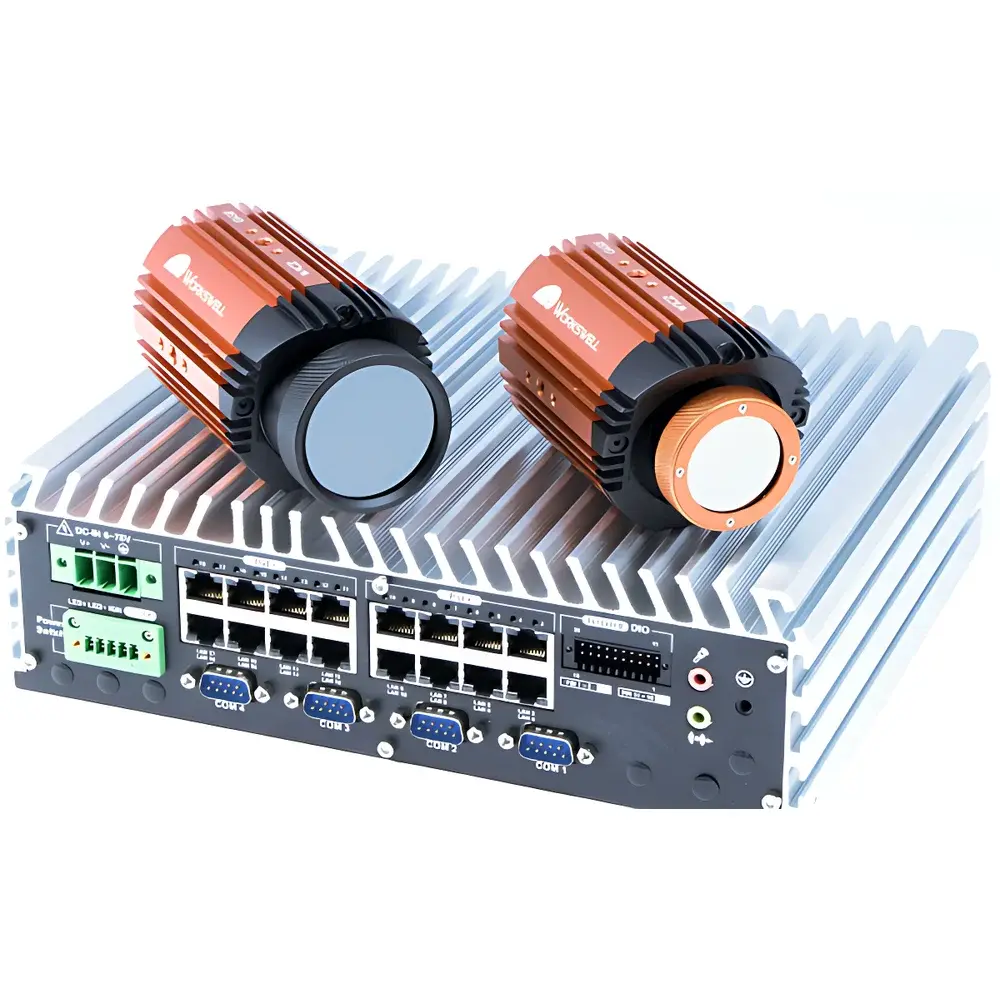
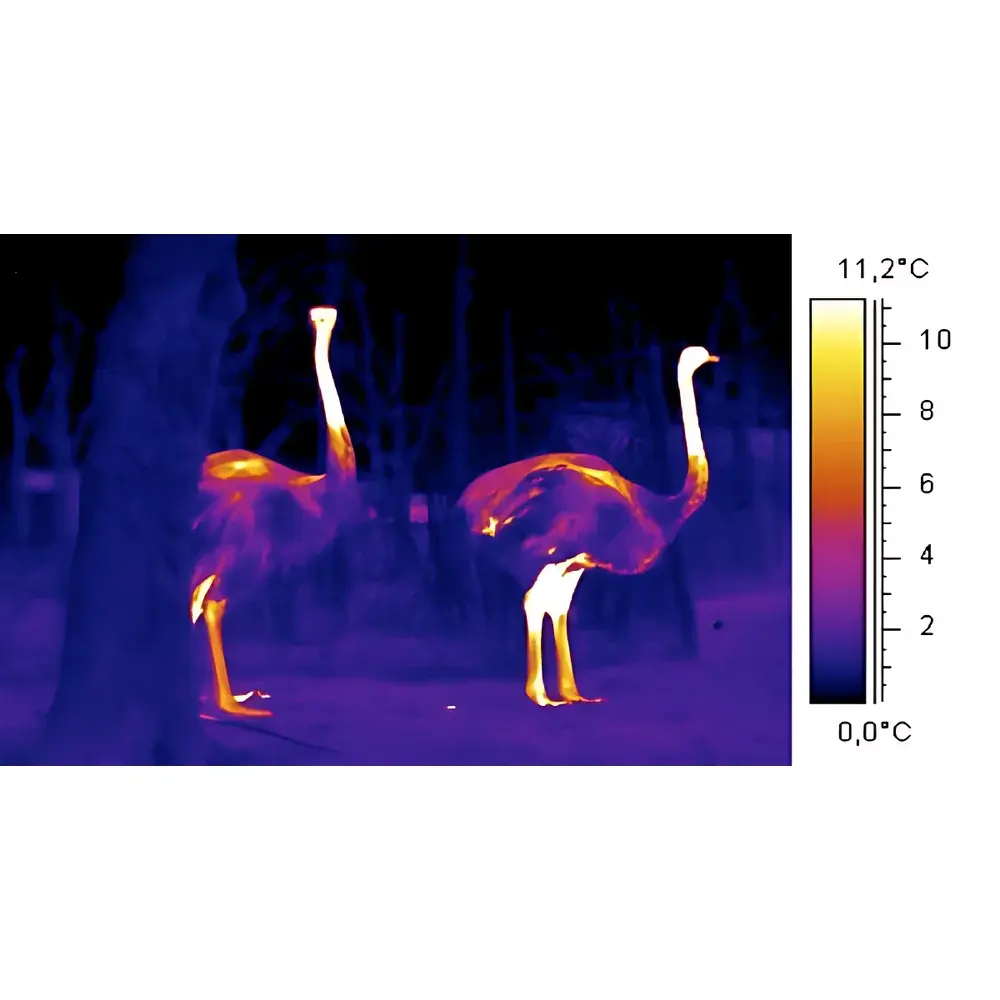
The Workswell WIC Infrared Thermal Imaging Camera for Animal Science is a calibrated, research-grade thermal imaging system engineered for non-contact, high-fidelity surface temperature mapping in controlled laboratory environments and semi-field settings. Built upon uncooled microbolometer detector technology operating in the long-wave infrared (LWIR) spectral band (7.5–13.5 µm), the WIC captures radiometrically accurate thermal data across its native 640 × 512 pixel array. Its 30 mK thermal sensitivity enables detection of subtle physiological temperature gradients—such as those associated with cutaneous vasomotor responses, thermoregulatory behavior, or localized inflammation—in live animal subjects without physical contact or restraint artifacts. Designed specifically for life science applications, the system supports quantitative longitudinal monitoring of thermal phenotypes under defined ambient conditions (air temperature, relative humidity, object distance), making it suitable for metabolic studies, stress response assessment, and comparative thermophysiology across species.
Key Features
- Radiometric calibration traceable to NIST-equivalent standards; each pixel delivers absolute temperature values with full calibration certificate included
- Compact, ruggedized housing rated IP65 for resistance to dust ingress and low-pressure water jets—enabling stable operation in vivariums, outdoor enclosures, or transportable field setups
- USB 3.0 interface provides bus-powered operation (no external PSU required), ensuring seamless integration with portable workstations and minimizing electromagnetic interference in sensitive electrophysiology or behavioral labs
- GigE Vision–compliant variant available for networked deployment, supporting IEEE 1588 Precision Time Protocol (PTP) for sub-millisecond synchronization with other modalities (e.g., video tracking, respirometry, EEG)
- Interchangeable LWIR lenses (9 mm to 100 mm focal length) allow optimization of spatial resolution and working distance—from close-range rodent thermography (≥15 cm) to large-animal or group-housing monitoring at distances up to several meters
- Real-time pixel-level temperature analytics: min/max/mean over user-defined ROIs, temporal profiling, and export of full radiometric TIFF sequences for post hoc statistical modeling
Sample Compatibility & Compliance
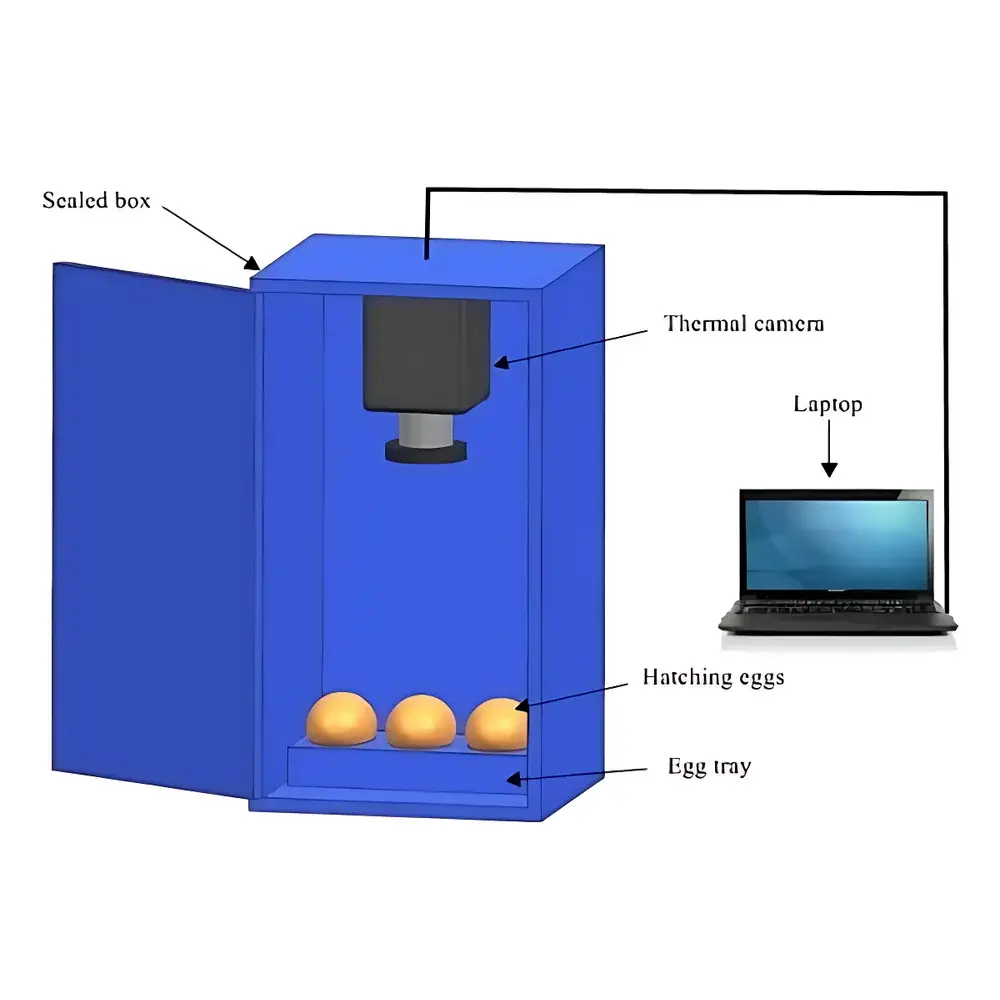
The WIC system is validated for use with unrestrained or minimally handled vertebrate models—including rodents, lagomorphs, avian species, and medium-sized mammals—under ISO 10993–compatible handling protocols. Its non-invasive measurement principle eliminates thermal loading artifacts common with contact probes, preserving natural thermoregulatory behavior during acquisition. The camera complies with CE marking requirements for laboratory instrumentation and meets electromagnetic compatibility (EMC) standards per EN 61326-1. All firmware and software components adhere to GLP-relevant audit trail provisions when used with WIRIS Suite v5.2+, including timestamped parameter logging, user-access controls, and immutable raw-data export. While not FDA-cleared for clinical diagnostics, the system satisfies technical prerequisites for preclinical thermographic endpoints referenced in OECD TG 407, ASTM E1933-19 (Standard Test Methods for Measuring and Compensating for Emissivity Using Infrared Imaging Systems), and ISO/TR 13154 (Medical infrared thermography).
Software & Data Management
The WIRIS Suite provides a dedicated environment for scientific thermal data acquisition and analysis. It supports dual-mode operation: real-time streaming with adjustable gain, level, and span; and triggered snapshot capture synchronized with external TTL signals. Key analytical capabilities include dynamic ROI definition (point, line, polygon, freehand), emissivity correction based on material database or user-input spectral reflectance, and environmental parameter compensation (ambient temperature, relative humidity, atmospheric transmission, object distance). Video exports retain full radiometric metadata in 16-bit TIFF format, compatible with MATLAB, Python (OpenCV, scikit-image), and ImageJ/Fiji workflows. Audit-ready project files store operator ID, acquisition timestamps, instrument configuration, and calibration status—meeting documentation requirements for internal QA reviews and regulatory submissions under ISO 17025 or AAALAC-accredited facilities.
Applications
- Quantitative thermoregulation studies: circadian rhythm mapping, cold/warm challenge responses, and pharmacological modulation of peripheral perfusion
- Non-invasive detection of inflammatory foci in arthritis, dermatitis, or post-surgical recovery models
- Energetic trade-off analysis via facial or auricular temperature dynamics during cognitive tasks or social interaction assays
- Thermal phenotyping in genetically modified lines (e.g., UCP1-knockout mice) or dietary intervention studies
- Validation of thermal insulation properties in nesting materials, housing substrates, or wearable bio-monitoring devices
- Integration with indirect calorimetry systems to correlate surface temperature gradients with whole-body O2 consumption and CO2 production rates
FAQ
Does the WIC require periodic recalibration after initial delivery?
Yes—while factory calibration remains valid for 12 months under normal operating conditions, annual recalibration is recommended for GLP-compliant studies. Workswell-certified service centers provide traceable recalibration with updated certificates.
Can the WIC be used for thermography in small birds or neonatal rodents?
Yes, provided appropriate lens selection (e.g., 9 mm or 13 mm wide-angle) and environmental stabilization (controlled ambient temperature, minimized air drafts). Minimum measurable object size is ~0.5 mm at 30 cm working distance.
Is the WIRIS Suite compatible with Windows 11 and 64-bit MATLAB R2022b+?
Yes—the software supports Windows 10/11 (64-bit), and TIFF-based radiometric exports are fully readable in MATLAB via standard image I/O functions. SDKs for C++, Python, and LabVIEW are available under NDA.
What is the maximum frame rate achievable in radiometric mode?
30 Hz is supported at full 640 × 512 resolution with USB 3.0; GigE variants maintain 30 Hz with PTP-synchronized multi-camera configurations.
Are there restrictions on using the +1500 °C extended range option in animal studies?
The +1500 °C configuration requires a narrowband spectral filter (e.g., 3.9 µm) and is intended exclusively for industrial applications such as furnace monitoring. It is not suitable for biological tissue imaging due to strong atmospheric absorption and non-Planckian emission characteristics outside the LWIR band.
Related Products



