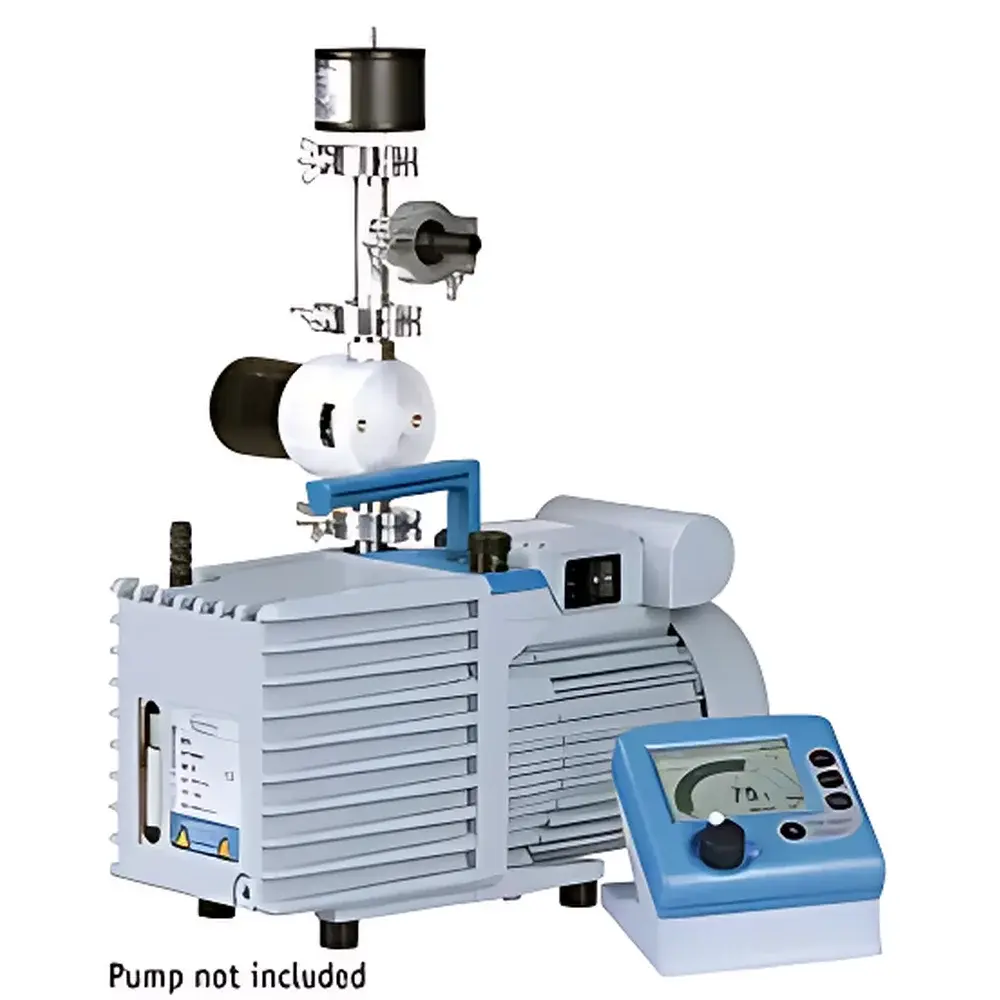
VACUUBRAND CVC 3000 High-Vacuum Control System with Rotary Vane Pump Integration
| Brand | VACUUBRAND® |
|---|---|
| Origin | Germany |
| Model | CVC 3000 High-Vacuum Kit |
| Measurement Principle | Pirani (Thermal Conductivity) Gauge |
| Pressure Range | 1×10³ mbar to 1×10⁻³ mbar |
| Sensor Uncertainty | ±15% of reading (0.01–10 mbar) |
| Sensor Cable Length | 2 m |
| Interface Protocol | VACUU·BUS® |
| Valve Type | VV-B 15C Solenoid Direct-Acting Valve |
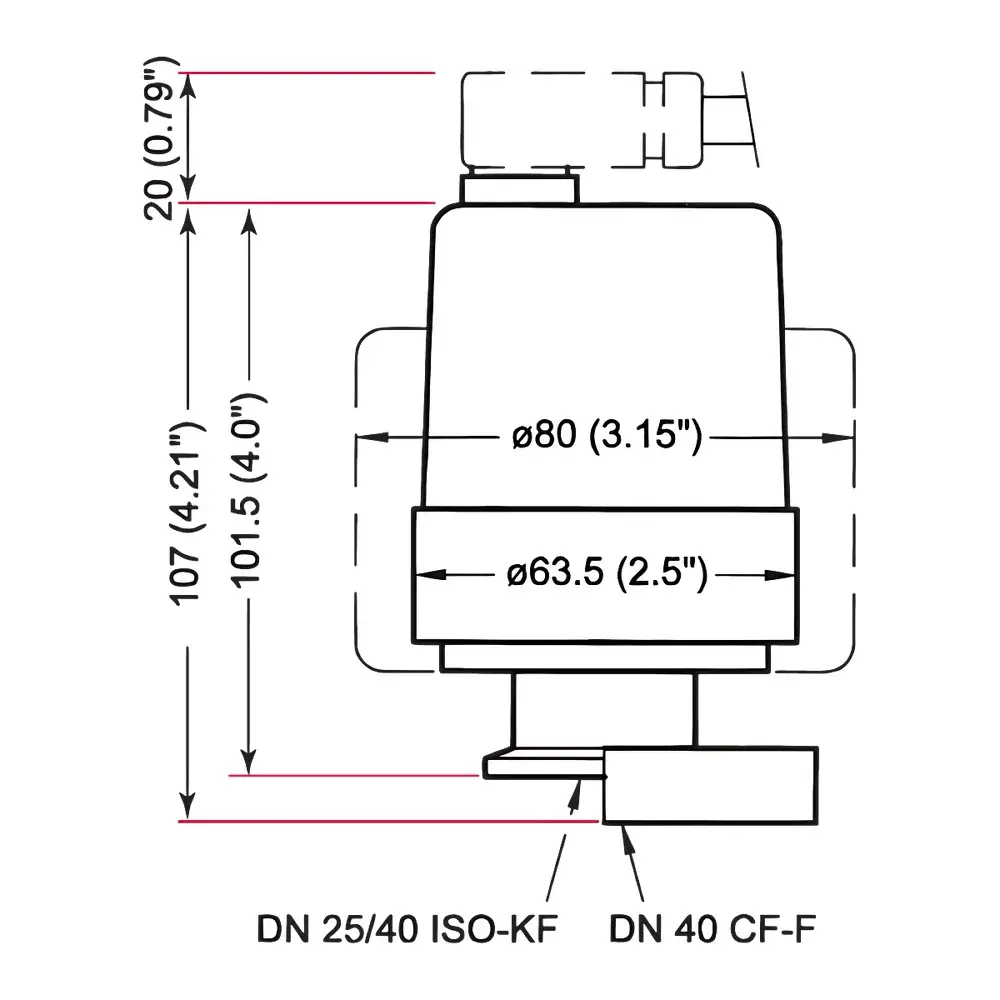
| Flange Options | KF DN 16 or KF DN 25 |
| Compliance | CE, RoHS, ISO 9001-certified manufacturing |
Overview
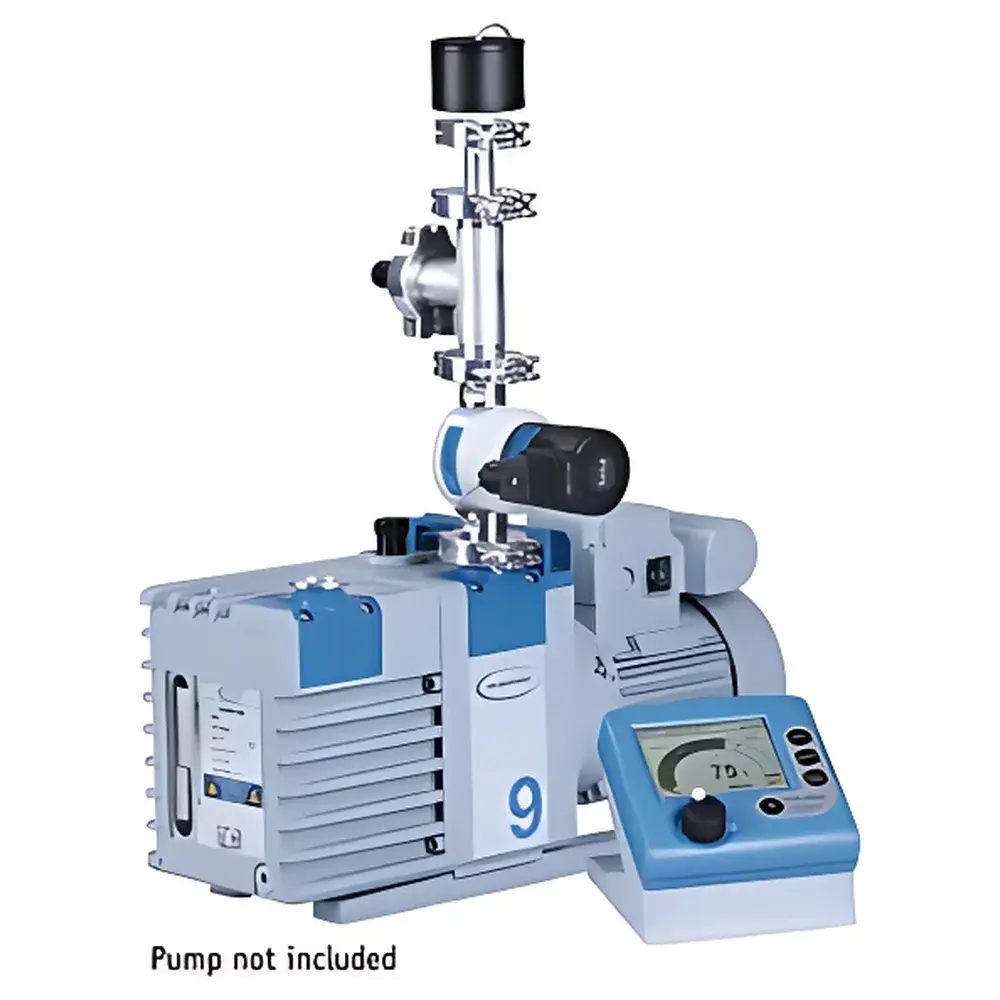
The VACUUBRAND CVC 3000 High-Vacuum Control System is an integrated, digitally networked vacuum regulation solution engineered for precise pressure control in the range of 1×10³ mbar down to 1×10⁻³ mbar. Designed specifically for integration with rotary vane pumps—including VACUUBRAND’s RE/RZ series (e.g., RE/RZ 2.5, RE/RZ 6, RE/RZ 9, RE/RZ 16) and RC 6 chemical-resistant hybrid pumps—the system enables automated, repeatable vacuum process management in laboratory-scale distillation, solvent removal, freeze drying, degassing, and thin-film deposition applications. At its core, the CVC 3000 operates on closed-loop feedback control: it continuously reads pressure data from the externally mounted VSP 3000 Pirani sensor and modulates vacuum level by actuating the VV-B 15C solenoid valve—either fully open or fully closed—thereby regulating gas flow into the system. This on/off control strategy delivers stable setpoint maintenance within defined process tolerances, particularly in applications where high-speed response is less critical than long-term stability and reproducibility. All components—including controller, sensor, and valve—communicate via the proprietary VACUU·BUS® digital interface, enabling plug-and-play recognition, automatic parameter assignment, and unified firmware management without manual configuration.
Key Features
- VACUU·BUS® digital communication architecture ensures seamless interoperability between CVC 3000 controller, VSP 3000 sensor, and VV-B 15C valve—no DIP-switching or analog calibration required
- Dual-flange compatibility: Two pre-engineered configurations available—KF DN 16 (for RE/RZ 2.5, RE/RZ 6, RC 6) and KF DN 25 (for RE/RZ 9, RE/RZ 16)—each including flanged T-junctions, PP nozzle adapters (DN 10 mm or DN 15 mm), clamps, and Viton® O-rings
- CVC 3000 controller features a 4-digit LED display, intuitive push-button navigation, and programmable setpoints with hysteresis adjustment to minimize valve cycling
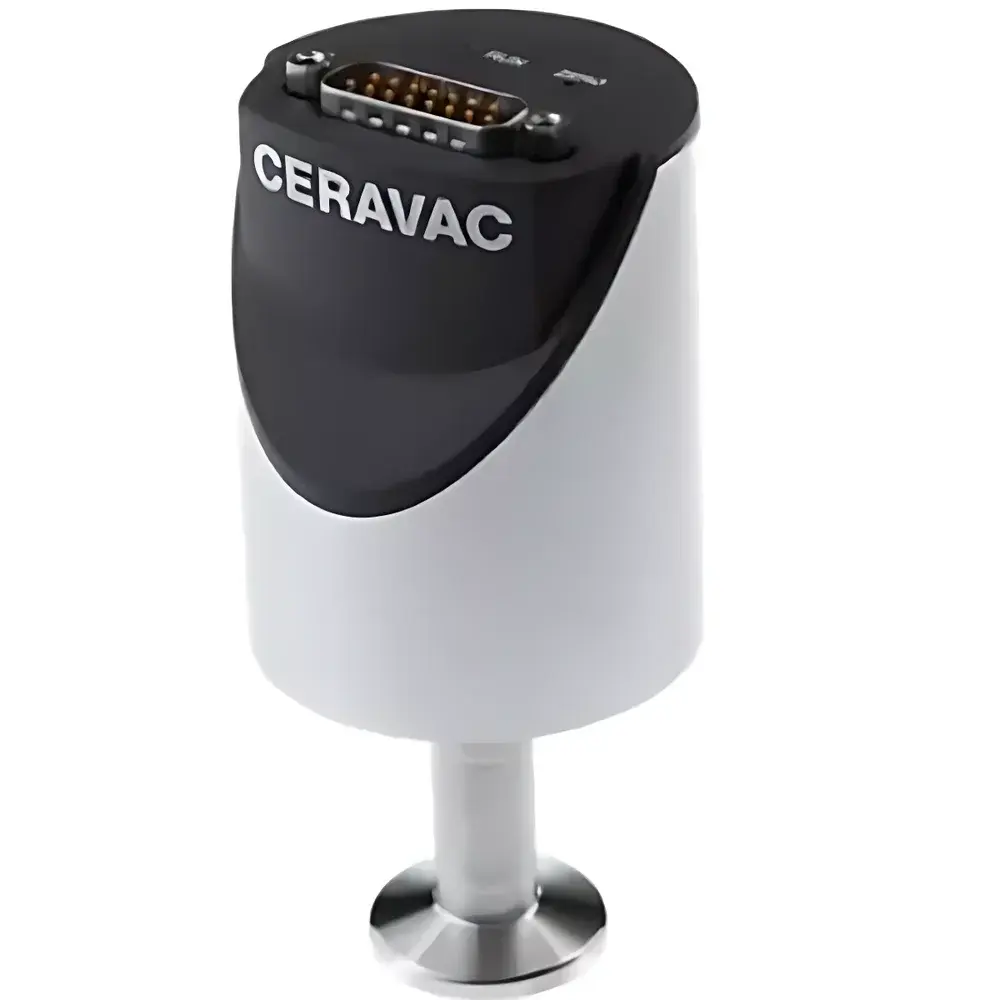
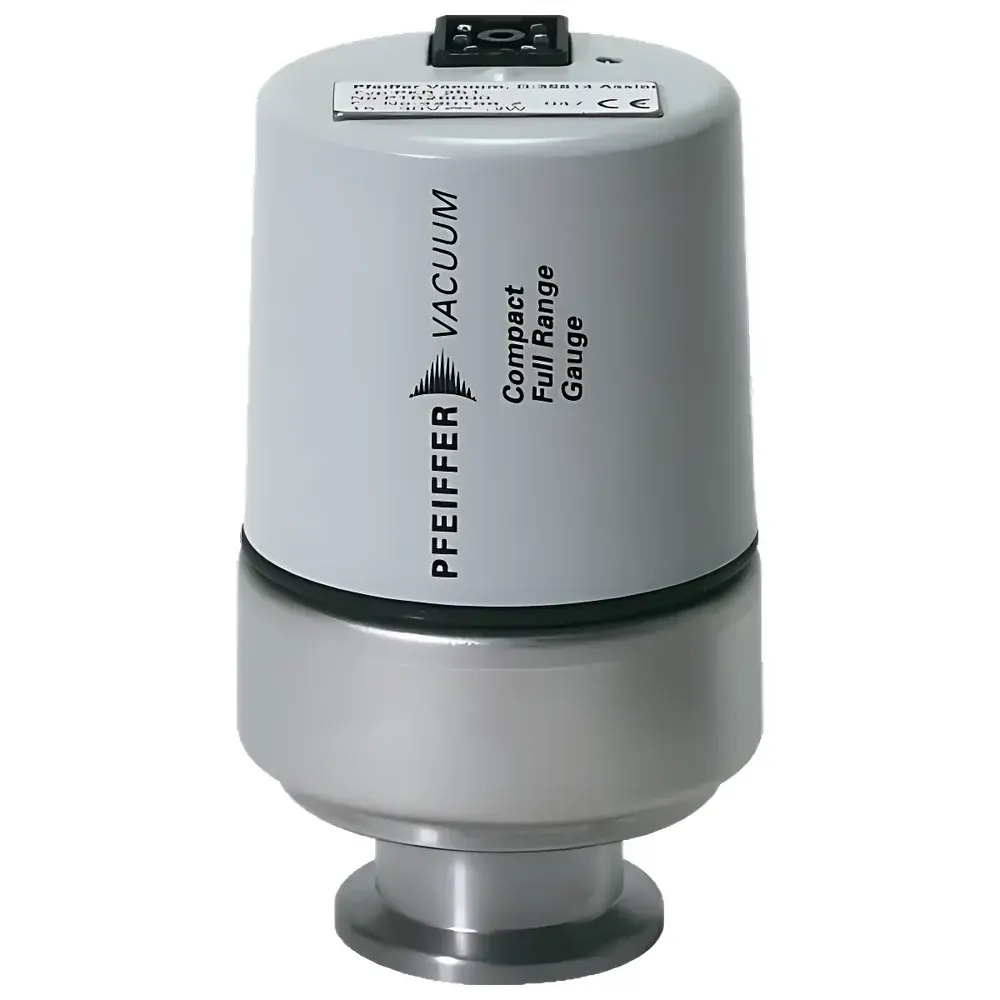
- VSP 3000 thermal conductivity (Pirani) sensor offers robust performance across medium-to-high vacuum ranges; calibrated traceably to NIST-traceable standards
- VV-B 15C direct-acting solenoid valve provides fast, leak-tight shut-off with stainless steel body, EPDM diaphragm, and IP65-rated housing suitable for ambient lab environments
- No internal sensor in CVC 3000 unit—ensures thermal decoupling from electronics, reducing drift and extending service life
Sample Compatibility & Compliance
The CVC 3000 High-Vacuum Kit is compatible with non-corrosive, non-condensable gases and vapors typical in organic solvent handling, inert atmosphere purging, and vacuum-assisted filtration. It is not rated for use with aggressive halogenated solvents, strong oxidizers, or highly condensable vapors without upstream cold traps or chemical scrubbers. All components comply with EU Directive 2014/30/EU (EMC), 2014/35/EU (LVD), and Regulation (EC) No 1907/2006 (REACH). The system supports GLP-compliant operation when used with validated procedures: audit trails can be maintained manually via timestamped logbooks, and the controller retains last-set parameters through power loss. While the CVC 3000 does not include FDA 21 CFR Part 11–compliant electronic signature functionality, its deterministic on/off control logic and stable hardware design facilitate qualification under GMP Annex 15 and ISO 14644-1 cleanroom vacuum protocols.
Software & Data Management
The CVC 3000 operates as a standalone, embedded-control device with no PC dependency. All operational parameters—including setpoint, hysteresis, valve response delay, and display brightness—are configured directly on-device. Real-time pressure values are displayed continuously; historical data logging is not natively supported. For integration into centralized monitoring systems, optional analog output modules (0–10 V or 4–20 mA) may be added via VACUUBRAND’s accessory portfolio, enabling connection to PLCs or SCADA platforms. Firmware updates are performed via USB using VACUUBRAND’s official VACUUBUS® Configuration Tool (Windows only), which also permits export of device identification, calibration date, and operational status reports—useful for preventive maintenance scheduling and ISO 9001 documentation.
Applications
- Controlled solvent evaporation in rotary evaporators and parallel evaporators
- Staged vacuum ramping during lyophilization cycle development
- Pressure-regulated degassing of resins, adhesives, and composite precursors
- Process vacuum stabilization in small-scale thin-film coating systems
- Automated vacuum hold tests for leak detection in sealed reaction vessels
- Integration into custom-built vacuum gloveboxes requiring KF-interface compatibility
FAQ
Can the CVC 3000 be used with non-VACUUBRAND pumps?
Yes—provided the pump features a KF DN 16 or KF DN 25 inlet port and operates within the specified pressure range. Mechanical compatibility and vacuum integrity must be verified independently.
Is the VSP 3000 sensor suitable for measuring oil vapor partial pressure?
No. The Pirani principle measures total thermal conductivity and cannot distinguish between gas species. Oil vapors will cause positive measurement drift and potential sensor contamination.
Does the system support continuous proportional control?
No. The CVC 3000 implements discrete on/off regulation via the VV-B 15C valve. For proportional control, consider the CVC 3000 Pro variant with analog valve driver capability.
What is the recommended recalibration interval for the VSP 3000 sensor?
VACUUBRAND recommends annual verification against a certified reference standard under controlled conditions, especially after exposure to condensables or particulate-laden streams.
Can multiple CVC 3000 units be daisy-chained on one VACUU·BUS® network?
Yes—up to 16 devices may share a single VACUU·BUS® bus, enabling synchronized multi-zone vacuum control in modular lab setups.