
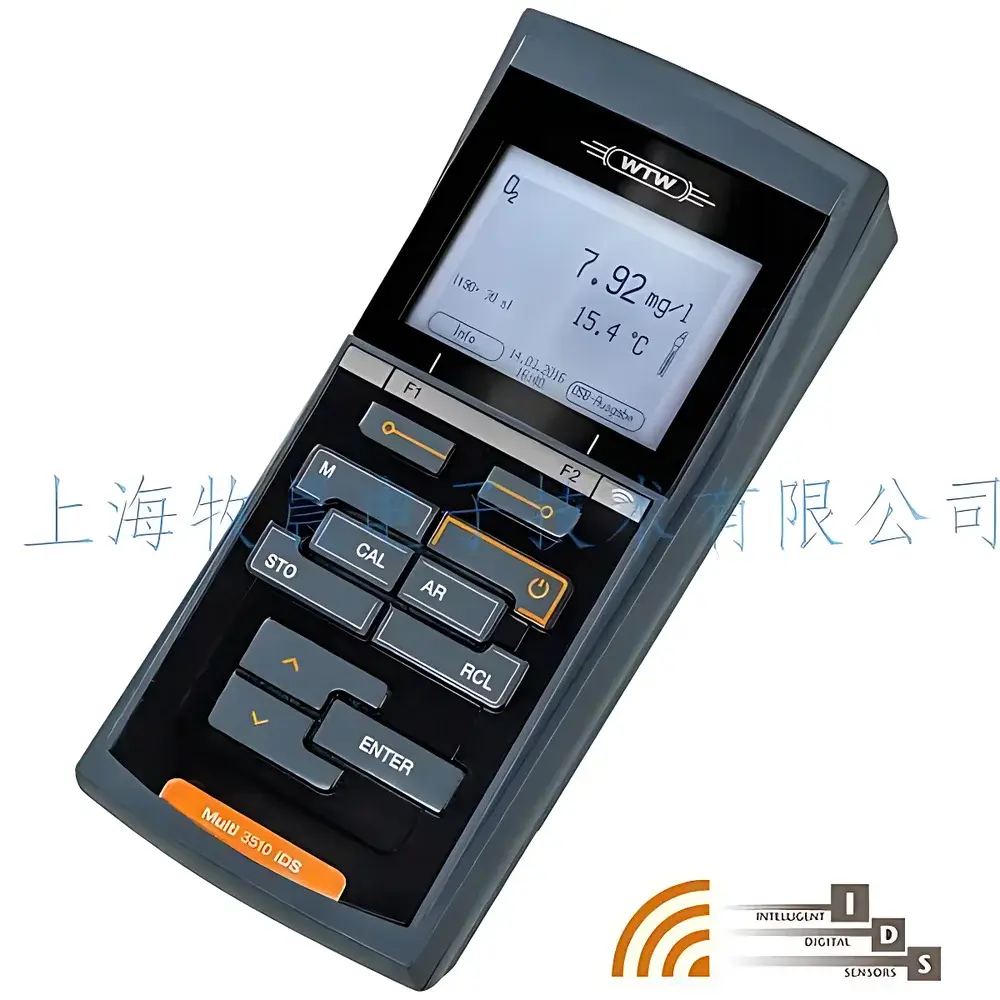
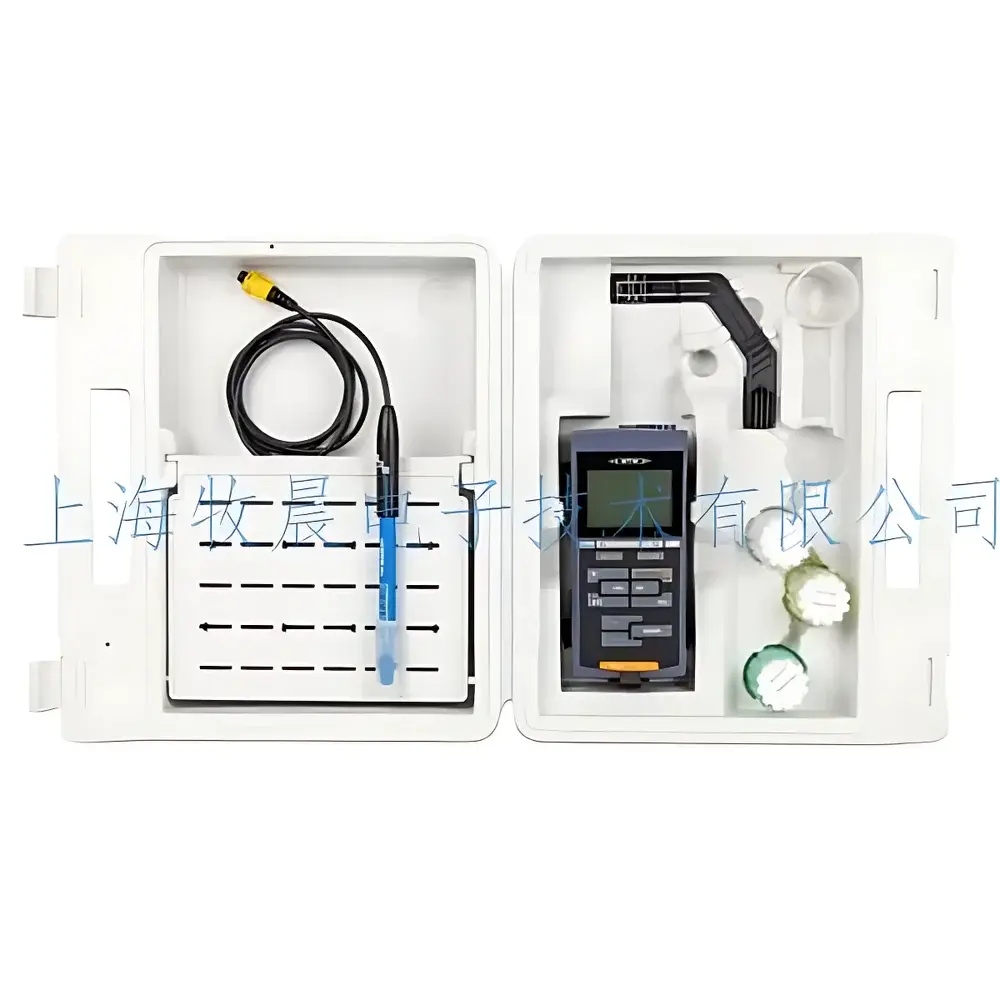
WTW Multi 3510 2FD351 Portable Multiparameter Water Quality Analyzer
| Brand | WTW |
|---|---|
| Origin | Germany |
| Model | Multi 3510 2FD351 |
| Instrument Type | Portable/Handheld Water Quality Analyzer |
| Detection Principle | Electrochemical Method |
| Measured Parameters | pH, ORP, Dissolved Oxygen (DO), Conductivity, Turbidity |
| Repeatability | <1% |
Overview
The WTW Multi 3510 2FD351 is a high-precision, portable multiparameter water quality analyzer engineered for field-deployable environmental monitoring and routine laboratory verification. Built on WTW’s IDS (Intelligent Digital Sensor) platform, it employs standardized digital signal transmission to eliminate analog noise, ensure long-term calibration stability, and enable plug-and-play probe recognition. The instrument operates on electrochemical sensing principles across all core parameters: potentiometric measurement for pH and ORP; optical fluorescence quenching (FDO technology) for dissolved oxygen; four-electrode conductivity with automatic cell constant compensation; and 90° nephelometric detection at 860 nm for turbidity. Designed for compliance-driven workflows, the Multi 3510 meets CE marking requirements and supports traceable data acquisition in accordance with ISO 5667 (water sampling), ASTM D1293 (pH), ASTM D888 (dissolved oxygen), and EN 27027 (turbidity). Its robust architecture—IP67-rated housing, galvanically isolated sensor inputs, and rechargeable NiMH battery system—ensures operational integrity in harsh outdoor environments, including wastewater treatment plants, riverbanks, coastal zones, and landfill leachate monitoring sites.
Key Features
- Digital IDS interface enabling automatic probe identification, embedded calibration memory, and sensor-specific configuration retention
- Up to 10,000 measurement data points stored internally with time/date stamping and user-defined ID tagging
- Galvanic isolation between sensor inputs and main unit to suppress ground-loop interference and ensure signal fidelity in electrically noisy settings
- Rechargeable 4×1.2 V NiMH battery pack with USB-powered charging; optional AA alkaline operation for extended deployment
- USB-B port for direct PC connectivity, firmware updates, and bulk data export in CSV or XML format
- Integrated wireless module support (optional) for real-time telemetry from remote or submerged IDS probes
- pH electrode health monitoring with continuous diagnostic feedback on slope, offset, and response time
- Automatic temperature compensation across all measured parameters using integrated Pt1000 thermistor in each IDS probe
Sample Compatibility & Compliance
The Multi 3510 2FD351 accommodates a full range of WTW IDS-certified probes—including SenTix®940 (pH), TetraCon®925 (conductivity), FDO®925 (dissolved oxygen), and VisoTurb®900-P (turbidity)—enabling simultaneous or sequential measurement in freshwater, seawater, brackish effluent, and industrial process streams. All IDS probes feature POM or stainless-steel housings rated for continuous immersion up to 10 bar pressure (MPP series), making them suitable for deep-water profiling down to 100 m depth with density-compensated salinity correction. The system complies with GLP documentation standards through audit-trail-capable data logging, user-access-level controls, and calibration history archiving. While not inherently 21 CFR Part 11 compliant, its structured data export format facilitates integration into validated LIMS environments where electronic signatures and change control are managed externally.
Software & Data Management
Data transfer and post-processing are supported via WTW’s proprietary LabX® software (Windows-based), which provides visualization tools for trend analysis, statistical reporting (mean, SD, CV%), and customizable certificate generation. Raw measurements include metadata such as probe serial number, calibration timestamp, ambient temperature, and operator ID—critical for ISO/IEC 17025-accredited laboratories. Exported files conform to ASTM E1382-compliant structure and can be ingested directly into enterprise QA/QC platforms. Firmware updates are delivered via signed binary packages verified through SHA-256 checksums to maintain device integrity throughout its service life.
Applications
- Routine surveillance of surface water bodies (rivers, lakes, reservoirs) per EU Water Framework Directive (WFD) Annex V protocols
- Effluent compliance testing at municipal and industrial wastewater treatment facilities against local discharge permits
- Groundwater quality assessment during site remediation projects and landfill monitoring programs
- In-situ validation of online analyzers used in drinking water distribution networks
- Educational fieldwork and research expeditions requiring rugged, self-contained instrumentation with minimal setup time
- Emergency response scenarios involving chemical spills or algal bloom events requiring rapid multi-parameter screening
FAQ
Does the Multi 3510 2FD351 require manual calibration before each use?
No—calibration data is stored within each IDS probe’s internal memory. Upon connection, the instrument automatically loads the most recent calibration values, including slope, zero point, and temperature coefficients.
Can the instrument operate while charging via USB?
Yes—the device supports concurrent operation and charging without interruption to measurement continuity or data logging.
Is turbidity measurement compliant with ISO 7027?
The VisoTurb®900-P probe uses an 860 nm LED source and 90° detection geometry, meeting the spectral and angular specifications outlined in ISO 7027-1:2016 for formazin-equivalent turbidity determination.
What is the maximum cable length supported for IDS probes?
Standard IDS cables are rated for 10 m; extension kits (up to 50 m) are available with active signal repeaters to maintain digital integrity and timing accuracy.
How is depth compensation handled in saline environments?
When paired with MPP 930 IDS sensors, the instrument applies hydrostatic pressure-derived depth calculation combined with real-time conductivity-based density estimation to correct salinity and DO saturation values per UNESCO EOS-80 equations.
Related Products







