Sartorius BCE224i-1CCN Analytical Balance (0.1 mg readability)
| Brand | Sartorius |
|---|---|
| Origin | Shanghai, China |
| Manufacturer Type | Authorized Distributor |
| Product Category | Domestic |
| Model | BCE224i-1CCN |
| Instrument Type | Analytical Balance |
| Maximum Capacity | 220 g |
| Readability | 0.1 mg |
| Repeatability | ≤ ±0.1 mg |
| Calibration | Internal (isoCAL®) |
| Pan Dimensions | Rectangular |
| Connectivity | USB-C, RS-232 (9-pin), GLP/GMP-compliant data output |
| Operating Languages | 8 (English, German, French, Italian, Spanish, Portuguese, Russian, Polish) |
| Applications | Weighing, Counting, Percentage Weighing, Formulation, Density Determination, Statistics, Peak Hold, Checkweighing, Unit Conversion, Below-balance Weighing |
Overview
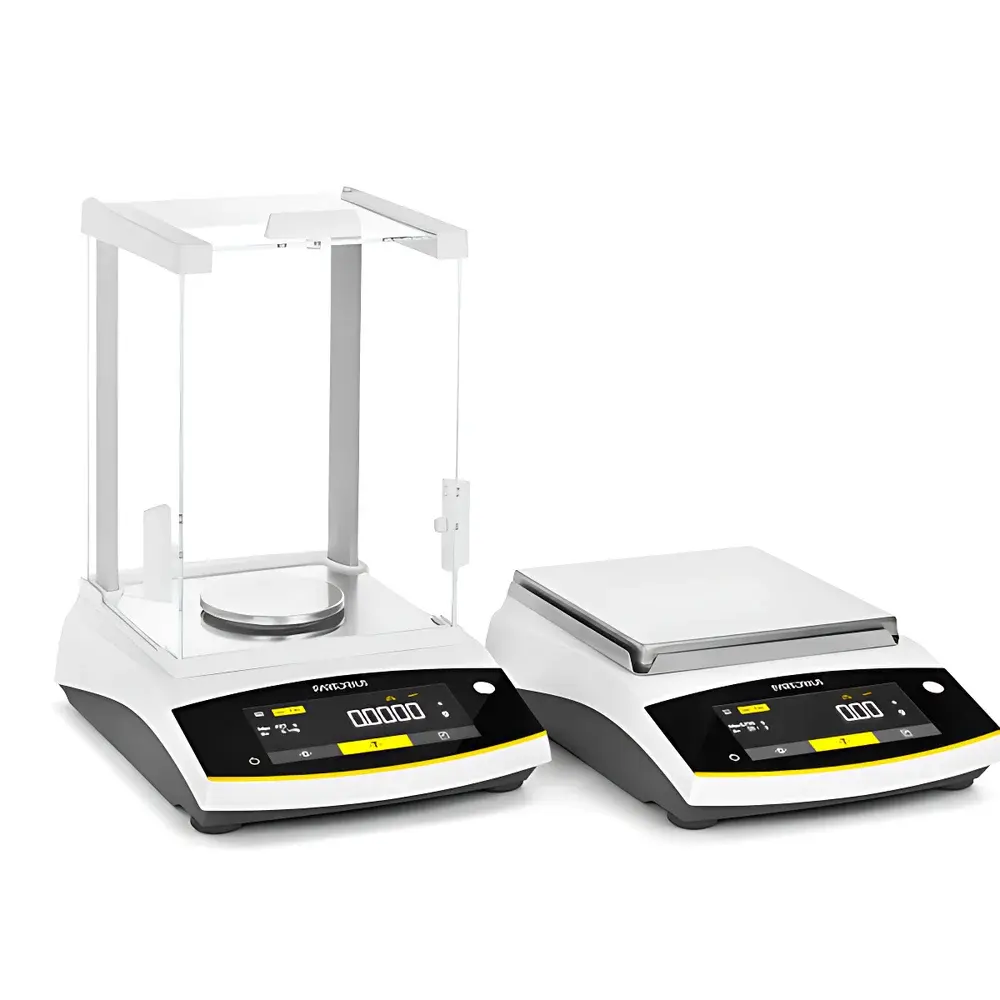
The Sartorius BCE224i-1CCN is a high-precision analytical balance engineered for laboratories requiring consistent 0.1 mg readability across routine and regulated weighing tasks. Built upon the Entris® II platform—designed and validated in Germany—the instrument integrates Sartorius’ proprietary monolithic sensor technology to deliver exceptional stability, linearity, and long-term drift resistance. Its measurement principle relies on electromagnetic force compensation (EMFC), where the restoring force required to maintain the load pan at zero displacement is directly proportional to mass and digitally converted with metrological traceability. This architecture ensures compliance with international weighing standards including OIML R76, ASTM E898, and ISO/IEC 17025–accredited calibration practices. The balance operates within an ambient temperature range of 10–30 °C and is rated for Class I environmental conditions per EN 61326-1, making it suitable for QC labs, pharmaceutical formulation suites, and academic research environments where regulatory adherence and reproducibility are non-negotiable.
Key Features
- Monolithic electromagnetic force compensation (EMFC) sensor delivering 0.1 mg readability and repeatability ≤ ±0.1 mg at full capacity (220 g)
- isoCAL® internal calibration system—automatically triggered by time intervals or temperature fluctuations (±1.5 °C deviation), ensuring continuous metrological integrity without manual intervention
- Rectangular stainless steel weighing pan (120 × 120 mm) with integrated overload protection up to 500 g, supporting volumetric vessels and multi-step sample handling
- Modular draft shield with fully removable side and top sliding doors; anti-static coated glass panels minimize electrostatic interference during low-mass measurements
- IP54-rated housing constructed from chemical-resistant PBT polymer, stainless steel, and tempered glass—designed for frequent cleaning and compatibility with common laboratory solvents
- Intuitive dual-interface display: high-contrast LED readout combined with responsive capacitive touchscreen for glove-compatible operation
- @start self-diagnostic sequence executed at power-on, verifying sensor response, zero stability, and internal reference integrity prior to first use
Sample Compatibility & Compliance
The BCE224i-1CCN accommodates diverse sample formats—from fine powders and crystalline APIs to bulk solids and suspended components—via its spacious weighing chamber (220 × 180 × 250 mm H) and optional below-balance hook for density determination or magnetic susceptibility testing. All hardware and firmware comply with ISO 9001 manufacturing protocols and meet essential requirements of EU Directive 2014/30/EU (EMC) and 2014/35/EU (LVD). For regulated environments, the balance supports 21 CFR Part 11–compliant audit trails when connected to Sartorius LabX® software (optional), including electronic signatures, user-level access control, and immutable record generation. It also fulfills GLP/GMP documentation requirements through timestamped, printer-ready reports that include balance ID, calibration status, environmental conditions, and operator ID.
Software & Data Management
Data export is natively supported via USB-C and legacy RS-232 (9-pin DB9) interfaces, enabling seamless integration with LIMS, ELN, and ERP systems. The balance stores up to 1,000 weighing records internally and permits configurable output intervals (1–999 s) for dynamic processes such as filling or titration monitoring. Twelve preprogrammed applications—including statistical analysis (mean, SD, CV%), checkweighing with configurable tolerance bands, and density calculation using Archimedes’ principle—are accessible without external software. All outputs conform to GLP/GMP formatting standards: each printout or serial transmission includes date/time stamps, balance serial number, calibration due date, and operator code (when password-protected user profiles are enabled).
Applications
This balance serves critical functions across pharmaceutical development (e.g., active ingredient dispensing per USP ), quality control (raw material assay, content uniformity testing), academic research (catalyst mass quantification, gravimetric sorption studies), and industrial R&D (polymer blend formulation, catalyst loading optimization). Its density determination mode supports solid and liquid density measurement per ISO 1183 and ASTM D792, while the counting function enables rapid batch verification of tablets, capsules, or microcomponents with automatic unit weight learning. The percentage weighing and formulation modes facilitate multi-component mixing under SOP-defined tolerances, and the peak-hold function captures transient mass changes during volatile solvent evaporation or thermal decomposition experiments.
FAQ
What is the maximum sample height accommodated under the draft shield?
The internal chamber allows samples up to 250 mm in height; the removable draft shield provides unobstructed vertical access for tall containers or reaction flasks.
Does the balance support external calibration weights?
No—it is equipped exclusively with isoCAL® internal calibration; no external weights are required or supported for routine operation.
Can user permissions be assigned to restrict access to calibration or configuration menus?
Yes—password protection enables three-tier access levels (Operator, Supervisor, Administrator) to prevent unauthorized parameter modification.
Is the RS-232 interface compatible with legacy lab printers and data loggers?
Yes—the standard 9-pin implementation supports ASCII-based protocols used by most certified lab printers and SCADA-compatible data acquisition systems.
How frequently does isoCAL® initiate automatic recalibration?
By default, isoCAL® triggers every 2 hours and upon ±1.5 °C ambient temperature change; both parameters are adjustable via service menu.