
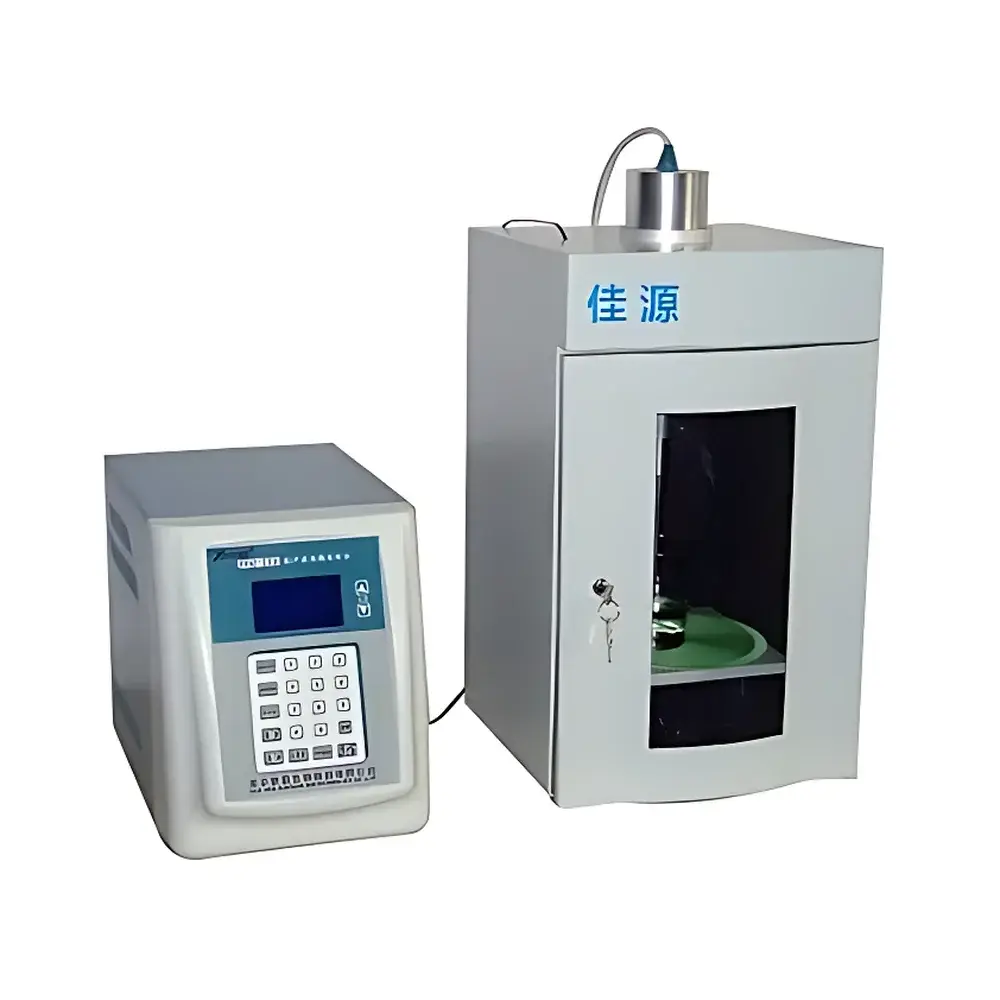
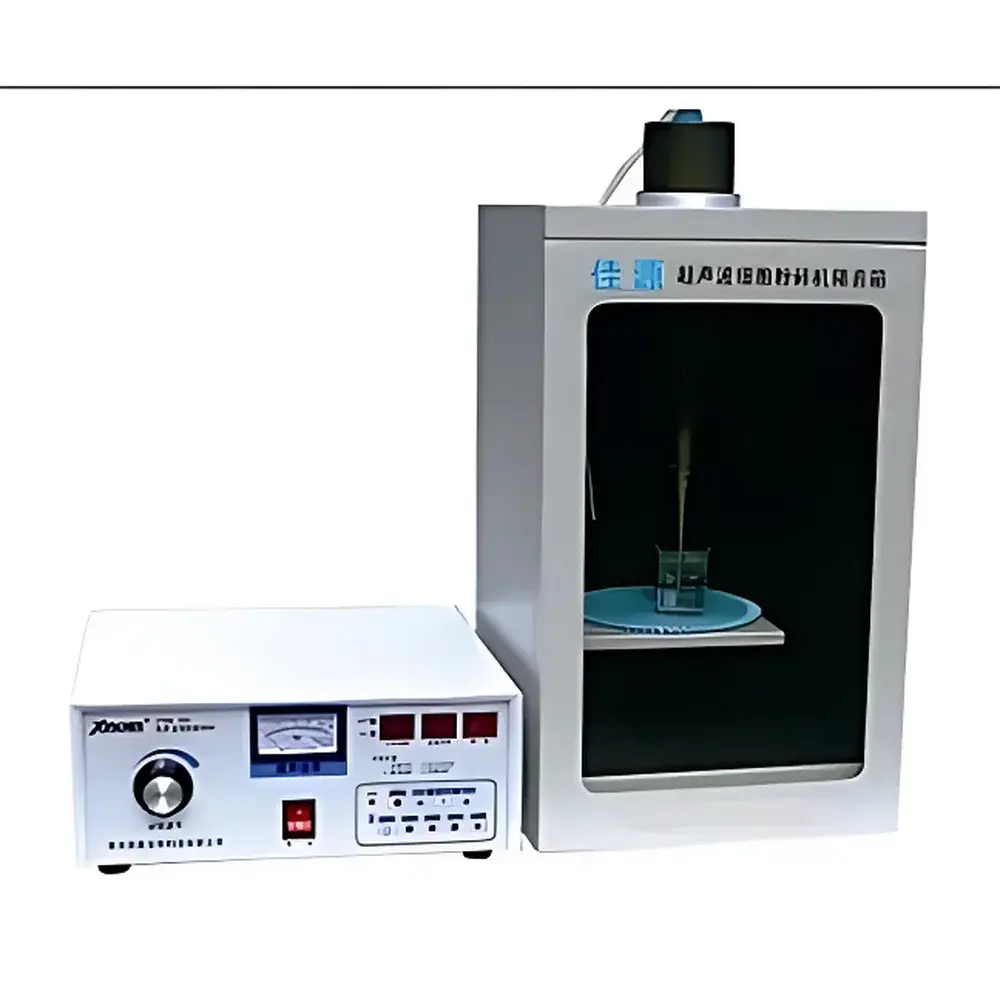
Jiayuan JY92-IIN Ultrasonic Cell Disruptor
| Brand | Jiayuan |
|---|---|
| Origin | Beijing, China |
| Model | JY92-IIN |
| Ultrasonic Frequency | 20–25 kHz (auto-frequency tracking) |
| Output Power | 650 W (touch-key continuous adjustment) |
| Pulse Mode | On-time 0.1–99.9 s, Off-time 0.1–99.9 s |
| Total Operating Time | 0.1–99 min |
| Temperature Monitoring Range | 0–100 °C |
| Standard Probe Diameter | Φ6 mm |
| Optional Probes | Φ2, Φ3, Φ8, Φ10, Φ15 mm |
| Sample Volume Capacity | 0.2–500 mL |
| Duty Cycle | 1–99% |
| Power Supply | 220/110 V, 50/60 Hz |
Overview
The Jiayuan JY92-IIN Ultrasonic Cell Disruptor is an engineered benchtop sonicator designed for controlled, reproducible cell lysis and sample homogenization in life science laboratories. It operates on the principle of high-intensity ultrasonic cavitation—where rapid pressure fluctuations in a liquid medium generate transient microbubbles that collapse violently, producing localized shear forces, microstreaming, and thermal effects. This physical disruption mechanism enables efficient rupture of membranes across diverse biological matrices—including mammalian and insect cells, bacterial cultures, yeast, plant tissues, viral particles, and subcellular organelles—without requiring chemical or enzymatic additives. Unlike rotor-stator homogenizers or bead-beating systems, ultrasonic disruption delivers scalable, non-thermal (when pulsed), and highly tunable energy input, making it particularly suitable for sensitive biomolecule extraction (e.g., proteins, nucleic acids, exosomes) where structural integrity must be preserved.
Key Features
- 650 W nominal output power with touch-sensitive digital interface for precise, stepless power regulation—enabling optimization across fragile and robust samples.
- Auto-frequency tracking circuitry maintains stable resonance at 20–25 kHz despite load variations or probe wear, ensuring consistent acoustic energy delivery and minimizing transducer overheating.
- Programmable pulse mode (on/off timing from 0.1 to 99.9 seconds) allows thermal management during extended processing—critical for heat-labile targets such as native enzymes or RNA.
- Integrated PT100 temperature sensor with real-time display (0–100 °C range) supports protocol validation and compliance with temperature-sensitive SOPs.
- Modular probe system: standard Φ6 mm titanium alloy probe included; optional probes (Φ2, Φ3, Φ8, Φ10, Φ15 mm) permit volume- and viscosity-matched coupling—ensuring optimal energy transfer from microliter-scale lysates to 500 mL suspensions.
- Rugged aluminum alloy housing with IP20-rated enclosure, fan-cooled transducer assembly, and overload protection circuits ensure operational reliability under routine laboratory use.
Sample Compatibility & Compliance
The JY92-IIN accommodates a broad spectrum of biological materials—from low-viscosity bacterial suspensions (e.g., E. coli BL21(DE3)) to high-viscosity plant extracts and fibrous tissue homogenates. Its adjustable amplitude and duty cycle support validated protocols compliant with ISO 13485–aligned quality systems and GLP/GMP documentation requirements. While not certified for IVD or clinical diagnostic use, its performance aligns with common method development frameworks referenced in USP <1058> (Analytical Instrument Qualification) and ASTM E2656 (Standard Guide for Sonication of Biological Samples). The device meets CE safety standards (EN 61000-6-2/6-3) and RoHS directives for restricted substances.
Software & Data Management
The JY92-IIN operates via embedded firmware without external PC dependency—ideal for regulated environments where software validation overhead must be minimized. All parameter settings (power level, pulse sequence, total duration, temperature threshold) are stored in non-volatile memory and recalled per user-defined program slot. Audit trail functionality includes timestamped run logs (start/stop time, actual power delivered, peak temperature reached), exportable via USB interface for integration into LIMS or electronic lab notebooks. For advanced workflow automation, optional RS-232 or TTL-triggered I/O ports enable synchronization with centrifuges, chillers, or fraction collectors—supporting 21 CFR Part 11–compliant data capture when paired with validated third-party acquisition software.
Applications
- Nucleic acid isolation: Efficient shearing of genomic DNA for NGS library prep; gentle lysis of cultured cells for intact RNA recovery.
- Protein extraction: Solubilization of inclusion bodies, membrane protein solubilization, and nuclear extract preparation with minimal protease activation.
- Nanoparticle synthesis: Facilitation of sonochemical reduction and dispersion stabilization in liposome, polymeric nanoparticle, and metallic colloid formulations.
- Cell organelle isolation: Selective disruption yielding functional mitochondria, lysosomes, or microsomes for downstream enzymatic assays.
- Pharmaceutical R&D: Emulsification of oil-in-water nanoemulsions; enhancement of dissolution kinetics in amorphous solid dispersions.
- Agricultural biotechnology: Extraction of phytochemicals and secondary metabolites from recalcitrant plant tissues (e.g., lignified stems, seed coats).
FAQ
What is the maximum recommended continuous operating time per cycle?
For thermal stability and transducer longevity, continuous operation beyond 5 minutes is discouraged. Use pulse mode (e.g., 5 s on / 5 s off) for extended treatments exceeding 10 minutes.
Can the JY92-IIN be used for sterilization or microbial inactivation?
No. While ultrasonic cavitation causes some bactericidal effect, this device is not designed or validated for sterilization. It serves strictly as a mechanical disruption tool—not a disinfection or terminal sterilization system.
Is probe calibration required before each use?
No routine calibration is mandated; however, periodic verification of amplitude output using a calibrated hydrophone (per IEC 61689) is recommended annually for labs operating under ISO/IEC 17025 or similar accreditation schemes.
Does the unit support external temperature control integration?
Yes—via analog voltage output (0–10 V) corresponding to real-time probe tip temperature, enabling feedback loops with external recirculating chillers or Peltier-based cooling jackets.
What maintenance is required for long-term reliability?
Monthly inspection of probe threads and horn surface for pitting or erosion; replacement of worn probes every 500–1,000 hours of cumulative use; annual cleaning of air intake filters and internal heatsink surfaces.
Related Products



