
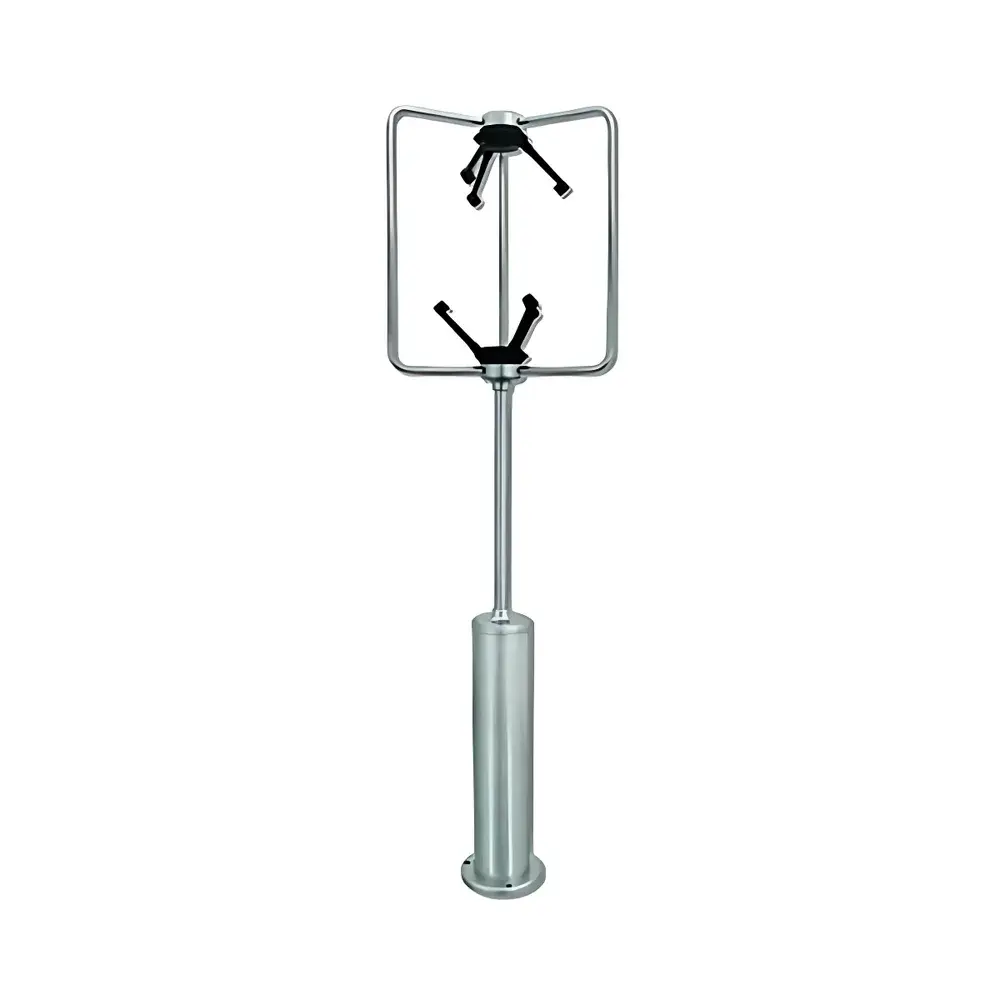
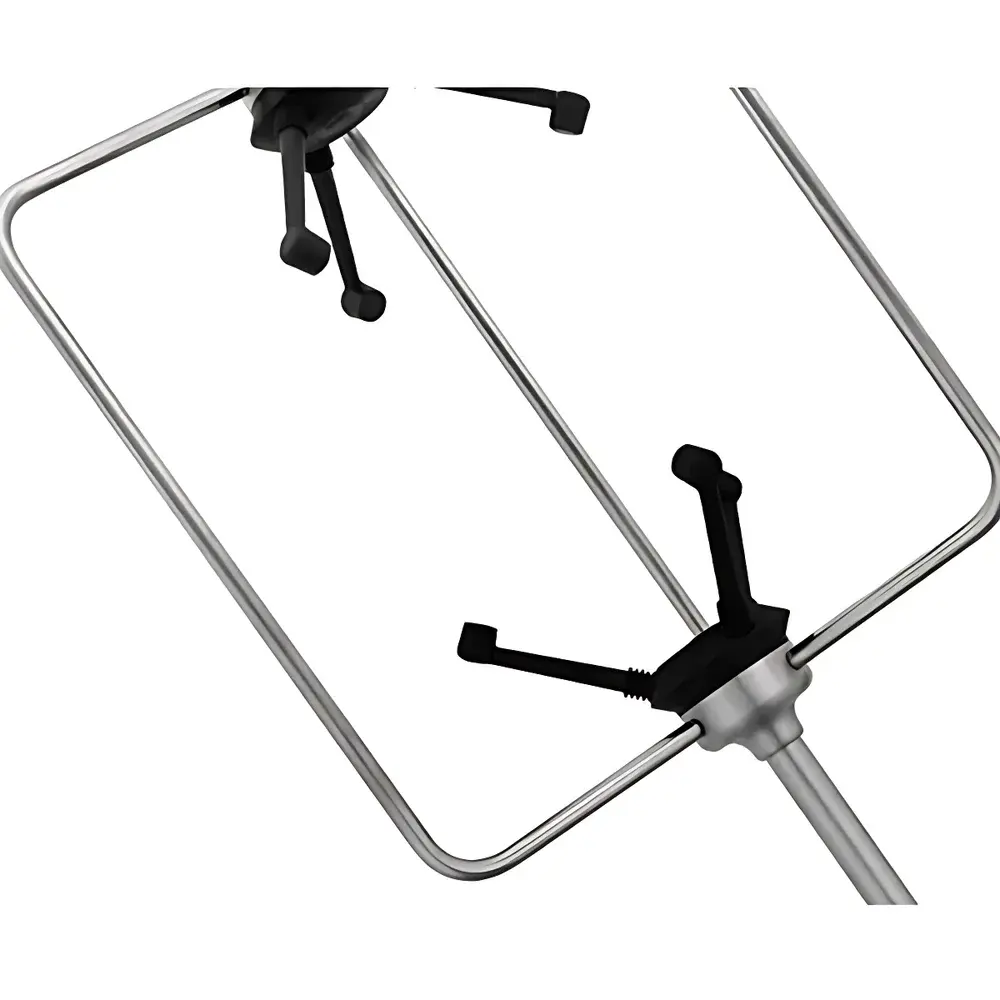
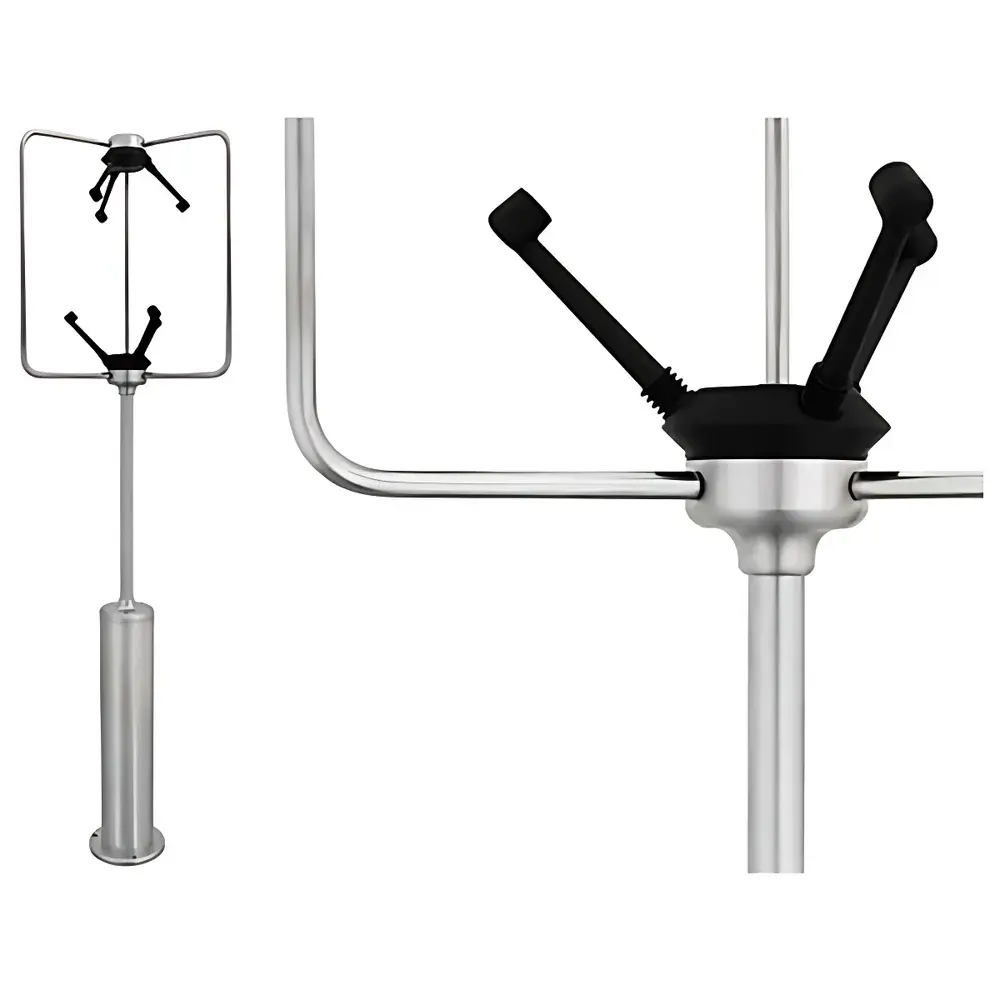
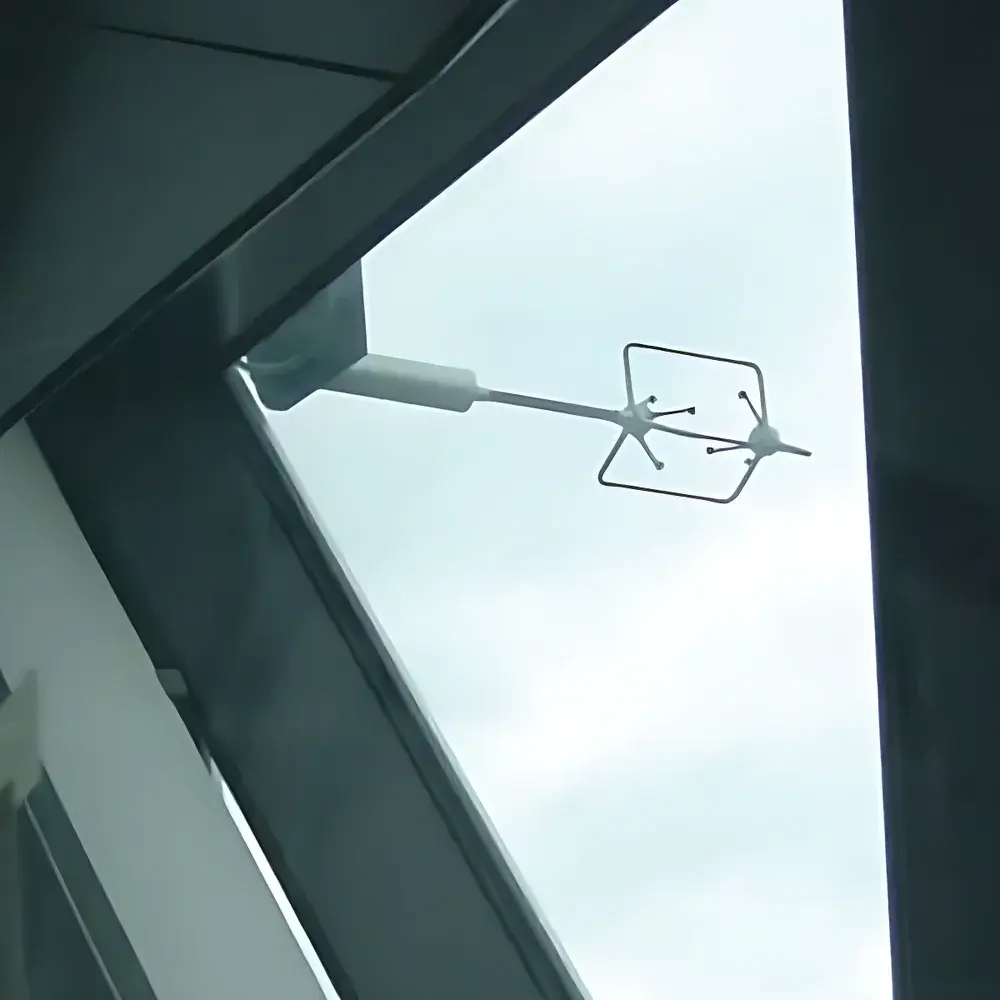
Gill WindMaster Pro 3D Ultrasonic Anemometer
| Brand | Gill |
|---|---|
| Origin | United Kingdom |
| Model | WindMaster Pro |
| Instrument Type | Ultrasonic Anemometer |
| Resolution | 0.01 m/s |
| Measurement Range | 0–65 m/s |
| Accuracy | ±1.5% of reading |
| Operating Temperature | −40 °C to +70 °C |
| Operating Humidity | 5–100% RH |
| Output Frequency | 32 Hz |
| Output Parameters | U, V, W velocity components, sonic temperature, speed of sound |
| Housing Material | Stainless steel |
| Optional Calibration | Traceable wind tunnel calibration (Gill-certified) |
| Analog I/O & PRT Resolution | 14-bit |
Overview
The Gill WindMaster Pro is a high-precision, three-dimensional ultrasonic anemometer engineered for continuous, turbulence-resolving atmospheric wind measurement in demanding environmental and research applications. Based on the time-of-flight principle, it calculates orthogonal wind velocity components (U, V, W) by precisely measuring the transit time of ultrasonic pulses between opposing transducer pairs. This non-mechanical, moving-part-free architecture eliminates mechanical wear, inertia lag, and directional dead zones—enabling true 360° wind direction measurement and sub-second dynamic response. The instrument delivers synchronized 32 Hz output of instantaneous U, V, and W vectors, along with derived sonic temperature and speed of sound—critical parameters for eddy covariance flux calculations, boundary layer profiling, and atmospheric stability analysis. Its enhanced vertical (W-axis) resolution and improved sonic velocity accuracy reduce flow distortion errors induced by structural wind loading—a key advancement over earlier-generation ultrasonic anemometers.
Key Features
- True 3D wind vector measurement with 32 Hz native sampling rate—optimized for turbulence and flux studies
- Extended wind speed range: 0–65 m/s with ±1.5% full-scale accuracy across the operational envelope
- High-resolution velocity output: 0.01 m/s digital resolution for all three axes (U, V, W)
- Integrated sonic temperature measurement—calculated from acoustic path timing, traceable to ITS-90
- Rugged 316 stainless steel housing rated for long-term deployment in harsh environments (−40 °C to +70 °C; 5–100% RH non-condensing)
- Optional Gill-certified wind tunnel calibration—performed against NPL-traceable standards, with individual calibration certificate and correction coefficients
- Configurable analog inputs/outputs and Pt100 RTD interface—all supporting 14-bit resolution for auxiliary sensor integration
- No moving parts or bearings—ensuring zero maintenance, high reliability, and immunity to icing-induced failure (when used with optional heater kit)
Sample Compatibility & Compliance
The WindMaster Pro is designed for open-air atmospheric sampling and is compatible with standard meteorological mounting hardware (e.g., 50 mm or 2-inch mast clamps). It meets IP66 ingress protection requirements and conforms to IEC 60529 for dust and water resistance. While not intrinsically safe, its low-power design (typically <2.5 W) supports solar-battery remote operation. The instrument complies with EN 61326-1 (EMC for industrial environments) and EN 61000-6-2/6-3. For regulatory data integrity, raw binary output supports timestamped, unprocessed data streams suitable for GLP-compliant logging systems. When integrated into eddy covariance systems, it satisfies core instrumentation requirements outlined in AmeriFlux and ICOS protocols—and aligns with ISO 25339 (wind measurement uncertainty estimation) and ASTM D5096 (standard practice for atmospheric turbulence measurements).
Software & Data Management
The WindMaster Pro communicates via RS-232, RS-485, or SDI-12 serial interfaces using ASCII or binary output formats. Gill’s proprietary WindCom configuration utility enables real-time parameter adjustment, firmware updates, and diagnostic monitoring—including transducer health status, signal-to-noise ratio, and path obstruction alerts. Raw 32 Hz data can be streamed directly to Campbell Scientific CR-series dataloggers, LI-COR eddy covariance systems, or custom Python/Matlab acquisition platforms via TTL-level UART. All outputs include embedded microsecond-accurate timestamps (via internal TCXO), supporting post-hoc synchronization with GPS-disciplined clocks. For auditability, optional firmware versions support 21 CFR Part 11–compliant data logging when deployed with validated third-party software (e.g., LoggerNet with electronic signature modules).
Applications
- Meteorological networks: Core sensor in national weather services and airport ASOS/AWOS systems requiring high-frequency wind profiling
- Eddy covariance flux towers: Primary anemometer in CO₂, H₂O, CH₄, and energy balance studies—validated for use with LI-7500/7700 and Campbell CSAT3B systems
- Wind resource assessment: Pre-construction site characterization for wind farm development, including shear exponent derivation and turbulence intensity mapping
- Structural wind engineering: Real-time load monitoring on bridges, tall buildings, and offshore platforms per EN 1991-1-4 and ASCE 7 guidelines
- Ocean-atmosphere interaction: Moored buoy and coastal station deployments measuring air-sea momentum transfer and latent heat fluxes
- Urban climate studies: High-resolution boundary layer mapping in complex terrain and built environments using multi-point sensor arrays
FAQ
Does the WindMaster Pro require periodic recalibration?
Yes—while drift is minimal due to solid-state design, Gill recommends annual verification against a traceable reference standard. Full wind tunnel recalibration is advised every 2–3 years for flux-critical applications.
Can it operate in freezing or icy conditions?
The standard unit is rated for −40 °C but does not include active de-icing. An optional heater kit (WindMaster Pro-H) is available for continuous operation in persistent icing conditions.
What is the minimum recommended mounting height above ground?
For turbulence and flux measurements, ≥2 m above displacement height is required; for general meteorological use, ≥10 m AGL is standard per WMO Guide to Meteorological Instruments and Methods of Observation (CIMO Guide, Chapter 12).
Is the sonic temperature output suitable for thermodynamic calculations?
Yes—the sonic temperature is derived from the speed of sound in air and correlates closely with virtual temperature (±0.15 K typical uncertainty), making it appropriate for density corrections and stability parameter (e.g., Richardson number) computation.
How is data synchronization handled across multiple sensors in a network?
Each unit features a configurable hardware sync input (TTL) for external PPS signals, enabling sub-millisecond alignment with GPS-synchronized master clocks across distributed sensor arrays.
Related Products







