
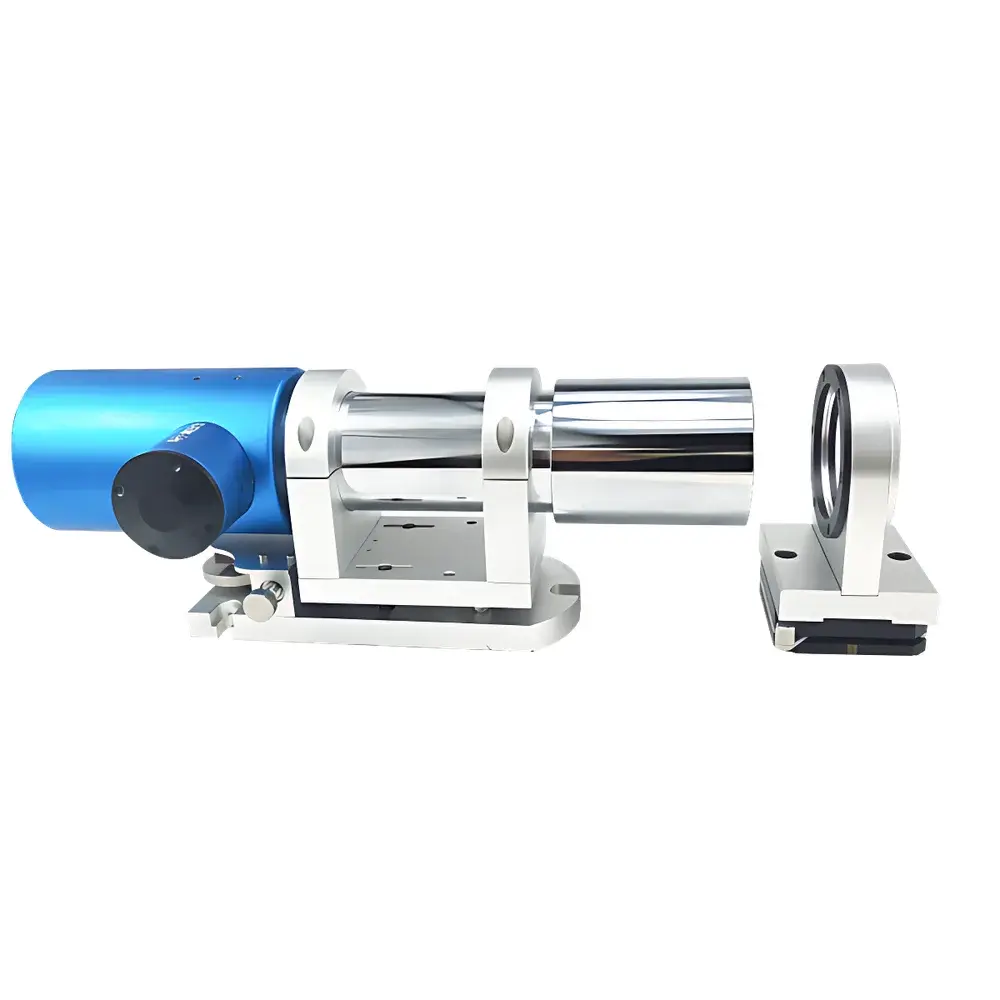
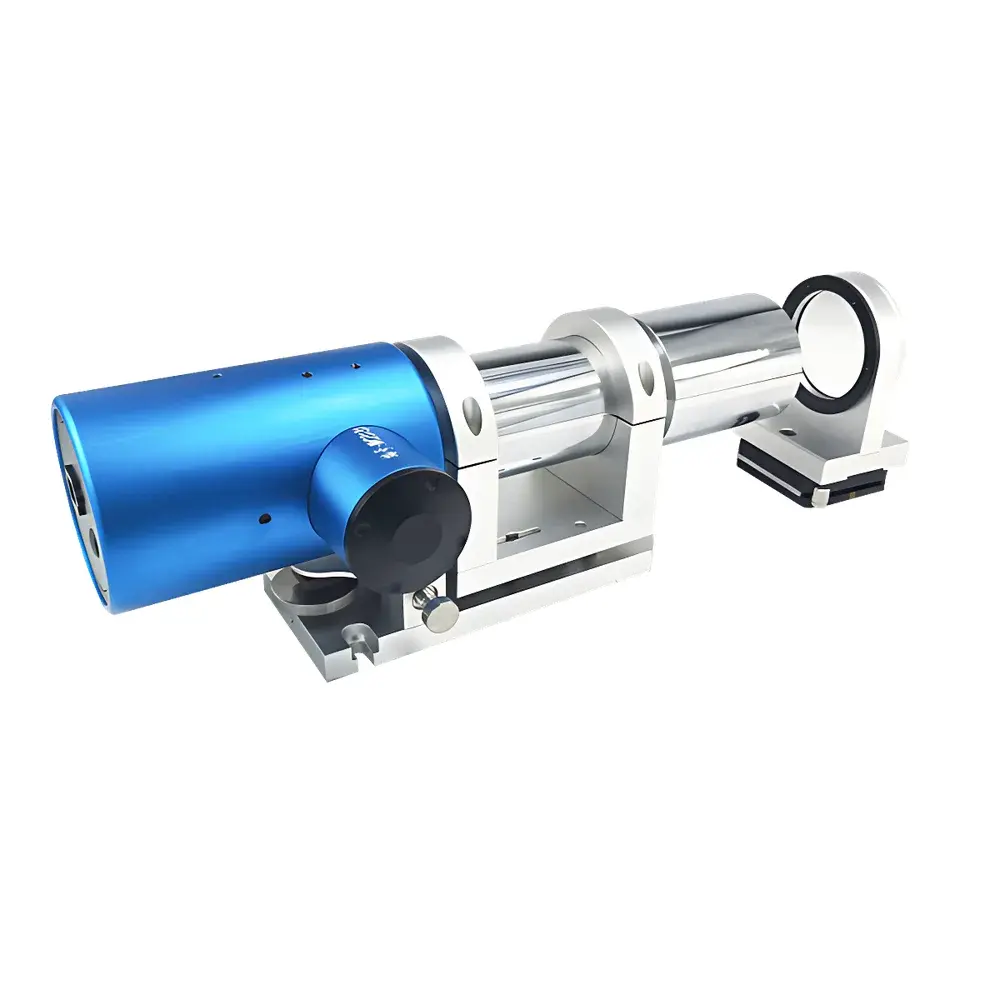
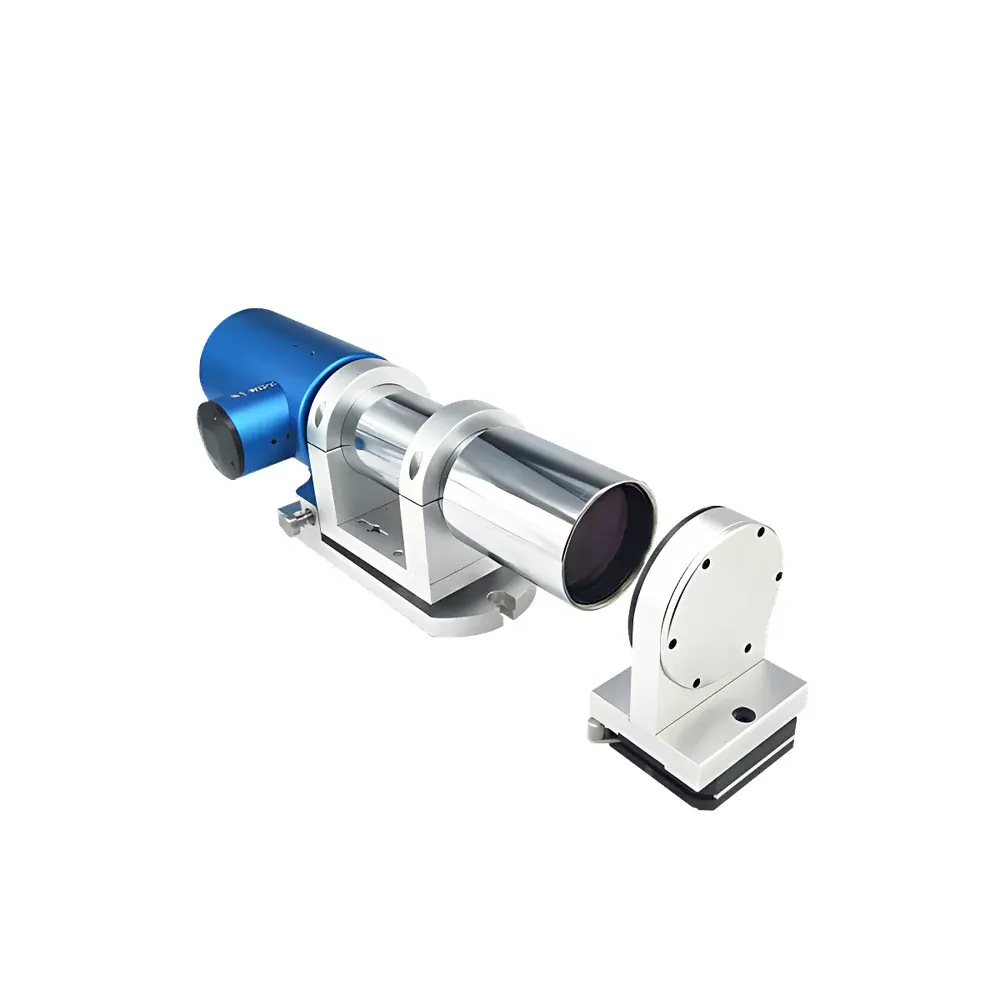
YANRUN MC030-MAT260/60/1 Dual-Axis Photoelectric Autocollimator
| Brand | YANRUN |
|---|---|
| Origin | Shanghai, China |
| Manufacturer Type | Manufacturer |
| Country of Origin | Domestic (China) |
| Model | MC030-MAT260/60/1 |
| Focal Length | 260 mm |
| Aperture | 60 mm |
| Measurement Range | 0–25 m |
| Angular Resolution | 0.0001″ to 1″ (adjustable in arcseconds) |
| Field of View (X/Y) | 2600″ × 2100″ (arcsec) |
| Accuracy (Center, ±1000″) | ±1″ |
| Frequency Response | ≤30 Hz |
| Interface | USB 2.0 |
| Dimensions | 340 × 125 × 125 mm |
| Weight | 6.2 kg |
| Light Source | Long-life semiconductor LED |
| Operating System | Windows 7 or later (64-bit), Intel Core i3-4th Gen or higher, ≥2.3 GHz |
Overview
The YANRUN MC030-MAT260/60/1 Dual-Axis Photoelectric Autocollimator is a precision optomechanical instrument engineered for high-accuracy angular metrology based on the fundamental principle of optical autocollimation. It operates by projecting collimated light—generated from an LED-illuminated reticle positioned at the focal plane of a 260 mm focal length objective lens—onto a reflective surface. The reflected beam re-enters the same objective and forms a real image on a high-resolution photodetector array located at the conjugate focal plane. When the reflector rotates by angle α, the image displaces by ΔS ≈ 2f·α (where f = 260 mm), enabling sub-arcsecond angular quantification via pixel-level centroid detection. Unlike traditional visual autocollimators relying on human eye alignment, this system eliminates parallax and observer fatigue through real-time digital imaging and automated centroid tracking. Its dual-axis (X/Y) simultaneous measurement architecture supports full two-dimensional angular deviation analysis without mechanical reorientation—making it suitable for dynamic alignment verification, static geometric error mapping, and long-term stability monitoring in controlled laboratory and industrial environments.
Key Features
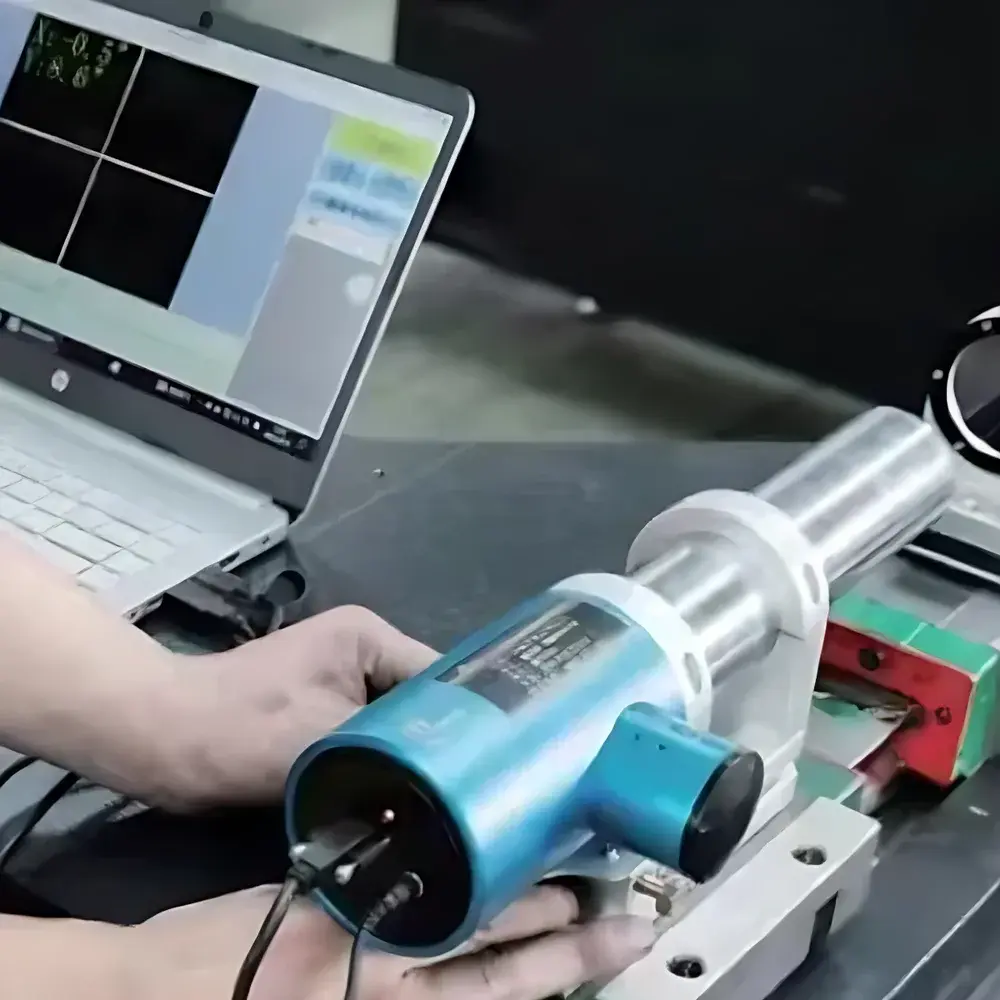
- Dual-axis synchronous angular measurement with real-time coordinate readout of reflected reticle image on integrated electronic eyepiece display
- Adjustable angular resolution down to 0.0001 arcsecond (0.005 µrad), selectable across five discrete steps (0.0001″–1″)
- High-stability semiconductor LED illumination with >50,000-hour operational lifetime and negligible thermal drift
- Compact monolithic housing (340 × 125 × 125 mm; 6.2 kg) optimized for portable deployment on optical tables, CNC machine beds, and cleanroom workstations
- USB 2.0 interface compliant with Windows 7/10/11 (64-bit); software supports audit-trail logging and timestamped data export
- Automated curve fitting and error calculation per ISO 230-6 for straightness, flatness, perpendicularity, and parallelism assessments
- Multi-language UI (English, Chinese, Russian, Korean) with configurable report templates aligned to ISO/IEC 17025 documentation requirements
- Modular accessory compatibility—including precision kinematic mounts, rotary stages, and extended-range retroreflectors—for application-specific calibration workflows
Sample Compatibility & Compliance
The MC030-MAT260/60/1 is designed to interface with standard optical flats, mirror-backed kinematic mounts, and custom-machined reference surfaces meeting surface flatness ≤λ/20 (633 nm HeNe wavelength). It complies with core metrological frameworks including ISO 10360-8 (coordinate measuring systems), ISO 230-1 (machine tool testing), and VDI/VDE 2617 Part 7 (angle measurement instruments). While not FDA-regulated, its data acquisition and storage architecture supports GLP/GMP-aligned validation when configured with time-stamped, user-authenticated measurement sessions and immutable export logs. All firmware and control software are developed under traceable version control, with revision history documented per IEC 62304 Class B software safety requirements.
Software & Data Management
The bundled YANRUN AutoAlign Suite runs natively on Windows platforms and provides real-time visualization of X/Y displacement vectors, statistical process control (SPC) charts, and batch-mode analysis of multi-point angular scans. Raw sensor data (16-bit grayscale frames at ≤30 Hz frame rate) is stored in HDF5 format with embedded metadata (timestamp, environmental conditions, operator ID, calibration certificate ID). Export options include CSV, XML, and native Excel (.xlsx) with preformatted ASTM E29-compliant rounding rules. Software modules support ISO 1101 geometric tolerance evaluation (e.g., GD&T symbols for angularity, profile of a line/surface), and optional add-ons enable integration with MATLAB, LabVIEW, and Python-based automation via COM/ActiveX APIs. Audit trails meet 21 CFR Part 11 requirements when paired with domain-authenticated Windows login and electronic signature configuration.
Applications
- Precision alignment of optical benches, laser cavities, and interferometer components in R&D laboratories
- In-process verification of linear axis straightness and squareness on CNC machining centers per ISO 230-2
- Calibration of rotary tables and goniometers used in aerospace component inspection
- Flatness assessment of granite surface plates and air-bearing reference planes
- Dynamic angular stability monitoring of vibration-isolated optical platforms
- Verification of collimation in telescope assembly and satellite payload integration
- Teaching and research applications in undergraduate and graduate optics laboratories
FAQ
What is the minimum measurable angle and how is resolution achieved?
The instrument achieves a base resolution of 0.0001 arcsecond (5 nanoradians) through sub-pixel centroid interpolation of the reticle image on a high-Q CMOS photodetector array, combined with precise geometric calibration against NIST-traceable angle standards.
Does the system require warm-up before high-accuracy measurements?
Yes. For measurements within ±0.1″ accuracy, a minimum 15-minute power-on stabilization period is recommended; metrological calibration requires ≥24 hours of thermal equilibration in a temperature-controlled environment (±0.5 °C).
Can the device operate beyond 25 meters?
While the specified maximum working distance is 25 m, extended-range operation up to 50 m is feasible using high-reflectivity retroreflectors (optional accessory), though angular sensitivity degrades proportionally with reduced signal-to-noise ratio.
Is third-party software integration supported?
Yes—via documented COM interfaces and Python bindings. Users may embed measurement routines into custom QC dashboards or synchronize data streams with MES/SCADA systems.
How is traceability maintained for calibration certificates?
Each unit ships with a factory calibration certificate referencing national metrology institute standards (e.g., NIM China), and recalibration services follow ISO/IEC 17025 procedures with uncertainty budgets reported per GUM (JCGM 100:2008).




