
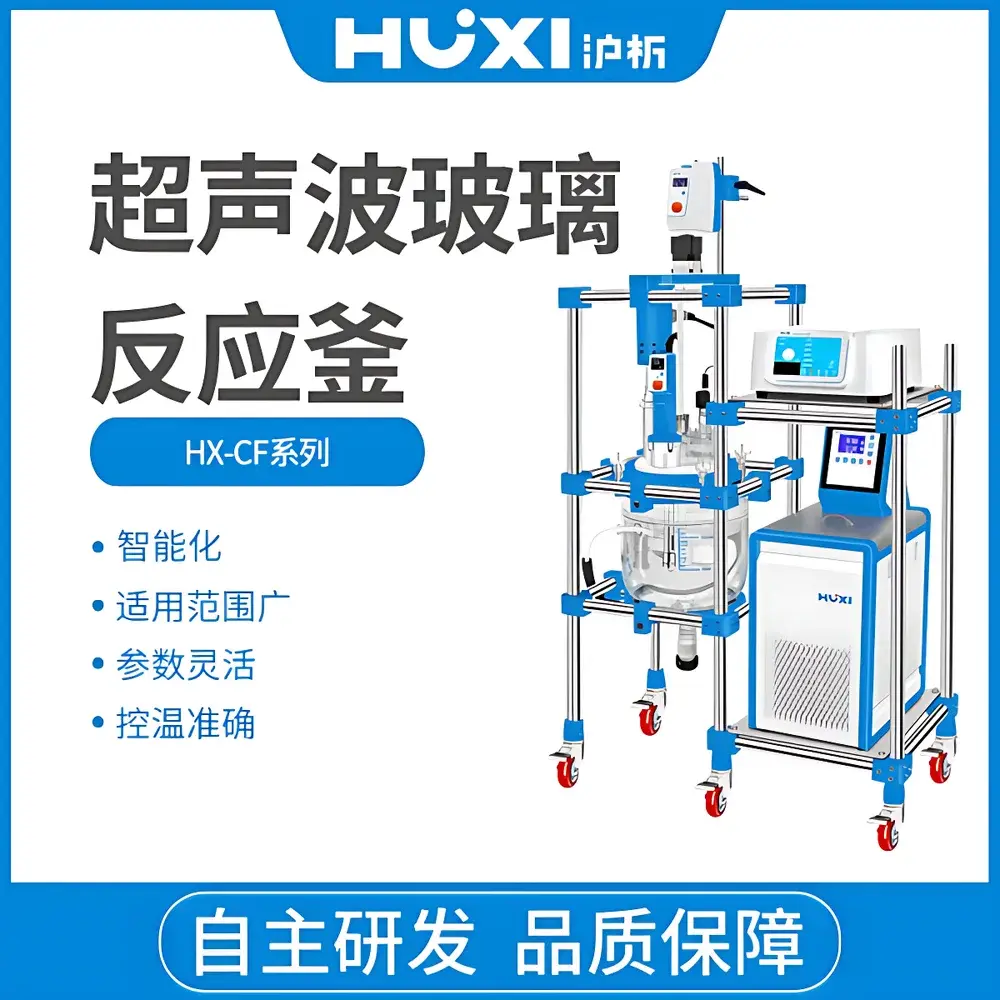
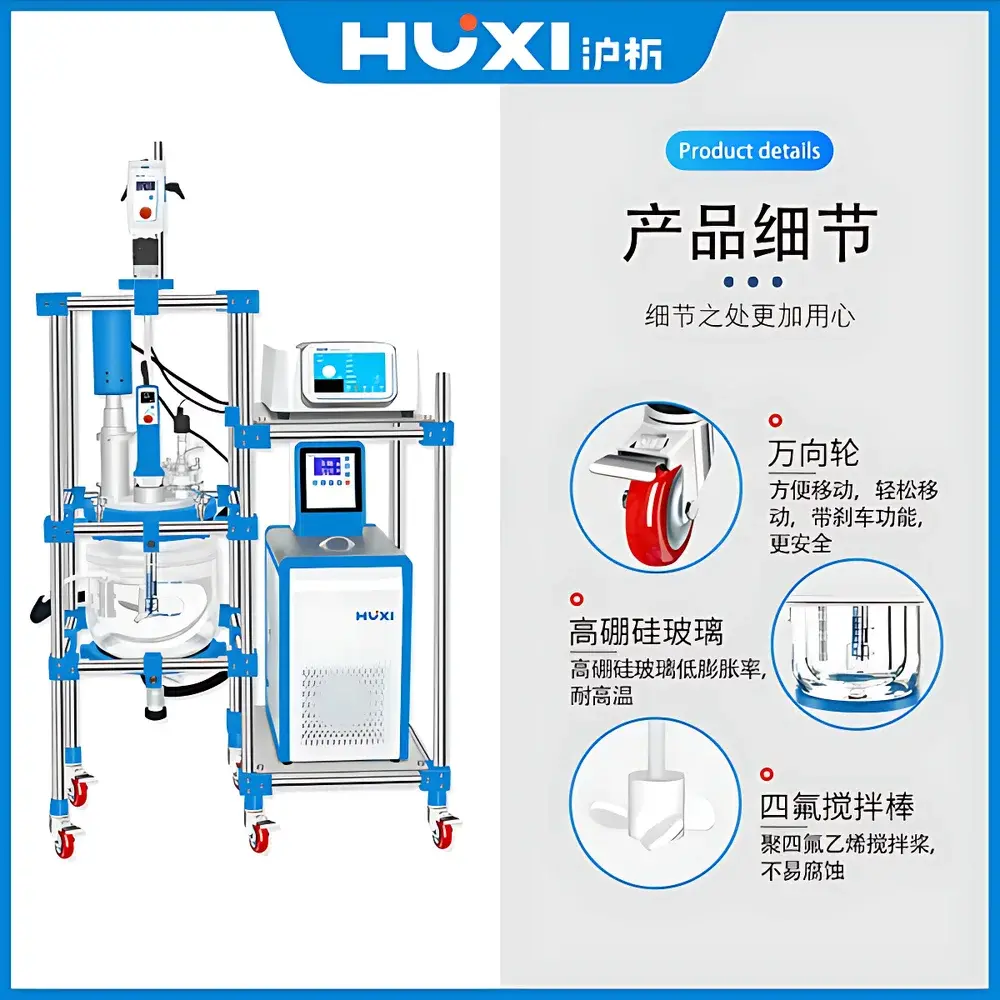
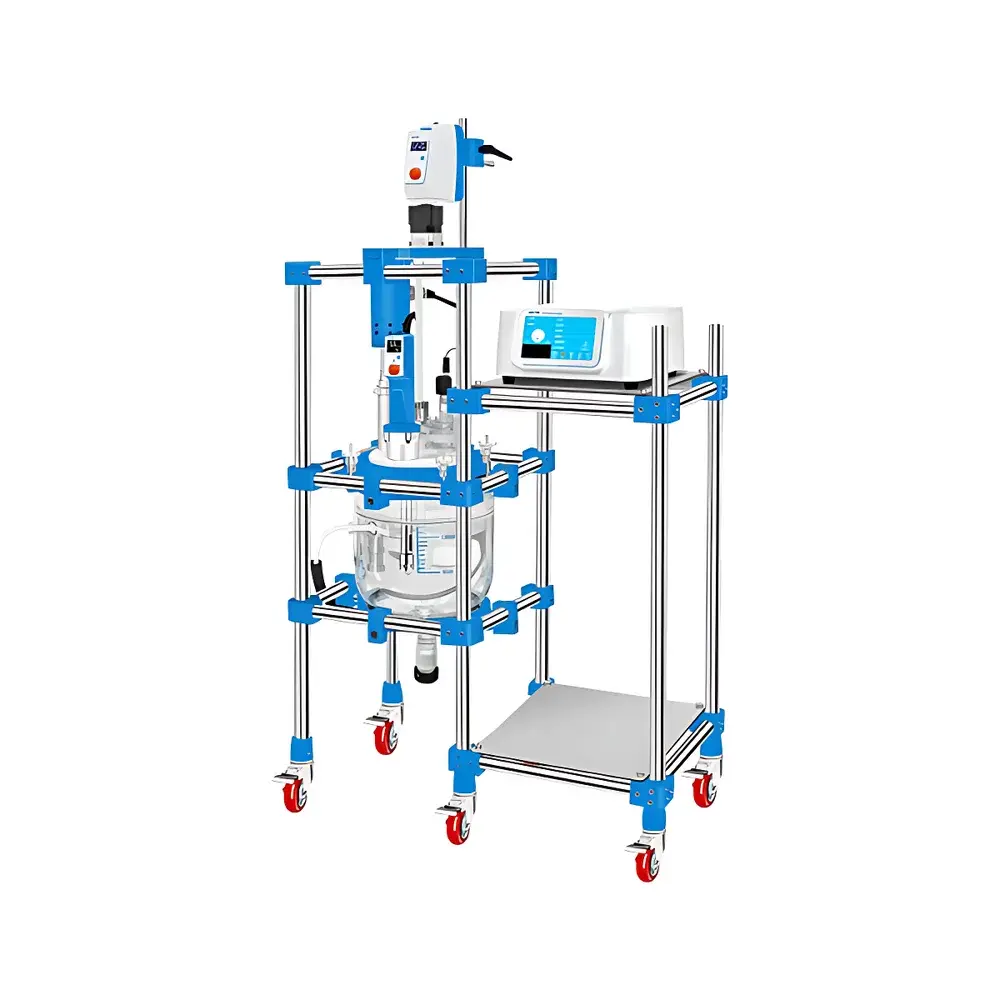
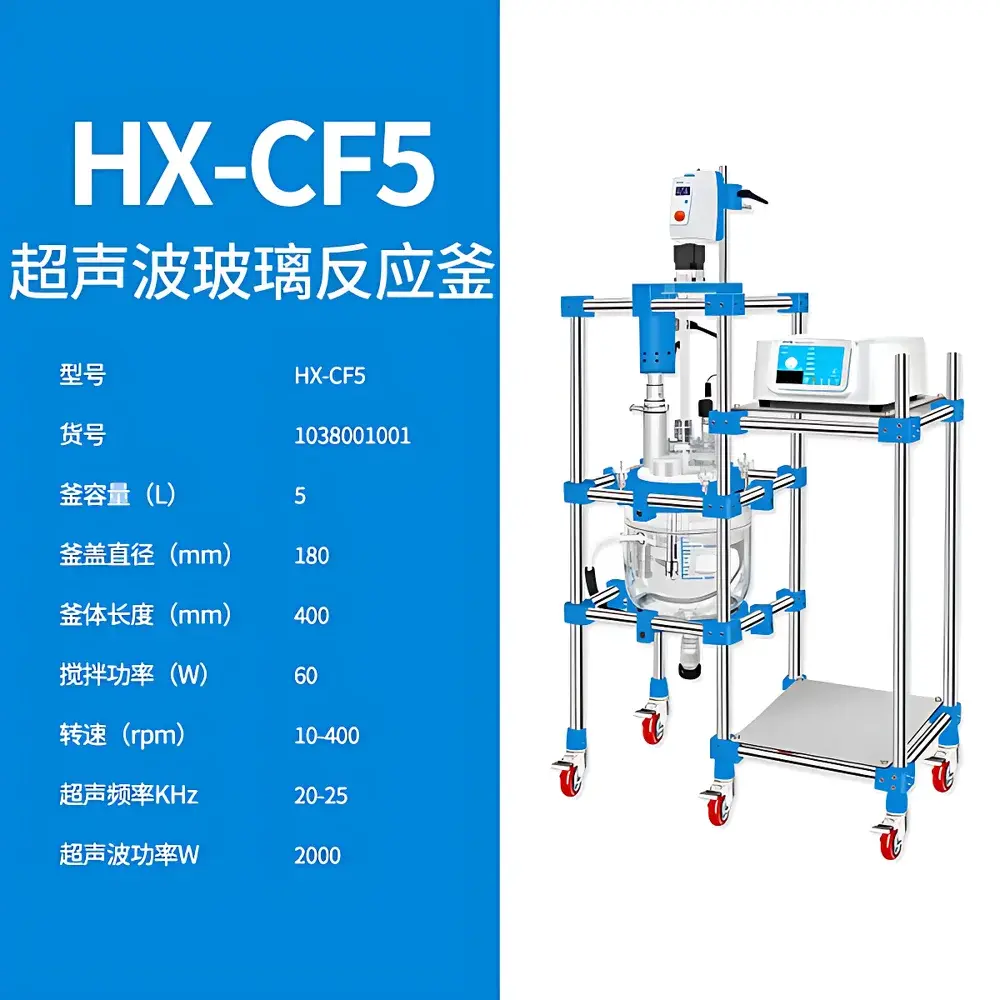
HUXI HX-CF5 Ultrasonic Double-Jacketed Glass Reactor
| Brand | HUXI |
|---|---|
| Origin | Shanghai, China |
| Manufacturer Type | Direct Manufacturer |
| Product Category | Domestic |
| Model | HX-CF5 |
| Instrument Classification | Jacketed Reactor |
| Usable Volume | Small-scale |
| Construction Material | Borosilicate Glass |
| Operating Pressure | Medium Pressure |
| Capacity | 5 L |
| Vacuum Capability | Not Designed for Vacuum Operation |
Overview
The HUXI HX-CF5 Ultrasonic Double-Jacketed Glass Reactor is an integrated laboratory reaction system engineered for controlled synthesis, sonochemical processing, and multi-modal sample treatment under ambient or temperature-regulated conditions. It operates on the principle of high-intensity ultrasonic cavitation—generated via a titanium alloy sonotrode (Φ40 mm, 250 mm total length) operating at 20–25 kHz—to induce localized extreme temperatures (>5,000 K) and pressures (>1,000 atm) within liquid media. This enables efficient cell disruption, emulsification, extraction, homogenization, and acceleration of heterogeneous chemical reactions. The reactor’s double-jacketed borosilicate glass vessel (Duran-type equivalent, linear expansion coefficient ≈ 3.3 × 10⁻⁶ /K) allows optional external temperature control via circulation of thermostatic fluid (e.g., using compatible chiller HLC-1008), supporting exothermic/endothermic reaction management. Designed for benchtop use in research and development laboratories, the HX-CF5 complies with standard mechanical and electrical safety requirements for Class I laboratory equipment (IEC 61010-1), and its non-vacuum-rated construction defines its operational envelope as atmospheric-pressure, liquid-phase chemistry.
Key Features
- Integrated multimodal operation: Simultaneous or independent activation of ultrasonication (up to 2000 W output), magnetic or mechanical stirring (10–400 rpm, 60 W motor), and high-shear homogenization (A–G adjustable intensity, continuous 4-hour duty cycle)
- TFT touchscreen interface with real-time parameter display, voice feedback, and configurable alarm triggers for overtemperature, overload, and time expiration
- Programmable ultrasonic protocol storage: Up to 20 user-defined sequences including pulse-on/pulse-off timing (0.1–99.9 s each), total duration (1 s to 99 h 59 min 59 s), and power ramping profiles
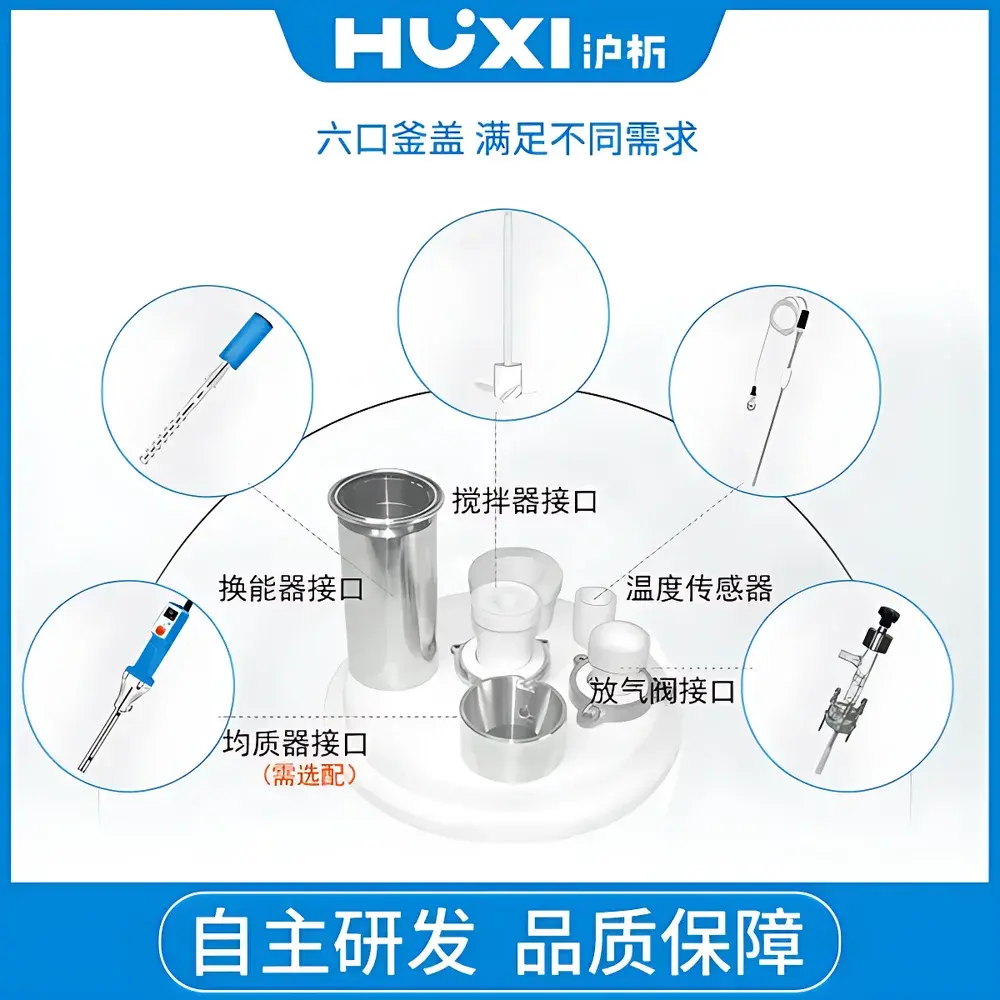
- Borosilicate glass (3.3-type) main vessel with six standardized NS29/32 ground-glass ports, 180 mm diameter lid, and 400 mm vertical clearance—enabling modular integration of condensers, dropping funnels, pH probes, or gas inlets
- Full PTFE and borosilicate wetted-path construction ensures compatibility with aggressive solvents (e.g., concentrated acids, halogenated organics) and eliminates metallic leaching risks
- Space-efficient stacked support frame with detachable PTFE-lined discharge valve and front-unobstructed viewing geometry for real-time visual monitoring of reaction progress
- Remote control capability via RS485/RS232 communication port, supporting LabVIEW-compatible SCPI command sets for automated workflow integration
Sample Compatibility & Compliance
The HX-CF5 is validated for use with aqueous, organic, and mixed-phase systems across pH 0–14 and thermal ranges from −20 °C to +150 °C (when paired with external chiller/heater). Its non-vacuum design excludes applications requiring reduced pressure or solvent distillation under vacuum. All glass components meet ISO 3585 specifications for borosilicate glass 3.3. Electrical safety conforms to IEC 61010-1:2010 Ed.3 for laboratory equipment. While not certified to GLP/GMP or FDA 21 CFR Part 11 out-of-the-box, audit-ready data logging (with timestamped parameter records and alarm logs) supports internal validation protocols required by regulated QC/QA environments in pharmaceutical and biotech R&D.
Software & Data Management
The embedded firmware provides local data persistence for all executed protocols and alarm events. Each stored program includes full parameter metadata (ultrasonic power setpoint, pulse timing, stir speed, duration), with automatic timestamping and operator ID tagging when password authentication is enabled. Export is supported via USB mass storage mode (CSV format), enabling traceability for SOP compliance. No cloud connectivity or proprietary software installation is required—remote supervision uses standard terminal emulation (e.g., PuTTY) or custom Python/Node-RED scripts interfacing via serial commands.
Applications
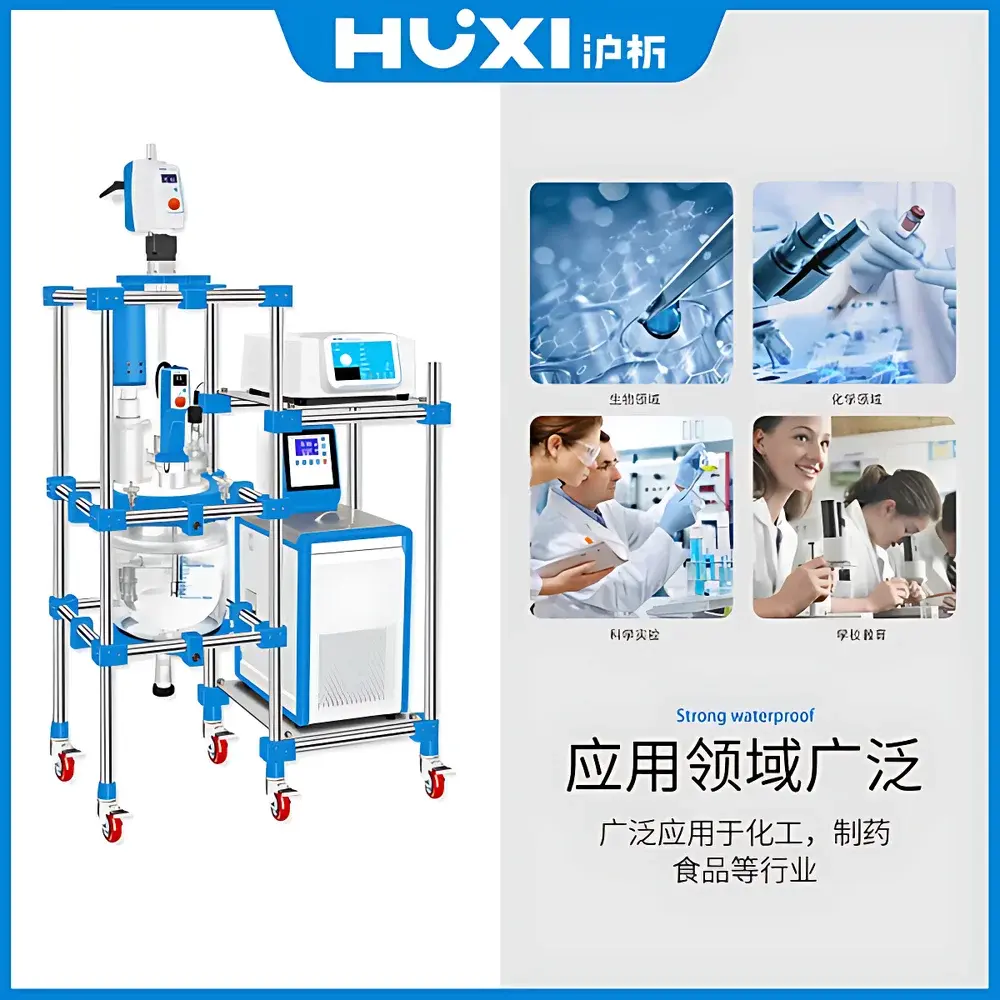
- Cell lysis and subcellular fractionation of mammalian, bacterial, yeast, and plant tissues
- Sono-catalyzed organic synthesis (e.g., Suzuki couplings, esterifications, nanoparticle nucleation)
- Preparation of nanoemulsions, liposomes, and Pickering emulsions for drug delivery studies
- Accelerated solid-liquid extraction of phytochemicals (e.g., polyphenols, alkaloids) under mild thermal conditions
- In-process homogenization of viscous polymer solutions and colloidal suspensions prior to rheological or DLS analysis
- Surface cleaning and degassing of catalyst substrates prior to catalytic testing
FAQ
Is the HX-CF5 suitable for vacuum applications?
No. The reactor is rated for atmospheric-pressure operation only; it lacks vacuum-rated seals, reinforced glass thickness, or pressure-relief mechanisms required for sub-atmospheric use.
Can the ultrasonic transducer be operated without liquid in the vessel?
No. Dry operation will cause immediate transducer overheating and permanent damage. Liquid coupling is mandatory for acoustic energy transmission and thermal dissipation.
What temperature control options are available?
The double jacket accepts external circulators (e.g., HLC-1008). No built-in heating/cooling elements are present—the system relies entirely on external thermal fluid exchange.
Is calibration documentation provided with the instrument?
Factory calibration certificates for ultrasonic power output (traceable to NIST-equivalent acoustic standards) and stir motor torque response are included. User-performed verification procedures are outlined in the technical manual.
How is maintenance of the sonotrode performed?
Titanium alloy sonotrodes require periodic inspection for pitting or erosion at the radiating tip. Cleaning with ethanol followed by ultrasonic bath decontamination is recommended after each use involving biological or polymeric residues.
Related Products



