
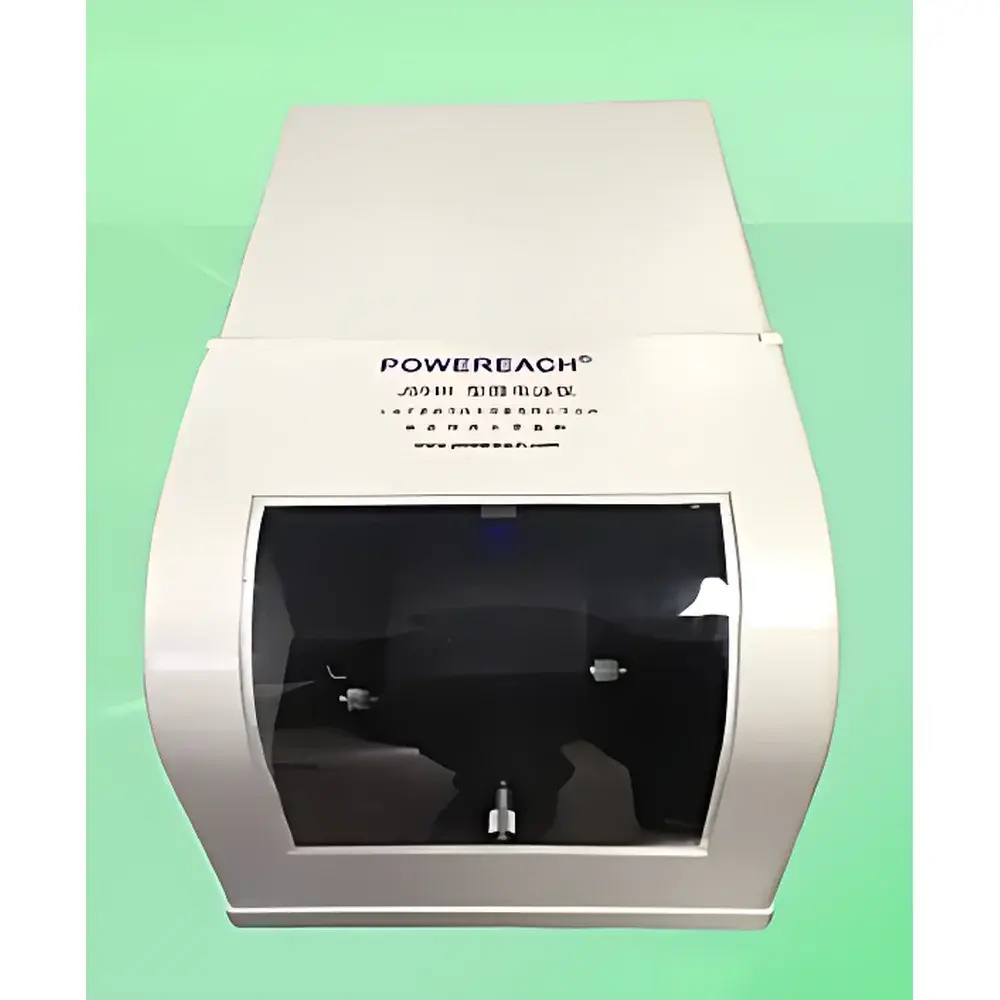
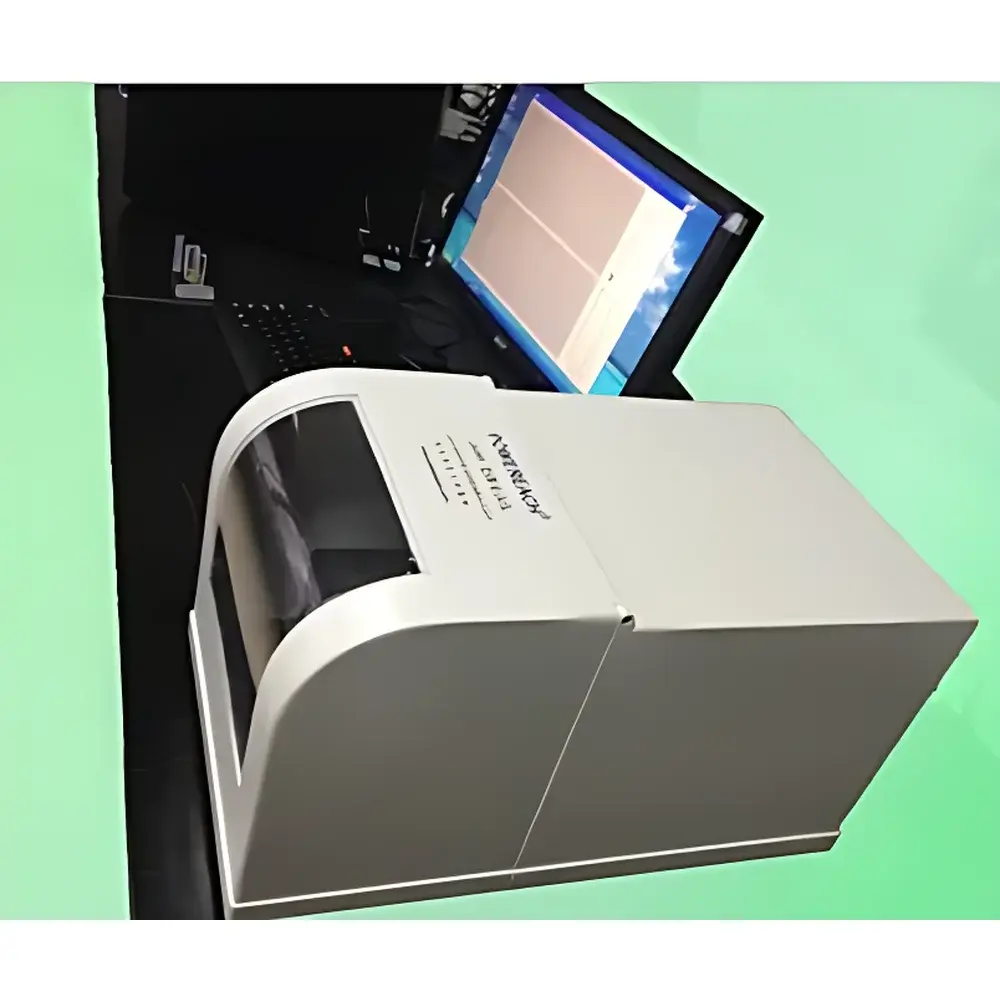
Zeta Potential Analyzer JS94J2M by ZYKX
| Brand | ZYKX |
|---|---|
| Origin | Beijing, China |
| Model | JS94J2M |
| Zeta Potential Range | ±3000 mV |
| Accuracy | ±5% |
| pH Range | 0.00–14.00 |
| pH Resolution | 0.1 pH |
| Zeta Resolution | 1 mV |
| Temperature Range | −5.0 to 105.0 °C |
| Temp. Accuracy | ±0.1 °C |
| Sample Volume per Measurement | 0.5 mL |
| Optical System | Semiconductor-based blue/green LED illumination (λ ≈ 470–520 nm), 1200× magnification |
| Electrophoresis Cell | Integrated Ag/Pt/Ti electrodes in 0.5 cm-thick borosilicate glass cuvette |
| Voltage Polarity Switching Time | 0.30–1.20 s (adjustable) |
| Sampling Duration | 3–10 s |
| Power Supply | 220 V AC, 50 Hz, 150 W |
| Optional Thermostatic Stage | −10 to 95 °C |
Overview
The ZYKX JS94J2M Zeta Potential Analyzer is a precision electrophoretic light scattering (ELS) instrument engineered for the quantitative determination of zeta potential (ζ) in colloidal dispersions and emulsions. It operates on the principle of microelectrophoresis: under an applied electric field, charged particles migrate at a velocity proportional to their surface charge density; this electrophoretic mobility is optically tracked via high-magnification (1200×), low-power semiconductor-based blue/green LED illumination (470–520 nm), and converted to zeta potential using the Henry equation and Smoluchowski approximation. The system is optimized for aqueous and non-aqueous suspensions with particle diameters ranging from 0.1 to 10 µm — a range covering nanoparticles, pigment dispersions, liposomes, and submicron polymer lattices. Its design emphasizes measurement robustness, minimal sample consumption (just 0.5 mL per analysis), and compatibility with routine QC workflows in regulated and academic laboratories.
Key Features
- Integrated electrophoresis cell with precision-machined 0.5 cm-thick borosilicate glass cuvette and embedded Ag/Pt/Ti electrodes — engineered for stable current distribution and minimized electrode polarization.
- Optimized optical path featuring short-wavelength LED illumination (≤520 nm) and high numerical aperture imaging, enabling reliable visualization and tracking of sub-500 nm particles without thermal perturbation (optical power <100 µW).
- Real-time temperature monitoring via calibrated probe; automatic compensation of viscosity and dielectric constant inputs for accurate ζ calculation across −5.0 to 105.0 °C.
- Adjustable voltage polarity switching (0.30–1.20 s) and programmable sampling duration (3–10 s), supporting both fast screening and high-reproducibility replicate measurements.
- Computer-controlled crosshair alignment system with 3-axis translation stage ensures precise positioning of the measurement volume — eliminating ambiguity associated with stationary layer effects in conventional cells.
- Modular architecture allows integration with optional Peltier-based thermostatic stages (−10 to 95 °C), supporting temperature-dependent zeta mapping for stability assessment and IEP determination.
Sample Compatibility & Compliance
The JS94J2M accommodates a broad spectrum of dispersion media — including water, ethanol, isopropanol, toluene, and silicone oils — making it suitable for R&D and quality control in pharmaceutical emulsions, cosmetic formulations, mineral processing slurries, and nanomaterial synthesis. Its operational pH range (0.00–14.00) supports acidic, neutral, and strongly alkaline systems. While not pre-certified to ISO 13099 or ASTM D7826, the instrument’s measurement methodology aligns with core principles defined in these standards for electrophoretic mobility and zeta potential reporting. Data acquisition and parameter logging comply with basic GLP documentation requirements; raw image sequences, mobility histograms, and calculated ζ values are timestamped and exportable in CSV and TIFF formats for audit-ready record retention.
Software & Data Management
Control and analysis are performed via dedicated Windows-based software with multilingual UI support. The application acquires synchronized grayscale image sequences (four frames per polarity direction), performs centroid-based particle tracking, computes electrophoretic mobility distributions, and reports mean zeta potential with standard deviation. Built-in calibration routines verify optical alignment and voltage linearity. All measurement parameters — field strength, temperature, pH, polarity timing, and image gain — are logged alongside results. Export options include summary reports (PDF), tabular data (CSV), and raw image sets (TIFF). The software does not implement FDA 21 CFR Part 11 electronic signature or audit trail functionality out-of-the-box; however, its deterministic output format enables integration into validated LIMS or ELN environments via standardized file ingestion protocols.
Applications
- Determination of isoelectric point (IEP) for protein purification optimization and surfactant selection in biopharmaceutical formulation.
- Stability assessment of nanoparticle drug carriers, ceramic slurries, and pigment dispersions via zeta potential vs. pH or ionic strength titration.
- Surface charge characterization of functionalized nanomaterials (e.g., amine- or carboxyl-modified silica) during surface chemistry development.
- Quality control of colloidal silver, titanium dioxide, and zinc oxide suspensions in cosmetics and sunscreens.
- Teaching laboratory use for undergraduate physical chemistry and colloid science courses — demonstrating DLVO theory, double-layer compression, and electrokinetic phenomena.
FAQ
What particle size range is supported for zeta potential measurement?
The JS94J2M is validated for dispersed particles between 0.1 µm and 10 µm in diameter, provided sufficient optical contrast exists in the chosen medium.
Can the instrument measure zeta potential in organic solvents?
Yes — it supports common non-aqueous media including ethanol, isopropanol, acetone, toluene, and silicone oils, subject to appropriate electrode compatibility and conductivity considerations.
Is temperature control built-in or optional?
The base unit includes real-time temperature sensing and compensation; active thermostatic control requires the optional Peltier stage (−10 to 95 °C).
How is electrode polarization mitigated during measurement?
Through low-frequency alternating field application (adjustable polarity reversal interval) and use of inert, surface-treated Ag/Pt/Ti electrodes designed to minimize Faradaic reactions.
Does the system support automated batch analysis?
No — each measurement requires manual sample loading and optical alignment; however, sequence scripting for repeated parameter sets is supported via software macro functions.



