
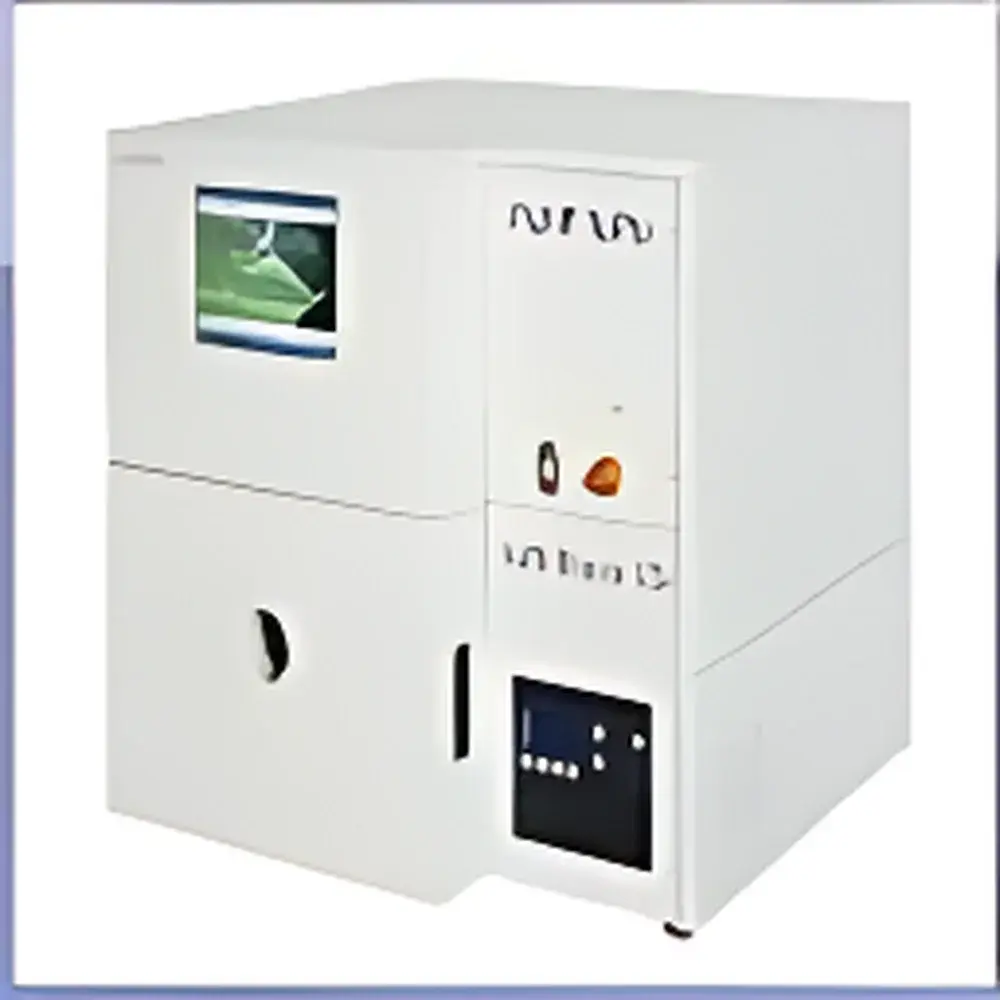
PVA TePla IoN Wave 10 Gas Plasma System
| Brand | PVA TePla |
|---|---|
| Origin | Germany |
| Model | IoN Wave 10 |
| Type | Benchtop Microwave-Driven Gas Plasma System |
| Application Scope | Laboratory & Pilot-Scale Plasma Cleaning, Surface Activation, Descum, Wafer Decontamination, and Package Delidding |
| Compliance | CE Marked, Designed for ISO 14644-1 Class 5 Cleanroom-Compatible Operation |
Overview
The PVA TePla IoN Wave 10 Gas Plasma System is a compact, microwave-powered benchtop plasma source engineered for precise, low-damage surface modification and contamination removal in controlled laboratory and pilot-scale environments. Unlike capacitively coupled (CCP) or inductively coupled (ICP) plasma systems, the IoN Wave 10 utilizes a 2.45 GHz microwave cavity to generate high-density, low-pressure plasma without internal electrodes—eliminating sputtering-induced particulate generation and enabling exceptional process reproducibility. It operates with process gases including O2, Ar, N2, CF4, and gas mixtures, supporting both reactive ion etching (RIE)-like descum and gentle surface activation modes. The system is specifically optimized for semiconductor front-end and back-end processes—including post-lithography resist ashing, wafer-level organic residue removal, bond pad cleaning prior to wire bonding, and controlled delidding of IC packages—while maintaining sub-micron feature integrity and minimizing substrate heating.
Key Features
- 2.45 GHz microwave plasma source with magnetron-driven cavity and tunable power output (up to 1000 W), ensuring stable plasma ignition and uniform energy distribution across the treatment zone
- Integrated vacuum chamber (stainless steel, 100 mm diameter × 120 mm height) with pneumatic lid actuation and leak-tight sealing (base pressure < 5 × 10⁻³ mbar)
- Programmable digital controller with pre-configured process recipes, real-time RF/microwave power monitoring, and integrated pressure feedback loop (capacitance manometer, 0–1000 mbar range)
- Gas delivery module with dual mass flow controllers (MFCs) for independent regulation of up to two process gases, supporting precise stoichiometric control
- Compact footprint (W × D × H: 580 × 620 × 540 mm) and CE-compliant electrical architecture, suitable for Class 5 cleanroom integration without external exhaust ducting (when used with optional catalytic abatement)
- Tool-side safety interlocks including door-open shutdown, overpressure cut-off, and microwave radiation leakage monitoring per IEC 61000-6-4 and EN 55011 standards
Sample Compatibility & Compliance
The IoN Wave 10 accommodates substrates up to 100 mm in diameter—including silicon wafers (bare, oxide-coated, or metallized), ceramic substrates, glass slides, polymer films (e.g., polyimide, PET), and molded plastic housings. Its non-contact, low-temperature plasma mode (< 40 °C substrate rise under standard O2 ashing conditions) prevents thermal warping or degradation of temperature-sensitive materials. All wetted components comply with SEMI F57 and ASTM F209 standards for semiconductor tool materials. The system supports GLP/GMP-aligned operation through optional audit-trail-enabled software (IoN Control Suite v3.2+), providing electronic records compliant with FDA 21 CFR Part 11 requirements for traceability, user authentication, and data integrity.
Software & Data Management
Control is managed via the IoN Control Suite—a Windows-based application supporting recipe management, parameter logging (time-stamped pressure, power, gas flow, and process duration), and export to CSV or XML formats. The software includes built-in diagnostic routines for plasma ignition verification, MFC calibration validation, and vacuum integrity checks. Optional Ethernet/IP connectivity enables integration into centralized facility monitoring systems (e.g., SECS/GEM protocols). Raw sensor data is stored locally on an industrial-grade SSD with write-protection and automatic backup to network drives—ensuring long-term compliance with ISO/IEC 17025 Clause 7.5 on data retention and traceability.
Applications
- Photoresist descum after development and before etch—removing residual organics without undercutting patterned features
- Wafer-level cleaning of Al, Cu, or Au bond pads to eliminate native oxides and hydrocarbon contamination prior to wire bonding or flip-chip assembly
- Surface activation of polymeric encapsulants (e.g., EMC, silicone gels) to improve adhesion in underfill or molding processes
- Controlled delidding of plastic-encapsulated microcircuits (PEMs) for failure analysis, using Ar/O2 plasma to selectively ablate mold compound without damaging die surfaces
- Pre-bond cleaning of MEMS wafers and optical substrates to achieve water contact angles < 10°, indicating high surface energy and hydrophilicity
- Routine maintenance cleaning of AFM tips, TEM grids, and quartz crystal microbalances (QCMs) in analytical labs
FAQ
What vacuum level is required for stable plasma ignition?
Stable microwave plasma ignition is achieved at pressures between 0.1–10 mbar; optimal process windows are typically 0.5–2.0 mbar depending on gas composition and desired ion density.
Can the IoN Wave 10 be used with flammable or corrosive gases?
Yes—when equipped with optional corrosion-resistant gas lines (Hastelloy C-276), stainless-steel MFCs rated for Cl2/NF3, and compatible abatement, it supports halogenated and reducing chemistries under appropriate safety protocols.
Is remote operation supported?
Standard Ethernet interface enables remote monitoring and limited control via VNC or secure RDP; full recipe execution requires local operator authentication per ISO 13485 Annex C requirements.
How often does the magnetron require replacement?
Rated for ≥5,000 hours of cumulative operation under nominal load; lifetime is extended by thermal management and duty-cycle optimization in the control firmware.
Does the system meet semiconductor industry cleanliness specifications?
Yes—chamber surface roughness Ra ≤ 0.4 µm, electropolished finish, and particle shedding < 1 particle/cm² per hour (tested per ISO 14644-1 Class 4 protocols) when operated in certified cleanroom environments.



