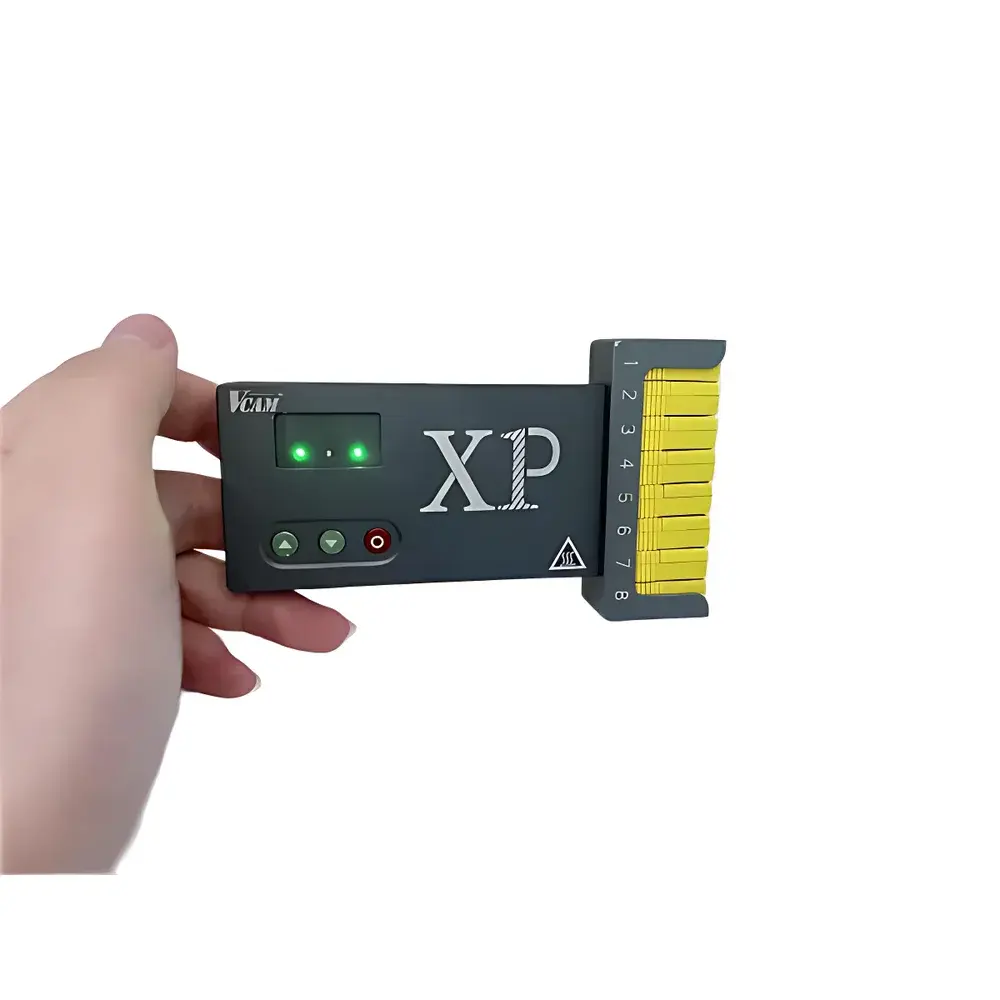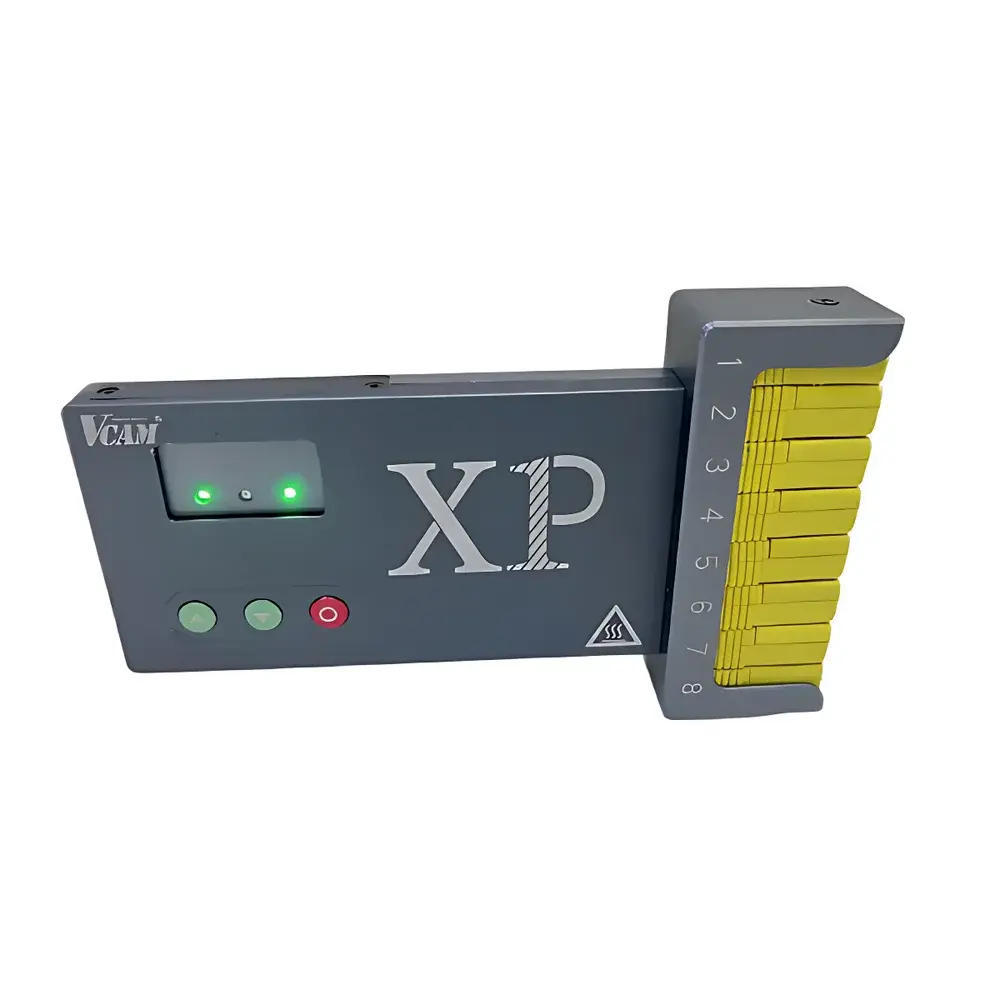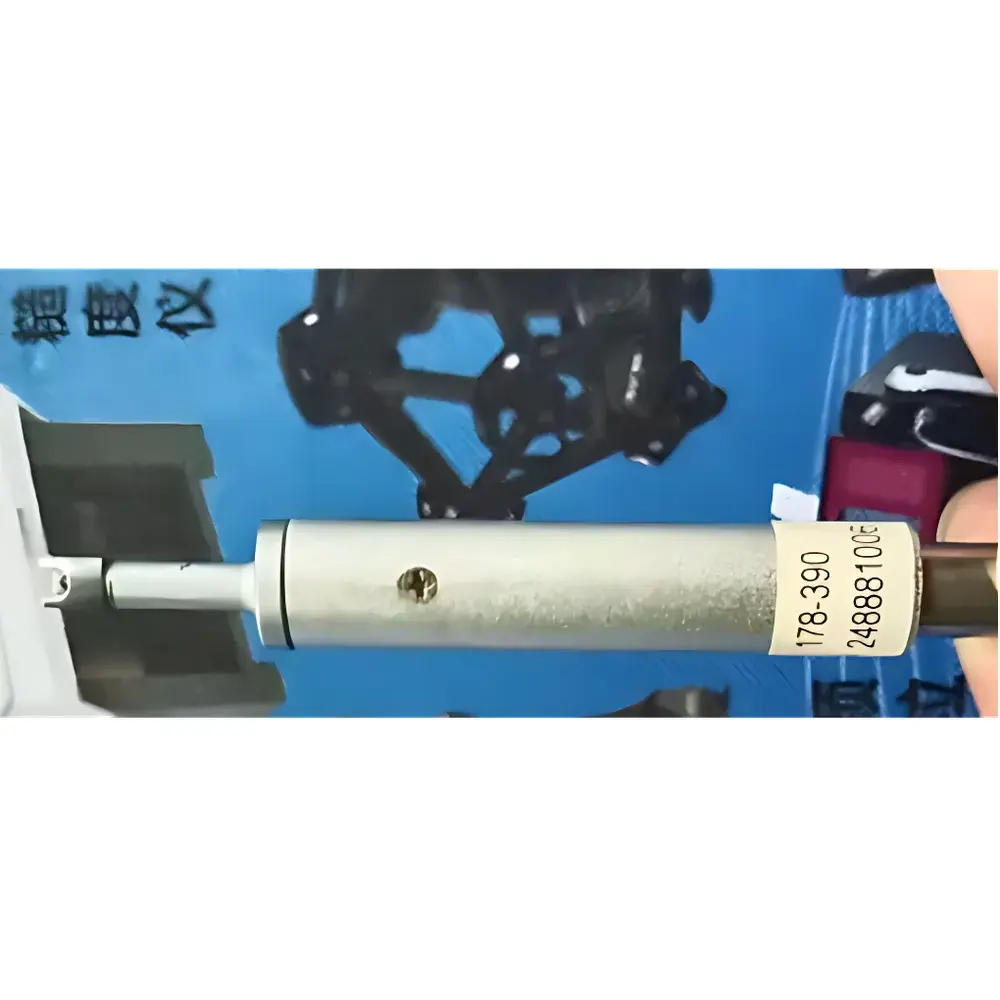
Accretech 248881006 Portable Surface Roughness Tester
| Brand | Accretech |
|---|---|
| Origin | Japan |
| Model | 248881006 |
| Type | Portable Contact-Type Profilometer |
| Measurement Principle | Stylus-Based Inductive Displacement Sensing |
| Standard Compliance | ISO 4287, ISO 4288, ISO 13565-1/2/3, ASME B46.1, JIS B 0601 |
| Probe Type | Diamond Tip (2 µm Radius, 90° Included Angle) |
| Vertical Resolution | ≤ 0.001 µm |
| Scan Length | Up to 16 mm (Standard), Expandable via Multi-Trace Mode |
| Cutoff Wavelengths | 0.08, 0.25, 0.8, 2.5, 8.0 mm (Selectable) |
| Evaluation Parameters | Ra, Rz, Rq, Rp, Rv, Rt, Rsk, Rku, Rsm, Rmr, Rdc, RΔq, Rk, Rpk, Rvk, Mr1, Mr2 |
| Data Storage | Internal Flash Memory (≥ 10,000 Profiles), USB Export |
| Display | High-Contrast Monochrome LCD with Backlight |
| Power | Rechargeable Li-ion Battery (≥ 10 h Continuous Operation) |
| Environmental Rating | IP54 (Dust and Splash Resistant) |
| Operating Temperature | 5–40 °C |
| Calibration | Traceable to NMIJ/JCSS Standards |
Overview
The Accretech 248881006 is a high-precision portable surface roughness tester engineered for field-deployable and workshop-integrated metrology in quality control, manufacturing process validation, and R&D environments. It operates on the established principle of contact stylus profilometry: a diamond-tipped probe traverses the surface at controlled speed and force (typically 0.75 mN nominal), converting vertical displacement into analog voltage signals via a linear variable differential transformer (LVDT) or electromagnetic inductive sensor. These signals are digitized at high sampling density (≥ 10,000 points/mm), enabling sub-nanometer vertical resolution and strict adherence to international profile evaluation standards. Designed for repeatability under variable environmental conditions, the 248881006 integrates mechanical damping, thermal drift compensation algorithms, and real-time filtering to minimize measurement uncertainty—critical for compliance-driven sectors including automotive powertrain component certification, medical device implant surface verification, and aerospace turbine blade finish assessment.
Key Features
- Compact, handheld form factor with ergonomic grip and integrated tilt-compensated leveling feet for stable operation on uneven or inclined surfaces.
- Dual-mode scanning: single-pass trace (up to 16 mm) and multi-trace stitching for extended evaluation lengths (e.g., gear flank or bearing raceway profiling).
- On-device parameter calculation per ISO 4287/4288 and ASME B46.1, including core amplitude parameters (Ra, Rz, Rq), hybrid functional parameters (Rk, Rpk, Rvk), and statistical descriptors (Rsk, Rku).
- Real-time waveform display with adjustable gain, digital filtering (Gaussian, 2RC, phase-corrected), and selectable cutoff wavelengths to isolate roughness, waviness, and form components.
- Built-in calibration verification routine using certified step-height artifacts; supports user-defined calibration curves for specialized materials (e.g., soft polymers, coated metals).
- USB 2.0 interface for direct data export to Windows-based analysis software; no proprietary dongles or runtime dependencies required.
Sample Compatibility & Compliance
The 248881006 accommodates a broad range of engineering surfaces—including machined steel, cast aluminum, anodized aluminum, sintered ceramics, injection-molded thermoplastics, and PVD-coated tools—without requiring vacuum fixation or stage mounting. Its low-force stylus minimizes plastic deformation on softer substrates (e.g., brass, zinc die-castings), while its rigid kinematic base ensures minimal probe deflection on high-aspect-ratio features. All reported parameters are traceable to National Metrology Institute of Japan (NMIJ) reference standards and fully compliant with ISO/IEC 17025-accredited laboratory reporting requirements. The instrument’s firmware and data handling architecture support audit-ready documentation for GLP and GMP-regulated environments, including timestamped operator ID logging and immutable raw profile storage.
Software & Data Management
Raw profile data is stored in vendor-neutral ASCII text format (.txt) and industry-standard .sur files compatible with third-party metrology software (e.g., MountainsMap®, PolyWorks®, MATLAB). Optional PC software provides advanced analysis capabilities: spectral density (PSD) computation, bearing ratio curve (Abbott-Firestone), fractal dimension estimation, and statistical process control (SPC) charting with Cp/Cpk calculation. All software modules comply with FDA 21 CFR Part 11 requirements for electronic records and signatures, featuring role-based access control, full audit trail (including parameter edits and re-evaluations), and electronic signature capture for final report approval.
Applications
- Automotive: Verification of cylinder bore honing patterns, camshaft lobe finish, and transmission gear tooth flank roughness per OEM specifications (e.g., Ford WSS-M4D772-A, GM GMW14872).
- Medical Devices: Quantification of surface texture on orthopedic implants (Ti-6Al-4V, CoCr alloys) to ensure osseointegration compatibility and regulatory submission readiness (ISO 14644-1, ASTM F1854).
- Aerospace: In-process inspection of turbine disk grooves, compressor blade leading edges, and additive-manufactured part as-built surface characterization per AMS2760 and Nadcap AC7101.
- Electronics: Characterization of wafer-level packaging surfaces, heat sink fin finishes, and precision-machined RF cavity walls where scattering loss correlates directly with Ra and Rq values.
- Tooling & Dies: Monitoring EDM and grinding process stability through trending of Rz and Rsk over successive production lots.
FAQ
What stylus tip radius is used for standard calibration and routine measurement?
A 2 µm radius diamond stylus with 90° included angle is supplied as standard; optional 5 µm and 12.5 µm tips are available for high-wear or ultra-smooth surface applications.
Can the 248881006 perform waviness-only or form-only analysis?
Yes—via configurable Gaussian filter separation with user-selectable cutoff wavelengths (0.08–8.0 mm) and order settings compliant with ISO 16610-21.
Is the device suitable for measuring roughness on curved surfaces?
It supports convex and concave cylindrical surfaces with radii ≥ 3 mm using the optional arc-shaped base adapter; curvature compensation is applied during parameter calculation.
How is traceability maintained during field use?
Each unit ships with a NMIJ-traceable calibration certificate; onboard verification routines allow daily checks using certified step gauges (e.g., 0.1 µm and 1.0 µm steps) without external lab intervention.
Does the instrument support automated reporting for ISO/TS 16949 or IATF 16949 audits?
Yes—predefined report templates include all mandatory fields (sample ID, operator, date/time, equipment ID, environmental conditions, raw data link, and pass/fail status against specification limits) and export directly to PDF with digital signature embedding.