
AirMar ST850 Submersible Speed and Temperature Sensor
| Brand | Airmar |
|---|---|
| Origin | USA |
| Model | ST850 |
| Output | NMEA 2000® or Analog (selectable) |
| Speed Range | 2–45 knots (2–52 MPH) |
| Temperature Accuracy | ±0.5°C |
| Operating Temp | −10°C to +40°C |
| Sampling Interval | 1 s |
| Pressure Rating | 3 m |
| Transducer Window Material | Polyurethane |
| Hull Tilt Limit | ≤22° |
| Pulse Frequency | 17,000 p/nm (4.8 Hz per knot) |
| Supply Voltage | 9–16 VDC |
| Current Draw | <200 mA |
| NMEA 2000 LEN | 2 |
| Compliance | IEC 60945 |
| Weight (Plastic/Bronze/Stainless) | 0.7 / 1.3 / 1.6 kg |
| Standard Cables | 6 m NMEA 2000, 9 m Analog |
Overview
The AirMar ST850 is a submersible Doppler-based speed and temperature sensor engineered for high-fidelity vessel performance monitoring in marine navigation and hydrodynamic applications. Unlike paddlewheel or pitot-tube systems, the ST850 employs coherent Doppler shift measurement of acoustic backscatter from suspended particles and microturbulence in the water column—enabling true speed-through-water (STW) determination independent of hull fouling, salinity gradients, or flow distortion. Its integrated microprocessor performs real-time signal conditioning, digital filtering, and velocity vector correction for pitch/yaw-induced error—outputting calibrated speed and temperature data via standardized marine protocols. Designed for permanent through-hull installation, the ST850 delivers stable, low-drift measurements across dynamic operating conditions—from displacement yachts to planing powerboats and racing sailcraft—while maintaining compliance with IEC 60945 for maritime electronic equipment.
Key Features
- Doppler-based speed-through-water measurement with ±0.5 knot repeatability at steady-state conditions
- Integrated high-stability thermistor for simultaneous water temperature acquisition (±0.5°C accuracy)
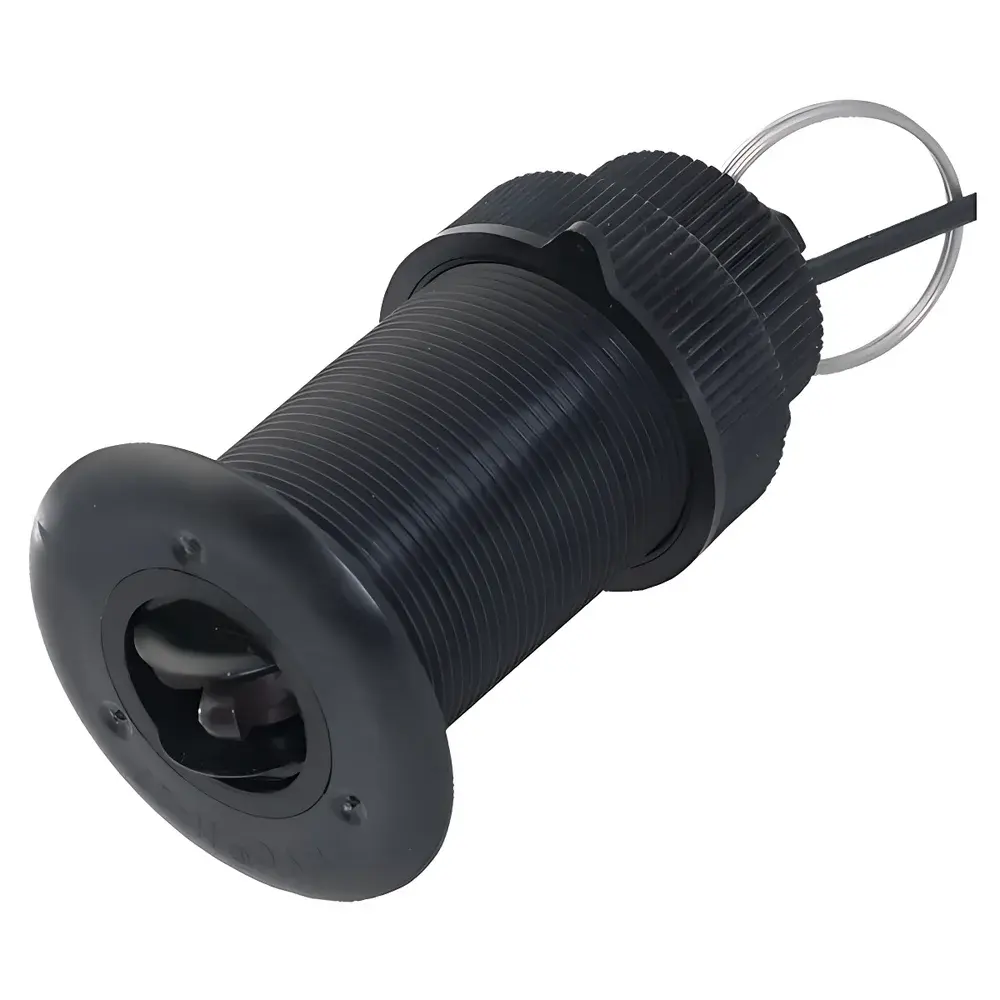
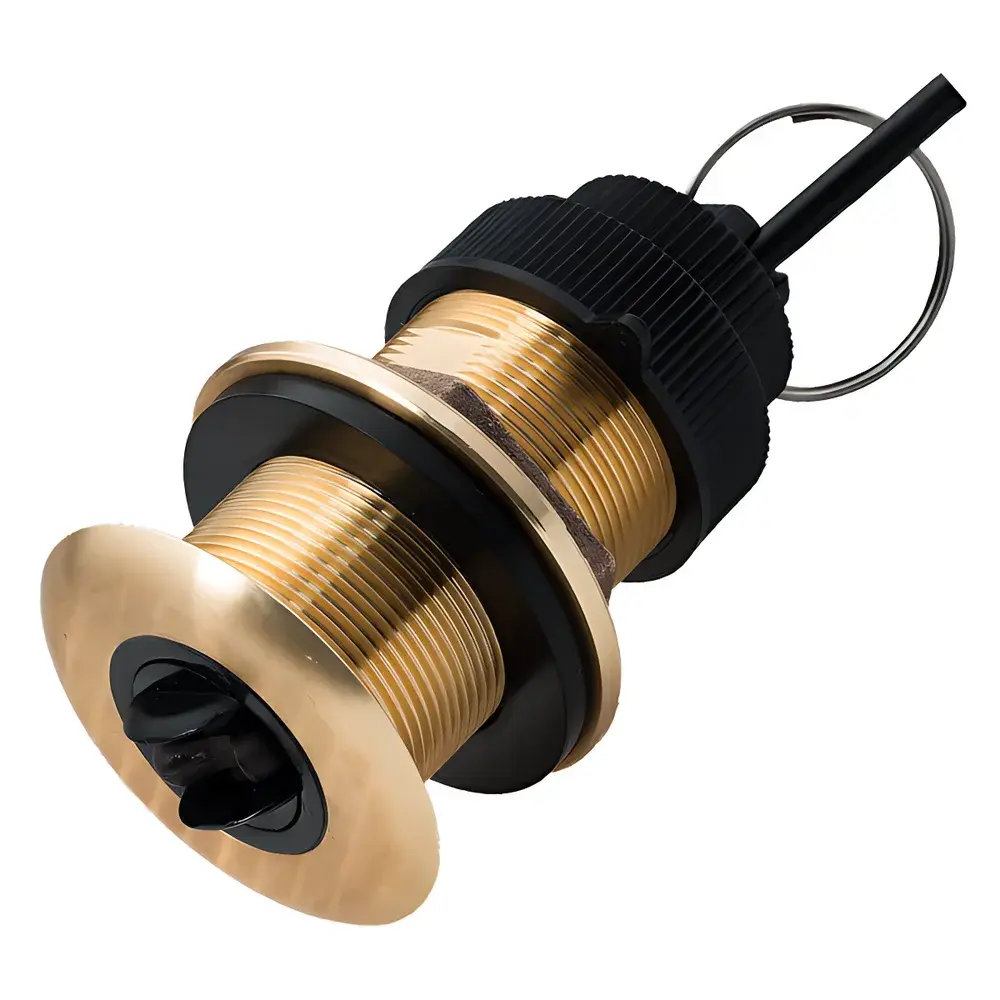
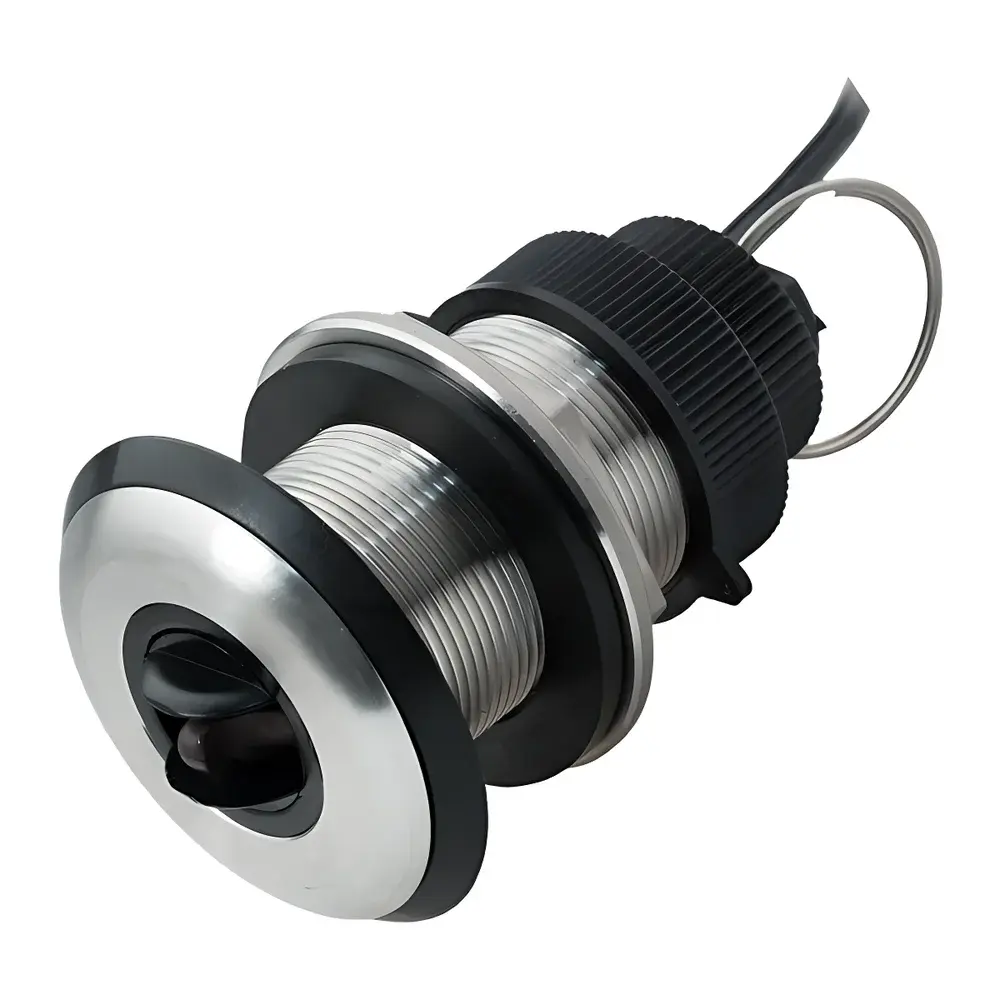
- Three flush-mount housing options: polyurethane (P217/P314), bronze (B119/B21), and stainless steel—each optimized for corrosion resistance and hydrodynamic profile
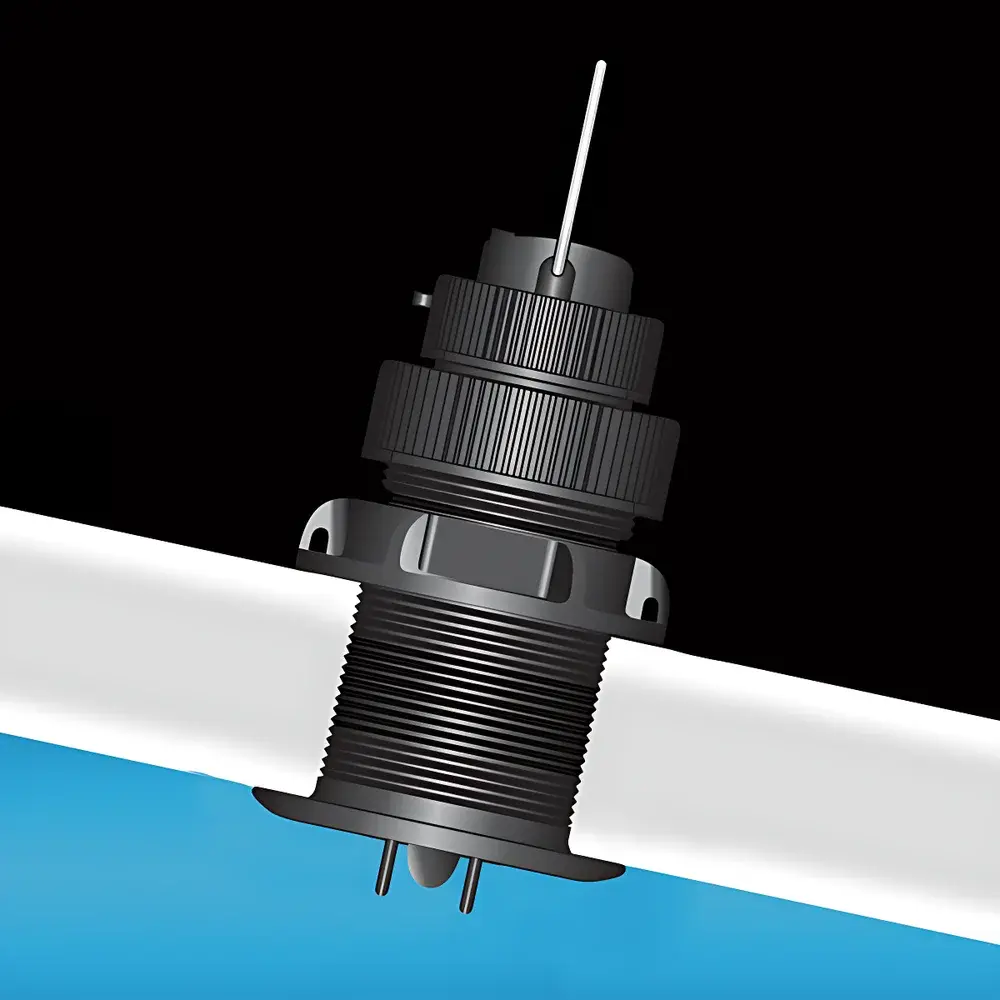
- Low-profile design with ≤5 mm (3/16″) external protrusion; minimizes drag and eliminates boundary-layer turbulence interference
- Selectable output interface: NMEA 2000® (with DeviceNet-compatible connector) or analog voltage (0–5 VDC or 0–10 VDC)
- Smart™ Sensor firmware enables automatic gain control, adaptive pulse repetition, and self-diagnostic reporting via NMEA PGNs
- Rated for continuous immersion at depths up to 3 meters; compatible with hull tilt angles ≤22°
- Supply voltage range of 9–16 VDC ensures compatibility with standard 12 V marine electrical systems
Sample Compatibility & Compliance
The ST850 is validated for operation in seawater, brackish water, and freshwater environments where suspended particulate concentration exceeds 10 ppm—ensuring reliable Doppler signal return across diverse operational zones. It meets IEC 60945 requirements for electromagnetic compatibility (EMC), environmental robustness (IP68 equivalent), and mechanical shock/vibration resistance typical of Class A marine electronics. While not certified for safety-critical navigation under IMO Resolution A.694(17), it complies with NMEA 2000® conformance testing standards (NMEA TS 2000-1 and -2) and supports full PGN 128259 (Speed Water Referenced) and PGN 130310 (Environmental Parameters) data structures. The sensor’s analog output option facilitates integration into legacy instrumentation systems requiring non-digital interfaces.
Software & Data Management
Data from the ST850 is natively accessible via any NMEA 2000®-compliant display, chartplotter, radar, or multifunction display (MFD) supporting PGN 128259 and 130310. When connected to a vessel network with a gateway device (e.g., Actisense NGT-1 or Maretron USB100), raw sensor logs—including timestamped speed, temperature, signal quality index (SQI), and internal diagnostics—can be archived in CSV or NMEA .log format for post-mission analysis. Firmware updates are performed using AirMar’s proprietary SmartSensor Utility (Windows/macOS), which also enables configuration of output resolution, sampling rate override, and analog scaling parameters. Audit trails for calibration events and configuration changes are retained in non-volatile memory—supporting GLP-aligned recordkeeping when deployed in research or regulatory monitoring contexts.
Applications
- Real-time speed-through-water input for autopilot and route optimization algorithms on commercial and recreational vessels
- Performance benchmarking of hull forms and propulsion efficiency during sea trials and regatta preparation
- Integration into scientific platforms for coastal current profiling, tidal energy assessment, and estuarine hydrodynamic modeling
- Redundant speed sensing in dual-sensor configurations for redundancy-critical navigation systems
- Temperature-compensated speed referencing in high-precision logbook and fuel consumption analytics
- Baseline instrumentation for autonomous surface vehicle (ASV) navigation stacks requiring STW feedback
FAQ
What is the minimum detectable speed and how is low-speed accuracy maintained?
The ST850 maintains usable output down to 2 knots (≈1.03 m/s) via adaptive pulse integration and noise-floor suppression algorithms. Below this threshold, signal-to-noise ratio degrades due to reduced particle scatter density; no extrapolation or zero-speed hold is applied.
Can the ST850 be installed on cored fiberglass or aluminum hulls?
Yes—provided the through-hull fitting is bonded to solid laminate or reinforced with backing plates per ABYC E-11 guidelines. Installation on foam-cored hulls requires localized core removal and structural reinforcement around the aperture.
Is firmware update capability available in-field?
Yes. Updates require connection to a Windows or macOS host running AirMar SmartSensor Utility and a USB-to-NMEA 2000 adapter. No disassembly or service center return is needed.
Does the sensor support NMEA 0183 output?
No. The ST850 provides NMEA 2000® or analog outputs only. NMEA 0183 conversion requires an external gateway device such as the Actisense NGW-1.
How does hull paint affect acoustic transmission?
Antifouling paints containing copper oxide or ablative polymers do not impair performance. However, thick epoxy barrier coats (>200 µm) or metallic-based coatings may attenuate the 1 MHz transducer signal and are not recommended.







