
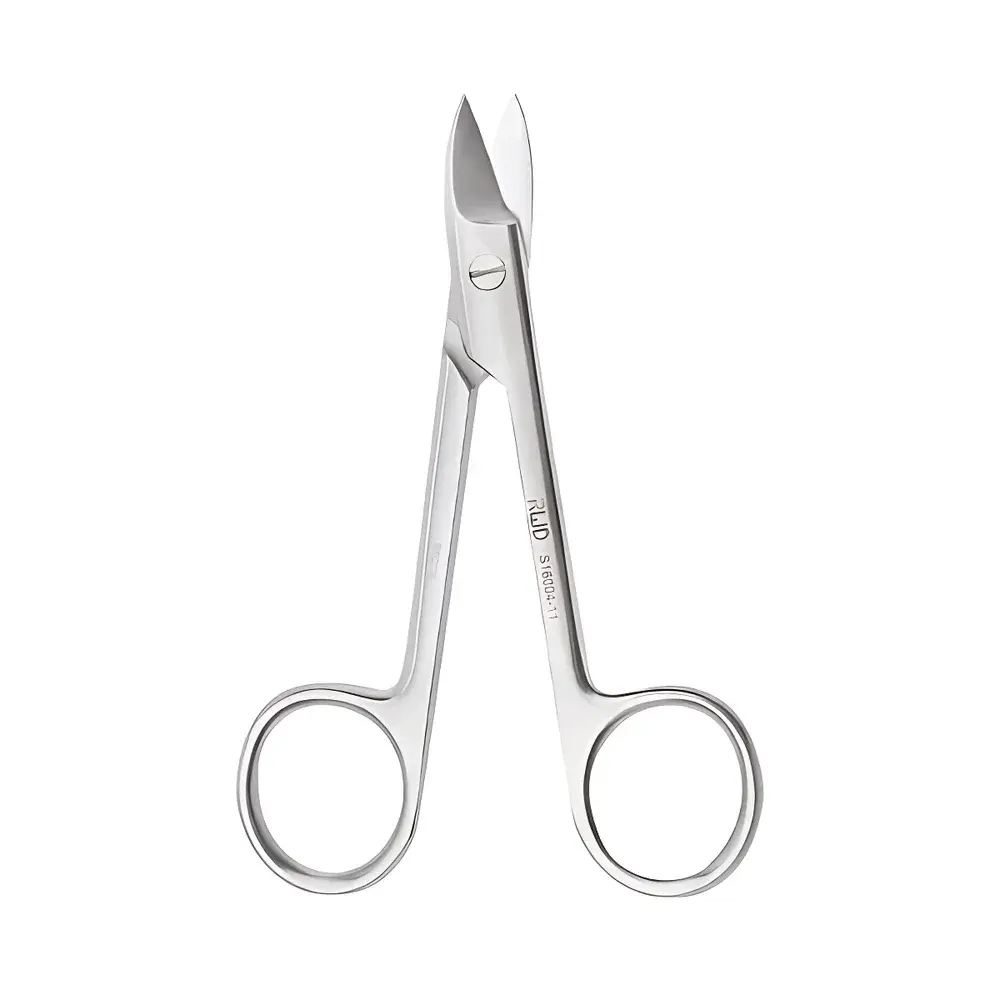
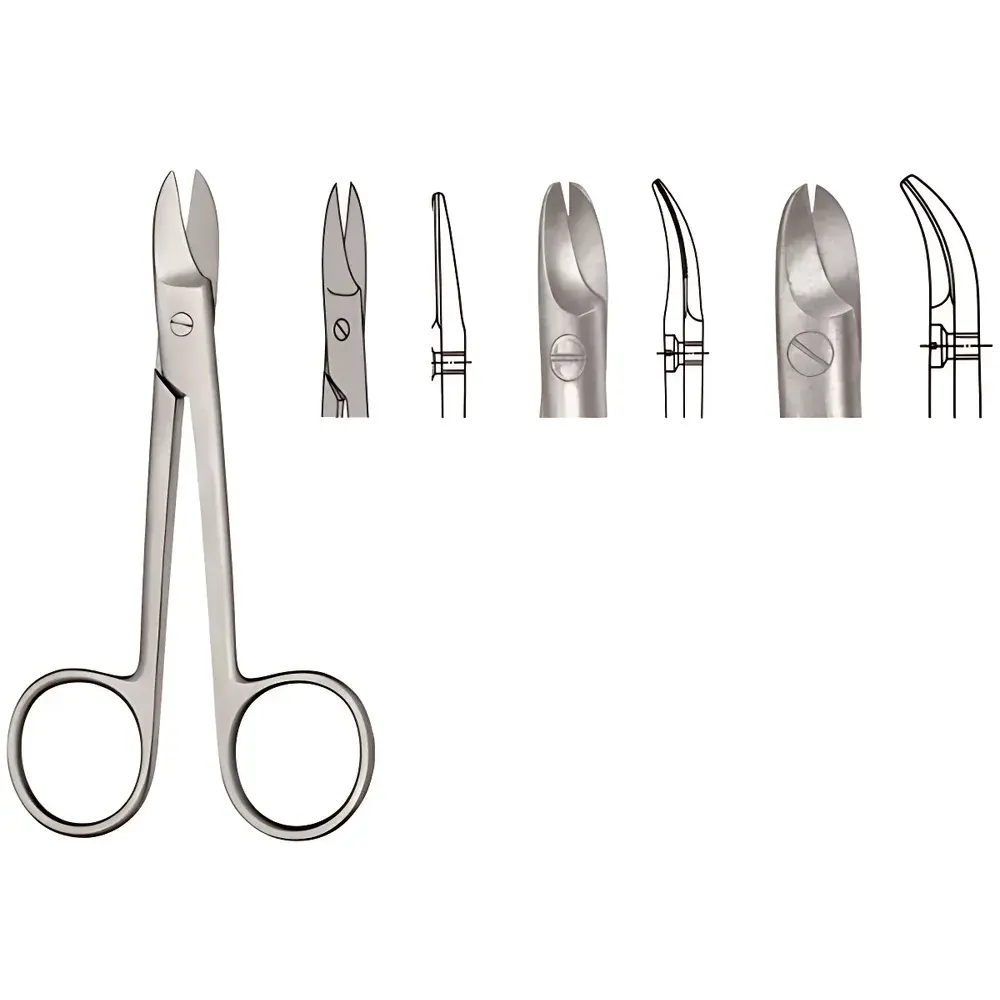
BEEBE Bone Shears – Straight & Curved, 10.5 cm and 11 cm Models
| Brand | RWD |
|---|---|
| Origin | Shenzhen, China |
| Manufacturer Type | Direct Manufacturer |
| Origin Category | Domestic (China) |
| Model Numbers | S16001-10, S16002-10, S16003-11, S16004-11 |
| Pricing | Available Upon Request |
Overview
The BEEBE Bone Shears are precision-engineered surgical instruments designed for controlled, high-fidelity cutting of osseous tissue in preclinical research, veterinary procedures, and anatomical dissection laboratories. Manufactured by RWD (Shenzhen), a certified ISO 13485 medical device producer, these shears operate on a robust lever-action mechanical principle—utilizing optimized blade geometry, calibrated pivot tension, and hardened stainless steel construction to deliver consistent cutting force with minimal slippage or bone fragmentation. Unlike general-purpose scissors, BEEBE Bone Shears feature reinforced beveled edges and cross-hatched serrations (on toothed variants) that engage cortical bone surfaces effectively while preserving adjacent soft tissue integrity. The 10.5 cm and 11 cm configurations reflect ergonomic optimization for both fine cranial/facial bone work and broader orthopedic specimen preparation.
Key Features
- Two distinct tip geometries: straight blades for linear osteotomies and precise midline cuts; curved blades for circumferential or angled bone access in confined anatomical spaces.
- Two functional surface options: fully serrated (toothed) edges for enhanced grip on dense cortical bone; smooth (non-toothed) edges for clean, low-trauma sectioning of softer cancellous or immature bone.
- Consistent 10.5 cm and 11 cm overall lengths—validated for optimal hand–instrument–target alignment in rodent, rabbit, and small canine models per IACUC-recommended ergonomics guidelines.
- High-carbon stainless steel (AISI 420 equivalent) blades, hardened to 54–56 HRC, ensuring long-term edge retention and resistance to corrosion during repeated sterilization cycles (autoclave-safe up to 134°C).
- Textured polymer-coated handles with dual-contour finger rings for secure tactile feedback and reduced operator fatigue during extended use sessions.
Sample Compatibility & Compliance
These shears are validated for use across common preclinical skeletal tissues—including murine calvaria, rat femoral diaphyses, porcine rib segments, and ovine vertebral laminae. All models comply with ISO 7740-1:2021 (Surgical Instruments — Bone Cutting Instruments — Part 1: Requirements and Test Methods) and meet biocompatibility requirements per ISO 10993-1 for short-term tissue contact. As Class I non-sterile, reusable devices, they support GLP-aligned laboratory workflows when integrated into documented instrument tracking and reprocessing protocols. Each batch undergoes dimensional verification (blade parallelism ±0.1 mm, jaw gap ≤0.05 mm at closed position) and mechanical load testing (minimum 12 N cutting force at tip under standardized load conditions).
Software & Data Management
No embedded electronics or software components are present—consistent with passive surgical instrument classification under FDA 21 CFR §878.4490 and EU MDR Annex VIII Rule 1. However, RWD provides traceable lot documentation, including material certificates (EN 10088-1), heat treatment records, and post-manufacturing inspection reports. These documents are compatible with electronic lab notebook (ELN) integration and support audit-ready data archiving for regulatory submissions (e.g., IND-enabling toxicology studies). Optional laser marking of model number and lot ID enables seamless inventory linkage in LIMS environments.
Applications
- Preclinical orthopedic model development: calvarial defect creation, femoral osteotomy stabilization, spinal laminectomy simulation.
- Veterinary surgical training: hands-on practice of bone trimming, ostectomy, and fracture reduction techniques in accredited teaching labs.
- Anatomical specimen preparation: precise disarticulation of bony elements for histomorphometric analysis or micro-CT scanning without thermal or mechanical artifact.
- Biomechanics sample harvesting: extraction of standardized bone cores or beam specimens meeting ASTM F2118-22 dimensional tolerances for tensile/compressive testing.
- Comparative anatomy studies requiring reproducible skeletal sectioning across species, from avian sternums to lagomorph pelvises.
FAQ
Are these shears suitable for human clinical use?
No. BEEBE Bone Shears are designated for research, veterinary, and educational applications only—not cleared for human surgical intervention.
What sterilization methods are validated?
Autoclaving (134°C, 3 min, saturated steam), ethylene oxide (EtO), and low-temperature hydrogen peroxide plasma are all compatible; chemical immersion disinfection must avoid chloride-based solutions.
How is blade sharpness maintained between uses?
RWD recommends manual honing with a ceramic rod (grit #1200) after every 10–15 uses, followed by full recalibration of pivot tension using the included torque-adjustment tool.
Do the S16003-11 and S16004-11 models differ only in tooth configuration?
Yes—S16003-11 features straight, serrated blades; S16004-11 features curved, non-serrated blades. Both share identical handle ergonomics, length, and material specifications.
Is technical support available for international customers?
Yes. RWD maintains ISO 9001-certified technical service channels supporting calibration verification, wear assessment, and replacement part fulfillment (e.g., pivot screws, blade assemblies) with documented lead times.




