
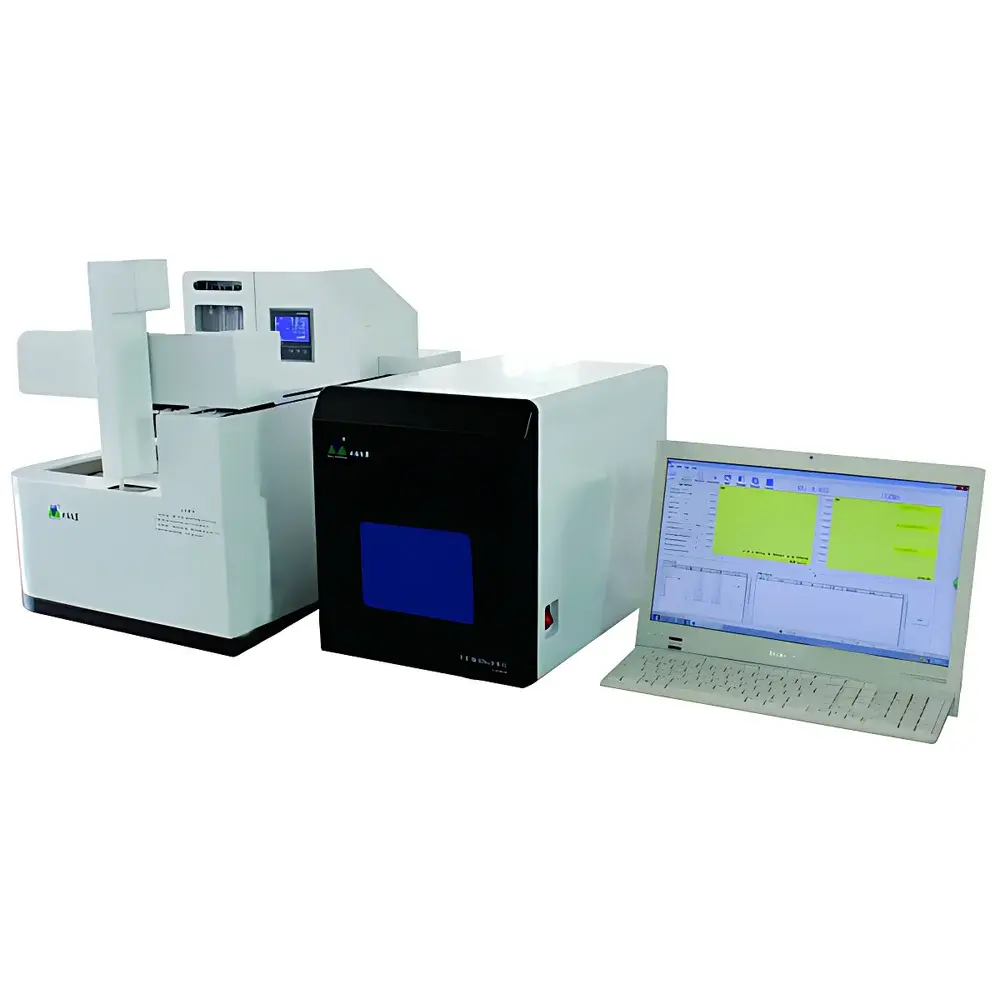
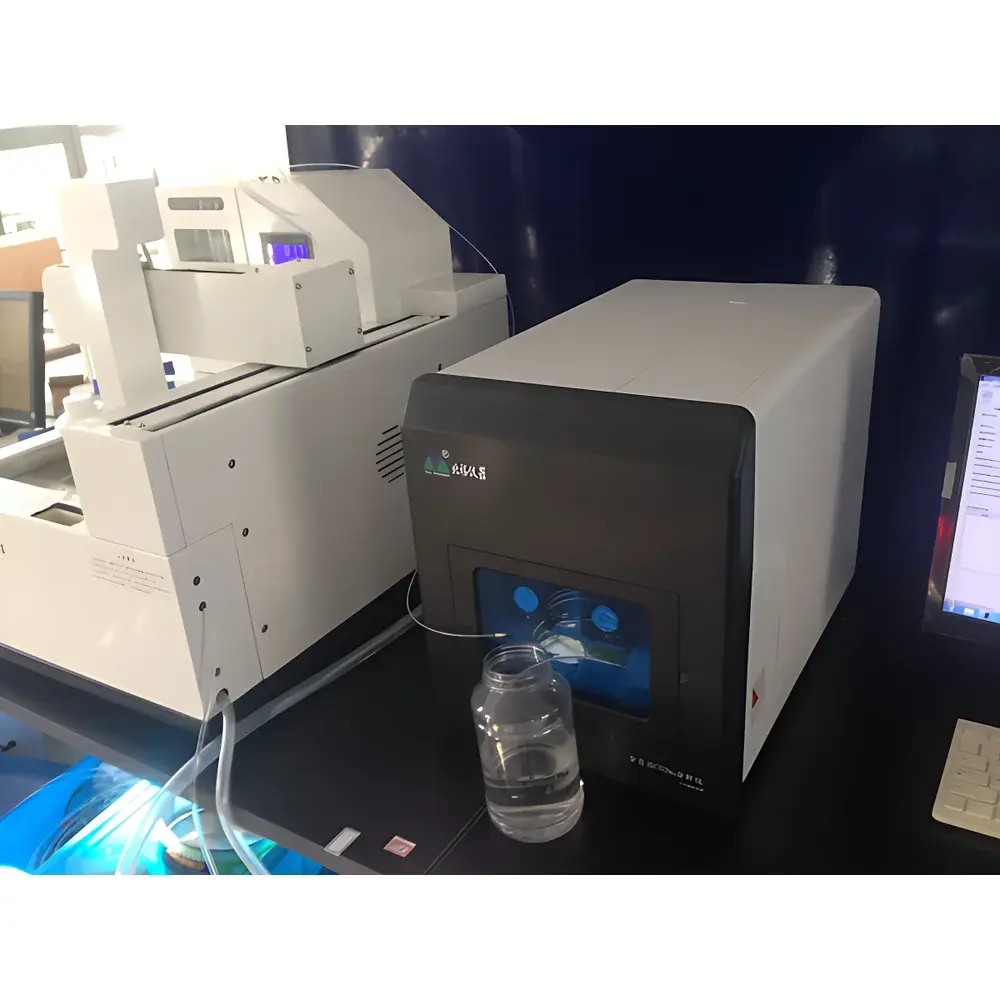
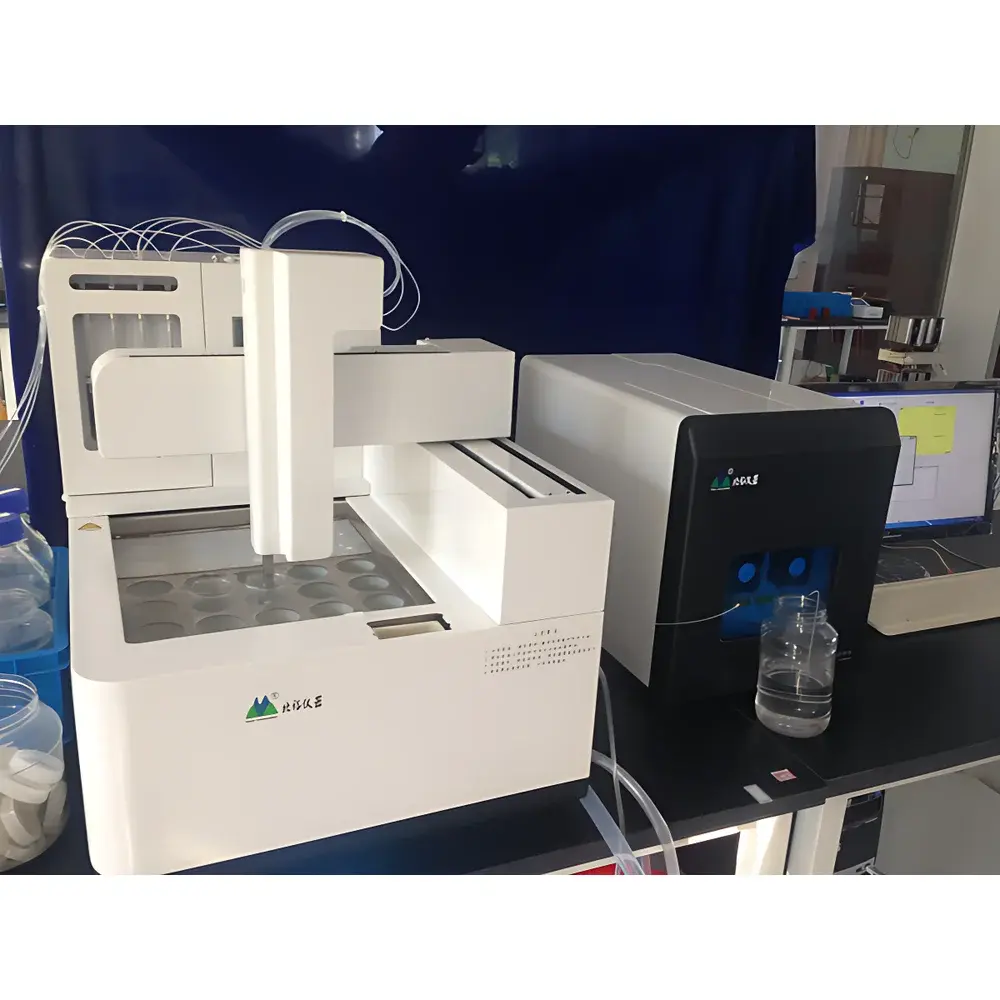
Beiyu Technologies CGM800 Automated Permanganate Index (CODMn) Analyzer
| Brand | Beiyu Technologies |
|---|---|
| Origin | Shanghai, China |
| Manufacturer Type | Direct Manufacturer |
| Model | CGM800 |
| Detection Principle | Colorimetric Quantification via Nitrite Residual Measurement after KMnO₄ Oxidation |
| Range | < 5.0 mg/L |
| Repeatability | RSD < 2% |
| Accuracy | ±5% |
| LOD | 0.08 mg/L |
| Resolution | 0.01 mg/L |
| Sample Throughput | ~4 min per sample (30-sample batch capability) |
| Wavelength Accuracy | ±0.2 nm |
| Wavelength Repeatability | ±0.1 nm |
| Temperature Control Precision | ±0.1 °C |
| Baseline Drift | 0.0002 A |
| Baseline Noise | 0.0001 A |
Overview
The Beiyu Technologies CGM800 Automated Permanganate Index (CODMn) Analyzer is a fully integrated laboratory instrument engineered for precise, high-throughput determination of the permanganate index—a critical parameter in water quality assessment reflecting the oxygen-demanding organic and inorganic substances oxidizable by potassium permanganate under acidic conditions. Unlike conventional manual titration methods (e.g., GB 11892–1989), the CGM800 implements a standardized, two-stage chemical protocol: first, acid digestion of the water sample with KMnO₄ at controlled temperature and time; second, quantitative quenching of unreacted permanganate using stoichiometric sodium nitrite, followed by highly sensitive spectrophotometric quantification of residual nitrite according to HJ/T 197–2005. This indirect photometric approach eliminates subjective endpoint judgment, color interference, and operator-dependent variability—delivering robust, traceable results aligned with national regulatory frameworks for surface water, drinking water source monitoring, and wastewater treatment process control.
Key Features
- Fully automated digestion–analysis workflow: no manual reagent addition, no visual endpoint detection, no manual calculation
- Integrated multi-channel precision syringe pump system with 0.1% volumetric accuracy and independent fluid paths for each reagent—preventing cross-contamination
- Dedicated cleaning station with programmable rinse cycles between samples to eliminate carryover and inter-sample interference
- Optimized sample probe design minimizes reagent mixing and ensures consistent aspiration across turbid or colored matrices
- Real-time electronic liquid-level monitoring with dual-threshold alarms (low/high reservoir status) for uninterrupted operation
- High-stability optical module: wavelength accuracy ±0.2 nm, repeatability ±0.1 nm, baseline drift ≤0.0002 A over 30 min
- Precise thermal management system maintaining digestion and reaction zones within ±0.1 °C—critical for kinetic consistency per GB 11892
- Minimal sample pretreatment required: tolerant to common water matrix interferences including turbidity (up to 500 NTU) and chromaticity (absorbance ≤1.0 at 525 nm)
Sample Compatibility & Compliance
The CGM800 is validated for use with raw surface water, groundwater, treated drinking water, effluent from municipal and industrial wastewater plants, and low-salinity aquaculture systems. It complies with Chinese national standards GB 11892–1989 (determination of permanganate index) and HJ/T 197–2005 (nitrite measurement by gas-phase molecular absorption spectrometry). Instrument performance meets T/CHES 10–2018 (China Hydraulic Engineering Society standard for automated CODMn analyzers), including verification of linearity (R² ≥ 0.999), recovery (85–115% for spiked natural waters), and long-term stability (≤1.5% drift over 8-h continuous run). While not FDA 21 CFR Part 11-certified out-of-box, audit trails, user access logs, and method versioning are configurable to support GLP/GMP-aligned data integrity requirements.
Software & Data Management
The embedded Windows-based control software provides intuitive method setup, real-time status monitoring, and automated report generation compliant with ISO/IEC 17025 documentation guidelines. Each analysis record includes timestamped metadata: sample ID, reagent lot numbers, digestion temperature/time, absorbance readings at 540 nm, calculated CODMn value, RSD per batch, and operator login. Raw spectral data and calibration curves are exportable in CSV and PDF formats. Optional LIMS integration via ASTM E1384-compliant interface enables seamless data transfer to enterprise laboratory information systems. All method parameters—including temperature ramp profiles, injection volumes, and dwell times—are password-protected and version-controlled.
Applications
- Routine monitoring of source water quality in municipal drinking water utilities
- Compliance testing for Class I–III surface water per China’s Environmental Quality Standards for Surface Water (GB 3838–2002)
- Process optimization and effluent verification in textile, food processing, and pharmaceutical wastewater treatment facilities
- Research applications in limnology and environmental chemistry requiring high-reproducibility oxidative demand profiling
- Inter-laboratory comparison studies where standardized, operator-independent methodology is essential
FAQ
Does the CGM800 require distilled water for reagent preparation?
Yes—high-purity deionized or distilled water (resistivity ≥18.2 MΩ·cm) is required for all reagent stock solutions and system rinsing to prevent background interference.
Can the instrument handle seawater or brackish samples?
No—the CGM800 is optimized for freshwater matrices with salinity < 2 g/L. Elevated chloride concentrations interfere with nitrite quantification and are not supported under current firmware.
Is method validation documentation provided with the system?
Yes—each unit ships with a Factory Performance Verification Report including LOD/LOQ verification, linearity assessment (0.1–4.5 mg/L), and repeatability testing across three independent operators.
What maintenance intervals are recommended?
Daily: cleaning of sample probe and waste lines; Weekly: calibration verification with certified reference material (CRM); Annually: full optical alignment and pump calibration by authorized service engineer.
How is data integrity ensured during power interruption?
The system features non-volatile memory that retains all active method parameters and queued samples. Upon restart, it resumes analysis from the last completed step without data loss.
Related Products







