
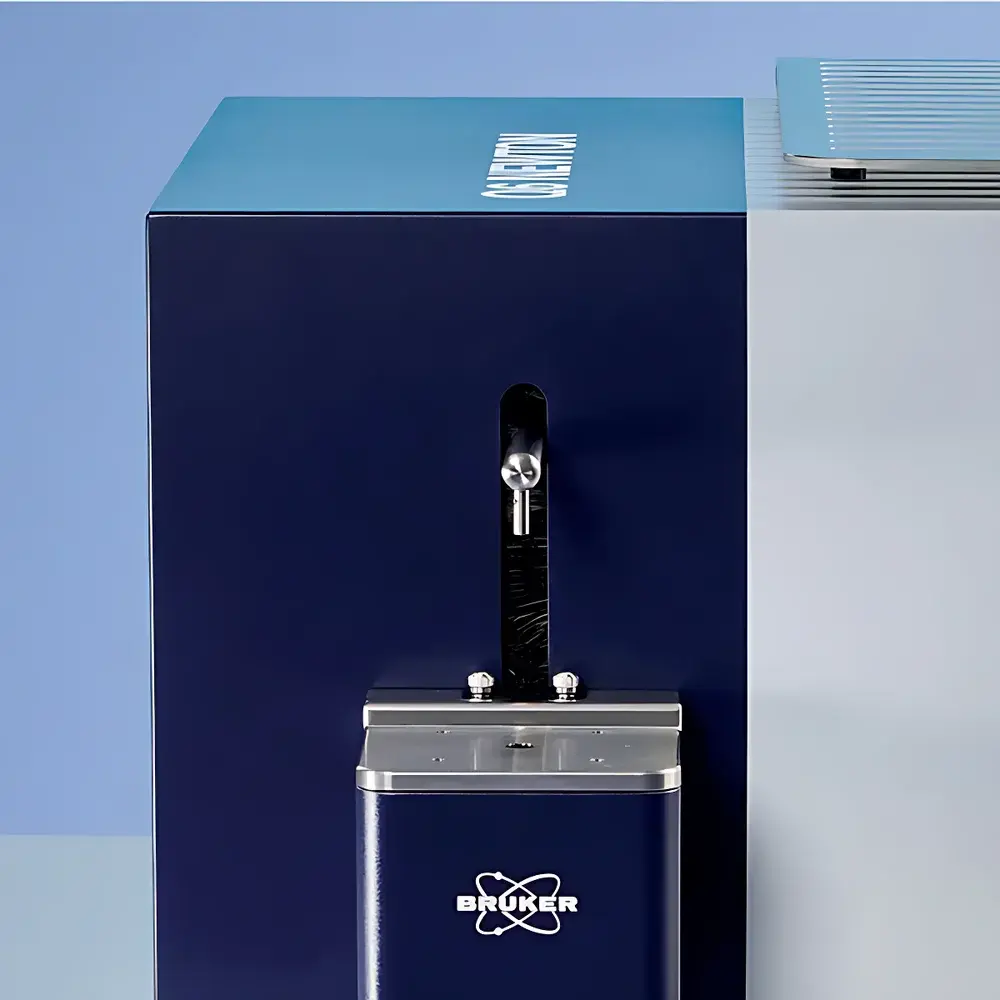
Bruker Q6 NEWTON Spark Optical Emission Spectrometer
| Brand | Bruker |
|---|---|
| Origin | Germany |
| Model | Q6 NEWTON |
| Instrument Type | Benchtop |
| Excitation Method | Spark |
| Detector Type | Photomultiplier Tube (PMT) |
| Focal Length | 800 mm |
| Grating Groove Density | 3600 lines/mm |
| Wavelength Range | 120–200 nm |
| Number of Channels | 128 |
| Argon Consumption | 2–4 L/min (during analysis) |
| Detector Pixel Count / Pixel Size | 3880 pixels per single detector block |
Overview
The Bruker Q6 NEWTON Spark Optical Emission Spectrometer (OES) is a benchtop, high-performance analytical instrument engineered for precise, rapid, and robust elemental analysis of metallic alloys in demanding industrial environments—including foundries, metallurgical laboratories, and quality control facilities. Based on the fundamental principle of spark-induced optical emission spectroscopy, the Q6 NEWTON excites solid metal samples using controlled high-voltage discharges, generating characteristic atomic line emissions across the ultraviolet and vacuum ultraviolet (VUV) spectral regions. These emissions are dispersed via high-resolution echelle or Czerny–Turner optics and detected with optimized photomultiplier tube (PMT) arrays. The system’s architecture integrates thermal stabilization, intelligent spark generation, and dual-path optical detection to ensure long-term calibration stability, low detection limits (sub-ppm for key elements), and high reproducibility—critical for compliance with ISO 11577, ASTM E415, ASTM E1086, and EN 10315 standards.
Key Features
- SmartSpark™ Digital Spark Source: A maintenance-free, fully digital excitation system delivering stable, matrix-optimized pre-spark conditioning and high-energy main sparks. Enables reduced measurement times (<20 s typical), minimized inter-element interference, and improved precision across diverse alloy matrices (Fe-, Al-, Cu-, Ti-, Ni-, and Zn-based).
- SafeGuard™ Real-Time Monitoring System: TÜV-certified hardware-level safety module that automatically terminates sparking upon detection of unsafe conditions—including insufficient argon purity, electrode contamination, poor sample surface contact, or misalignment. Also provides continuous spark quality diagnostics for preventive maintenance planning.
- HighSense™ Detection Architecture: Dual-path PMT readout chain with ultra-low-noise electronics and fast signal processing. Delivers high photon collection efficiency and sub-second spectral acquisition, supporting detection limits down to 0.1 ppm for nitrogen in steel and 0.5 ppm for phosphorus in aluminum.
- RockSteady™ Active Thermal Control: Precision thermo-regulation system maintaining optical bench temperature within ±0.2 °C of setpoint. Eliminates wavelength drift caused by ambient fluctuations and ensures consistent peak resolution and intensity calibration over extended operation cycles.
- Parallel MultiVision™ Dual Optical Chamber Design: Simultaneous VUV (130–200 nm) and UV/VIS (190–800 nm) detection paths—each equipped with RockSteady™ stabilization and HighSense™ readout. Enables comprehensive coverage of critical emission lines (e.g., N I 149.26 nm, P I 178.28 nm, O I 130.22 nm) without mechanical switching or spectral gaps.
- SmartButton™ Operator Interface: Context-aware tactile control enabling one-touch start/stop, non-analytical sample positioning (via timed press), and real-time status feedback through multi-color LED sequencing—reducing operator error and training time.
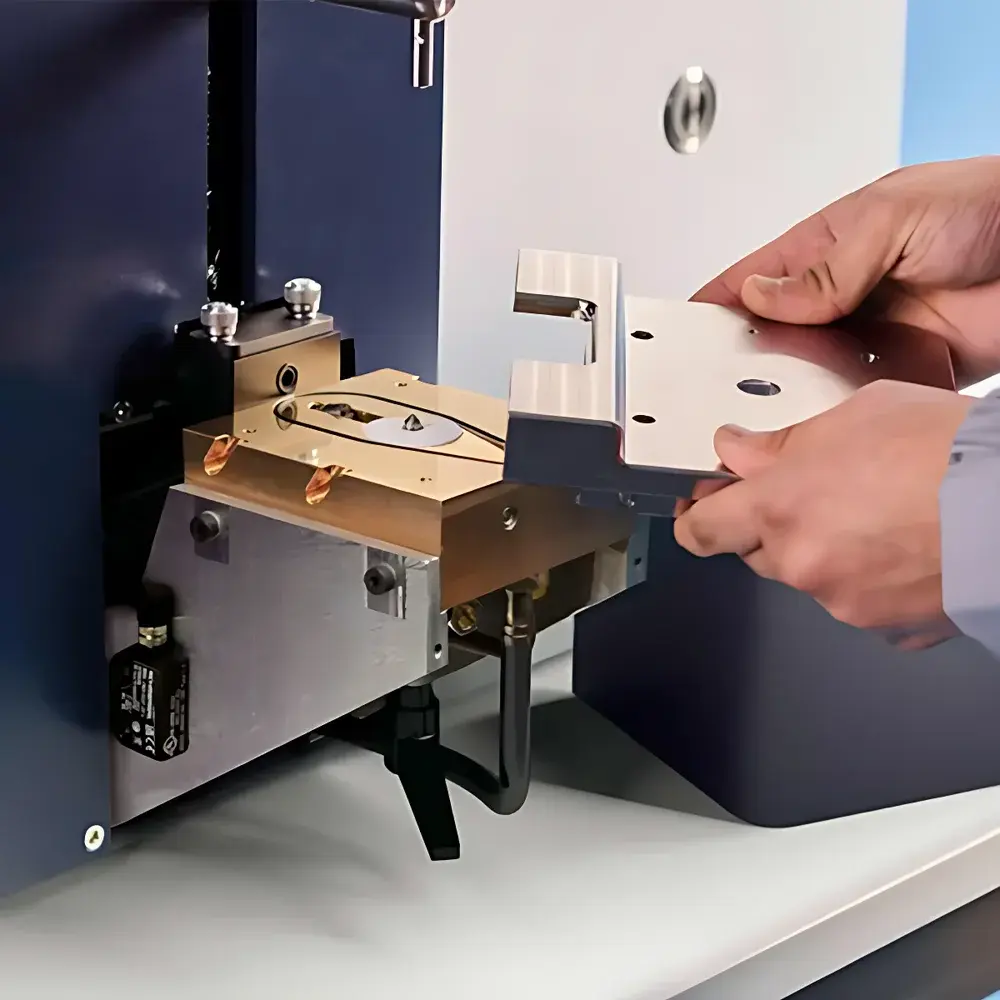
- Low-Maintenance Spark Stand & Pneumatic Sample Holder: Reinforced ceramic spark stand with large-diameter sample stage accommodates irregular geometries up to Ø100 mm. Integrated pneumatic clamping ensures uniform pressure and optimal electrode-sample gap, independent of operator skill.
- Optimized Argon Delivery System: Coaxial gas flow architecture supplies purified argon simultaneously to both optical chambers and the spark gap. Intelligent consumption management reduces average argon usage by up to 40% versus conventional OES systems—verified under ASTM E2882-compliant purge protocols.
Sample Compatibility & Compliance
The Q6 NEWTON supports direct solid sampling of conductive metals and alloys—including ferrous and non-ferrous grades such as carbon steels, stainless steels, tool steels, aluminum alloys (e.g., 1xxx–7xxx series), copper alloys (brass, bronze), titanium alloys (Ti-6Al-4V, CP-Ti), nickel superalloys (Inconel®, Hastelloy®), and zinc- or magnesium-based die-cast materials. Sample preparation follows ISO 11084 (surface grinding) and ASTM E2109 (flatness and roughness requirements). The instrument meets CE marking directives (2014/30/EU EMC, 2014/35/EU LVD), RoHS 2011/65/EU, and is designed for GLP/GMP environments requiring audit trails, user access control, and electronic signature support per FDA 21 CFR Part 11 when integrated with Bruker’s OPUS LIMS-ready software suite.
Software & Data Management
Controlled via Bruker’s proprietary SparkAnalyzer Pro software, the Q6 NEWTON offers method-driven workflows with embedded calibration validation, drift correction algorithms, and multivariate statistical tools (PCA, PLS regression). All raw spectra, spark parameters, and result histories are stored in encrypted, timestamped databases compliant with ISO/IEC 17025 data integrity requirements. Software modules support automated report generation (PDF/CSV/XLSX), SPC charting (X-bar/R, Cpk), and seamless integration with enterprise MES/QMS platforms via OPC UA or RESTful API. Audit trail functionality records all user actions, parameter changes, and calibration events—with immutable logs retained for ≥36 months.
Applications
- Steel Production & Recycling: Rapid quantification of C, S, P, N, B, Sn, As, and trace rare earth elements in molten bath samples, cast products, and scrap sorting—ensuring compliance with ASTM A615 (rebar), EN 10025 (structural steel), and ISO 9443 (stainless grades).
- Aluminum Alloy Certification: Accurate determination of Mg, Si, Fe, Cu, Mn, Cr, and Ti in extrusion billets and aerospace forgings; critical for meeting AMS 4027 and EN AW-6061 specifications.
- Copper & Brass Manufacturing: Detection of oxygen at ≤5 ppm levels in electrolytic tough pitch (ETP) copper (ASTM B115), plus simultaneous analysis of Pb, Bi, and Se impurities affecting hot workability.
- Titanium & High-Performance Alloys: Trace nitrogen and hydrogen monitoring in Ti-6Al-4V aerospace components (ASTM F2885), where deviations >50 ppm N can compromise fatigue life.
- Non-Ferrous Secondary Smelting: Fast grade identification and impurity screening (Pb, Cd, Hg, Sb) in lead-zinc concentrates and recycled magnesium scrap—supporting ISO 14001 environmental compliance reporting.
FAQ
What sample preparation is required prior to analysis?
Flat, clean, and oxide-free surfaces are mandatory. Samples must be ground using ISO 11084-compliant SiC abrasive paper (P120–P400), followed by ethanol wipe. Minimum thickness: 4 mm; minimum diameter: 10 mm.
Does the Q6 NEWTON require vacuum pumping for VUV analysis?
No. The VUV optical path employs sealed, low-volume purging with high-purity argon (≥99.999%), eliminating need for mechanical vacuum pumps and associated maintenance.
Can the instrument analyze non-conductive materials?
Not directly. Conductive coatings (e.g., graphite or Ag paste) may be applied for limited analysis of carbides or ceramics—but quantitative accuracy is not certified per ISO 11577 for such applications.
How often does the instrument require recalibration?
Typical recalibration interval is 6–12 months under stable lab conditions, verified using certified reference materials (CRMs) traceable to NIST or BAM. Daily drift checks with control samples are recommended.
Is remote diagnostics supported?
Yes. Optional Bruker Remote Support Service enables secure, encrypted remote access for firmware updates, spectral diagnostics, and troubleshooting—fully compliant with GDPR and HIPAA data handling policies.
Related Products






