
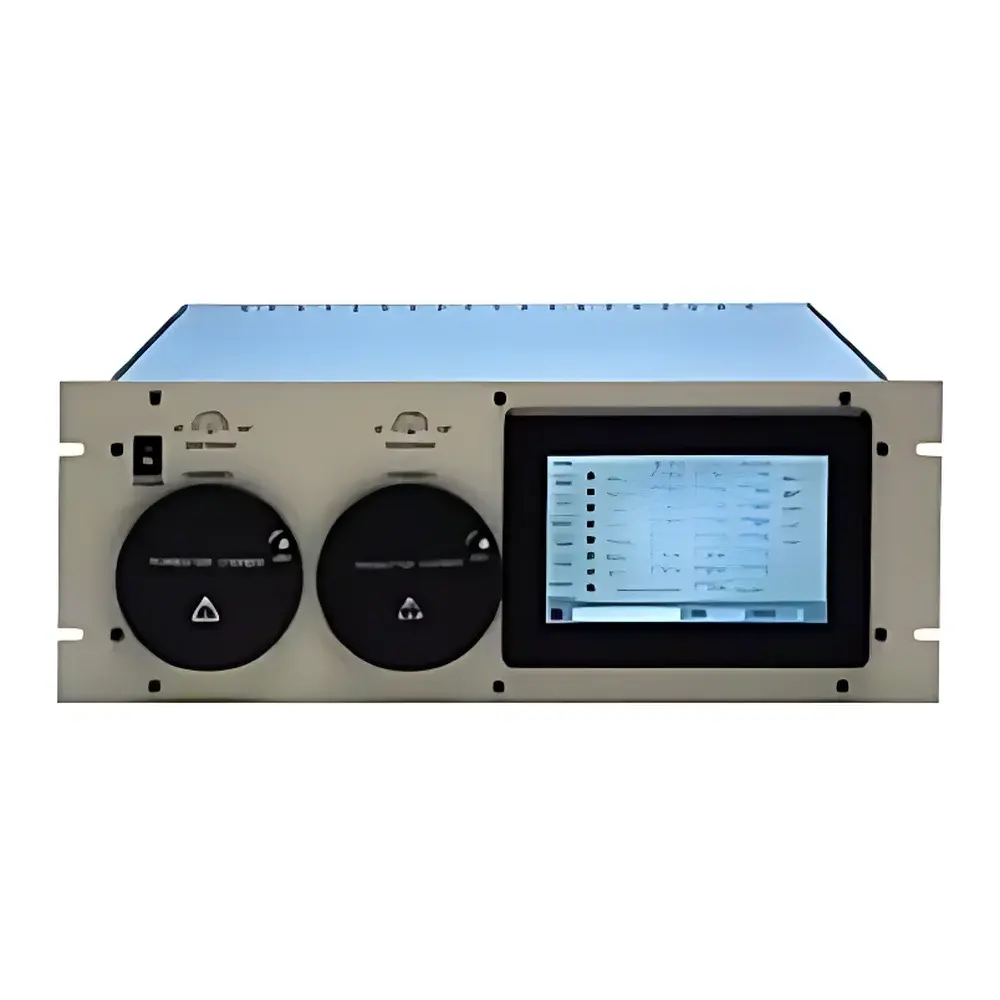
VICI Model 505 Dynacalibrator® Dynamic Calibration Gas Generator
| Brand | VICI |
|---|---|
| Origin | USA |
| Manufacturer Type | Authorized Distributor |
| Import Status | Imported |
| Model | 505 |
| Price Range | USD $1,200 – $6,800 |
Overview
The VICI Model 505 Dynacalibrator® is a precision-engineered dynamic calibration gas generator designed for trace-level and low-concentration gas standard generation in analytical laboratories, environmental monitoring facilities, and industrial emissions testing environments. It operates on the principle of temperature-controlled permeation—where volatile organic compounds (VOCs) or inorganic gases are released at a stable, predictable rate from certified permeation tubes housed in thermally regulated chambers. By maintaining chamber temperature with ±0.01°C stability at 110°C, the system ensures high reproducibility of permeation rates across extended operational periods. Unlike static gas cylinders, the Model 505 dynamically synthesizes calibration standards *in situ*, enabling continuous, on-demand generation of gas mixtures ranging from sub-ppb to high-ppm concentrations—critical for calibrating GC-FID, GC-ECD, PID, FTIR, and laser-based gas analyzers.
Key Features
- Dual independent permeation chambers with individual temperature control (30°C to 110°C), each equipped with a dedicated carrier gas mass flow controller (MFC)
- High-stability thermal regulation: ±0.01°C accuracy at 110°C, achieved via precision PID-controlled heating and insulated chamber design
- Four-position selection valve per chamber: Zero (purge), Chamber 1, Chamber 2, or simultaneous Chamber 1 + Chamber 2 output
- Integrated dual-MFC architecture: one MFC for carrier gas (fixed factory-calibrated flow), another for diluent gas (user-adjustable, real-time monitored)
- Mixing manifold with T-junction configuration ensures homogeneous blending of permeated gas and diluent prior to distribution
- Dual outlet configuration: “SPAN OUT” for calibrated gas delivery to analyzers and “Overflow” for pressure-regulated venting to maintain consistent backpressure
- Front-panel digital interface with temperature setpoint display, flow readouts, and status indicators for immediate operational verification
Sample Compatibility & Compliance
The Model 505 supports a wide range of NIST-traceable permeation tubes—including those for benzene, toluene, formaldehyde, NO₂, SO₂, H₂S, and halogenated hydrocarbons—provided they conform to ASTM D6196-22 (Standard Practice for Selecting Air Monitoring Methods for Formaldehyde and Other Carbonyl Compounds) and EPA Method TO-17 requirements. Its construction meets CE marking directives for electromagnetic compatibility (EMC) and low-voltage safety. While not intrinsically safe, the unit is intended for use in non-hazardous laboratory environments compliant with ISO/IEC 17025:2017 clause 6.4 (environmental conditions for equipment operation). No internal pressure vessels or hazardous gas storage are present; all permeation tubes are externally loaded and sealed per manufacturer specifications.
Software & Data Management
The Model 505 operates as a standalone hardware platform without embedded software or network connectivity. Temperature setpoints and flow configurations are manually adjusted via front-panel controls, ensuring deterministic behavior and eliminating firmware-related drift or cybersecurity exposure. For GLP/GMP-aligned workflows, users may document calibration parameters (e.g., chamber temp, carrier/diluent flow rates, tube lot number, expiration date) in laboratory notebooks or LIMS-integrated spreadsheets. The device’s repeatability and thermal stability support audit-ready traceability when paired with validated permeation tube certificates and routine chamber temperature verification using NIST-traceable thermistors (recommended per USP Analytical Instrument Qualification).
Applications
- Primary and secondary calibration of ambient air quality monitors (e.g., EPA-certified PAMS, Photochemical Assessment Monitoring Stations)
- Verification and span-checking of continuous emission monitoring systems (CEMS) for stack gas analysis
- Method validation and instrument performance qualification per ISO 16000-6, ISO 16017-1, and ASTM D5197
- Generation of multi-component gas standards for GC column retention time alignment and detector response linearity assessment
- Dynamic dilution studies requiring precise concentration gradients (e.g., sensor response time characterization, breakthrough curve analysis)
- Supporting ISO/IEC 17025 accredited testing laboratories where documented uncertainty budgets require traceable, temperature-dependent permeation rate calculations
FAQ
What permeation tube types are compatible with the Model 505?
NIST-traceable permeation tubes with standard 1/4″-28 UNF threading and operating temperature ranges overlapping 30–110°C. Tubes must be certified for use with the target analyte and carrier gas (typically nitrogen or zero air).
Does the Model 505 support automated data logging or remote control?
No. It is a manually operated, analog-controlled instrument. Integration with external data acquisition systems requires optional third-party analog signal adapters (0–5 V or 4–20 mA outputs not natively provided).
How often should chamber temperature calibration be verified?
Per ISO/IEC 17025 requirements, verify chamber temperature accuracy at least daily using an independent, NIST-traceable thermometer before initiating calibration runs.
Can the Model 505 generate zero gas?
Yes—via the “Zero” position on either chamber’s selector valve, which bypasses permeation tubes and delivers only carrier gas through the mixing manifold.
Is the Model 505 suitable for use with reactive or corrosive gases?
Only if compatible permeation tubes and chemically inert wetted materials (e.g., electropolished stainless steel, Kalrez® seals) are specified by the tube manufacturer and validated for the target analyte’s chemical stability at elevated temperatures.



