
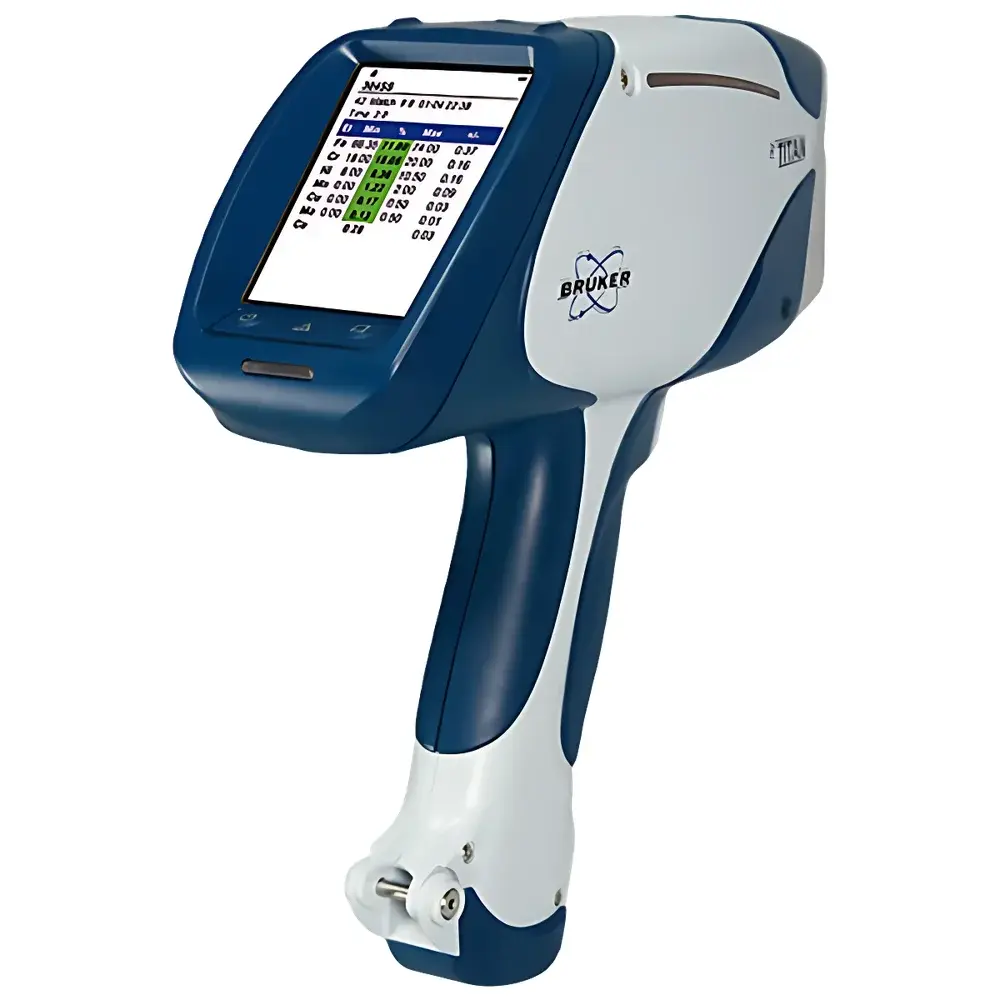
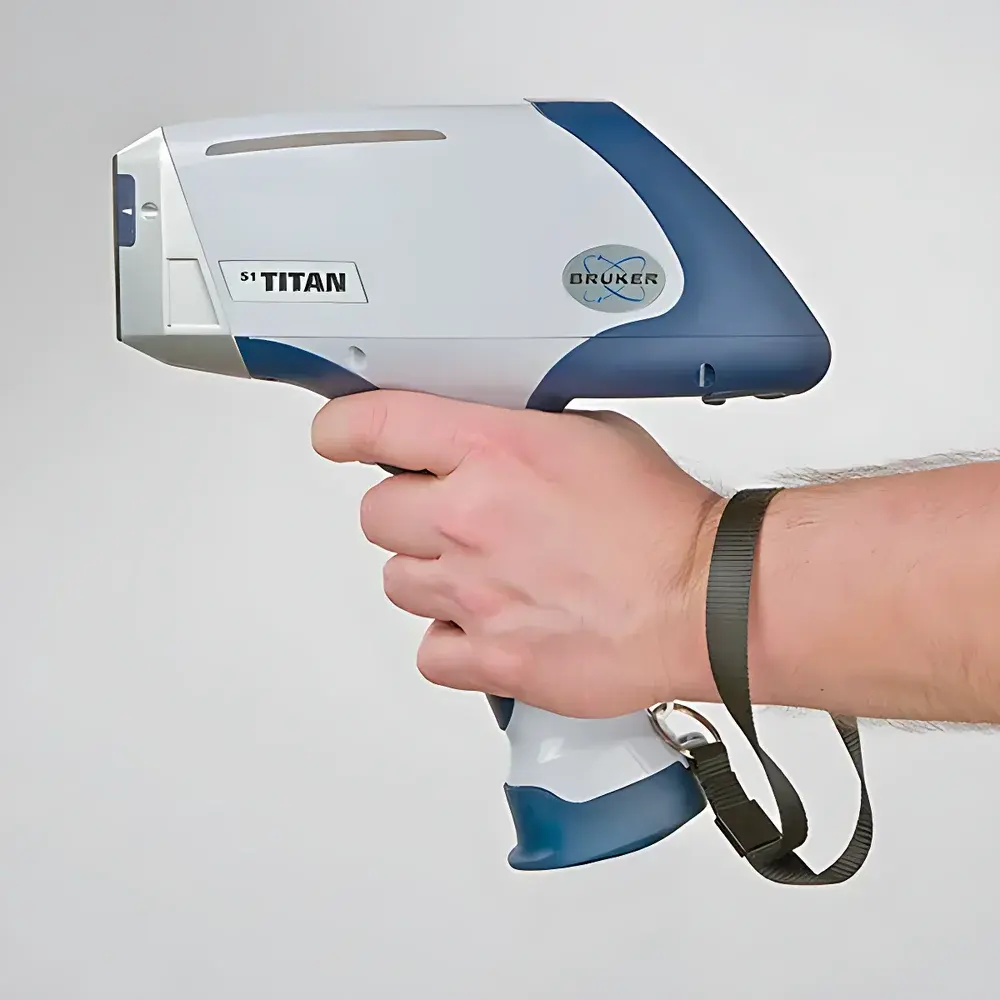
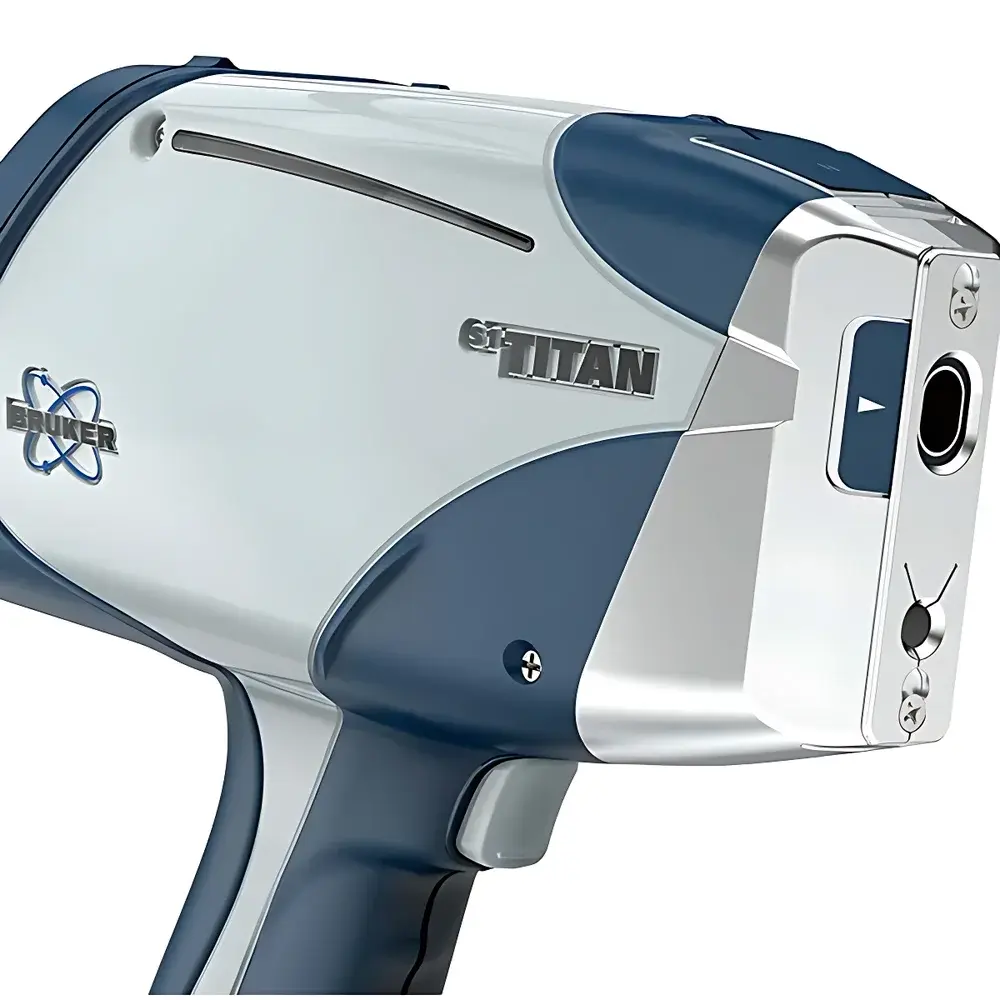
Bruker S1 TITAN Handheld Energy Dispersive X-Ray Fluorescence Spectrometer for Oil Analysis
| Brand | Bruker |
|---|---|
| Origin | Germany |
| Model | S1 TITAN |
| Application | Field-Portable Oil & Lubricant Analysis |
| Instrument Type | ED-XRF Spectrometer |
| Industry Use | Energy & Petrochemical |
| Elemental Range | Na (Z=11) to U (Z=92) |
| Quantification Range | 1 ppm – 99.99 wt% |
| Energy Resolution | <140 eV @ Mn Kα |
| Repeatability | ≤0.1% RSD |
| Detector | Silicon Drift Detector (SDD) |
Overview
The Bruker S1 TITAN is a field-deployable, handheld energy dispersive X-ray fluorescence (ED-XRF) spectrometer engineered for rapid, non-destructive elemental analysis of lubricating oils, hydraulic fluids, diesel fuels, and other petroleum-based matrices. Operating on the principle of X-ray fluorescence—where primary X-rays excite atoms in the sample, inducing emission of characteristic secondary X-rays—the instrument delivers quantitative and semi-quantitative data on elemental composition without sample digestion or laboratory preparation. Its compact, ruggedized design meets IP54 environmental protection standards and is certified for safe operation in Zone 2 hazardous areas common in refineries, offshore platforms, and power generation facilities. Unlike benchtop ICP-OES or ICP-MS systems, the S1 TITAN enables real-time decision-making at the point of use, supporting predictive maintenance strategies by detecting trace wear metals (e.g., Fe, Cu, Al, Cr), contaminants (e.g., Si, Na, Ca), and critical additives (e.g., Zn, P, Ca, Mg) directly in situ.
Key Features
- High-performance Silicon Drift Detector (SDD) with <140 eV energy resolution at Mn Kα, enabling precise peak separation for overlapping transitions (e.g., V Kβ/Si Kα, Pb Mα/As Kα).
- Optimized X-ray tube (Rh anode, up to 40 kV/10 µA) with multiple beam filters to enhance sensitivity for light elements (Na–Cl) and heavy metals (Pb, Hg, U) in complex oil matrices.
- Integrated CCD camera and laser crosshair for precise targeting of small-volume samples (≥0.5 mL) or filter patches containing trapped particulates.
- Rugged magnesium alloy housing with ergonomic grip, drop-tested to 1.2 m, and compliant with MIL-STD-810G for shock, vibration, and thermal cycling.
- Battery-powered operation (rechargeable Li-ion, ≥8 hours continuous use) with hot-swappable battery option for uninterrupted field deployment.
- Onboard spectral deconvolution using fundamental parameters (FP) algorithms and empirical calibrations traceable to NIST SRM 2720a (used oil) and ISO 8503-2 reference filters.
Sample Compatibility & Compliance
The S1 TITAN supports direct analysis of liquid oils (neat or diluted), used oil extracts, membrane filter deposits (e.g., after centrifugation or vacuum filtration), and solid residues from oil filters or sump pans. Sample presentation follows ASTM D6595 (Standard Test Method for Determination of Wear Metals and Contaminants in Used Lubricating Oils or Hydraulic Fluids by Rotating Disc Electrode Atomic Emission Spectrometry) and ISO 11171 (Calibration of automatic particle counters). Instrument compliance includes CE marking per EU Directive 2014/30/EU (EMC) and 2011/65/EU (RoHS), as well as conformity with IEC 61000-4-2 (ESD immunity) and IEC 61000-4-3 (radiated RF immunity). Data integrity protocols align with FDA 21 CFR Part 11 requirements for electronic records and signatures when used in GMP-regulated environments.
Software & Data Management
Bruker’s proprietary S1 PX software provides full control over acquisition parameters, real-time spectrum visualization, and automated quantification using matrix-matched calibration curves. It supports multi-layered user access control (administrator/operator/technician), audit trail logging (including operator ID, timestamp, method version, and raw spectrum hash), and export of results in CSV, XML, or PDF formats compatible with LIMS integration. Customizable reporting templates include trend charts for wear metal concentration vs. operating hours, statistical process control (SPC) limits per ASTM D7688, and alarm thresholds based on OEM-recommended wear limits (e.g., Caterpillar S•O•S, Komatsu KOMTRAX).
Applications
- Predictive maintenance of rotating machinery: Monitoring Fe, Cr, Ni, and Mo concentrations to identify bearing, gear, or cylinder liner wear modes.
- Fuel sulfur compliance verification: Rapid screening of diesel and marine fuel for sulfur content per IMO MARPOL Annex VI and EPA 40 CFR Part 1093.
- Additive depletion assessment: Tracking Zn, P, Ca, and Mg levels to determine remaining service life of anti-wear (ZDDP) and detergent packages.
- Contamination forensics: Identifying Si (dust ingress), Na/K (coolant leakage), or Al (ingestion of atmospheric particulates) in turbine oils and transformer fluids.
- Field verification of oil change intervals: Validating lab-reported results onsite to reduce turnaround time and prevent unnecessary fluid replacement.
FAQ
Does the S1 TITAN require sample preparation for oil analysis?
No—liquid oils can be analyzed directly in standard vials or cuvettes; for enhanced sensitivity, particulate-rich samples are typically filtered onto 0.45 µm mixed-cellulose ester membranes prior to measurement.
How is calibration maintained across varying oil viscosities and base stocks?
Calibration is matrix-corrected using internal standardization (e.g., Co or Y spike addition) and validated against certified reference materials spanning mineral, synthetic, and bio-based lubricants per ISO/IEC 17025 guidelines.
Can the instrument quantify sulfur in ultra-low-sulfur diesel (ULSD)?
Yes—detection limit for S in ULSD is ≤5 ppm (3σ) under optimized conditions (60 s counting time, He purge mode), meeting ASTM D7042 and EN 15971 specifications.
Is spectral interference from chlorine or calcium corrected during phosphorus analysis?
Yes—advanced FP modeling and iterative least-squares fitting resolve overlaps between P Kα (2.01 keV), Cl Kα (2.62 keV), and Ca Kα (3.69 keV) using detector response functions and known matrix composition.
What regulatory documentation accompanies each unit for audit readiness?
Each system ships with a Factory Calibration Certificate, EU Declaration of Conformity, ISO 17025-accredited performance verification report, and optional IQ/OQ documentation packages for pharmaceutical or nuclear-grade applications.




