
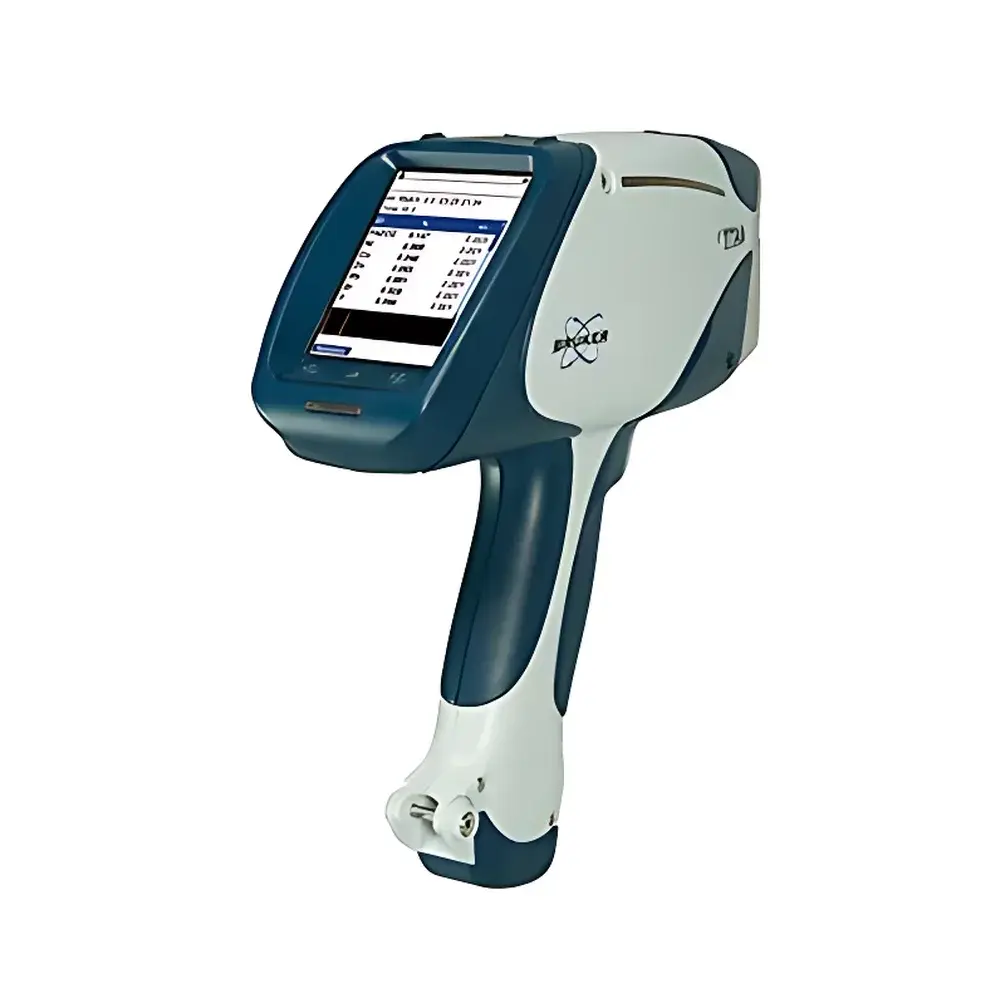
Bruker S1 TITAN Portable Energy Dispersive X-Ray Fluorescence Spectrometer
| Brand | Bruker |
|---|---|
| Origin | Italy |
| Model | S1 TITAN |
| Application | Handheld/Portable |
| Element Range | Mg–U |
| Detection Limit | 1 ppm – 99.99% |
| Energy Resolution | <140 eV (Mn Kα) |
| Repeatability | ±0.1% RSD |
| Detector | Silicon Drift Detector (SDD) |
| Weight | 1.5 kg |
| Compliance | API RP 578, ASTM E2857, ISO 21043, GLP/GMP-ready data audit trail |
Overview
The Bruker S1 TITAN is a handheld energy dispersive X-ray fluorescence (EDXRF) spectrometer engineered for rapid, non-destructive elemental analysis and positive material identification (PMI) of metallic alloys in industrial field environments. Based on fundamental XRF physics—where primary X-rays excite characteristic secondary (fluorescent) X-rays from sample atoms—the instrument quantifies elemental composition by measuring the energy and intensity of emitted photons. Its high-performance silicon drift detector (SDD), coupled with optimized X-ray tube excitation and real-time spectrum deconvolution algorithms, delivers laboratory-grade accuracy under ambient conditions. Designed specifically for compliance-critical applications such as refinery turnaround inspections, pipeline integrity verification, and fabrication QA/QC, the S1 TITAN meets the technical requirements of API Recommended Practice 578 for alloy verification programs and supports traceable, auditable workflows aligned with ISO/IEC 17025 and FDA 21 CFR Part 11 principles.
Key Features
- Sub-second acquisition time for alloy grade identification and quantitative elemental analysis (Mg–U), enabling throughput of >100 measurements per shift without compromising precision.
- High-resolution SDD detector with energy resolution <140 eV at Mn Kα, ensuring robust peak separation for overlapping transitions (e.g., Cr–Fe–Mn, Ni–Co, Mo–Zr) in complex multi-element matrices.
- Integrated continuous automatic gain calibration (CAGC) system maintains spectral stability across temperature fluctuations (−10 °C to 50 °C) and extended operation cycles.
- Ruggedized IP54-rated housing with titanium-reinforced detector window and drop-tested chassis (1.2 m onto concrete), certified to MIL-STD-810G for vibration, shock, and dust resistance.
- Onboard alloy library containing >400 standardized grades (UNS, ASTM, DIN, JIS, GB), supporting automatic match scoring with pass/fail flagging against user-defined tolerance bands.
- Optional micro-spot collimation (≤2 mm diameter) and integrated HD camera for precise targeting of welds, heat-affected zones, or small-diameter piping components.
Sample Compatibility & Compliance
The S1 TITAN is validated for direct analysis of solid metallic samples—including castings, forgings, pipes, valves, flanges, and fasteners—without surface preparation beyond standard cleaning. It accommodates curved, irregular, and elevated-temperature surfaces (up to 200 °C) using optional thermal shielding accessories. All measurement protocols are traceable to NIST SRM reference materials, and factory calibrations are performed against ISO 21043-compliant certified standards. Data output includes full spectral metadata (tube voltage/current, live time, dead time, detector temperature), enabling retrospective reprocessing and inter-laboratory comparability. The instrument’s firmware and software architecture support ALCOA+ data integrity principles and provide electronic signatures, audit trails, and role-based access control required for GxP-regulated environments.
Software & Data Management
Bruker’s proprietary S1 PX software provides intuitive workflow navigation, customizable reporting templates (PDF/CSV/XML), and seamless integration with enterprise LIMS and SAP QM modules via ODBC or RESTful API. Measurement data is encrypted at rest (AES-256) and includes timestamped GPS coordinates, operator ID, and environmental sensor logs (ambient temperature/humidity). Batch export supports automated generation of PMI compliance reports compliant with ASME B31.3, API RP 578 Annex A, and internal QA documentation requirements. Firmware updates are digitally signed and version-controlled, with rollback capability and change-log documentation retained for regulatory review.
Applications
- Refinery and petrochemical plant PMI verification prior to hydrotesting or commissioning, mitigating catastrophic failure risks associated with incorrect alloy substitution (e.g., carbon steel misused in H₂S service).
- Aerospace component certification per AMS 2750E and Nadcap AC7101, including turbine disk, blade, and landing gear material validation.
- Nuclear power plant In-Service Inspection (ISI) of steam generator tubing, reactor vessel internals, and safety-related piping per ASME Section III Appendix VIII.
- Offshore platform structural integrity audits, covering duplex stainless steels (e.g., UNS S32205), super-austenitics (e.g., UNS N08367), and nickel-based alloys (e.g., UNS N06625).
- Scrap metal sorting and recycling facilities performing rapid segregation of stainless, aluminum, copper, and precious metal-bearing alloys.
FAQ
What regulatory standards does the S1 TITAN support for PMI compliance?
It is configured to meet API RP 578, ASTM E2857, ISO 21043, and EN 15309 requirements; full audit trail functionality satisfies FDA 21 CFR Part 11 and EU Annex 11 expectations.
Can the instrument analyze coated or painted surfaces?
Yes—penetration depth of ~1–3 µm allows reliable analysis through thin oxide layers, paint films (<50 µm), and galvanization; thicker coatings require mechanical removal per ASTM E1621.
How is calibration maintained during field use?
CAGC operates continuously during measurement; annual recalibration against certified reference materials is recommended, with optional on-site verification kits available.
Is remote firmware update supported?
Yes—secure OTA updates via Wi-Fi or cellular connection, with SHA-256 signature validation and rollback-safe version management.
What is the typical detection limit for Cr in stainless steel?
At 3σ confidence level, sub-100 ppm detection is achievable for Cr in austenitic and ferritic stainless matrices under standard 30-s measurement conditions.




