
EL-Cell PAT-Single-Stand Electrochemical Test Stand for Single-Cell Battery Evaluation
| Brand | EL-Cell |
|---|---|
| Origin | Germany |
| Model | PAT-Single-Stand |
| Dimensions (W × D) | 105 × 113 mm |
| Height | 80 mm (standalone), 110 mm (with PAT-Cell installed) |
| Weight | 0.56 kg (standalone), 0.96 kg (with PAT-Cell) |
| Material | Battery-grade Al (lower plunger), Cu (upper plunger), PP insulator sleeve |
| Optional current collectors | Stainless steel 316L |
| Electrode configuration | 2-electrode or 3-electrode (with integrated ring-type reference electrode) |
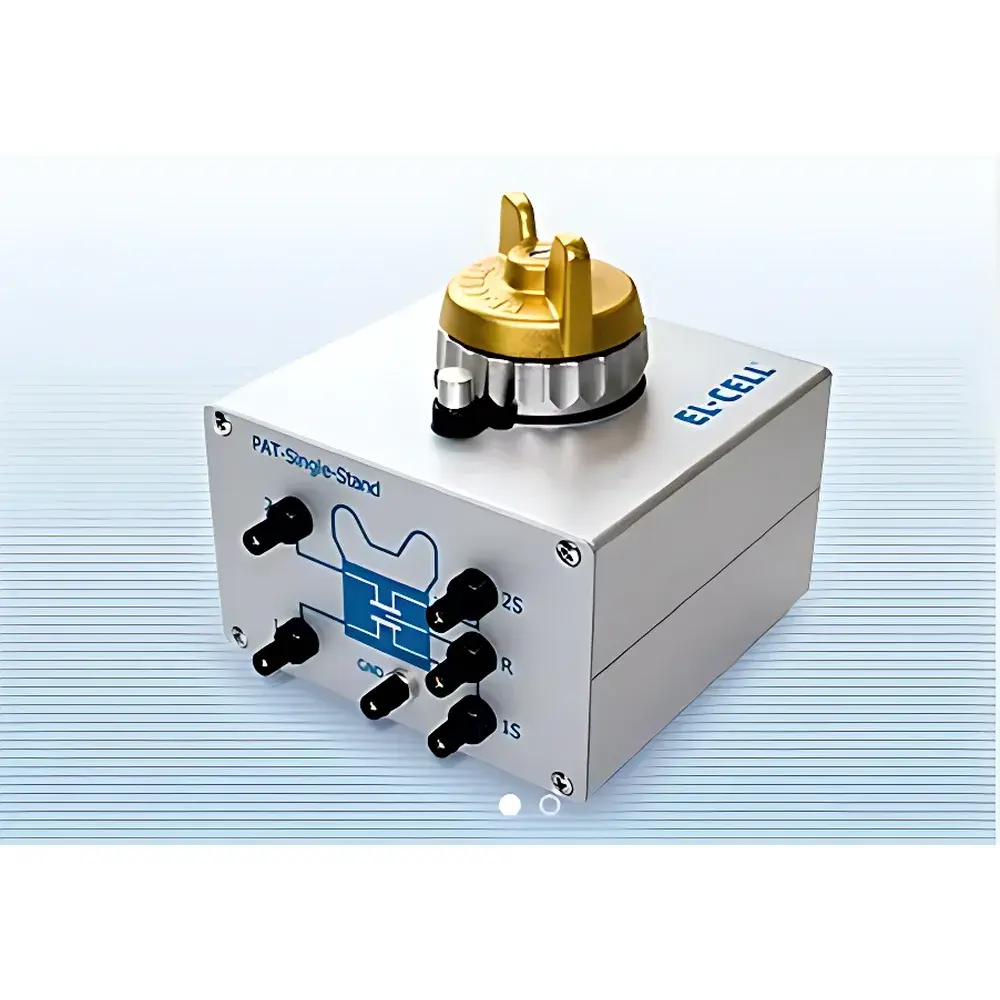
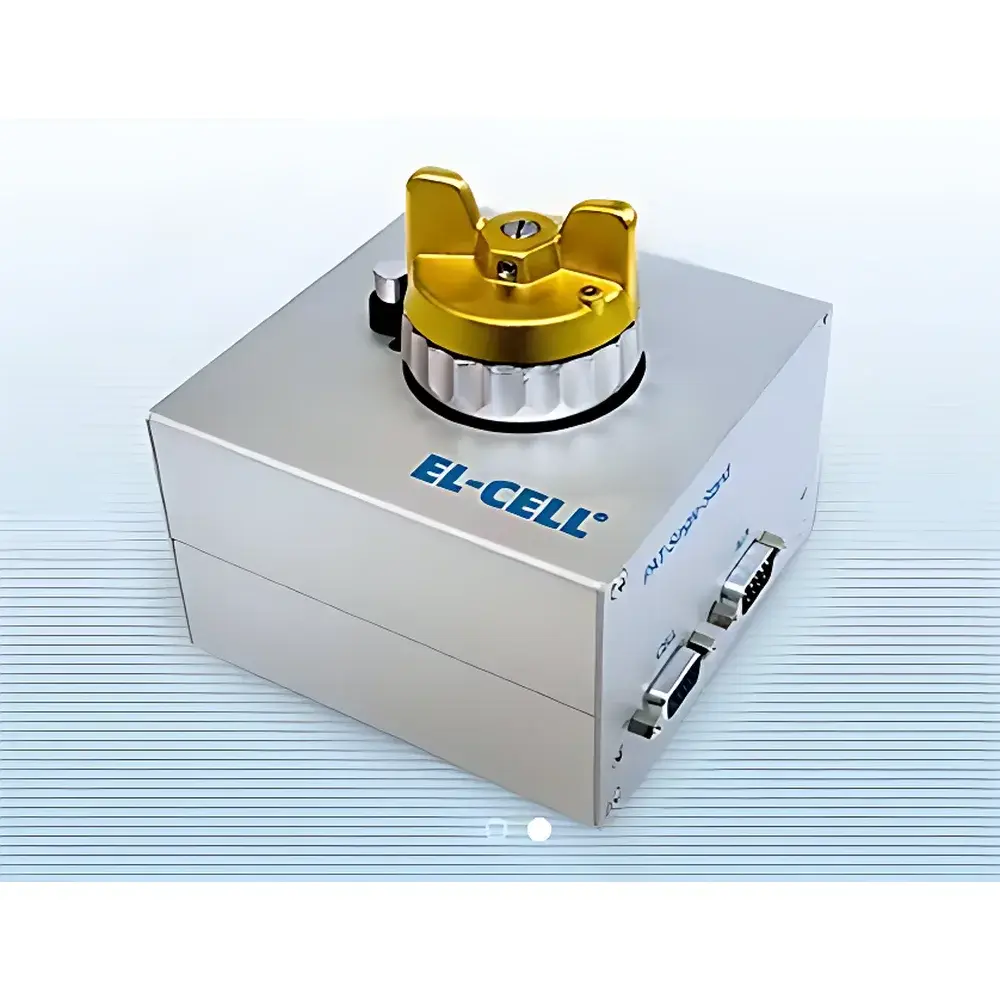
| Connectivity | 4-mm banana sockets or Sub-D hardwired interface |
| Compatibility | Universal potentiostats (e.g., Gamry Reference 3000), battery cyclers, and PAT-series test cells |
Overview
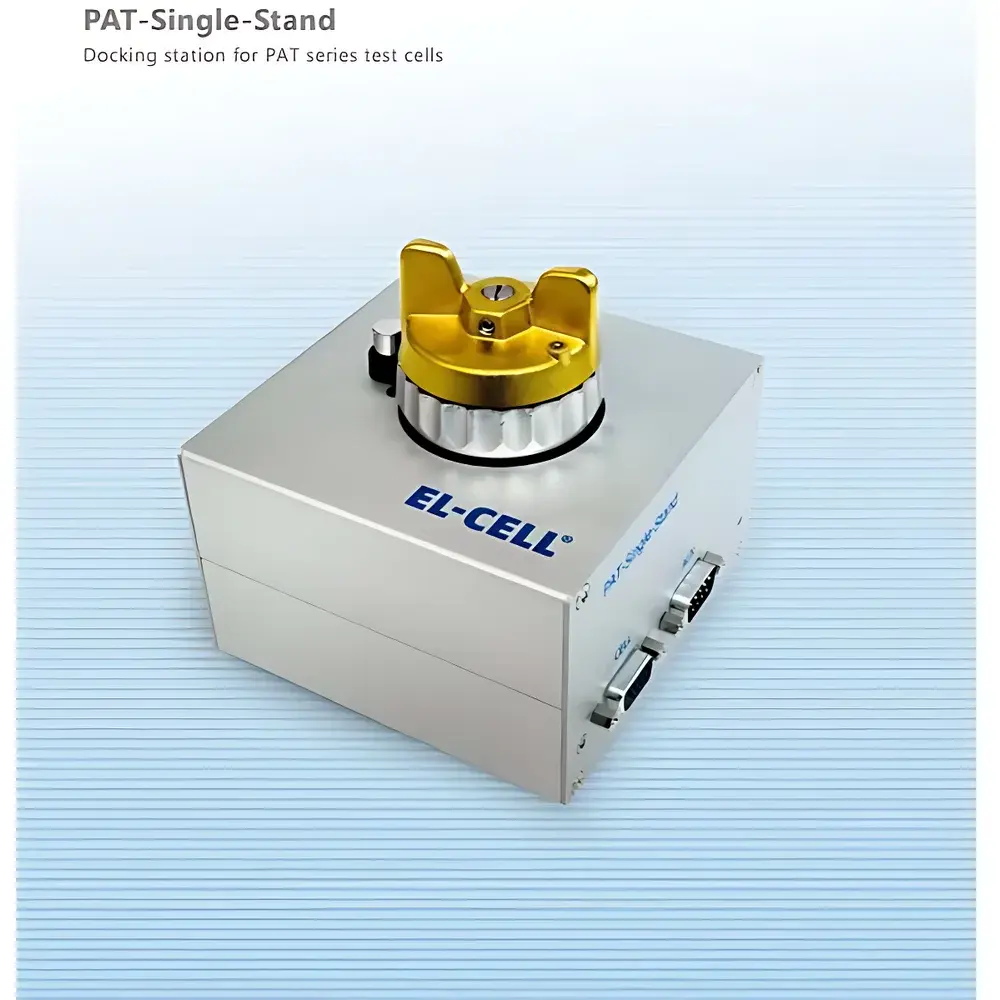
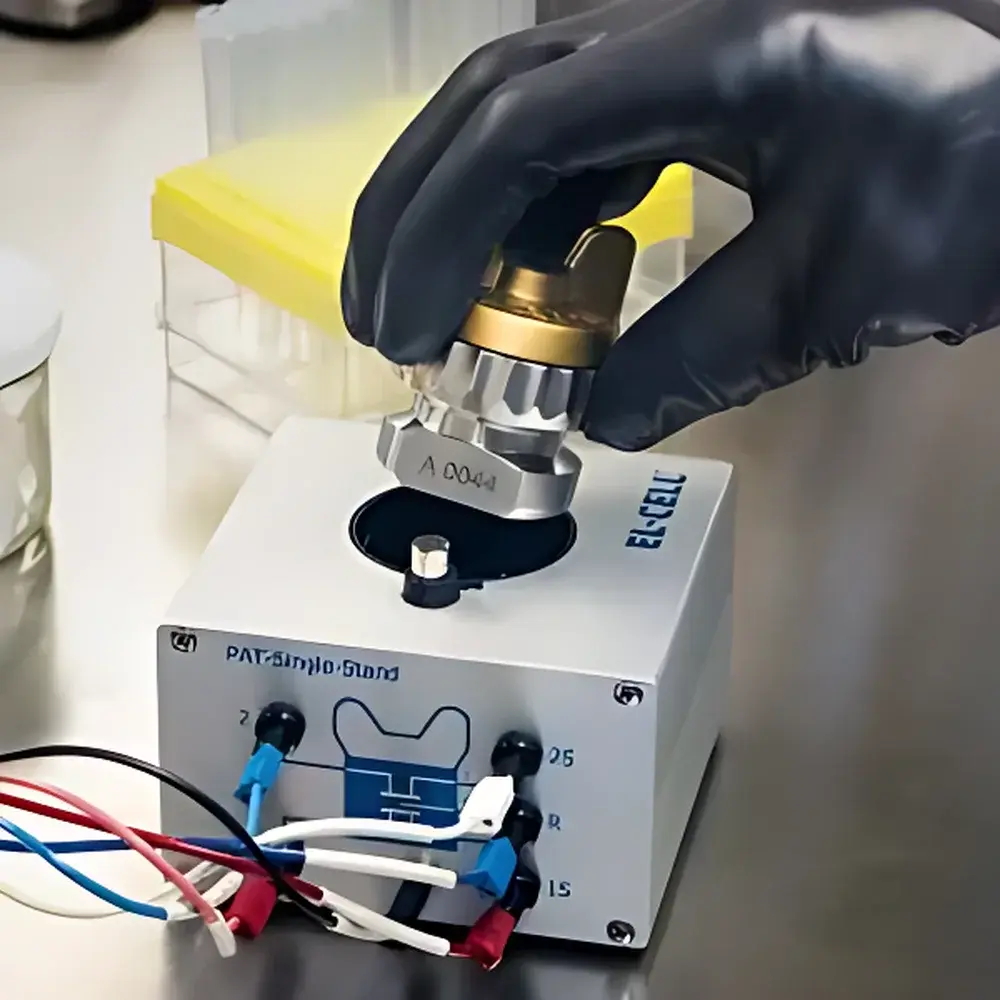
The EL-Cell PAT-Single-Stand is a precision-engineered electrochemical test stand designed specifically for controlled, reproducible single-cell battery evaluation under inert or temperature-regulated environments. It serves as the foundational mechanical and electrical interface between a PAT-series electrochemical cell (e.g., PAT-Core or PAT-Cell) and external instrumentation—including potentiostats, galvanostats, and battery cyclers. Built upon EL-Cell’s modular PAT architecture, the Single-Stand implements a rigid, low-resistance current path using battery-grade aluminum (cathode-side plunger) and copper (anode-side plunger), separated by a chemically inert polypropylene (PP) insulating sleeve. Its mechanical design enables rapid cell insertion and removal while maintaining consistent electrode alignment and contact pressure—critical parameters for minimizing interfacial resistance variability across repeated measurements. The system supports both two-electrode and three-electrode configurations; when used with the optional ring-type reference electrode pre-installed in the insulating sleeve, it facilitates accurate potential control and kinetic analysis of individual electrodes during cycling, impedance spectroscopy, or voltage relaxation studies.
Key Features
- Modular compatibility with all EL-Cell PAT-series cells—including PAT-Core, PAT-Cell, and ECC-PAT-Core—enabling seamless transition from prototype testing to standardized validation protocols.
- Tool-free, single-cell loading mechanism with calibrated axial force transmission, ensuring repeatable electrode compression without manual torque adjustment.
- Integrated 4-mm banana socket interface and optional Sub-D hardwired connection for direct, low-noise coupling to commercial electrochemical workstations (e.g., Gamry Reference 3000, BioLogic VSP-300, or Arbin BT-2000 series), eliminating cable reconfiguration between tests.
- Compact footprint (105 × 113 mm) and low profile (80 mm height standalone) permit unobstructed placement inside standard gloveboxes (Ar+ or N₂ atmosphere) and environmental chambers (−40 °C to +80 °C), supporting in-situ and operando battery characterization under controlled humidity and gas composition.
- Constructive use of battery-relevant materials: anodized aluminum lower plunger (compatible with LiCoO₂, NMC, LFP cathodes), oxygen-free copper upper plunger (suitable for graphite, Si-C, Li-metal anodes), and USP Class VI-certified polypropylene insulation—ensuring electrochemical inertness and long-term sealing integrity.
- Optional stainless steel 316L current collectors available for high-corrosion applications (e.g., aqueous Zn-ion, Li–S, or aggressive electrolyte systems).
Sample Compatibility & Compliance
The PAT-Single-Stand accommodates cylindrical (e.g., 18650, 21700), pouch, and coin-type cells when paired with appropriate PAT-Cell adapters. Its mechanical interface conforms to DIN EN ISO 12100 (safety of machinery) and meets CE marking requirements for laboratory equipment. For regulated environments, the system supports GLP-compliant workflows: raw voltage/current data acquisition preserves timestamped metadata, and when connected to FDA 21 CFR Part 11–compliant software (e.g., EC-Lab v12+, ModuLab XM), full audit trails—including user login, parameter changes, and instrument calibration logs—are automatically generated. All materials comply with RoHS Directive 2011/65/EU and REACH Annex XIV restrictions on SVHC substances.
Software & Data Management
No proprietary firmware or embedded controller is present—the PAT-Single-Stand operates as a passive, analog interface. Full experimental control resides within the host electrochemical workstation’s software. This architecture ensures compatibility with third-party scripting environments (Python via PyGamry, MATLAB Instrument Control Toolbox) and facilitates integration into automated test sequences using LabVIEW or custom SCADA systems. Raw analog signals retain full bandwidth (DC to >1 MHz), preserving fidelity for high-speed transient analysis (e.g., pulse testing, EIS up to 1 MHz). Data export follows standard formats (CSV, TXT, MPT) with column headers compliant with ASTM E2928-22 (Standard Practice for Electrochemical Impedance Spectroscopy Data Exchange).
Applications
- Half-cell and full-cell screening of novel cathode/anode materials (e.g., Ni-rich NMC, silicon composites, solid-state electrolytes).
- Inert-atmosphere functional validation of pre-lithiated electrodes and dry-room-assembled prototypes.
- Temperature-dependent kinetics studies (Arrhenius analysis of charge-transfer resistance) using programmable environmental chambers.
- Reference electrode–enabled differential voltage analysis (DVA) and incremental capacity analysis (ICA) for state-of-charge and degradation mode identification.
- Pre-validation step prior to deployment in multi-channel PAT-Tray systems (4- or 16-position), ensuring protocol consistency and minimizing cross-contamination risk during high-throughput campaigns.
FAQ
Can the PAT-Single-Stand be used with non-EL-Cell cells?
Yes—mechanical adaptors are available for Swagelok-style, Macor-based, or custom-designed cells; however, optimal electrical performance and sealing integrity are guaranteed only with native PAT-Series cells.
Is the reference electrode electrically isolated from the counter electrode?
Yes—the ring-type reference electrode is embedded in the PP sleeve and features a dedicated, shielded lead routed separately from working and counter electrode paths, preventing ground loops and enabling true three-electrode potentiostatic control.
Does the stand include thermal sensors or active temperature control?
No—it is a passive mechanical platform. Temperature monitoring requires external PT100 or thermocouple probes placed adjacent to the cell; integration with chamber PID controllers is supported via standard analog I/O interfaces.
What maintenance is required for long-term reliability?
Annual inspection of plunger surface oxidation and sleeve deformation is recommended; cleaning with isopropanol and lint-free wipes suffices—no lubricants or solvents beyond Class IIa biocompatibility standards should be applied.
How is traceability ensured during GMP-compliant battery qualification?
When paired with 21 CFR Part 11–validated software and electronic lab notebooks (e.g., LabArchives, Benchling), the system supports electronic signatures, role-based access control, and immutable data archiving—fully auditable per ICH Q5C and ISO 17025 requirements.




