
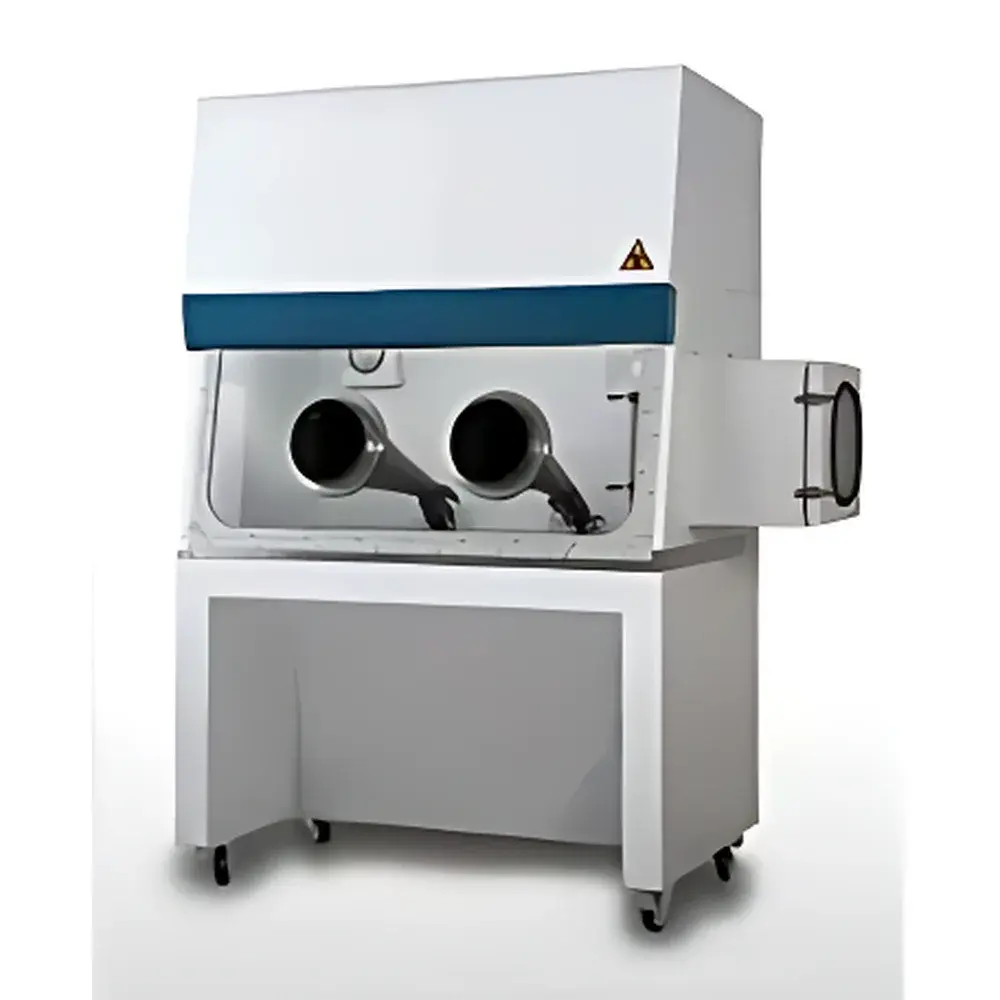
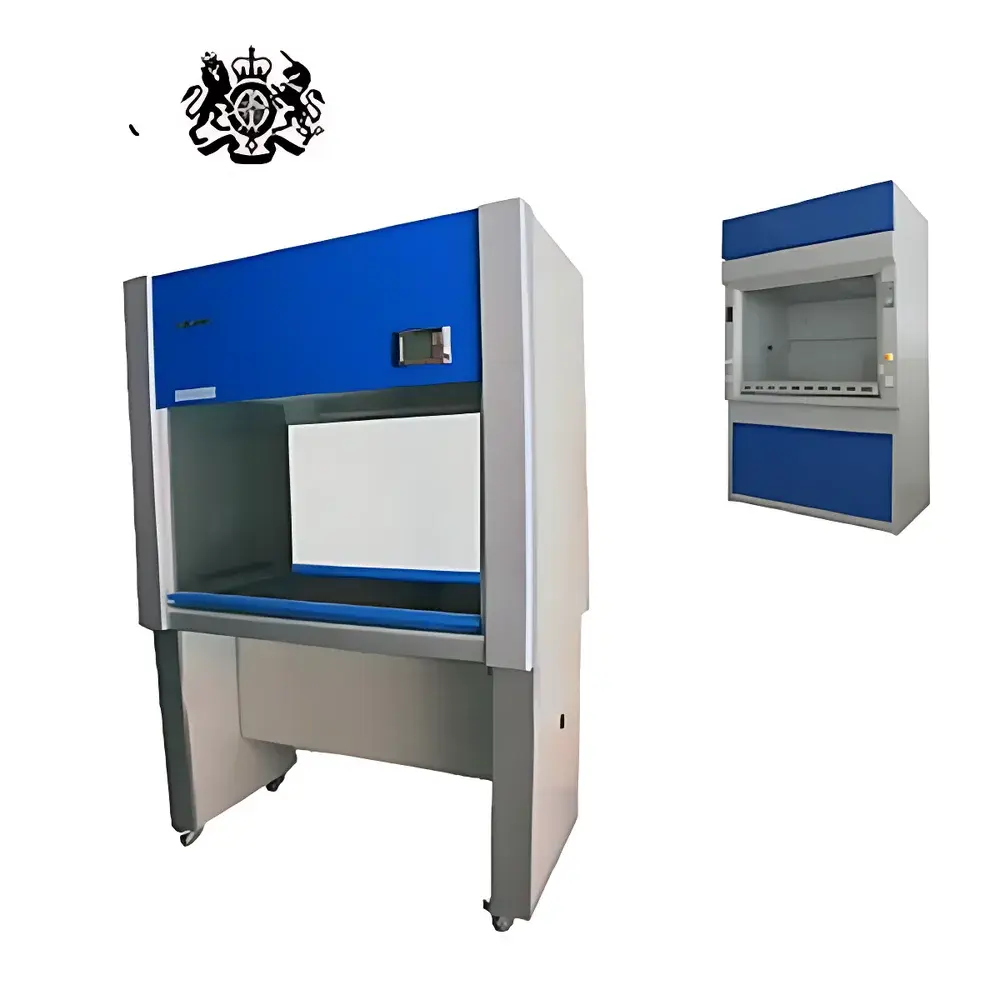
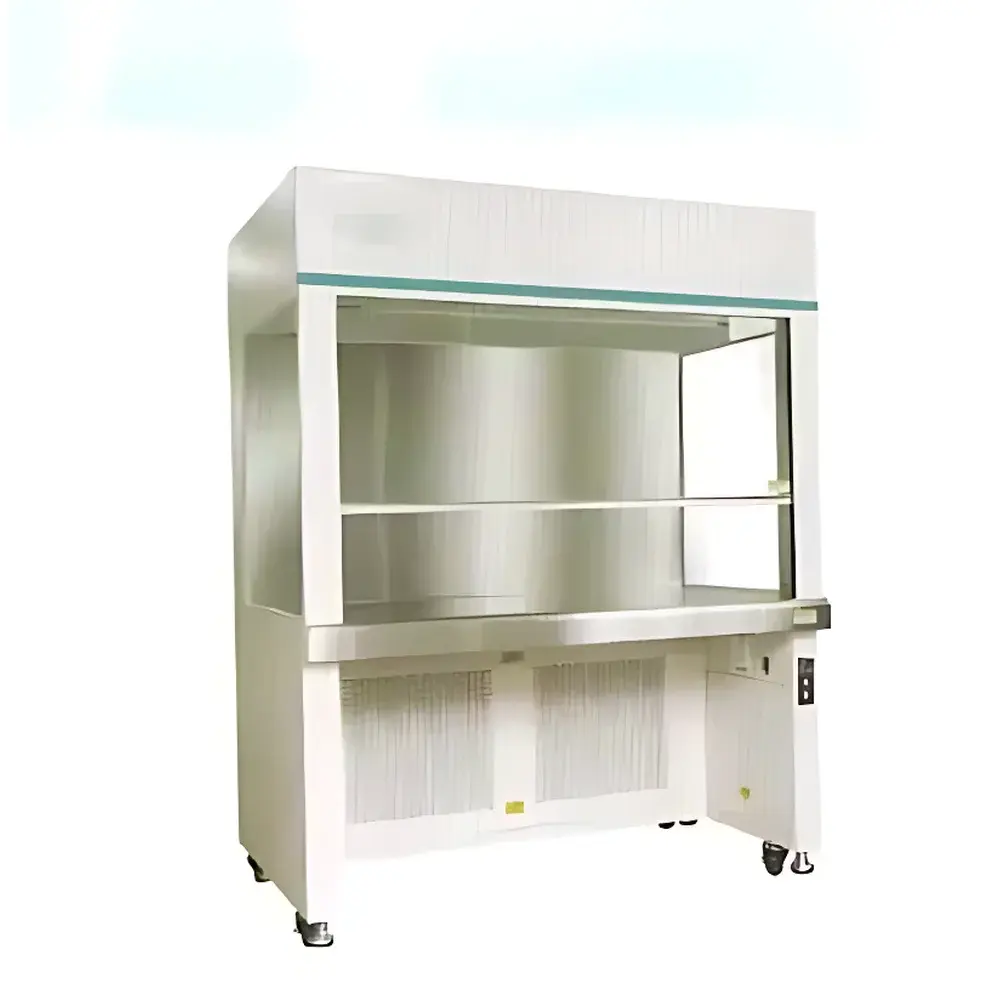
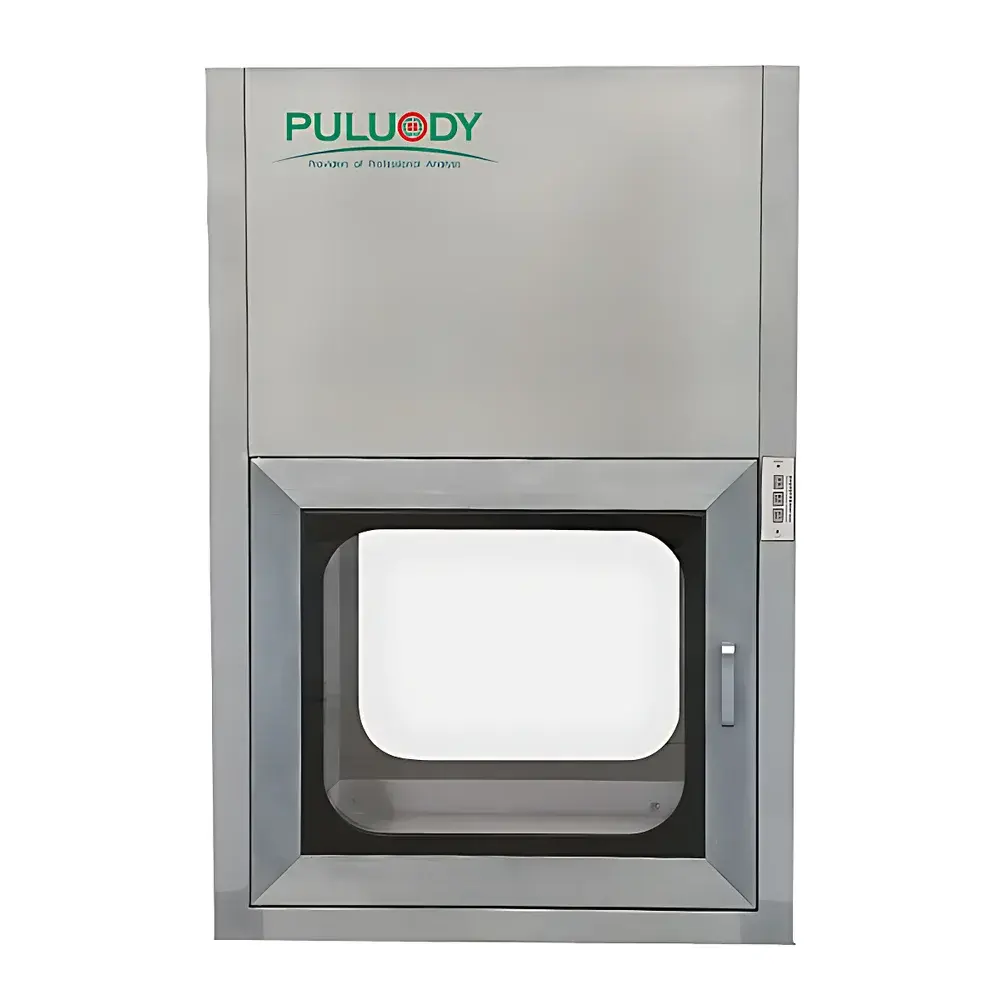
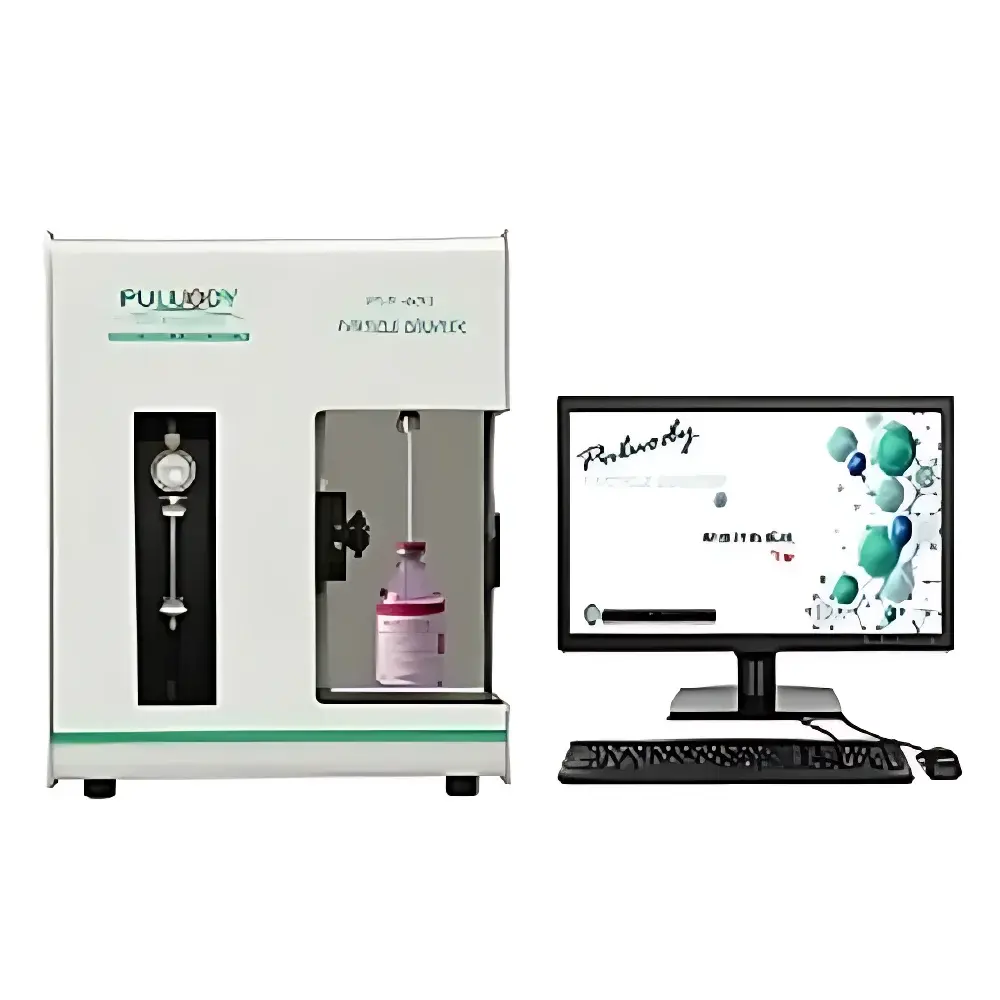
PULUODY PSD-PF10A-0.5 Class 10 Ultra-Clean Laboratory Laminar Flow Hood
| Brand | PULUODY |
|---|---|
| Origin | Shaanxi, China |
| Manufacturer Type | Authorized Distributor |
| Product Origin | Domestic (China) |
| Model | PSD-PF10A-0.5 |
| Dispersion Method | Wet Dispersion |
| Instrument Type | Laboratory Laser Particle Size Analyzer |
| Cleanroom Classification | ISO Class 4 (Equivalent to Federal Standard 209E Class 10) |
| Repeatability | ±1% |
| Measurement Time | 15 s |
| Airflow Velocity Range | 0.25–0.6 m/s (adjustable) |
| Vibration Amplitude | ≤3 µm |
| Noise Level | ≤67 dB(A) |
| UV Sterilization Cycle | 15 min for microbial reduction to sterile conditions |
| Operating Temperature | 10–30 °C |
| Relative Humidity | ≤75% RH |
| Power Supply | AC 220 V ±10%, 50 Hz ±1 Hz |
Overview
The PULUODY PSD-PF10A-0.5 Class 10 Ultra-Clean Laboratory Laminar Flow Hood is a precision-engineered containment system designed to support critical particle characterization workflows—particularly when integrated with laser diffraction-based particle size analyzers requiring ISO Class 4 (10-class) ambient air quality. Unlike conventional laminar flow cabinets, this unit is purpose-built to maintain unidirectional, low-turbulence airflow across the working surface, minimizing airborne particulate interference during sample preparation, dispersion, and introduction into optical measurement zones. Its dual-stage filtration architecture—comprising a pre-filter (polyester non-woven) and a certified HEPA filter (≥99.999% efficiency at 0.3 µm)—ensures that the operational zone consistently meets ISO 14644-1 Class 4 performance criteria under dynamic operating conditions. The cabinet’s structural integrity, stainless steel work surface, and fully welded powder-coated steel enclosure are engineered for long-term dimensional stability and resistance to chemical exposure during wet dispersion protocols.
Key Features
- ISO Class 4 (10-class) clean environment maintained via vertical laminar airflow at 0.25–0.6 m/s, independently adjustable through front-panel controls
- Dual-stage filtration: G4-grade pre-filter + H14 HEPA filter (EN 1822-1 compliant), with directional arrow marking for correct installation and airflow alignment
- Integrated UV-C germicidal lamp (254 nm) with 15-minute sterilization cycle; automatic interlock prevents UV operation during active airflow
- Low-vibration design: mechanical amplitude limited to ≤3 µm RMS during fan operation, preserving optical alignment sensitivity of co-located laser particle analyzers
- Acoustically optimized blower system: noise emission ≤67 dB(A) at 1 m distance, suitable for shared laboratory environments
- Stainless steel 304 work surface (electropolished finish) and full-steel enclosure with epoxy-powder coating for corrosion resistance and ease of decontamination
Sample Compatibility & Compliance
This laminar flow hood supports both aqueous and organic solvent-based wet dispersion procedures used in conjunction with laser diffraction particle sizing systems. It accommodates standard sample dispersion cells, ultrasonic probes, peristaltic pumps, and pipetting stations without compromising laminar uniformity. The unit complies with ISO 14644-1:2015 (Cleanrooms and associated controlled environments), ISO 14644-3:2019 (Test methods), and EN 12464-1:2021 (Lighting of indoor workplaces). For regulated laboratories, it supports GLP and GMP documentation requirements through traceable maintenance logs (filter replacement, UV lamp calibration, airflow verification), and can be validated per Annex 1 (EU GMP) or USP for non-sterile compounding environments where particle control is critical.
Software & Data Management
While the PSD-PF10A-0.5 itself is hardware-only, its operational parameters—including real-time airflow velocity, cumulative UV exposure time, and filter service intervals—are designed to integrate with third-party laboratory infrastructure management platforms (e.g., LabVantage, STARLIMS) via analog 4–20 mA outputs or Modbus RTU communication (optional interface module). Routine validation data (particle count verification using ISO 21501-4 compliant handheld particle counters, airflow mapping per ISO 14644-3 Annex B.5) are structured to align with FDA 21 CFR Part 11 audit trail requirements when recorded within validated electronic lab notebooks.
Applications
- Pre-analytical sample handling for laser diffraction particle size analysis (e.g., Malvern Mastersizer, Beckman Coulter LS series)
- Preparation of nanosuspensions, colloidal dispersions, and pharmaceutical powders under controlled particulate-free conditions
- Calibration standard handling and reference material dispensing where background contamination must remain below 10 particles/m³ (≥0.5 µm)
- Microscopy slide preparation and TEM/SEM grid mounting where electrostatic or airborne debris compromises imaging fidelity
- Quality control environments supporting ISO/IEC 17025-accredited testing laboratories performing particle size distribution reporting
FAQ
What cleanroom classification does the PSD-PF10A-0.5 meet?
It achieves ISO Class 4 (formerly Federal Standard 209E Class 10) in operational mode, verified by particle counting per ISO 21501-4 using ≥0.5 µm and ≥5.0 µm channels.
Can this unit be used with flammable solvents?
Yes—provided the optional explosion-proof fan and intrinsically safe UV ballast are installed, and local fire codes (e.g., NFPA 45) are followed.
How often should the HEPA filter be replaced?
Replacement is triggered when static pressure differential exceeds 250 Pa or when face velocity falls below 0.4 m/s at nominal fan voltage; typical service life is 18–24 months under continuous use in ISO Class 7 ambient labs.
Is UV irradiance intensity monitored or logged?
No built-in sensor; however, annual UV intensity verification using a NIST-traceable radiometer is recommended and documented as part of PQ validation.
Does the unit support IQ/OQ/PQ qualification protocols?
Yes—comprehensive qualification templates (including airflow uniformity mapping, particle challenge testing, and vibration analysis) are available upon request for GxP-regulated deployments.



