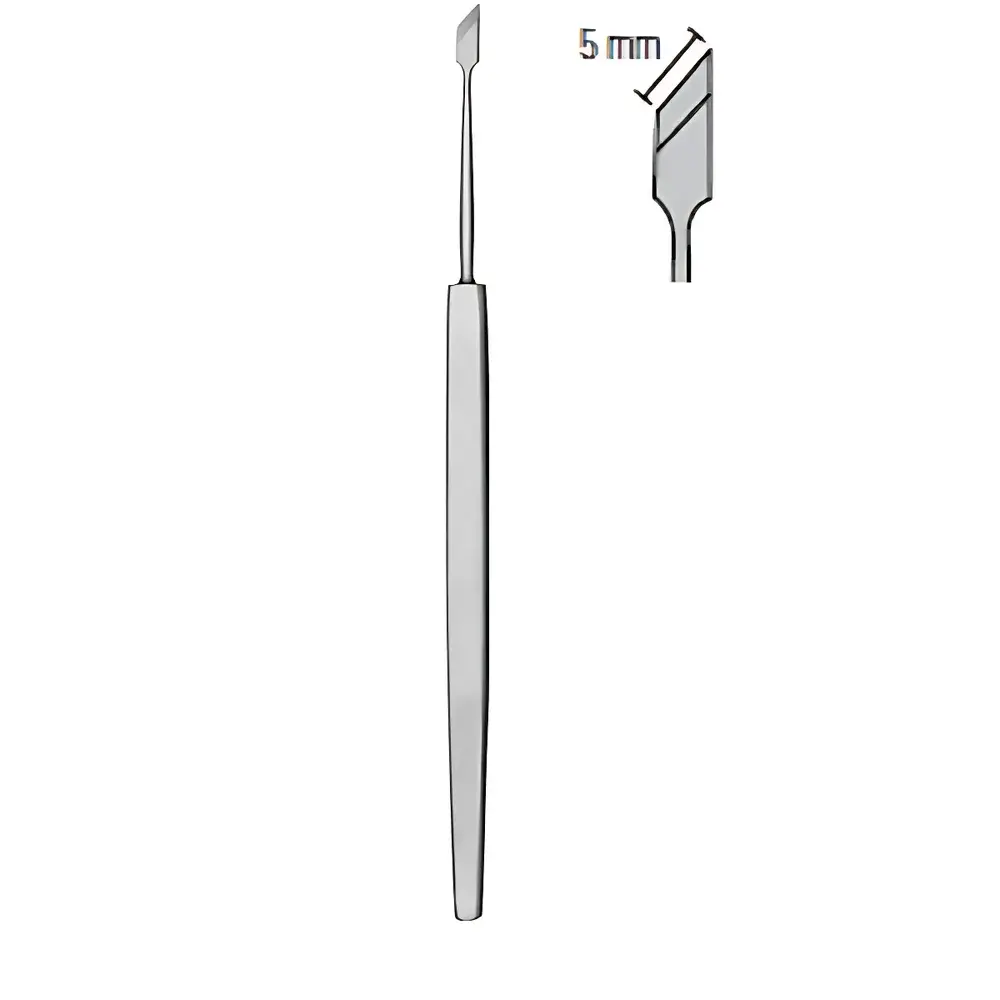
FREER Bone Rongeur – Straight, 4 mm Tip, 16 cm Length
| Brand | RWD |
|---|---|
| Origin | Shenzhen, China |
| Manufacturer Type | Original Equipment Manufacturer (OEM) |
| Country of Origin | China |
| Model | S23001-16 |
| Pricing | Upon Request |
Overview
The FREER Bone Rongeur (Model S23001-16) is a precision surgical instrument engineered for controlled bone and calcified tissue removal in neurosurgical, orthopedic, and craniofacial procedures. Designed according to established ergonomic and biomechanical principles, this straight-configured rongeur features a 4 mm wide biting tip and an overall length of 16 cm, enabling optimal access and tactile feedback during delicate osseous resection. Its operation relies on a manually actuated double-action lever mechanism that delivers high mechanical advantage while maintaining fine control over bite depth and tissue engagement—critical for minimizing collateral damage to adjacent dura, nerve roots, or soft tissue structures. The instrument is intended for single-user, reusable application within sterile environments compliant with ISO 13485–certified manufacturing protocols.
Key Features
- Stainless steel construction (AISI 420 or equivalent medical-grade martensitic stainless alloy) with passivated surface finish for corrosion resistance and biocompatibility
- Sharp, precisely ground 4 mm straight cutting jaws with uniform edge geometry and calibrated spring tension for consistent bite performance
- Ergonomically contoured handles with textured, non-slip grip surfaces to reduce hand fatigue during prolonged use
- 16 cm total length optimized for deep-field access in posterior fossa, spinal laminectomy, and frontal sinus approaches
- Autoclavable up to 134°C (273°F) per EN 285 and AAMI ST79 standards; compatible with low-temperature sterilization modalities including hydrogen peroxide plasma
- Manufactured under strict quality control in an ISO 13485–certified facility in Shenzhen, China
Sample Compatibility & Compliance
This rongeur is designed for manual use on human osseous tissue—including cortical and cancellous bone—as well as calcified cartilage and ossified ligaments. It is not intended for use on metal implants, dental enamel, or synthetic biomaterials requiring specialized instrumentation. The device complies with essential requirements outlined in the EU Medical Device Regulation (MDR 2017/745), including biocompatibility per ISO 10993-1, mechanical safety per ISO 7153-1, and labeling requirements per UDI implementation guidelines. Documentation includes CE marking (Class I, non-sterile, reusable), technical file summary, and sterilization validation data upon request. For FDA-regulated markets, the instrument falls under 21 CFR §878.4510 (Bone Rongeurs) and may be distributed as a 510(k)-exempt Class I device when supplied non-sterile and reusable.
Software & Data Management
As a manually operated mechanical instrument, the FREER Bone Rongeur does not incorporate embedded electronics, firmware, or software components. Consequently, no data acquisition, storage, or connectivity functions are present. All usage records—including sterilization logs, maintenance intervals, and functional inspections—must be maintained manually by the end-user facility in accordance with local GLP/GMP or Joint Commission requirements. Reusable instruments of this class require documented traceability per ANSI/AAMI ST98:2022, including lot-specific manufacturing identifiers engraved on the handle for audit readiness.
Applications
- Decompressive craniectomy and skull base drilling preparation
- Laminectomy and laminoplasty for spinal cord decompression
- Frontal sinusotomy and ethmoidectomy in functional endoscopic sinus surgery (FESS)
- Craniosynostosis correction and calvarial reshaping in pediatric neurosurgery
- Removal of osteophytes and bony spurs impinging on neural foramina
- Preparation of bony beds prior to cranioplasty or alloplastic implant placement
FAQ
Is this instrument supplied sterile?
No. Model S23001-16 is supplied non-sterile and must be sterilized prior to first use per institutional protocol.
What is the recommended cleaning and decontamination method?
Immediate manual cleaning with enzymatic detergent followed by ultrasonic agitation (≥10 min), thorough rinsing, and drying is required before sterilization. Avoid chloride-based cleaners.
Can this rongeur be sharpened after repeated use?
Yes—re-sharpening is permissible using certified medical instrument sharpening services adhering to ISO 7740-1 specifications for cutting edge geometry restoration.
Does RWD provide instrument tracking or UDI labeling?
Each unit bears a permanent laser-engraved serial number and model identifier compliant with EU MDR UDI-DI requirements; full UDI-PI assignment is available upon request for bulk orders.
What is the expected service life under proper maintenance?
With adherence to validated cleaning, inspection, and sharpening cycles, typical functional lifespan exceeds 500 sterilization cycles or 3–5 years of routine clinical use.
Related Products