
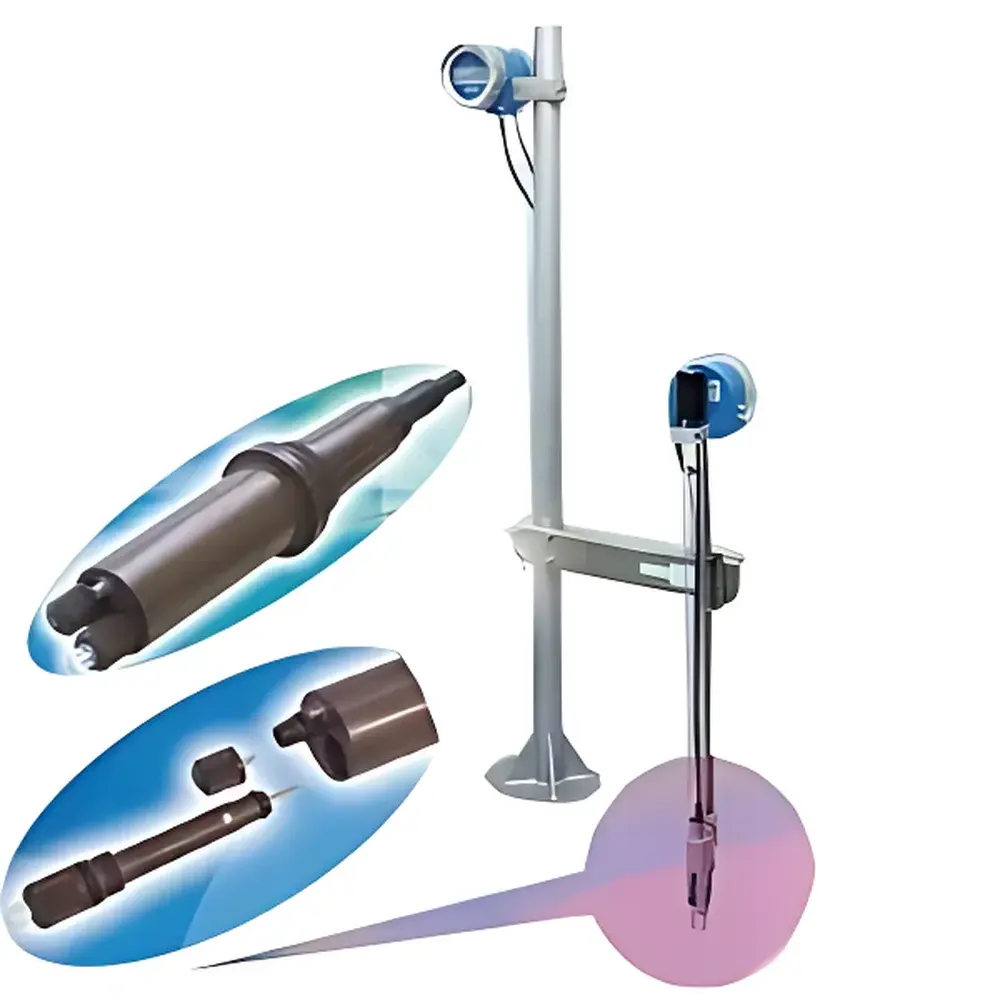
HACH DKK GSS/PSS/ASS Series Replaceable-Sensor Electrode Systems
| Brand | HACH |
|---|---|
| Origin | Imported |
| Manufacturer | DKK Toa (Japan), Distributed by HACH |
| Model Series | GSS-304A/B/F, GSS-314A/B/F, PSS-304B, PSS-314B, ASS-304B, ASS-314B |
| Sensor Type | Replaceable pH/ORP/Conductivity Electrodes with Non-refillable or Refillable KCl Reference Systems |
| Body Material | Polyphenylene Sulfide (PPS/Ryton®) |
| Operating Temperature Range | 5–100 °C (model-dependent) |
| Max Pressure Rating | 0.2–0.5 MPa |
| Minimum Conductivity for Stable pH Measurement | 100–1000 µS/cm |
| Electrode Mounting Options | Immersion, Insertion (Pipe), Flow-Through, Ultrasonic/Chemical/Pneumatic Cleaning Compatible |
| Compliance | Designed for continuous industrial water and wastewater monitoring per ISO 5667, ASTM D1293, USP <791>, and GLP/GMP-aligned operational traceability |
Overview
The HACH DKK GSS/PSS/ASS Series represents a modular, field-proven platform of replaceable-sensor electrochemical electrodes engineered for long-term reliability in demanding water quality monitoring applications. These systems operate on a proven two-part architecture: a rugged, process-hardened sensor body—constructed from polyphenylene sulfide (PPS), commercially known as Ryton®—and interchangeable sensing modules (pH, ORP, or conductivity). Unlike traditional monolithic electrodes, this design decouples sensor degradation from transducer failure, enabling targeted maintenance without system downtime or recalibration drift. The GSS series employs either non-refillable (GSS-304) or refillable (GSS-314) KCl reference electrolyte configurations, optimized for distinct conductivity regimes and chemical exposure profiles. The PSS and ASS variants extend this architecture to redox potential measurement using platinum or gold sensing elements, respectively—critical for anaerobic digestion control, landfill leachate monitoring, and activated sludge process optimization. All models are designed for direct integration into continuous emission monitoring systems (CEMS) and industrial process analyzers compliant with IEC 61508 functional safety principles.
Key Features
- Modular replaceable-sensor design: Electrode heads (pH, ORP, conductivity) can be swapped in-field without disconnecting wiring or removing the converter—reducing mean time to repair (MTTR) by >70% versus fixed-head alternatives.
- Ryton® (PPS) sensor body: Offers exceptional resistance to thermal cycling (up to 100 °C), oxidizing agents, caustic alkalis (pH ≥ 14), and hydrofluoric acid (GSS-304F/GSS-314F variants)—validated per ASTM D543 and ISO 178.
- Reference system flexibility: Non-refillable KCl gel (GSS-304/PSS-304/ASS-304) for low-maintenance wastewater applications; refillable liquid-junction KCl (GSS-314/PSS-314/ASS-314) for high-precision process control requiring stable junction potential.
- Pressure-rated construction: Rated for continuous operation up to 0.5 MPa (GSS-304 series) or 0.2 MPa (GSS-314 series), supporting insertion into pressurized pipelines and submerged aeration tanks.
- Electrode mounting adaptability: Supports six mechanical interface types—including immersion (HC-G70/G72), pipe-insertion (HC-G95), flow-through (HC-G80/G82), and active-cleaning configurations (UHC-7C, RHC-7C/E, PHCG-7D/95D)—all engineered for IP68 ingress protection and corrosion resistance per ISO 9223 C5-M classification.
Sample Compatibility & Compliance
The GSS/PSS/ASS platform is validated for use across municipal wastewater, industrial effluent, landfill leachate, boiler feedwater, and biogas scrubber solutions. Its non-refillable variants require minimum sample conductivity ≥1000 µS/cm for stable pH measurement (per ASTM D1293); refillable versions maintain accuracy down to 100 µS/cm. All models comply with electrical safety standards IEC 61010-1 and electromagnetic compatibility requirements IEC 61326-1. When deployed with HACH SC1000 or HQd controllers, data acquisition meets FDA 21 CFR Part 11 audit-trail requirements—including user authentication, electronic signature support, and immutable event logging. Calibration records, sensor diagnostics, and cleaning cycle logs are exportable in CSV or XML format for GLP/GMP documentation workflows.
Software & Data Management
Integration with HACH’s Instrument Manager™ software enables remote configuration, real-time diagnostic trending (e.g., asymmetry potential, reference impedance, slope deviation), and predictive maintenance alerts based on accumulated exposure hours and calibration drift history. Firmware updates preserve backward compatibility across all GSS/PSS/ASS generations. Sensor-specific calibration templates—preloaded for USP , EPA Method 150.1, and ISO 10523—are accessible via intuitive wizard-driven workflows. Raw analog outputs (4–20 mA, 0–5 V) and digital Modbus RTU/ASCII protocols ensure seamless connection to DCS, SCADA, and MES platforms without protocol gateways.
Applications
- Municipal wastewater treatment: Continuous pH monitoring in equalization basins, anoxic zones, and final effluent channels—particularly where hydrogen sulfide or chlorine residuals necessitate chemically resistant sensing surfaces.
- Industrial process control: Alkaline cleaning-in-place (CIP) validation in food & beverage plants; caustic scrubber pH control in flue gas desulfurization (FGD) systems.
- Landfill and leachate management: Redox potential (Eh) profiling in anaerobic digesters and leachate collection sumps using ASS-304B (gold electrode) to mitigate sulfide poisoning.
- Power generation: Condensate polishing loop conductivity surveillance with GSS-314B—leveraging refillable KCl for minimal drift under ultra-pure water conditions (≤0.1 µS/cm).
- Environmental compliance reporting: Long-term unattended deployment in regulatory monitoring wells (ASTM D5088) using HC-G95 insertion housings with integrated temperature compensation.
FAQ
Can the GSS-304F electrode be used in hydrofluoric acid-containing streams?
Yes—the GSS-304F variant features a fluoropolymer-coated glass pH bulb and HF-resistant reference junction, validated for continuous exposure to ≤5% HF at temperatures up to 50 °C.
What is the expected service life of the non-refillable KCl gel in GSS-304B under typical wastewater conditions?
Under continuous operation at 25 °C and conductivity >2000 µS/cm, the gel electrolyte maintains stable junction potential for ≥18 months; performance degrades linearly below 500 µS/cm due to ion depletion.
Is the UHC-7C ultrasonic cleaning bracket compatible with all GSS/PSS/ASS models?
No—UHC-7C is certified only for non-refillable KCl systems (GSS-304, PSS-304, ASS-304) due to differential pressure constraints on the gel-filled reference chamber.
Does the ASS-314B gold ORP electrode require periodic polishing?
No—gold surface passivation is minimized by proprietary surface activation; routine chemical cleaning with dilute citric acid (1% w/v, 5 min soak) restores baseline response without mechanical abrasion.
Can HC-G82 stainless steel flow-through brackets be installed in sanitary (3A) process lines?
Yes—HC-G82 meets ASME BPE-2022 surface finish requirements (Ra ≤ 0.8 µm) and is supplied with tri-clamp end fittings for hygienic installation in pharmaceutical and dairy applications.
Related Products







