
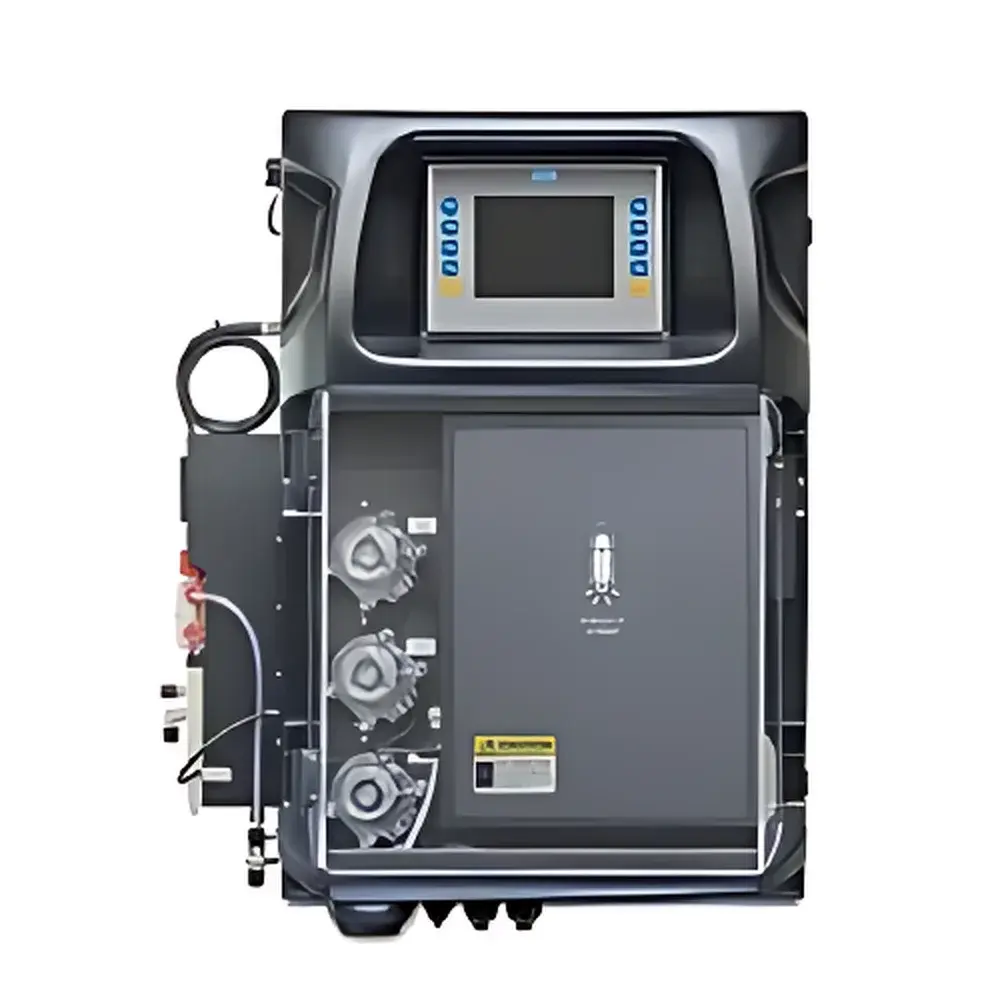
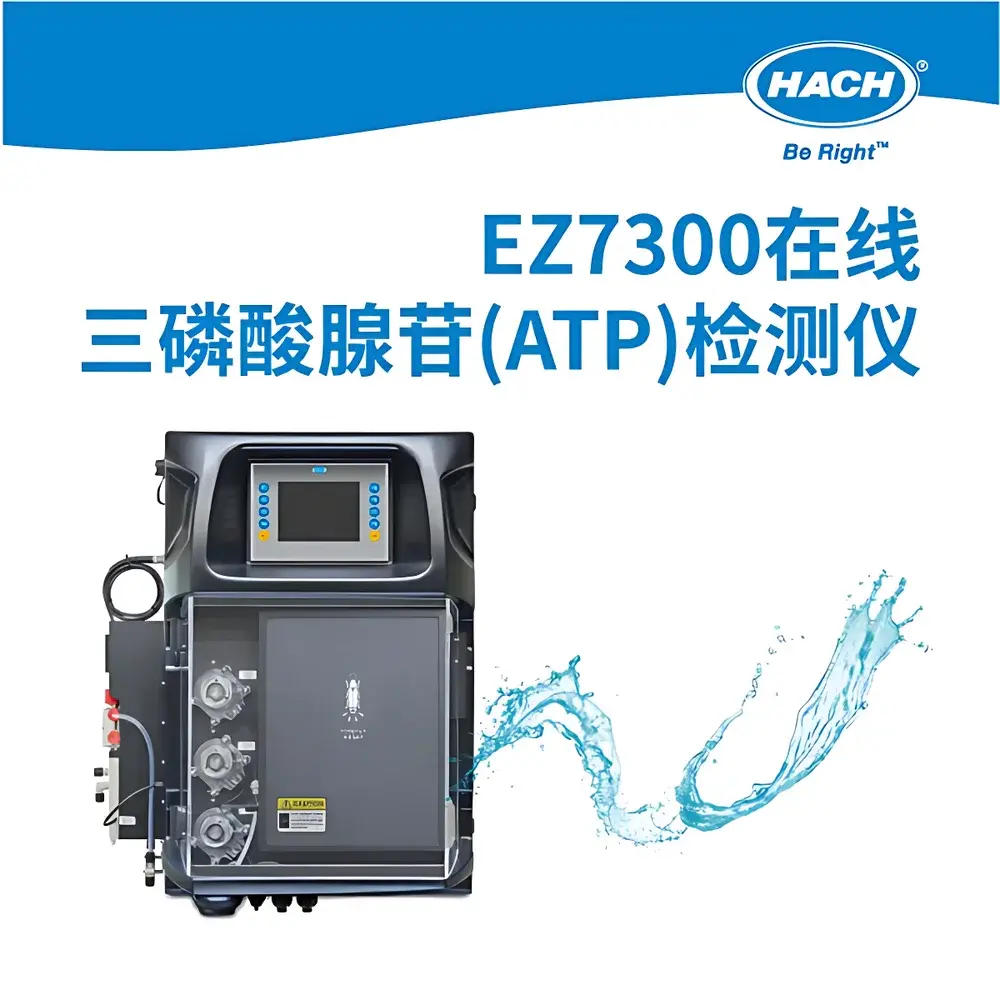
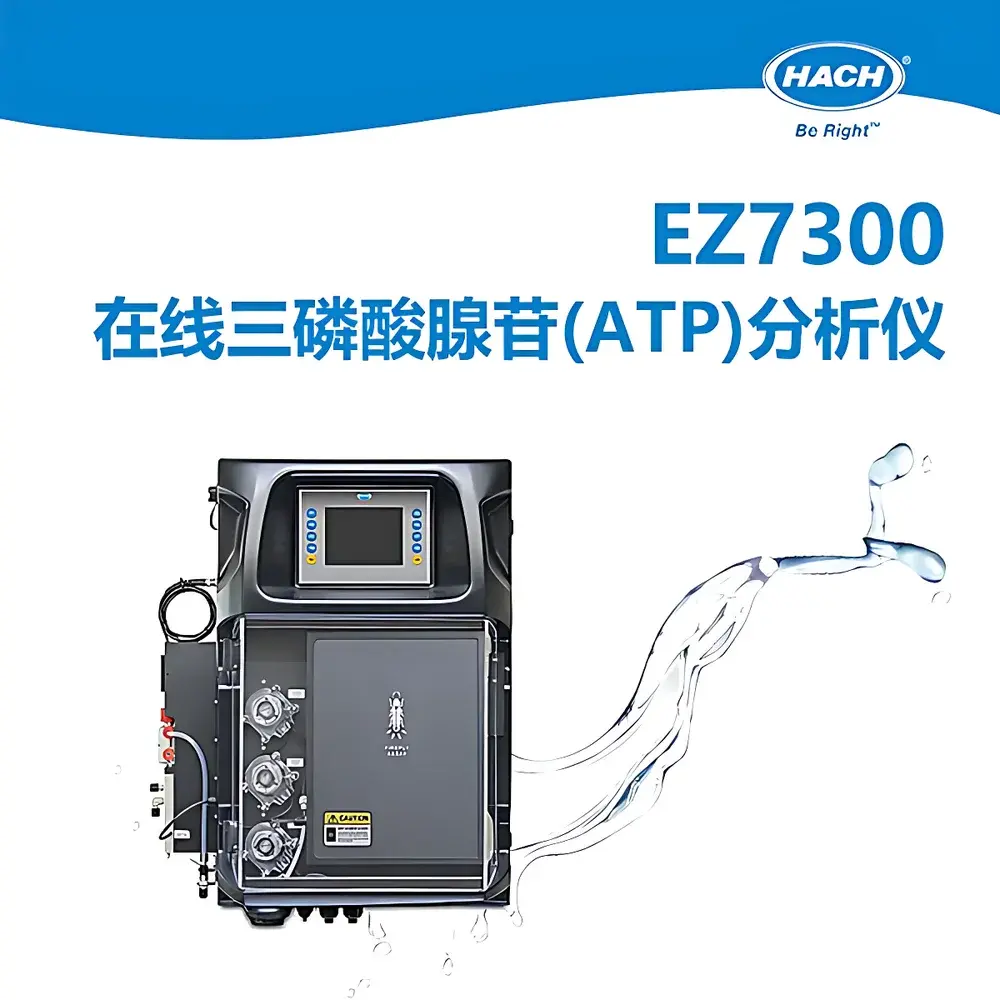
HACH EZ7300 Online Adenosine Triphosphate (ATP) Analyzer
| Brand | HACH |
|---|---|
| Origin | Imported |
| Manufacturer Type | Original Equipment Manufacturer (OEM) |
| Model | EZ7300 Online ATP Analyzer |
| Measurement Principle | Bioluminescence Assay (Luciferin–Luciferase Reaction) |
| Compliance | ASTM D4012-81 |
| Channel Capacity | 8-Channel Simultaneous Flow Analysis |
| Sample Matrix | Process Water, Potable Water, Cooling Water, Power Plant Feedwater |
| Reagent Replacement | Tool-Free Cartridge-Based System |
| Automation Level | Fully Automated, Unattended Operation |
Overview
The HACH EZ7300 Online Adenosine Triphosphate (ATP) Analyzer is an industrial-grade, real-time monitoring system engineered for continuous quantification of biologically active ATP in water streams. It operates on the well-established bioluminescence principle: ATP reacts with luciferin and luciferase under controlled pH and temperature conditions to emit photons proportional to ATP concentration. This reaction—standardized in ASTM D4012-81—is highly specific, rapid (<2 minutes per measurement), and independent of microbial culturability. Unlike traditional heterotrophic plate count (HPC) methods, the EZ7300 detects metabolically active microorganisms—including viable-but-non-culturable (VBNC) cells—making it a critical tool for early biofouling detection, disinfection efficacy verification, and proactive microbiological risk management in high-purity water systems.
Key Features
- Multi-component ATP differentiation: Simultaneously quantifies free ATP (extracellular), bound ATP (intracellular), and total ATP via sequential reagent injection and kinetic luminescence profiling.
- 8-channel modular architecture: Supports up to eight independent sample streams with programmable cycle timing, enabling centralized monitoring across cooling towers, RO feed lines, distribution loops, and boiler make-up water points.
- Cartridge-based reagent delivery: Pre-calibrated, factory-sealed luciferin–luciferase cartridges eliminate manual reagent preparation, reduce operator error, and ensure assay consistency over >30 days of unattended operation.
- Integrated temperature and pH compensation: Onboard sensors dynamically adjust luminescence calibration curves to maintain accuracy across ambient fluctuations (5–40 °C) and pH ranges (6.0–9.0).
- Self-diagnostic firmware: Real-time monitoring of photomultiplier tube (PMT) gain stability, reagent depletion status, flow integrity, and optical path cleanliness—triggering maintenance alerts prior to data drift.
- IP65-rated enclosure with NEMA 4X compatibility: Designed for deployment in utility corridors, pump houses, and outdoor metering kiosks without additional climate-controlled housing.
Sample Compatibility & Compliance
The EZ7300 is validated for use with low-turbidity (<5 NTU), low-particulate (<10 µm filter requirement) aqueous matrices including municipal drinking water, reverse osmosis permeate, ultrafiltration filtrate, and closed-loop industrial cooling water. It meets ASTM D4012-81 for field-deployable ATP quantification and supports regulatory alignment with US EPA Guidance for Microbial Monitoring in Drinking Water Distribution Systems and ISO 11348-3 (water quality—determination of the inhibitory effect of water samples using the luminescent bacterium Vibrio fischeri). While not a direct replacement for coliform testing, its data are routinely incorporated into HACCP plans, FDA-mandated water safety plans (21 CFR Part 112), and ISO 22000-certified food processing facilities as a leading indicator of microbial regrowth potential.
Software & Data Management
Data acquisition and system control are managed through HACH’s unified Instrument Manager™ software platform, compatible with Windows 10/11 and accessible via secure HTTPS web interface. The system logs raw luminescence counts, calculated ATP concentrations (pg/mL or ng/L), QC flag status, and instrument health metrics at user-defined intervals (1–60 min). All audit trails—including method changes, calibration events, and user logins—are time-stamped, digitally signed, and compliant with 21 CFR Part 11 requirements for electronic records and signatures. Historical datasets export natively to CSV, Excel, or OPC UA for integration into SCADA, LIMS, or enterprise asset management (EAM) systems.
Applications
- Early warning of biofilm formation in power plant condensate polishers and steam generator feedwater lines.
- Verification of UV or chlorine dioxide disinfection performance in municipal water treatment residuals monitoring.
- Real-time assessment of membrane integrity in pharmaceutical-grade purified water (PW) and water-for-injection (WFI) systems per USP .
- Trend analysis of microbiological load shifts during seasonal temperature variations or process upsets in food & beverage production rinse water loops.
- Supporting root cause analysis during non-conformance investigations in GMP-regulated environments where traditional culture-based methods lack sensitivity or speed.
FAQ
What is the detection limit of the EZ7300 for ATP in water?
The system achieves a method detection limit (MDL) of 10 pg ATP/mL under standard operating conditions, verified per EPA Method Detection Limit protocols.
Can the EZ7300 differentiate between bacterial and algal ATP sources?
No—it measures total biologically available ATP regardless of origin; however, contextual interpretation (e.g., concurrent turbidity, chlorophyll-a, or heterotrophic plate count data) enables informed source attribution.
Is routine calibration required?
Yes—daily automated zero and span checks using certified ATP standards (NIST-traceable) are performed; full multi-point calibration is recommended every 30 days or after cartridge replacement.
Does the analyzer require external air or gas supply?
No—all fluidics are driven by integrated peristaltic pumps and vacuum-assisted aspiration; no compressed air, nitrogen, or carrier gas is needed.
How is data security ensured during remote access?
Instrument Manager™ implements TLS 1.2 encryption, role-based user permissions (admin/operator/viewer), and optional RADIUS or LDAP integration for enterprise authentication.







