
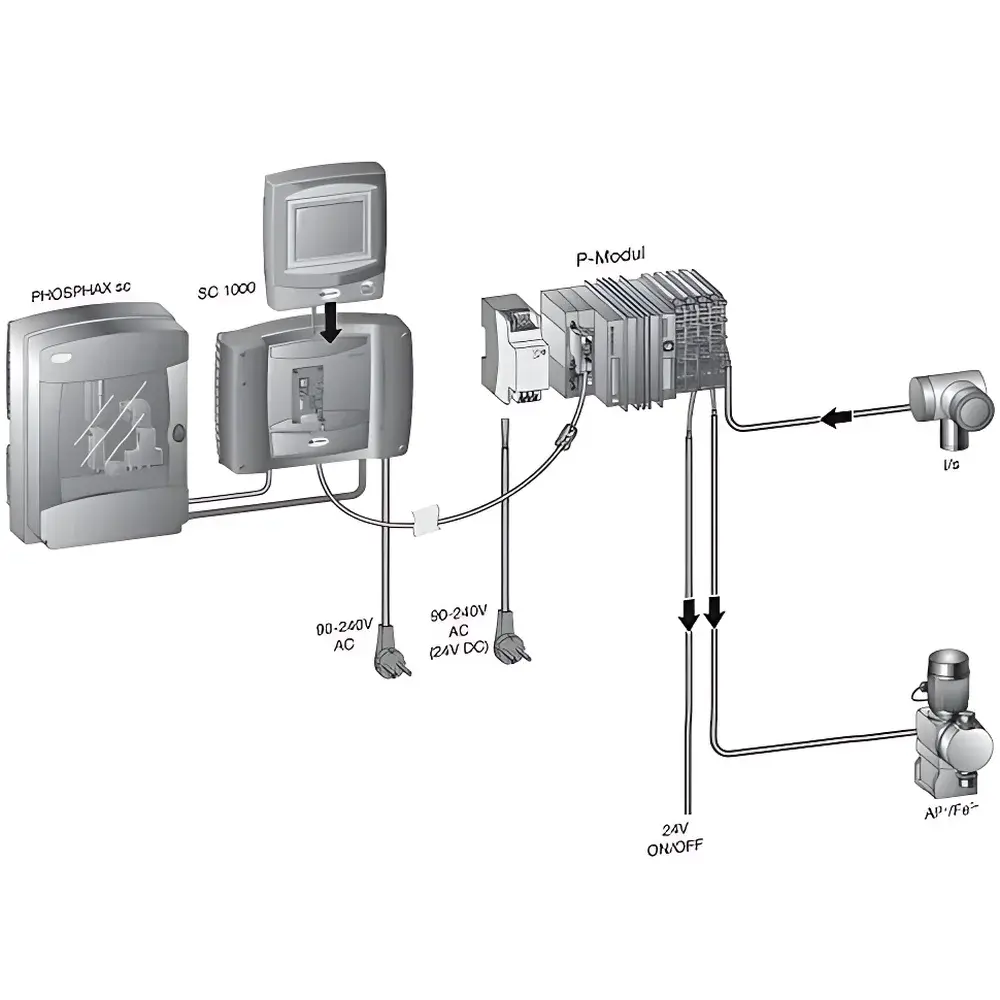
HACH WTOS P-RTC Real-Time Chemical Phosphorus Removal Optimization Module
| Brand | HACH |
|---|---|
| Origin | Imported |
| Manufacturer Type | Manufacturer |
| Model | WTOS P-RTC |
| Price | Upon Request |
Overview
The HACH WTOS P-RTC Real-Time Chemical Phosphorus Removal Optimization Module is an engineered control solution designed for biological wastewater treatment plants targeting consistent compliance with effluent phosphorus discharge limits—typically expressed as orthophosphate (PO4-P) concentration. Operating on a closed-loop, model-based control principle, the P-RTC dynamically calculates optimal coagulant dosage in real time by continuously integrating live inputs from upstream flow meters and the HACH PHOSPHAX™ sc orthophosphate analyzer. Its core algorithm applies stoichiometric and empirical correlations between measured PO4-P load (mg/L × L/s), target residual phosphorus setpoint, and coagulant active ingredient concentration to minimize chemical consumption without compromising regulatory compliance. This approach directly supports operational cost reduction, sludge volume minimization, and downstream dewatering energy savings—key performance indicators under modern water resource recovery facility (WRRF) optimization frameworks.
Key Features
- Real-time adaptive dosing: Continuously adjusts coagulant feed rate via 4–20 mA analog output to peristaltic or diaphragm metering pumps, supporting both open-loop and closed-loop control configurations.
- Intelligent low-flow management: Automatically switches to pulse-interval operation when calculated dosage falls below the pump’s minimum controllable flow threshold—ensuring precision at low-load conditions.
- Robust fault mitigation architecture: Implements sensor reliability assessment logic; detects signal loss, timeout, or implausible values (e.g., zero flow or out-of-range PO4-P) and seamlessly reverts to pre-stored fallback dosing profiles to maintain process continuity.
- Integrated hardware compatibility: Designed exclusively for use with the HACH SC1000 digital controller platform, enabling centralized parameter configuration, alarm logging, and cross-module data synchronization.
- Compact modular design: Encapsulated in an IP55-rated enclosure (170 × 120 × 100 mm, ~0.9 kg), suitable for panel-mount installation within existing control cabinets or analyzer shelters.
Sample Compatibility & Compliance
The P-RTC module functions exclusively within HACH’s validated analytical ecosystem. It requires input from the PHOSPHAX™ sc orthophosphate analyzer (employing vanadomolybdophosphoric acid colorimetric method per ISO 6878:2004 and EPA Method 365.3), which delivers measurement traceability to NIST-traceable standards. The module itself does not perform physical analysis but serves as a deterministic control engine compliant with IEC 61508 SIL 2 functional safety principles for process automation. All configuration parameters—including target PO4-P setpoints, coagulant equivalent weight, and maximum allowable dosage—are subject to change control procedures aligned with GLP and GMP documentation requirements. System-level validation supports adherence to ISO/IEC 17025 for testing laboratories and facilitates audit readiness for regulatory inspections under EU Urban Wastewater Treatment Directive (91/271/EEC) and US Clean Water Act NPDES permit conditions.
Software & Data Management
Configuration and monitoring occur exclusively through the SC1000 controller’s web-enabled interface or local touchscreen. All P-RTC operating parameters—including historical dosing curves, sensor input logs, alarm timestamps, and fallback activation events—are stored with time-stamped, immutable records. Audit trails comply with FDA 21 CFR Part 11 requirements when deployed with SC1000 firmware version 4.2 or higher and enabled electronic signature functionality. Data export is supported via MODBUS RTU (RS-485), PROFIBUS DP, or Ethernet TCP/IP protocols, enabling integration into plant-wide SCADA systems (e.g., Siemens Desigo, ABB Ability, or Schneider EcoStruxure). No cloud connectivity or proprietary SaaS platforms are required; all data resides locally unless explicitly forwarded via user-configured network routing.
Applications
- Municipal wastewater treatment plants seeking to meet stringent total phosphorus (TP) discharge limits (e.g., ≤0.1–0.3 mg/L PO4-P) while reducing ferric chloride or aluminum sulfate consumption by 15–35%.
- Industrial pretreatment facilities discharging to municipal sewers under phosphorus-based surcharge agreements.
- Water reclamation plants implementing nutrient recovery strategies where minimized sludge production preserves anaerobic digester capacity and biogas yield.
- Research-scale pilot plants evaluating coagulant alternatives (e.g., polyphosphates, lanthanum-based agents) under dynamic loading scenarios.
FAQ
Does the P-RTC module require calibration independent of the PHOSPHAX™ sc analyzer?
No. The P-RTC performs no physical measurement and has no calibration routine; its accuracy is fully dependent on the validated performance of the upstream PHOSPHAX™ sc and flowmeter.
Can the P-RTC operate without the SC1000 controller?
No. It is a dedicated plug-in module requiring SC1000 firmware v3.5+ and cannot function as a standalone PLC or DCS I/O device.
What happens if the orthophosphate analyzer goes offline during operation?
The P-RTC triggers its preconfigured reliability assessment protocol and activates the most recent validated fallback profile—maintaining stable dosing until sensor communication is restored.
Is the P-RTC compatible with non-HACH coagulant dosing pumps?
Yes—provided the pump accepts standard 4–20 mA analog control signals and operates within the module’s output current range (max 20 mA, loop-powered).
How is cybersecurity addressed in the P-RTC/SC1000 system?
Network-facing interfaces support configurable firewall rules, role-based access control (RBAC), and TLS 1.2 encryption for remote web access—aligned with ISA/IEC 62443-3-3 Level 2 requirements.







