
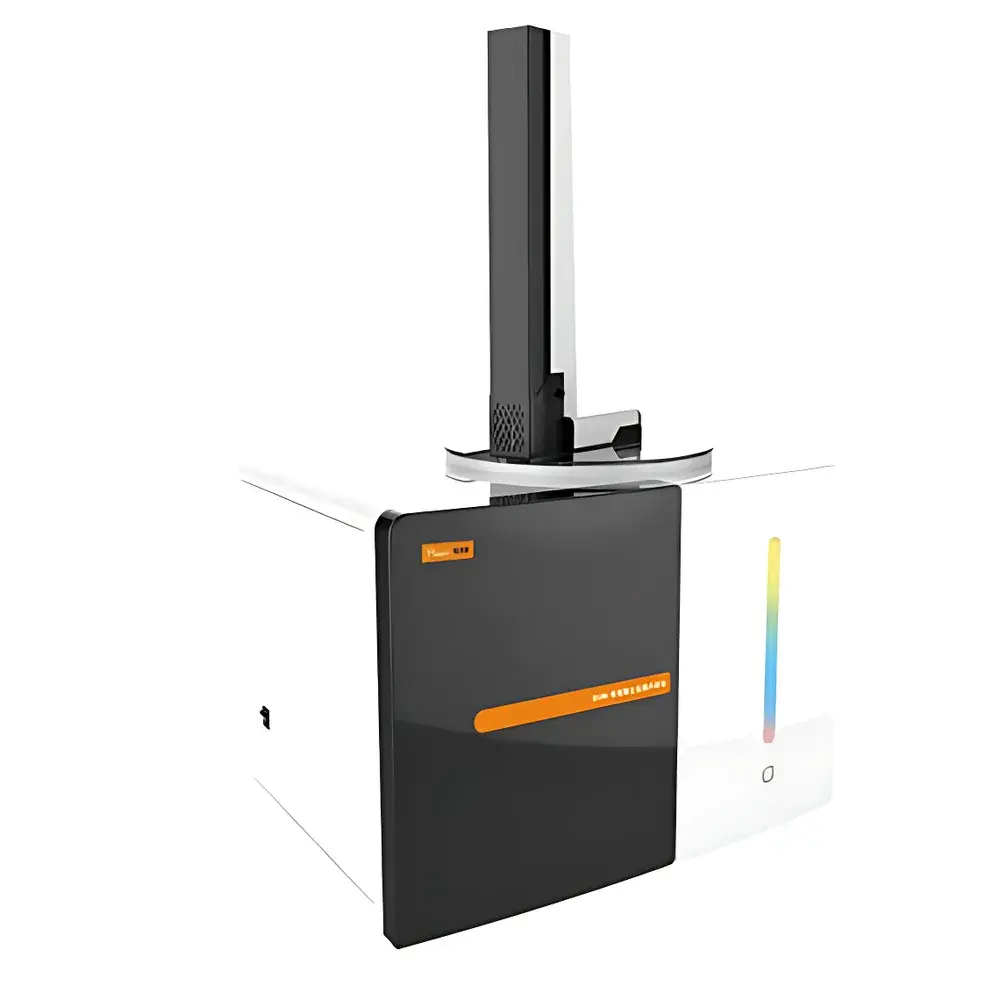
Hanon E500 Organic Elemental Analyzer
| Brand | Hanon |
|---|---|
| Origin | Shandong, China |
| Model | E500 |
| Measured Elements | C, H, O, N, S |
| Analysis Time | 3–4 min per element |
| Detection Limits | ≤30 ppm for C/H/N/S (TCD), ≤20 ppm for O (NDIR) |
| Measurement Accuracy | Absolute error ≤0.1% (10 mg standard sample) |
| Sample Mass | Up to 1.5 g or 1 mL liquid |
| Detector Configuration | TCD for C/H/N/S |
| Combustion Temperature | Up to 1400 °C |
| Autosampler Capacity | 120-position ceramic crucible tray |
| Gas Requirements | He (99.999%), O₂ (99.999%) |
| Dimensions (L×W×H) | 735 × 560 × 1160 mm |
| Net Weight | 100 kg |
Overview
The Hanon E500 Organic Elemental Analyzer is a high-precision laboratory instrument engineered for the quantitative determination of carbon (C), hydrogen (H), nitrogen (N), sulfur (S), and oxygen (O) in organic materials. It operates on the principle of high-temperature combustion and pyrolysis followed by gas-phase separation and selective detection—evolving from classical Dumas (N) and Pregl (C/H) methodologies. In C/H/N/S mode, samples are combusted at up to 1400 °C in an oxygen-rich environment within a quartz combustion tube. Combustion products—including CO₂, H₂O, N₂, and SO₂—are carried by high-purity helium through a series of molecular sieve adsorption columns for sequential physical separation. Each component is then eluted under programmed thermal desorption and quantified using a dual-channel thermal conductivity detector (TCD). For oxygen analysis, samples undergo high-temperature pyrolysis (1150 °C) in an inert atmosphere over activated carbon, converting all oxygen to CO, which is measured via non-dispersive infrared (NDIR) absorption at 4.677 µm and 4.72 µm—ensuring specificity and linearity per the Beer–Lambert law. The system integrates thermally stable furnace architecture, real-time gas flow control, and trace-level detection sensitivity to support rigorous elemental composition studies across research and industrial QA/QC workflows.
Key Features
- High-temperature combustion furnace with silicon-alumina fiber insulation, delivering uniform temperature distribution (±10 °C over 200 mm stable zone) and maximum operating temperature of 1400 °C.
- Integrated sample-to-ash high-temperature in-situ replacement technology: eliminates manual ash removal, enables uninterrupted 120-sample batch analysis, and prevents cross-contamination between runs.
- Three-stage molecular sieve adsorption column system optimized for selective retention and clean thermal desorption of H₂O, SO₂, and CO₂—avoiding chromatographic peak tailing and ensuring reproducible separation efficiency.
- Dual-mode detection architecture: high-stability TCD with constant-power filament control, digital balancing, and analog/digital signal isolation for C/H/N/S; dedicated NDIR detector with dual-wavelength measurement (4.677 µm & 4.72 µm) for O quantification.
- Automated 120-position autosampler with ceramic crucibles (reusable, high-purity, oxidation-resistant); compatible with solid powders, liquids, and viscous matrices using Sn or Ag boats.
- Electronic mass flow controllers (MFCs) for precise regulation of carrier gas (He) and oxygen flow; integrated drying and purification traps ensure baseline stability and detector longevity.
Sample Compatibility & Compliance
The E500 accommodates diverse sample forms—including solids (powders, granules, polymers), liquids (oils, solvents, extracts), and heterogeneous matrices (soils, sludges, biomass)—with maximum loading capacity of 1.5 g or 1 mL. Sample preparation follows standardized protocols aligned with ASTM D5291, ISO 17249, and USP , supporting method validation in regulated environments. The instrument complies with FDA 21 CFR Part 11 requirements through built-in audit trail functionality, role-based user permissions (three-tier access), immutable operation logging, and electronic signature support. All calibration, maintenance, and analytical events are timestamped and traceable—enabling full GLP/GMP compliance for pharmaceutical, agrochemical, and environmental laboratories.
Software & Data Management
The proprietary E500 Workstation software provides a streamlined, flat-design interface for method development, real-time instrument monitoring, automated data acquisition, and report generation. Key capabilities include: customizable linear or polynomial calibration curve fitting; wireless integration with METTLER TOLEDO and SARTORIUS analytical balances for direct mass transfer; scheduled auto-wake and standby modes to conserve carrier gas and extend component life; programmable post-run forced-air cooling with temperature-threshold shutdown; and comprehensive audit trail recording of all user actions, parameter changes, and result exports. Data files conform to ASTM E1382-compliant formats and support export to LIMS via CSV or XML. Software updates are delivered via secure authenticated channels and validated per ICH Q5A guidelines.
Applications
- Pharmaceutical & Biotech: Verification of active pharmaceutical ingredient (API) stoichiometry, excipient characterization, and impurity profiling in drug substances.
- Polymer & Materials Science: Determination of elemental composition in synthetic polymers, carbon blacks, graphene derivatives, and flame-retardant additives.
- Agriculture & Food Safety: Nutrient content analysis in fertilizers, feedstuffs, cereals, and processed foods; detection of adulteration or origin verification.
- Environmental Monitoring: Quantification of organic carbon in soils, sediments, wastewater sludge, and biochar; sulfur speciation in coal fly ash and flue gas desulfurization residues.
- Petrochemical & Energy: Elemental profiling of crude oils, lubricants, biofuels, and coke; compliance testing against ISO 8217 and ASTM D129 standards.
FAQ
What detection technologies does the E500 use for each element?
C, H, N, and S are measured using a high-stability thermal conductivity detector (TCD) following adsorption-desorption gas separation. Oxygen is quantified via non-dispersive infrared (NDIR) detection at two characteristic wavelengths (4.677 µm and 4.72 µm) after catalytic conversion to CO.
How does the instrument handle sample carryover or ash accumulation?
The E500 employs in-situ high-temperature ash replacement: ceramic crucibles remain inside the combustion zone during operation, and residual ash is volatilized or inerted without requiring mechanical cleaning between runs—maintaining measurement integrity across extended sequences.
Is the E500 compliant with regulatory data integrity requirements?
Yes. The workstation implements full 21 CFR Part 11 compliance, including electronic signatures, role-based access control, immutable audit trails, and automatic logging of all analytical and system events.
What gases are required for operation?
Ultra-high-purity helium (≥99.999%) as carrier gas and oxygen (≥99.999%) for combustion. Optional argon may be used for oxygen mode pyrolysis if specified during configuration.
Can the E500 analyze volatile or thermally labile compounds?
Yes—through controlled pyrolysis ramp profiles and optional low-temperature combustion protocols. Method parameters (e.g., oxygen pulse timing, furnace ramp rates) are fully configurable to accommodate sensitive matrices without decomposition artifacts.



