
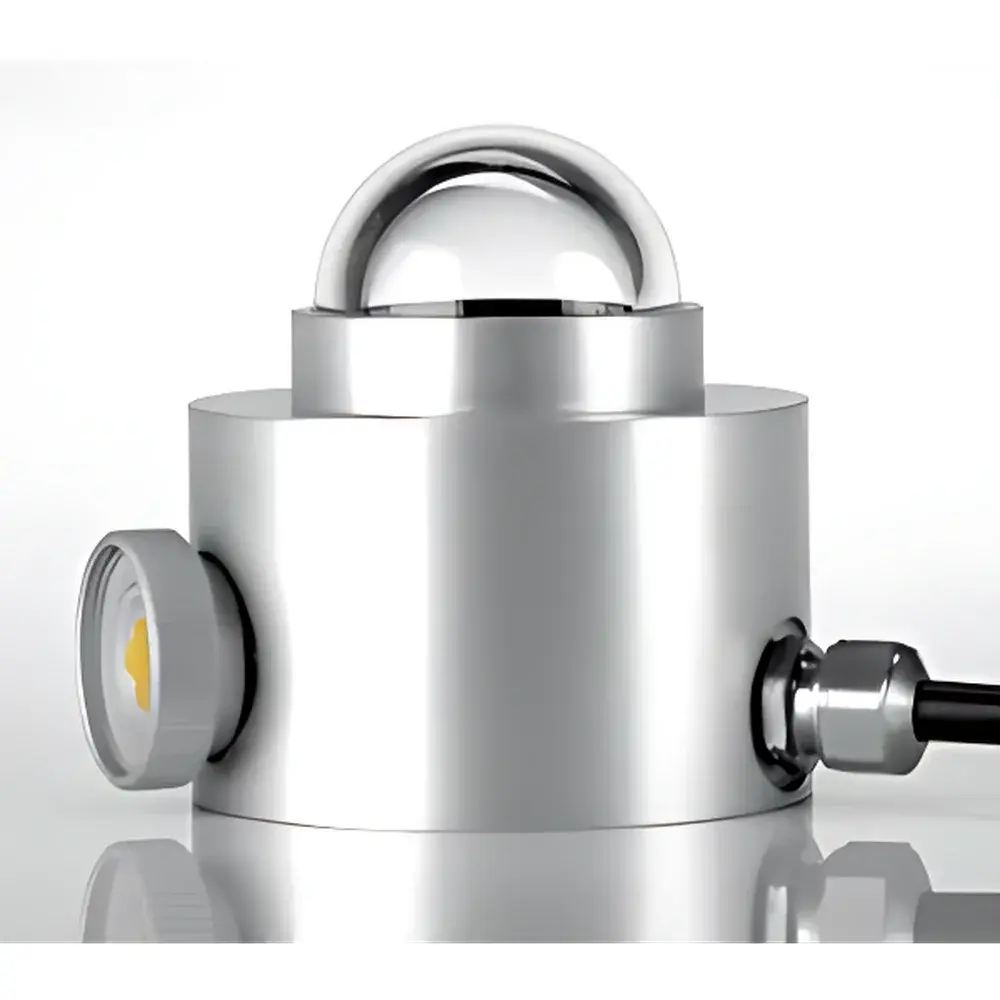
Kipp & Zonen CM4 High-Temperature Pyranometer
| Brand | Kipp & Zonen |
|---|---|
| Origin | Netherlands |
| Model | CM4 |
| Spectral Range | 300–2800 nm |
| Sensitivity | 4–10 µV/W/m² |
| Response Time | < 8 s |
| Zero-Offset A | < 4 W/m² |
| Zero-Offset B | < 15 W/m² |
| Directional Error (up to 80°, 1000 W/m² beam) | < 20 W/m² |
| Temperature Dependence of Sensitivity (-20 °C to +150 °C, over any 50 °C interval) | < 3 % |
| Operating Temperature Range | -40 °C to +150 °C |
| Maximum Irradiance | 4000 W/m² |
| Field of View | 180° |
| Integrated Pt-100 Temperature Sensor | Yes |
| Internal Class I Temperature Compensation | Yes |
| High-Temperature Signal Cable Length | 10 m |
Overview
The Kipp & Zonen CM4 High-Temperature Pyranometer is a precision-calibrated thermopile-based radiometer engineered for continuous, high-fidelity measurement of global solar or artificial broadband irradiance under extreme thermal and radiative stress conditions. Unlike standard pyranometers limited to ambient or moderately elevated temperatures, the CM4 employs a robust, hermetically sealed quartz dome assembly and thermally stabilized blackened thermopile detector optimized for operation across an extended range of -40 °C to +150 °C. Its measurement principle relies on the Seebeck effect: incident radiation absorbed by the black-coated thermopile hot junction generates a proportional thermoelectric voltage, linearly related to irradiance (W/m²) within its specified spectral band (300–2800 nm). This spectral response closely approximates the ASTM G173-03 reference solar spectral irradiance distribution, ensuring compatibility with photovoltaic performance modeling, concentrated solar power (CSP) receiver testing, and high-temperature material exposure studies.
Key Features
- Extended operational temperature range: -40 °C to +150 °C — validated for long-term stability in furnace enclosures, solar concentrator test stands, and industrial thermal processing environments.
- High irradiance capability: Rated up to 4000 W/m², enabling reliable use under concentrated sunlight (e.g., parabolic troughs, central tower receivers) and intense artificial sources (e.g., xenon arc lamps, high-power halogen arrays).
- Dual temperature compensation architecture: Combines internal Class I thermistor-based compensation with an integrated Pt-100 RTD sensor, providing traceable, real-time temperature metadata for post-acquisition correction of sensitivity drift.
- Optimized thermal design: All structural components—including housing, dome mount, and signal path—utilize low-thermal-expansion alloys and high-stability ceramics to minimize mechanical stress-induced zero shifts during rapid thermal cycling.
- 10-meter high-temperature-rated cable: Silicone-insulated, shielded, and braided for EMI resilience and sustained integrity at >120 °C ambient, compatible with standard data loggers equipped with low-noise differential analog inputs.
- Serviceable desiccant system: Threaded dry-box design allows field replacement of silica gel without disassembly of the optical head, maintaining long-term dew-point control inside the dome cavity.
Sample Compatibility & Compliance
The CM4 is designed for outdoor and industrial in-situ deployment on fixed mounts, tracking systems, or integrated into thermal test chambers. It complies with ISO 9060:2018 classification as a Secondary Standard pyranometer (Class A equivalent), meeting requirements for high-accuracy solar resource assessment per IEC 61724-1 and ASTM E892. Its thermal and electrical specifications are verified under GLP-compliant calibration procedures traceable to the World Radiometric Reference (WRR) via Kipp & Zonen’s accredited calibration laboratory (ISO/IEC 17025 certified). The Pt-100 output supports two-wire or four-wire resistance measurement configurations, enabling integration into SCADA systems requiring temperature-compensated irradiance outputs compliant with IEC 61400-12-1 for wind-solar hybrid site characterization.
Software & Data Management
While the CM4 operates as an analog sensor (mV output), its dual-output configuration (irradiance signal + Pt-100 resistance) enables full environmental context capture. When paired with compatible data acquisition systems (e.g., Campbell Scientific CR6, Delta-T Devices DL6, or custom LabVIEW/Python-based DAQ), users can implement real-time temperature-corrected irradiance calculation using the instrument-specific calibration coefficients provided in the included certificate. Each unit ships with a NIST-traceable calibration report listing sensitivity (µV/W/m²) and maximum uncertainty bands across five discrete temperature intervals (e.g., -20–0 °C, 0–50 °C, etc.), facilitating uncertainty propagation per GUM (JCGM 100:2018). Audit-ready data logs—including timestamped Pt-100 readings, raw thermopile voltage, and derived irradiance—support 21 CFR Part 11-compliant validation when deployed in regulated R&D or quality assurance workflows.
Applications
- Concentrated Solar Power (CSP) plant performance monitoring — particularly on absorber tubes, cavity receivers, and heliostat field validation.
- Accelerated aging and durability testing of PV modules, coatings, and polymers under combined high-irradiance/high-temperature stress.
- Calibration transfer and intercomparison campaigns involving reference cells, thermopile sensors, and spectroradiometers in thermal vacuum chambers.
- Industrial process control where radiant heat flux must be quantified alongside surface temperature (e.g., glass tempering furnaces, ceramic sintering lines).
- Atmospheric science campaigns requiring stable irradiance measurements during diurnal extremes in arid or high-altitude desert environments.
FAQ
Is the CM4 suitable for direct mounting on surfaces exceeding 100 °C?
Yes — the sensor housing and dome assembly are rated for continuous exposure up to +150 °C; however, mounting hardware must be selected for thermal expansion compatibility and non-conductive isolation to prevent conductive heat transfer from the substrate.
Can the Pt-100 output be used independently for temperature logging?
Yes — the integrated Pt-100 is a fully functional, calibrated Class B RTD (IEC 60751), delivering resistance values traceable to ITS-90, and may be read separately using standard RTD input channels.
Does the CM4 require periodic recalibration?
Kipp & Zonen recommends recalibration every two years for critical applications or after exposure to thermal shock, mechanical impact, or prolonged operation beyond 120 °C; annual verification against a transportable reference is advised for CSP or PV certification labs.
How is zero-offset error corrected in post-processing?
Zero-offset A (thermal offset under uniform temperature gradients) and Zero-offset B (asymmetric thermal loading) are characterized during factory calibration; correction algorithms are documented in the user manual and implemented in Kipp & Zonen’s Solys 2 and Pyrheliometer Data Processing Tool (PDPT) software suite.
Is the 10-meter cable suitable for use in wet or corrosive atmospheres?
The cable jacket is silicone rubber with UV and ozone resistance; for saline or chemically aggressive environments, optional stainless-steel braid shielding and IP68-rated cable glands are available upon request.







