
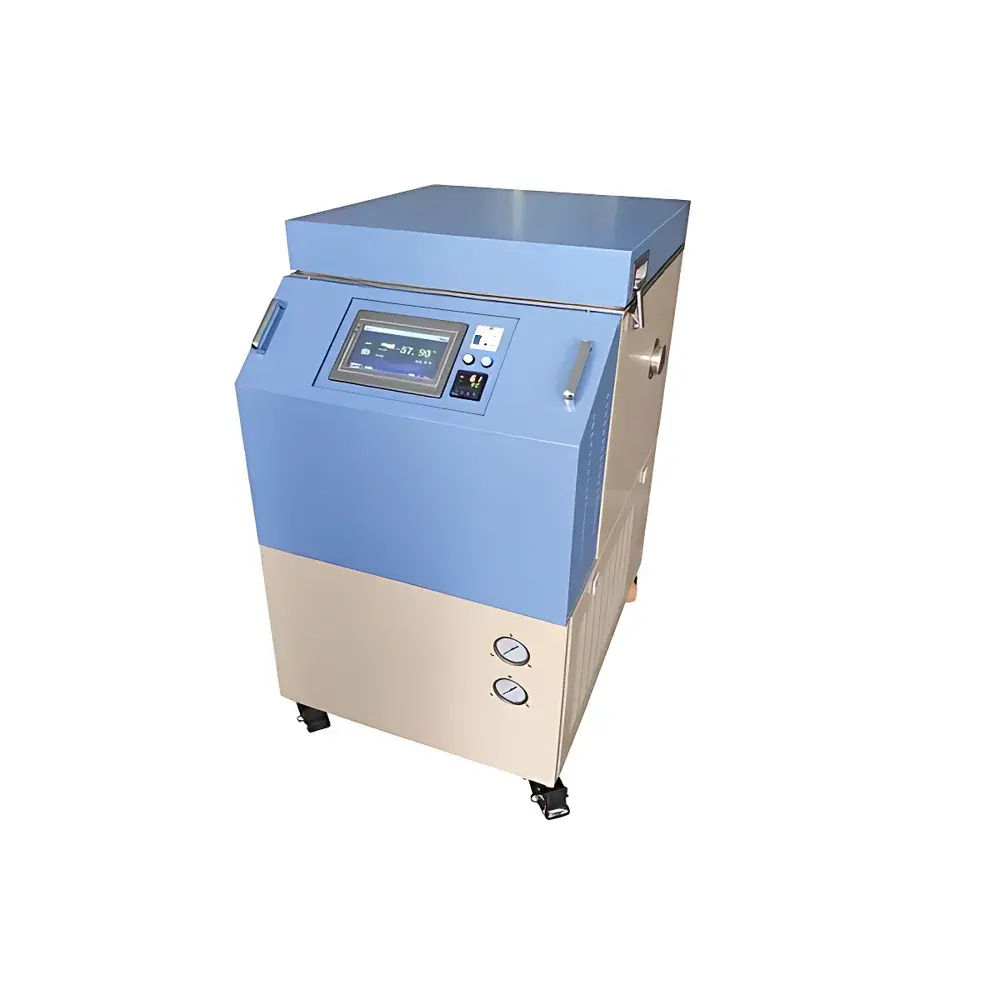
KJ GROUP PC-50L Environmental Stress Screening Chamber (Temperature Cycling & Thermal Shock Test Chamber)
| Brand | KJ GROUP |
|---|---|
| Origin | Liaoning, China |
| Model | PC-50L |
| Internal Volume | 50 L |
| Temperature Range | −70 °C to +150 °C |
| Temperature Uniformity | ≤ ±2 °C |
| Temperature Stability | ≤ ±0.5 °C |
| Ramp Rate (25 °C → +150 °C) | ≤ 50 min |
| Ramp Rate (25 °C → −40 °C) | ≤ 40 min |
| Ramp Rate (25 °C → −70 °C) | ≤ 70 min |
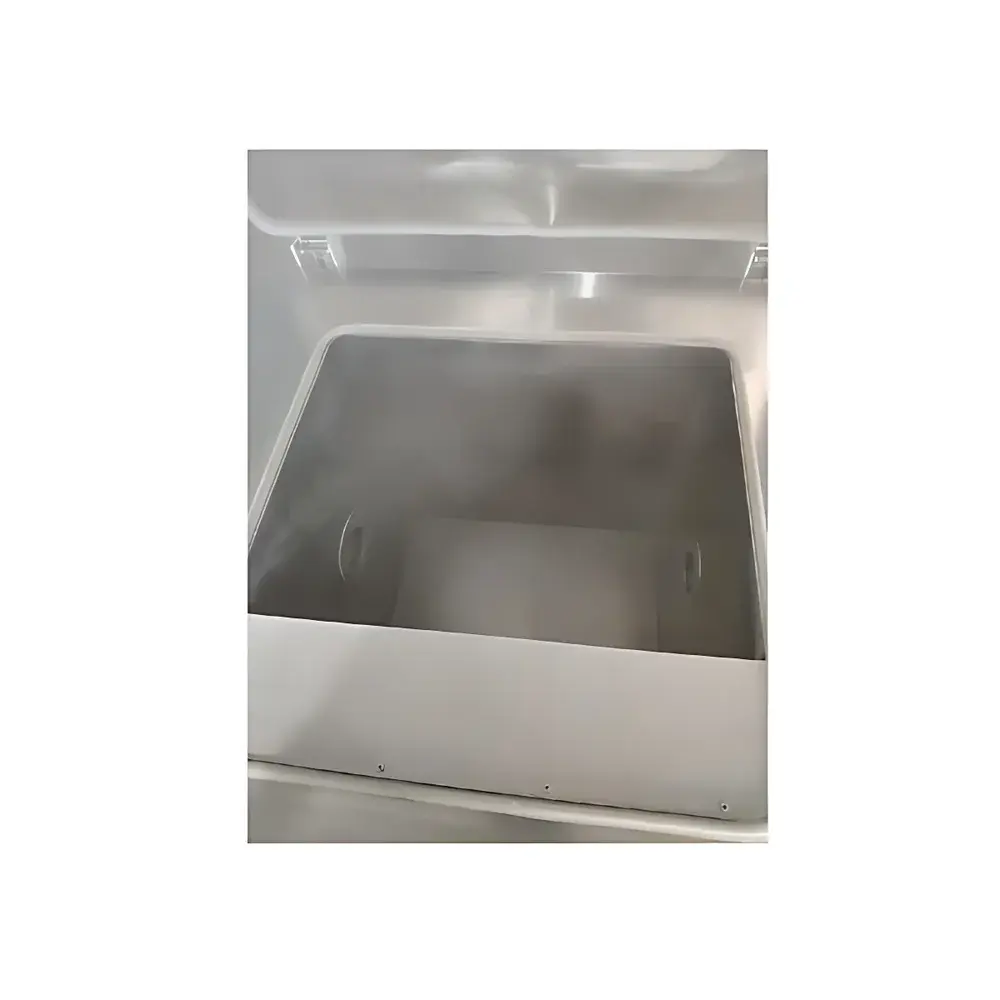
| Chamber Dimensions (W×D×H) | 400 × 400 × 400 mm (304 Stainless Steel Interior) |
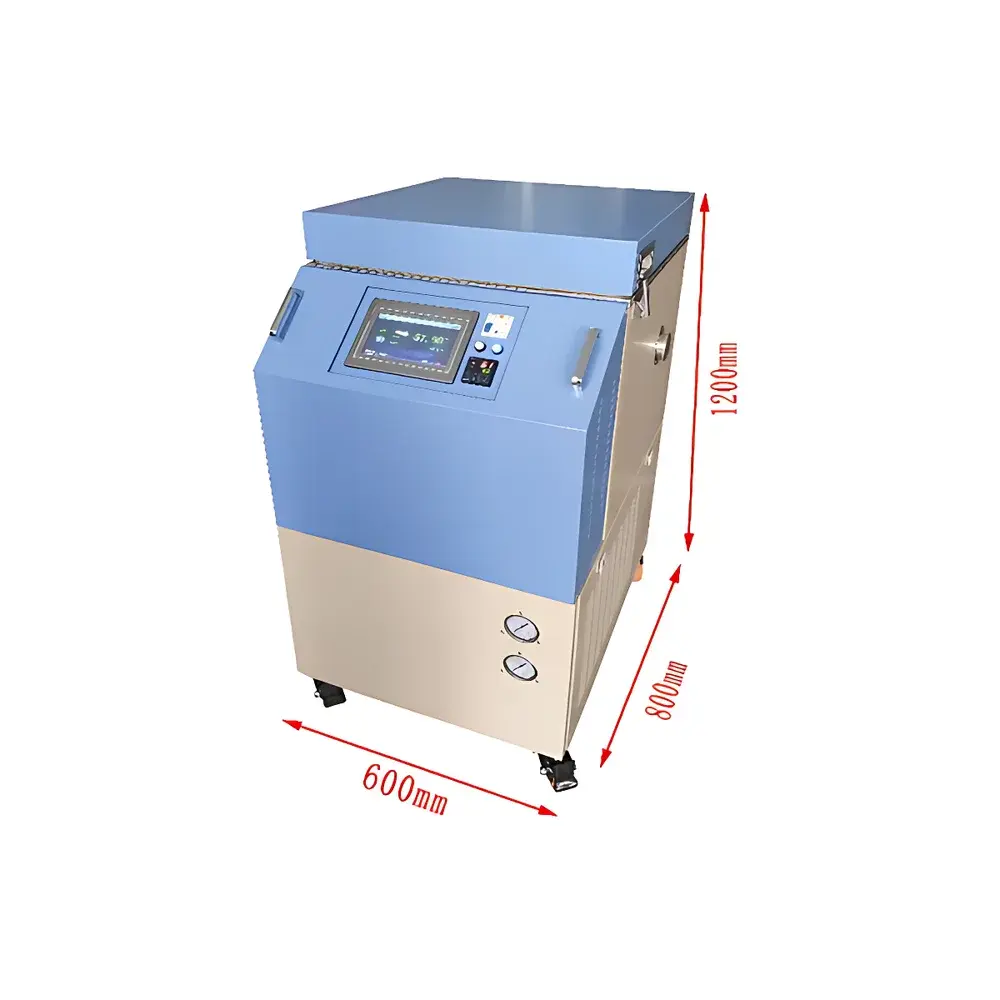
| External Dimensions (W×D×H) | 600 × 800 × 1200 mm |
| Weight | ~150 kg |
| Power Supply | AC 220 V, 50/60 Hz |
| Rated Power | 2 kW |
| Compressor | Original Imported Tecumseh (France) High-Efficiency Hermetic Compressor |
| Refrigerant | Environmentally Compliant HFC Blend |
| Control System | PLC-Based Touchscreen HMI with USB Data Export |
| Programmable Profiles | Up to 10 Segments |
| Observation Port | Dual φ50 mm Feedthrough Ports with Cryogenic Insulation |
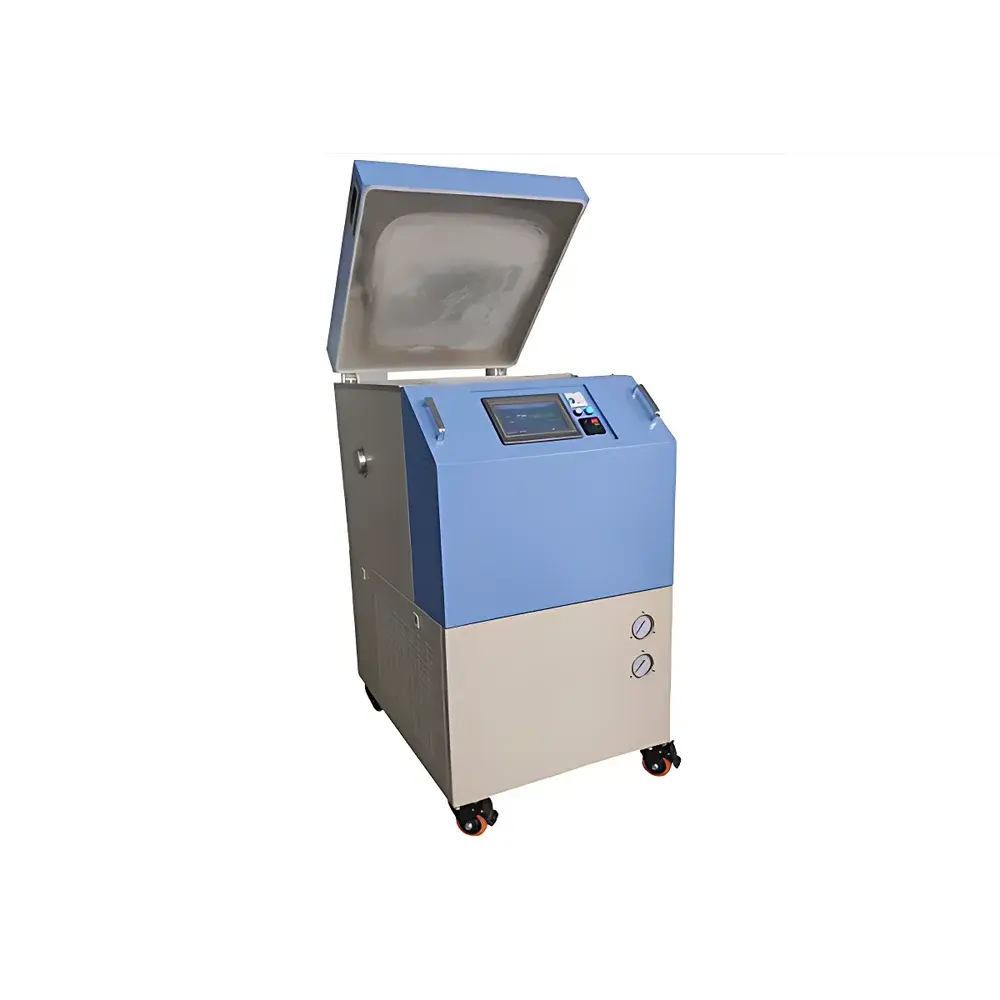
| Door Configuration | Top-Hinged Opening Design |
Overview
The KJ GROUP PC-50L Environmental Stress Screening Chamber is a precision-engineered thermal test system designed for controlled temperature cycling, steady-state thermal exposure, and accelerated environmental stress screening of electrochemical, electronic, and material specimens. Based on forced-air convection and dual-stage refrigeration architecture, the chamber employs a cascade refrigeration cycle—integrated with a high-efficiency Tecumseh hermetic compressor and low-GWP HFC refrigerant—to achieve stable operation across an extended thermal range of −70 °C to +150 °C. Its stainless steel interior (400 × 400 × 400 mm, 50 L volume) ensures corrosion resistance, thermal homogeneity, and long-term dimensional stability under repeated thermal loading. The top-hinged door design minimizes cold air loss during sample insertion—a critical performance advantage over side-opening configurations—thereby improving thermal recovery time and test repeatability. This chamber is engineered to support standardized safety evaluation protocols for lithium-ion cells, battery modules, PCB assemblies, polymer enclosures, and automotive electronics per IEC 62133, UN 38.3, ISO 16750-4, AEC-Q200, and MIL-STD-810H methods.
Key Features
- PLC-based touchscreen human-machine interface (HMI) with real-time temperature curve visualization, multi-segment programmability (up to 10 ramp/soak steps), and USB data export capability for traceable CSV-formatted logging
- High-fidelity thermal control: temperature stability ≤ ±0.5 °C and uniformity ≤ ±2 °C across the working volume, verified per ASTM E744 and IEC 60068-3-5
- Cascade refrigeration system featuring imported Tecumseh compressors and environmentally compliant refrigerant, enabling rapid cooling from ambient to −70 °C in ≤70 minutes
- Top-access door configuration with reinforced silicone gasketing, eliminating lateral cold leakage and ensuring consistent chamber integrity during frequent access cycles
- Dual φ50 mm feedthrough ports (left/right), sealed with cryogenically rated insulation materials to maintain thermal isolation while permitting sensor wiring or gas purging
- Robust 304 stainless steel inner chamber construction with rounded corners for ease of cleaning and compliance with ISO 14644-1 Class 8 cleanroom-compatible handling
Sample Compatibility & Compliance
The PC-50L accommodates standard 18650/21700 cylindrical cells, prismatic pouch modules (up to 300 mm diagonal), PCBs up to 350 × 350 mm, and small mechanical components (e.g., connectors, housings, seals). Its thermal profile fidelity and chamber uniformity meet requirements for qualification testing under UL 1642, UL 2580, GB/T 31485, and QC/T 743. The system supports GLP-compliant operation when paired with external audit-trail-capable data loggers; although not natively 21 CFR Part 11 certified, its USB-exported timestamped datasets are compatible with validated LIMS and ELN platforms for regulated environments. Calibration traceability follows ISO/IEC 17025 principles using NIST-traceable reference thermistors.
Software & Data Management
The embedded PLC controller provides local setpoint management, real-time graphing (temperature vs. time), and segmented program editing without external software dependency. All operational parameters—including actual chamber temperature, setpoint, ramp rate, elapsed time, and alarm status—are continuously logged at user-selectable intervals (1–60 sec) and stored internally. Data export via USB flash drive yields UTF-8 encoded CSV files containing column headers (Timestamp, Setpoint [°C], Actual [°C], Ramp Rate [°C/min], Segment ID), enabling direct import into MATLAB, Python pandas, JMP, or Minitab for statistical process analysis. Optional RS485 Modbus RTU interface enables integration into centralized facility monitoring systems (SCADA/BMS).
Applications
- Safety validation of Li-ion battery cells and packs under extreme thermal excursions (e.g., thermal runaway initiation studies per IEEE 1625)
- Thermal aging assessment of polymer electrolytes, separator membranes, and cathode coatings
- Environmental stress screening (ESS) of avionics-grade printed circuit boards prior to HALT/HASS
- Material coefficient-of-thermal-expansion (CTE) correlation studies on encapsulated sensors and MEMS devices
- Accelerated shelf-life testing of pharmaceutical packaging under ICH Q1A(R3) climatic zone IV conditions
- Qualification of automotive ECUs per ISO 16750-4 (temperature shock) and SAE J2380 (thermal cycling)
FAQ
What is the maximum sample weight the chamber can accommodate without compromising thermal performance?
The internal load capacity is limited by airflow distribution—not structural rating. For optimal uniformity, total sample mass should remain below 15 kg when fully loaded; heavier loads require extended stabilization times and may affect achievable ramp rates.
Does the system support nitrogen purging or inert atmosphere operation?
Yes—via the dual φ50 mm feedthrough ports. Users may introduce dry N₂ at regulated flow (0.5–2 L/min) to suppress oxidation during high-temperature aging tests; optional pressure relief valve and O₂ sensor integration are available upon request.
Is remote monitoring or Ethernet connectivity available as a factory option?
Standard configuration includes only USB and RS485 interfaces. Ethernet/WiFi modules with secure TLS 1.2-enabled REST API are offered as configurable add-ons for Industry 4.0 integration.
How often does the system require preventive maintenance?
Compressor oil and refrigerant levels should be verified annually; condenser coil cleaning is recommended every six months in non-laboratory environments. Full calibration verification against reference standards is advised biannually per ISO/IEC 17025 guidelines.
Can the chamber be used for humidity-controlled testing?
No—the PC-50L is a dry-temperature-only system. For combined temperature/humidity profiling, refer to the KJ GROUP TH-50L series environmental chambers.



