
Q-LAB QUV/UVC Ultraviolet Aging Test Chamber with 254 nm UVC Lamp
| Brand | Q-LAB |
|---|---|
| Origin | USA |
| Model | UVC |
| Lamp Wavelength | 254 nm |
| Lamp Power | 1800 W |
| Black Panel Temperature Range | 45–80 °C |
| Exposure Duration | 1–3000 h |
| Compliance | IEC 60335-1 |
| Application | UVGI Material Durability Assessment |
| Safety System | Integrated UVC stray-light containment |
| Monitoring | SOLAR EYE® UVC Radiometric Control |
Overview
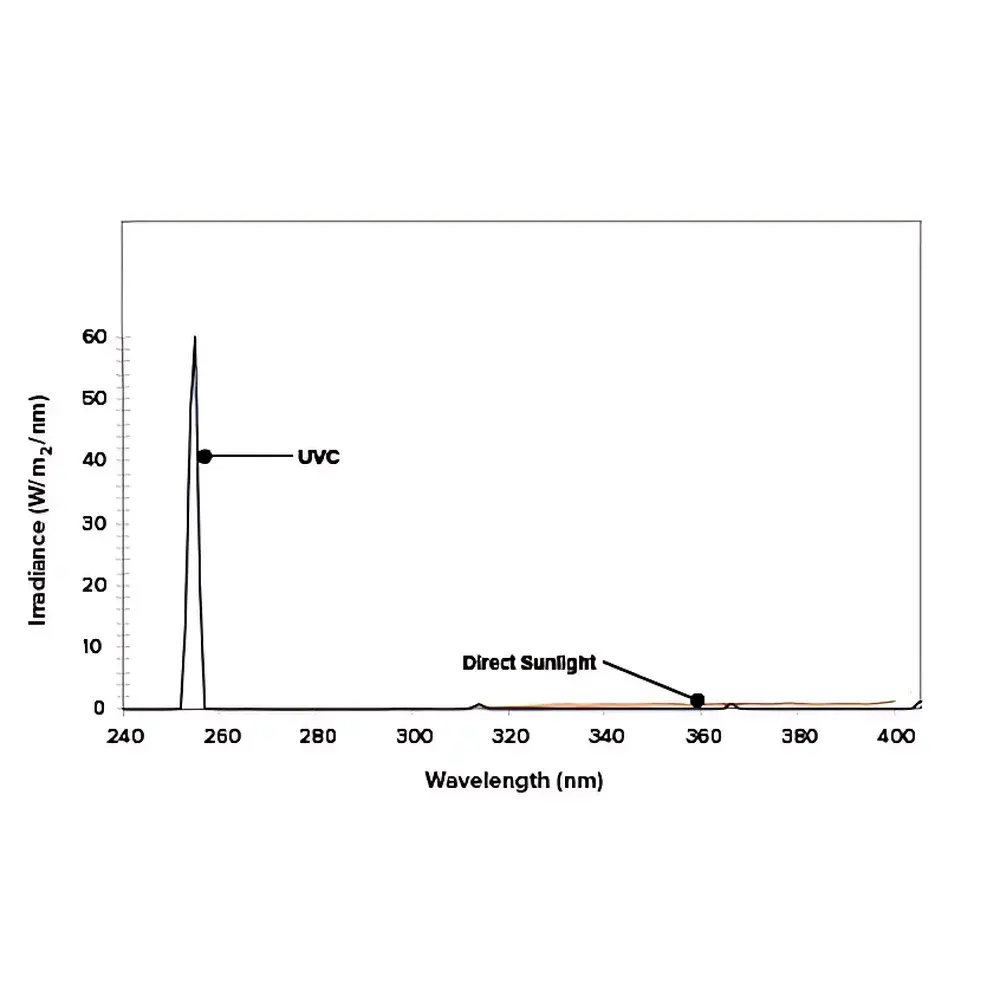
The Q-LAB QUV/UVC Ultraviolet Aging Test Chamber is a purpose-engineered environmental test system designed exclusively for accelerated durability evaluation of materials exposed to germicidal ultraviolet-C (UVC) radiation at 254 nm. Unlike conventional UV aging chambers employing UVA or UVB lamps, the QUV/UVC integrates high-intensity low-pressure mercury vapor lamps emitting narrow-band irradiance centered precisely at 254 nm — the peak germicidal wavelength with maximum DNA/RNA absorption cross-section. This spectral output replicates the optical stress profile encountered in ultraviolet germicidal irradiation (UVGI) applications, including surface disinfection systems, HVAC sterilization modules, and medical device decontamination protocols. The chamber operates under tightly controlled black panel temperature conditions (45–80 °C), enabling correlation between radiant exposure dose (J/m²) and thermally coupled photochemical degradation mechanisms. Its architecture conforms to IEC 60335-1 Annex H requirements for household and similar electrical appliance safety testing, specifically addressing UVC emission validation, thermal stability, and operator protection during prolonged irradiation cycles.
Key Features
- 254 nm UVC-specific lamp array delivering calibrated germicidal irradiance, compliant with IEC 60335-1 defined test condition: 10 W/m² at specimen plane
- SOLAR EYE® radiometric monitoring system with real-time UVC dose integration and automatic lamp output compensation
- Dedicated black panel temperature control (±0.5 °C stability) across 45–80 °C range, independently regulated from chamber air
- Interlocked UVC containment housing with dual-layer quartz shielding and optical baffling to eliminate stray radiation leakage
- Modular lamp tray design supporting rapid lamp replacement and spectral recalibration traceable to NIST-traceable standards
- Integrated safety interlocks meeting IEC 61000-6-4 (EMC) and IEC 62471 (photobiological safety) requirements for Class 3R UVC equipment
Sample Compatibility & Compliance
The QUV/UVC accommodates flat-panel specimens up to 150 mm × 75 mm × 25 mm (W × L × H), including polymeric films, coated substrates, textile laminates, leather composites, and painted metal coupons. Specimen holders are constructed from UVC-stable anodized aluminum to prevent outgassing or reflectance interference. All operational parameters align with internationally recognized material testing frameworks: IEC 60335-1 Annex H (UVC exposure verification), ASTM G154 Cycle 7 (UVC-specific irradiation protocol), and ISO 4892-3 Method A (fluorescent UV exposure with spectral filtering). The system supports GLP-compliant test execution through audit-trail-enabled parameter logging and electronic signature-capable reporting.
Software & Data Management
Control and data acquisition are managed via Q-LAB’s proprietary SUNTEST™ software v5.2, supporting multi-user role-based access, 21 CFR Part 11–compliant electronic records, and automated report generation in PDF/A-1b format. Real-time irradiance integration, black panel temperature trending, and cumulative dose tracking are logged at 1-second intervals with timestamped metadata. Raw datasets export in CSV and XML formats compatible with LIMS integration. Calibration history, lamp usage hours, and maintenance logs are stored within the embedded database with immutable revision control.
Applications
- Evaluation of polymer photostability under continuous 254 nm irradiation (e.g., PVC tubing, silicone gaskets, polycarbonate enclosures)
- Assessment of coating adhesion loss and chalking resistance in UVGI-exposed architectural finishes
- Accelerated aging of medical-grade textiles subjected to repeated hospital-grade UV disinfection cycles
- Validation of UVC-shielding efficacy in protective apparel and optical filters
- Correlation studies between laboratory UVC exposure and field performance of HVAC UV-C lamp housings
- Supporting R&D for FDA-submitted biocompatibility dossiers requiring ISO 10993-12 extractables profiling under UVC stress
FAQ
What is the spectral bandwidth of the UVC lamp?
The lamp emits a narrow-line spectrum centered at 254 nm with full width at half maximum (FWHM) ≤ 2 nm, generated by low-pressure mercury vapor discharge.
Is humidity control available in the QUV/UVC model?
Humidity regulation is not implemented in the base UVC configuration; this model prioritizes radiometric precision and thermal control under dry-UVC conditions per IEC 60335-1 requirements.
Can standard QUV lamps be substituted with UVC lamps?
No. The QUV/UVC chamber features optomechanical, thermal, and electrical modifications specific to 254 nm operation; retrofitting standard QUV units is neither supported nor compliant.
How is radiometric calibration maintained?
Calibration is performed using a NIST-traceable UVC broadband radiometer (240–260 nm) annually or after 500 operating hours, with certificate documentation stored in the instrument’s audit trail.
Does the system support automated cyclic testing?
Yes — SUNTEST™ software enables programmable sequences combining UVC irradiation, dark periods, and temperature ramps, with full compliance to ASTM G154 Cycle 7 definition.



