
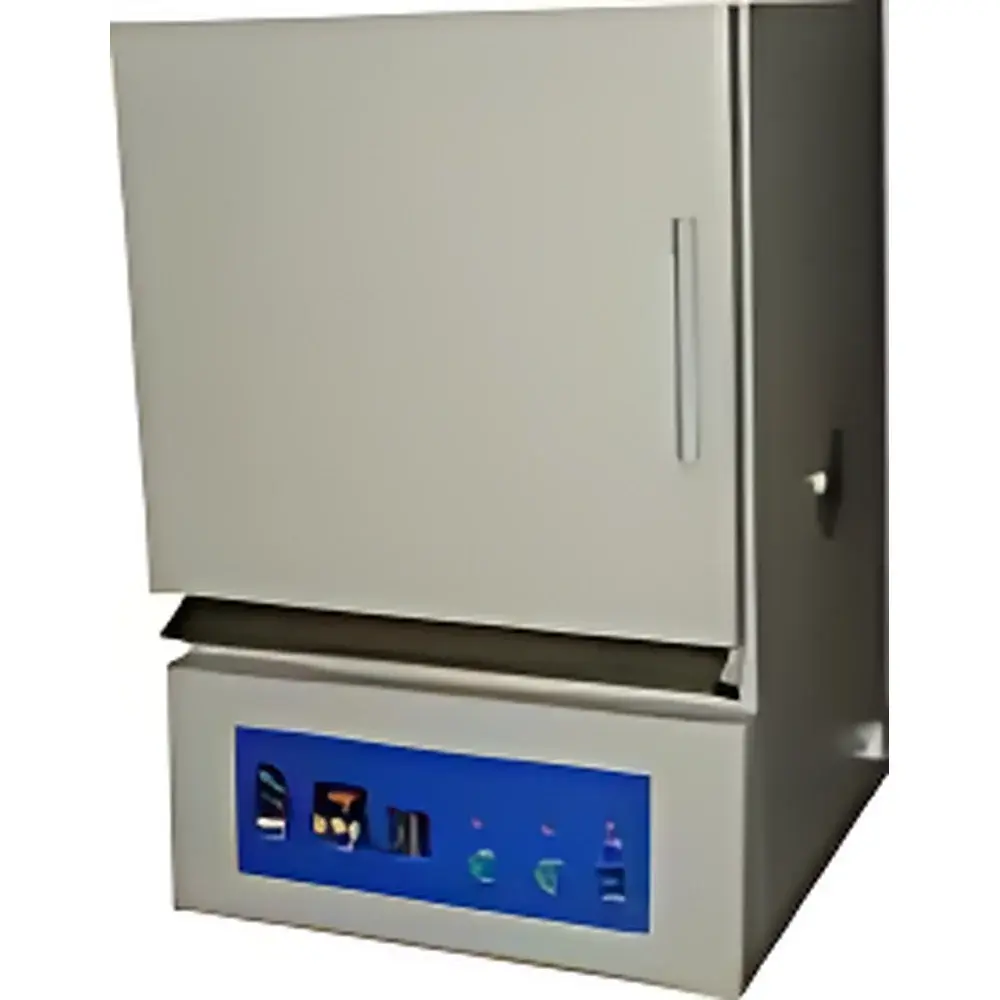
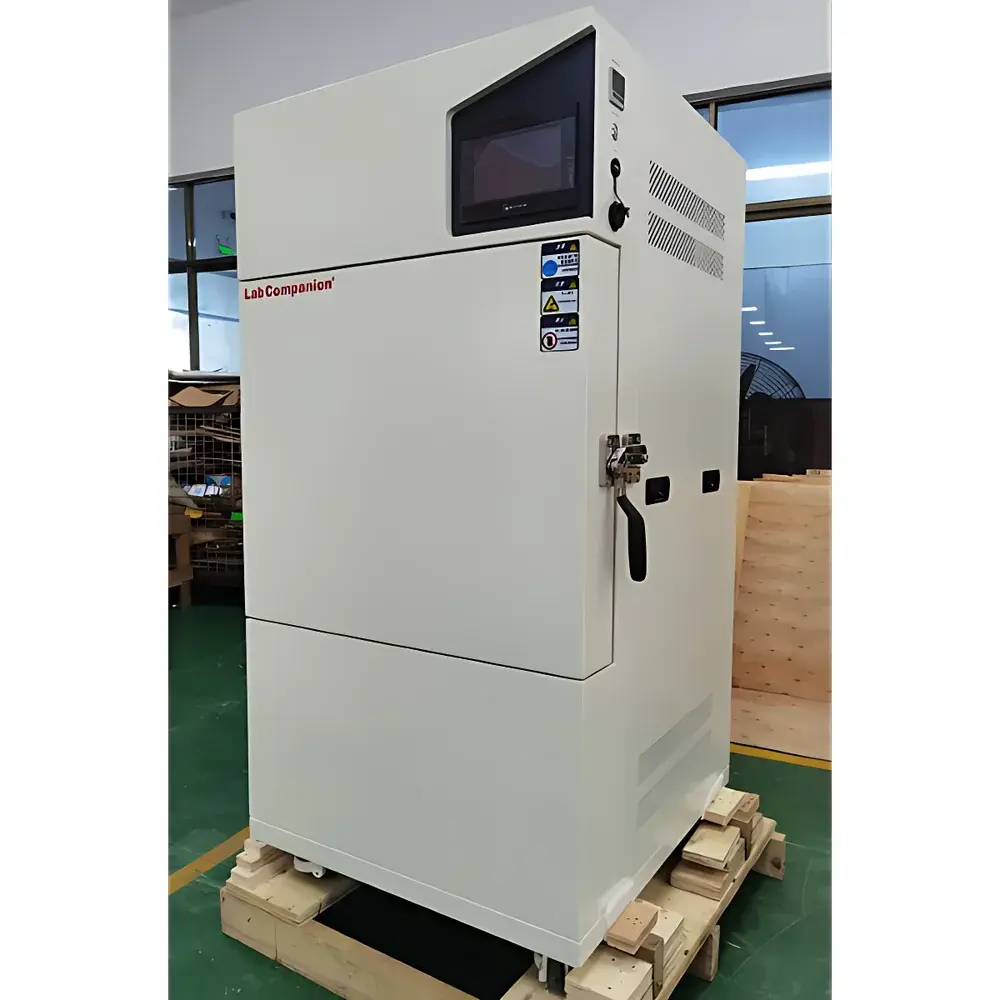
LabCompanion VAC Series Vacuum Oven
| Brand | LabCompanion |
|---|---|
| Origin | Guangdong, China |
| Manufacturer Type | Direct Manufacturer |
| Region Classification | Domestic (China) |
| Model | VAC |
| Price Range | USD 1,150 – 2,900 |
| Max Operating Temperature | 150–200 °C |
| Temperature Range | Ambient +20 °C to 200 °C |
| Temperature Uniformity | ±2 °C |
| Temperature Fluctuation | ±1 °C |
| Temperature Deviation | ±2 °C |
| Heating Rate | 3 °C/min |
Overview
The LabCompanion VAC Series Vacuum Oven is a precision-engineered environmental test chamber designed for controlled thermal processing under reduced pressure. Utilizing vacuum-assisted convection heating, it eliminates trapped air and volatile residues while suppressing oxidation—critical for thermoset curing, solvent-free drying, and degassing of viscous or oxygen-sensitive materials. Its dual-chamber architecture—comprising an inner process chamber nested within an outer heated jacket—minimizes thermal gradient across the working volume and improves energy efficiency. The system operates within a validated temperature range of ambient +20 °C to 200 °C, with uniformity maintained at ±2 °C (per IEC 60068-3-5), making it suitable for reliability testing, pre-conditioning, and process development in electronics, polymer, and semiconductor manufacturing environments.
Key Features
- Dual-chamber thermal design: Inner stainless-steel chamber enclosed by an independently heated outer jacket to enhance thermal stability and reduce heat loss.
- Vacuum-integrated operation: Equipped with a robust mechanical vacuum pump interface (compatible with two-stage rotary vane pumps) and digital vacuum gauge (range: 0.1–760 Torr, optional upgrade to 10−3 Torr).
- Precise PID temperature control: Microprocessor-based controller with ramp-soak programming, real-time deviation monitoring, and auto-tuning capability.
- Optical observation window (optional): Tempered borosilicate glass viewport with anti-fog coating enables non-intrusive visual inspection of sample behavior during vacuum cycles.
- Robust construction: 304 stainless-steel interior, double-layer insulation (ceramic fiber + aluminum foil), and reinforced door gasket for long-term vacuum integrity.
- Compliance-ready safety systems: Over-temperature cut-off, door interlock switch, and vacuum-loss alarm meeting functional safety requirements per IEC 61000-6-2/4.
Sample Compatibility & Compliance
The VAC Series accommodates a wide range of sample forms—including wafers, PCB assemblies, molded resins, gel-filled sensors, and moisture-sensitive components—without risk of surface oxidation or bubble entrapment. Its thermal performance complies with key international standards for environmental stress screening and aging validation, including GB/T 2423.1 (cold test), GB/T 2423.2 (dry heat), ISO 16750-4 (road vehicle environmental conditions), JESD22-A108 (temperature cycling), and GB/T 14710 (medical electrical equipment climatic testing). When configured with audit-trail-capable controllers and calibrated sensors, the system supports GLP/GMP-aligned qualification protocols (IQ/OQ/PQ) and satisfies traceability requirements under ISO/IEC 17025.
Software & Data Management
Standard configuration includes an embedded 4.3-inch TFT touchscreen HMI with on-device data logging (up to 10,000 records, timestamped and tagged with cycle ID). Optional RS485/Modbus RTU or Ethernet (TCP/IP) interfaces enable integration into centralized MES or SCADA platforms. With LabCompanion’s optional DataBridge™ software (Windows-compatible), users can export CSV-formatted temperature/vacuum profiles, generate PDF test reports with electronic signatures, and configure automated email alerts upon cycle completion or deviation events. All logged data retains full metadata (operator ID, chamber ID, sensor channel, calibration expiry) to meet FDA 21 CFR Part 11 requirements for electronic records and signatures when deployed in regulated environments.
Applications
- LED packaging: Degassing of silicone encapsulants and phosphor slurries prior to dispensing and curing.
- Semiconductor assembly: Moisture removal from die-attach epoxies and underfill materials before reflow; post-wafer cleaning drying without watermark formation.
- PCB manufacturing: Pre-bake of solder paste stencils, conformal coating cure acceleration, and flux residue outgassing.
- Advanced materials R&D: Thermal aging of polymer composites, crosslinking kinetics studies of elastomers, and solvent-free drying of aerogels or MOFs.
- Medical device production: Sterile-grade drying of implantable polymer housings and validation of shelf-life stability per ISO 10993-12.
FAQ
What vacuum level can the VAC Series achieve with the standard pump configuration?
With a typical two-stage rotary vane pump (e.g., 2 m³/h capacity), the system reaches ≤5 Torr within 15 minutes. Optional high-vacuum configurations support ≤1×10⁻³ Torr using a diffusion or turbo-molecular pump.
Is temperature calibration traceable to national standards?
Yes—each unit ships with a factory calibration certificate (NIST-traceable reference sensors), and optional on-site calibration services are available per ISO/IEC 17025.
Can the oven operate without vacuum (i.e., as a standard convection oven)?
Yes. The vacuum system is fully isolatable; the chamber functions as a forced-air convection oven with independent temperature control and airflow management.
What maintenance intervals are recommended for long-term vacuum integrity?
Door gasket inspection every 6 months; vacuum pump oil change every 500 operating hours; annual verification of pressure sensor linearity and temperature uniformity mapping per ASTM E2203.
Does the controller support multi-step vacuum-temperature profiles?
Yes—the programmable controller allows up to 32 segments combining ramp/soak sequences with synchronized vacuum hold steps, including pressure-controlled dwell modes.



