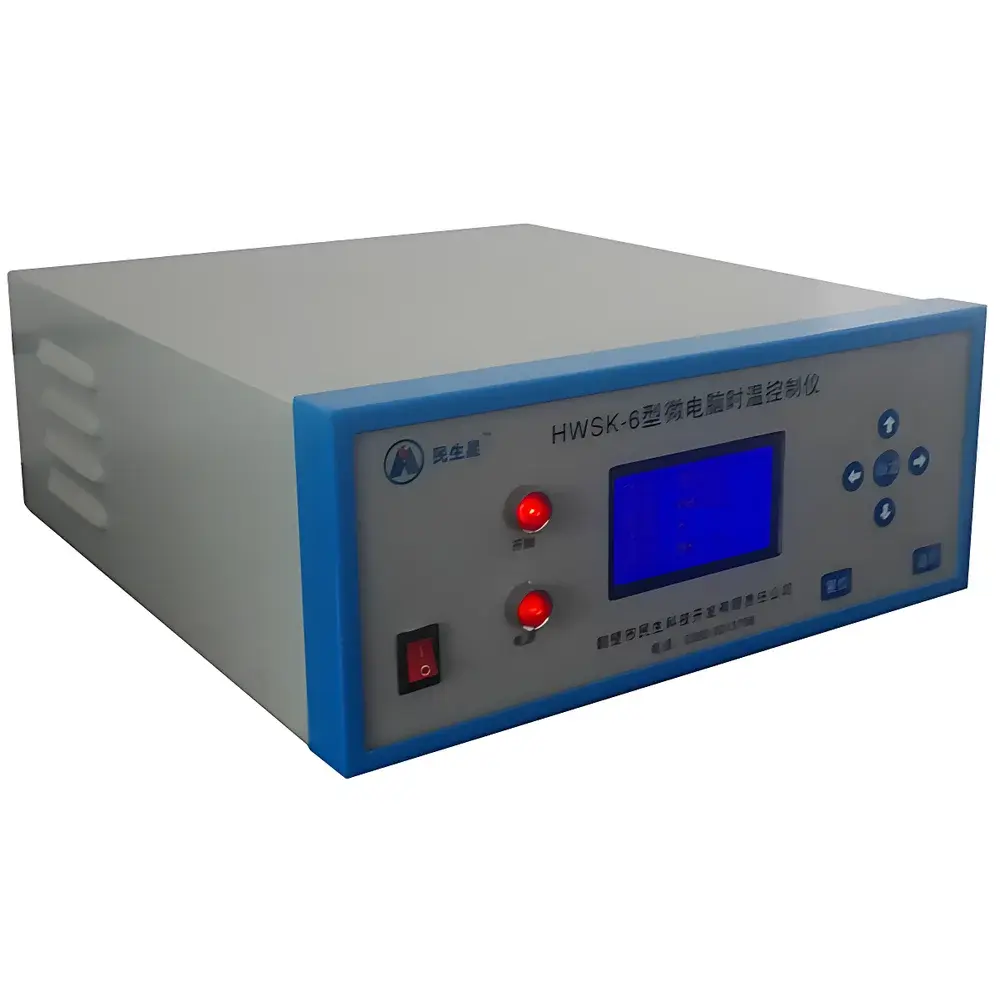
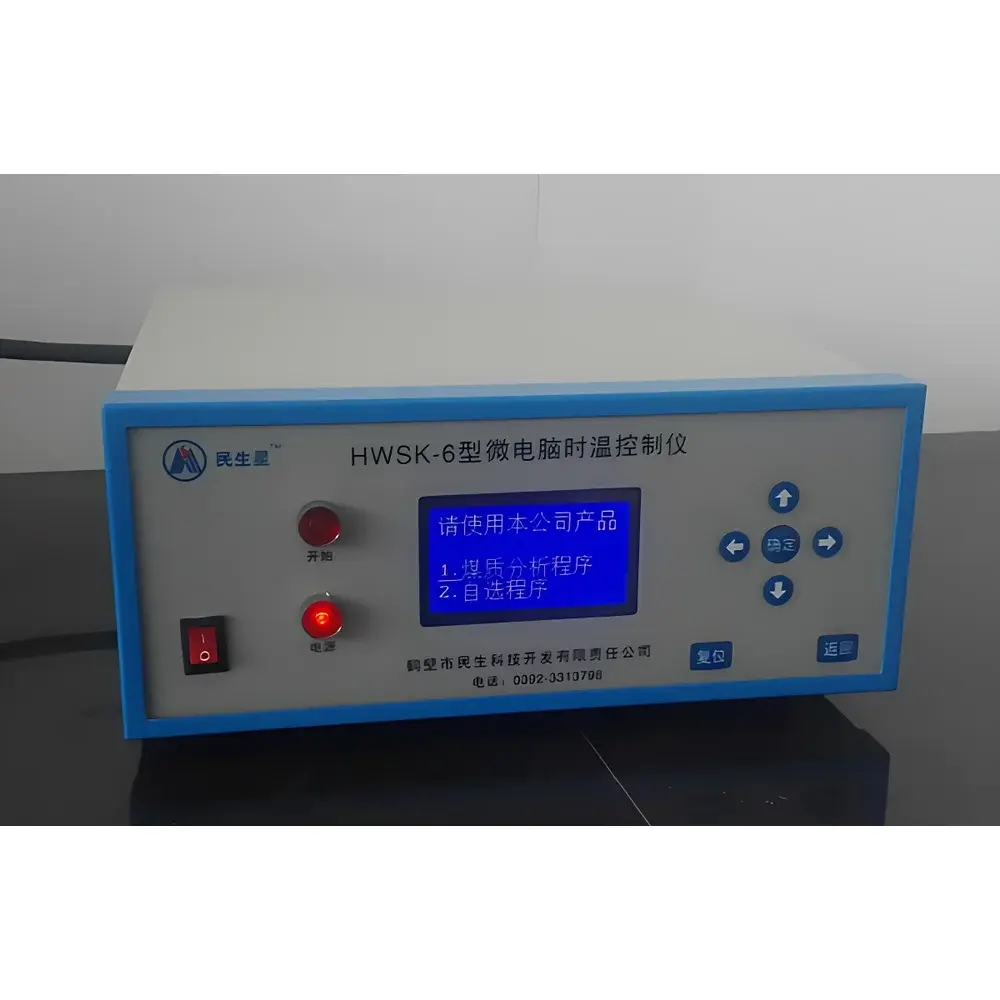
MingShen Science HWSK-6 Microcomputer Temperature Data Logger and Controller
| Brand | MingShen Science |
|---|---|
| Origin | Henan, China |
| Model | HWSK-6 |
| Channel Count | Single-channel |
| Display | Backlit LCD with Chinese UI |
| Input Sensor | Type K thermocouple |
| Temperature Range | Ambient to 1000 °C |
| Resolution | 0.1 °C |
| Temperature Accuracy | ±3 °C |
| Time Programmability | 000–999 min (1-min resolution) |
| Control Algorithm | PID |
| Power Supply | AC 220 V ±10%, 50 Hz |
| Max Load Power | ≤5 kW |
| Enclosure Material | Cast iron |
| Dimensions | 330 × 290 × 120 mm (L×W×H) |
| Mounting | Benchtop fixed installation |
| Weight | ~6 kg |
| Operating Environment | 0–40 °C, RH ≤80% |
| Cold-junction Compensation | Integrated constant-current circuit |
| Programmable Ramp Profiles | Up to 15 segmented temperature/time steps |
Overview
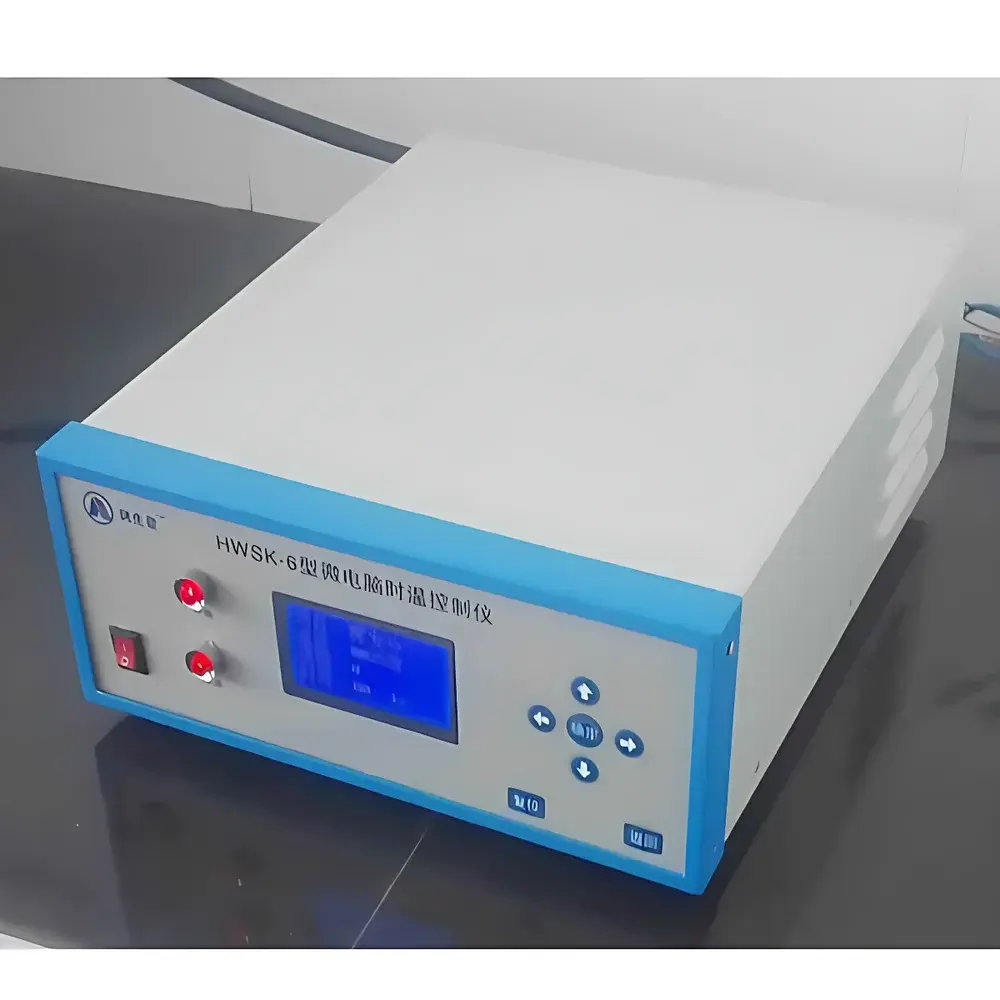
The MingShen Science HWSK-6 Microcomputer Temperature Data Logger and Controller is a dedicated benchtop instrumentation system engineered for precise thermal process monitoring and closed-loop temperature regulation in high-temperature laboratory furnaces—particularly muffle furnaces used in coal analysis, ash content determination, volatile matter testing, and coking index evaluation per ASTM D3172, ISO 1171, and GB/T 212–2008 standards. It operates on the principle of thermocouple-based temperature feedback combined with digital PID control logic to maintain setpoint stability during time-dependent thermal protocols. Unlike generic data loggers, the HWSK-6 integrates real-time control actuation (via solid-state relay output), programmable ramp/soak sequences, and built-in compliance logic for standardized test methods—including automatic execution of “fast ash,” “volatile matter,” “Roga Index,” and “caking index” procedures. Its cast-iron enclosure provides mechanical robustness and thermal shielding in industrial lab environments where electromagnetic interference and ambient heat load are common.
Key Features
- Single-channel Type K thermocouple input with automatic cold-junction compensation using precision constant-current circuitry
- Digital PID control algorithm optimized for furnace thermal inertia, minimizing overshoot and stabilizing temperature within ±3 °C of setpoint
- 15-step programmable ramp-and-soak profile capability—enabling custom multi-stage heating cycles compliant with ASTM D5142 (moisture/ash/volatile analysis) and ISO 562 (volatile matter)
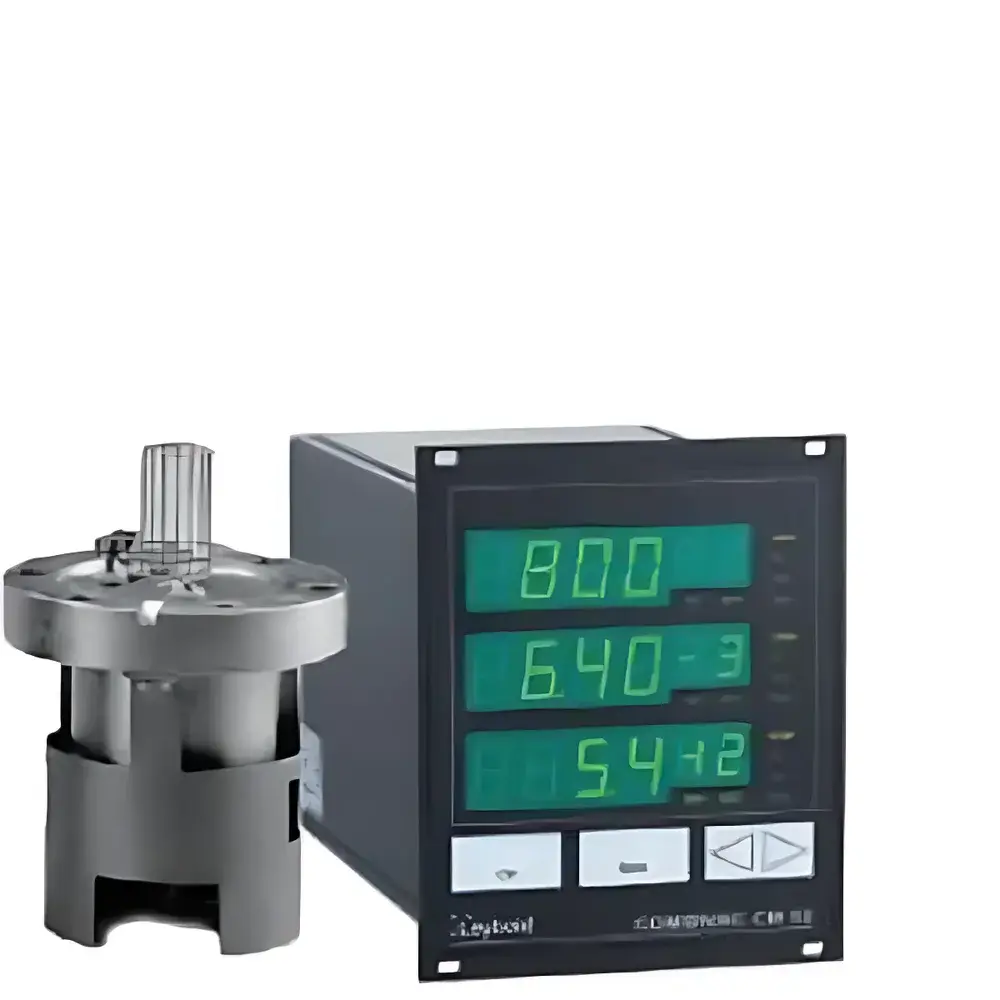
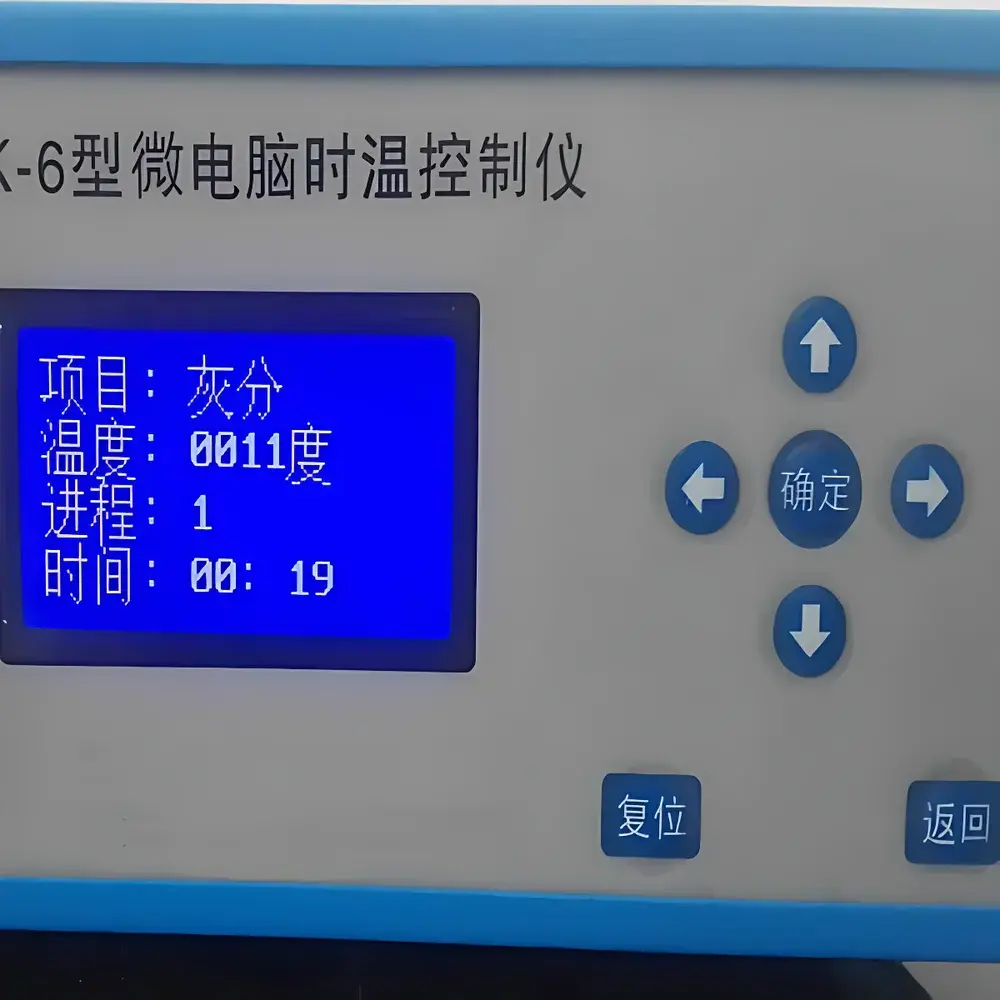
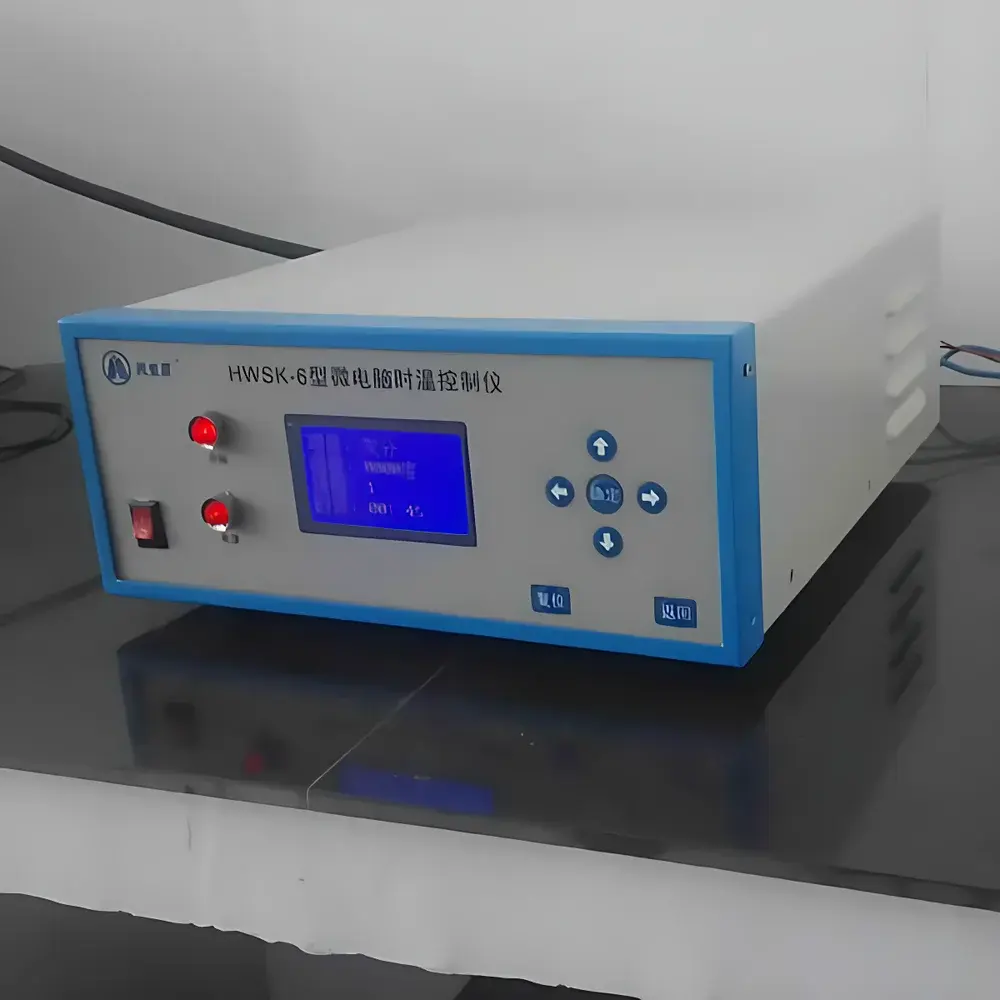
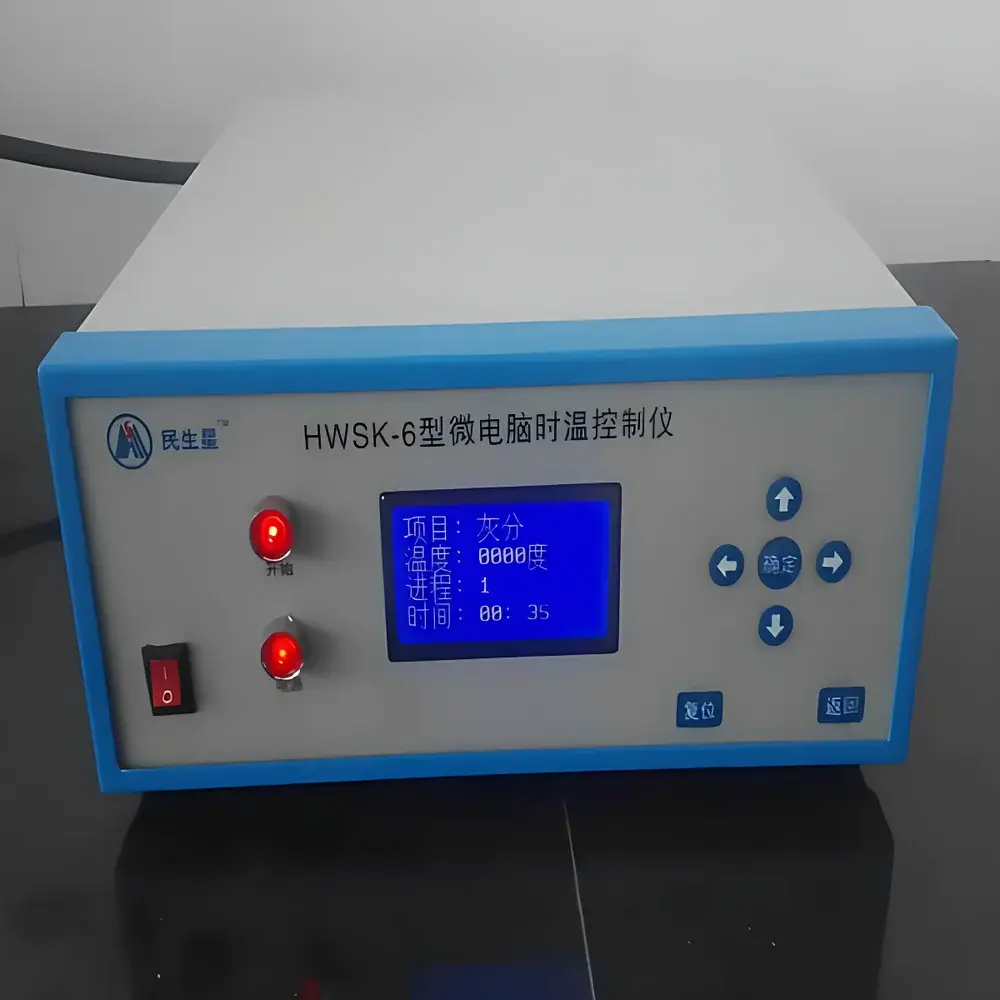
- Backlit monochrome LCD with full Chinese character interface, four-direction navigation keypad, and real-time display of current temperature, elapsed time, remaining time, and active test mode
- Integrated solid-state relay (SSR) output rated for ≤5 kW resistive loads, eliminating wear-prone mechanical contacts and mitigating failure modes associated with thyristor-based controllers
- Benchtop-fixed mounting design with vibration-damped cast-iron housing (330 × 290 × 120 mm), offering EMI resilience and thermal mass stability
- Compliance-ready architecture: All timing and temperature parameters adhere to national standard tolerances; no manual intervention required during automated test execution
Sample Compatibility & Compliance
The HWSK-6 is purpose-built for solid-sample thermal analysis in accredited coal testing laboratories. It interfaces directly with standard muffle furnaces equipped with K-type thermocouple ports and SSR-compatible heating circuits. Its firmware implements fixed procedural logic aligned with GB/T 212–2008 (Chinese national standard for coal proximate analysis), ASTM D3172 (standard practice for ultimate and proximate analysis of coal), and ISO 1171 (determination of ash in coal and coke). While not certified to IEC 61000-4 or FDA 21 CFR Part 11 out-of-the-box, its deterministic control behavior, non-volatile parameter storage, and timestamped operational logs support GLP-aligned recordkeeping when deployed within validated lab workflows. Environmental operating limits (0–40 °C, RH ≤80%) ensure reliability in typical QC laboratory conditions without climate-controlled enclosures.
Software & Data Management
The HWSK-6 operates as an embedded, stand-alone controller with no external PC dependency. All configuration, calibration offsets, and program sequences are stored in non-volatile EEPROM memory. Temperature and time data are continuously logged internally at user-defined intervals (default: 1-second sampling during active control phases) and retained across power cycles. No proprietary software or USB connectivity is provided; however, the device supports manual data review via on-screen scrolling history and print-out via optional RS232-connected thermal printer (not included). For integration into LIMS or centralized data archives, third-party serial-to-CSV conversion tools may be employed using ASCII protocol documentation available under NDA from MingShen Science. Audit trail functionality includes power-on counter, total operational hours, and last-modified timestamps for each stored program.
Applications
- Proximate analysis of coal and coke: ash content (fast ash method), volatile matter, moisture loss, and fixed carbon calculation
- Standardized coking tests: Roga Index (GB/T 474–2008) and Crucible Swelling Number (CSN) determinations requiring precise 30-min hold at 850 °C ±10 °C
- Calibration verification of furnace uniformity zones using multi-point soak profiles
- Thermal degradation studies of refractory materials, catalysts, and biomass feedstocks under controlled oxidative atmospheres
- Quality assurance in ceramic sintering pre-tests where repeatable 600–1000 °C ramp rates and dwell stability are critical
FAQ
What thermocouple type is supported?
Type K thermocouples only; cold-junction compensation is performed automatically via internal constant-current reference.
Can the HWSK-6 be integrated with a SCADA system?
Yes—via its isolated RS232 port using Modbus RTU or ASCII command protocol; integration requires external protocol translation hardware or middleware.
Is firmware upgrade capability available?
Firmware updates are performed by authorized MingShen service centers using dedicated programming jigs; field-upgradable versions are not distributed publicly.
Does the unit meet EMC immunity requirements for lab environments?
It complies with GB/T 18268.1–2010 (IEC 61326-1 equivalent) for laboratory-use electrical equipment, including electrostatic discharge (±4 kV contact) and burst immunity (±2 kV).
How is calibration traceability maintained?
The instrument accepts user-entered offset corrections per NIST-traceable thermocouple calibrators; factory calibration certificates list as-received accuracy against reference standards at 200 °C, 600 °C, and 900 °C.