
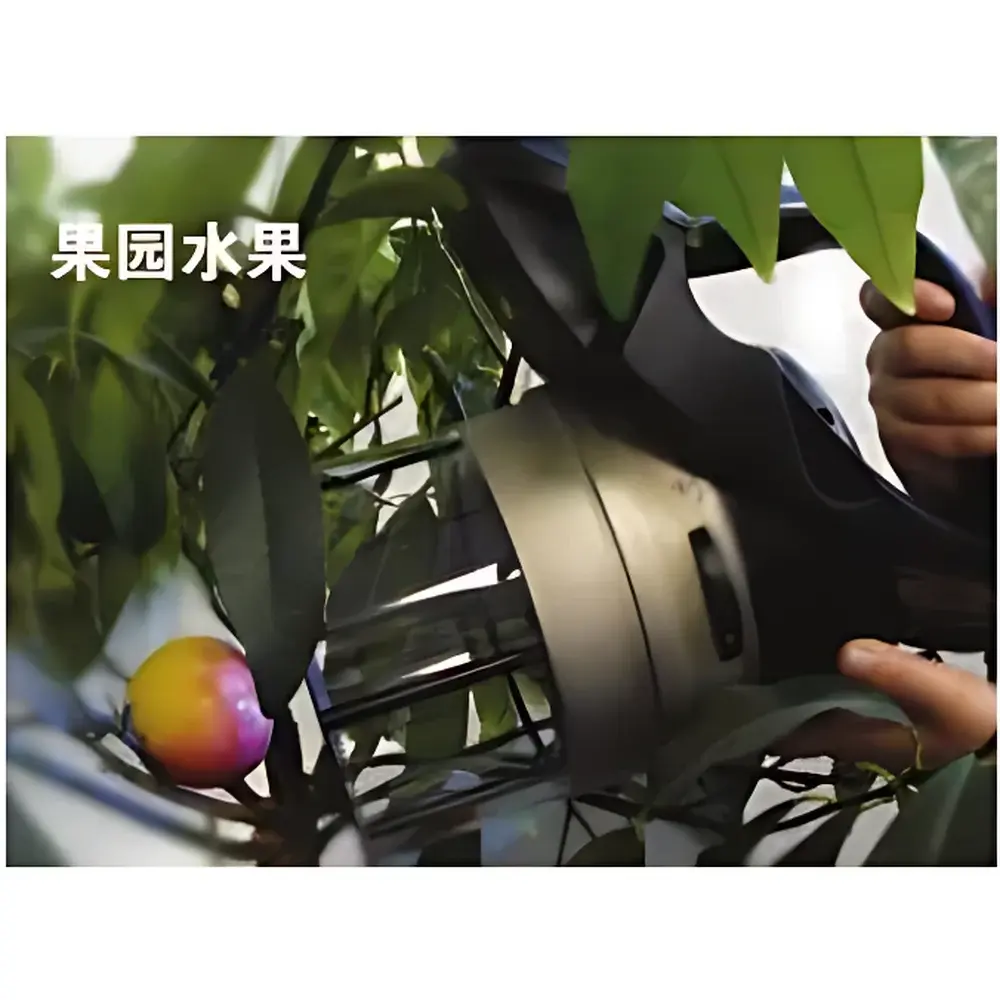
MULTIPLEX RESEARCH Portable UV-Vis Fluorescence Sensor
| Origin | France |
|---|---|
| Manufacturer Type | Distributor |
| Origin Category | Imported |
| Model | MULTIPLEX RESEARCH |
| Price | Upon Request |
Overview
The MULTIPLEX RESEARCH is a field-deployable, multi-channel UV-Vis fluorescence sensor engineered for non-destructive, real-time quantification of plant secondary metabolites—including chlorophyll, flavonoids, anthocyanins—and physiological status indicators such as the Nitrogen Balance Index (NBI). Developed from 15 years of collaborative research between the French National Centre for Scientific Research (CNRS) and Université Paris-Saclay, the instrument operates on dual fluorescence principles: (1) chlorophyll autofluorescence quenching under specific excitation wavelengths, and (2) polyphenol-mediated fluorescence screening effects—particularly pronounced in flavonoid- and anthocyanin-rich tissues. Unlike conventional chlorophyll meters relying solely on red-edge absorbance, MULTIPLEX employs pulsed LED excitation across four spectral bands (UV, blue, green, red) and simultaneous detection across three emission windows (blue/yellow, red, near-infrared), enabling decoupled, ratio-based quantification of multiple photochemical parameters within a single sub-second measurement.
Key Features
- Four independent excitation channels (365 nm UV, 450 nm blue, 525 nm green, 635 nm red) and three detection channels (440–520 nm blue/yellow, 630–690 nm red, 720–1000 nm NIR), yielding 12 distinct fluorescence signal combinations per acquisition
- Pulse-Amplitude Modulation (PAM)-based optical noise suppression, eliminating ambient light interference without mechanical shuttering or dark adaptation
- Non-contact measurement over variable sampling areas: 50 cm² (8 cm Ø), 28 cm² (6 cm Ø), or 12.5 cm² (4 cm Ø), suitable for whole leaves, fruits, flowers, seeds, or intact canopies
- Integrated high-precision GPS module (CEP < 2.5 m) with geotagged data logging for spatial mapping and precision agriculture applications
- Onboard 3.2″ capacitive touchscreen interface with multilingual support (English, French, Spanish); real-time parameter display and local storage without external computing
- Rechargeable external Li-ion battery pack (10 h continuous operation; 3 h full charge); total instrument mass: 2.5 kg (body only)
Sample Compatibility & Compliance
The MULTIPLEX RESEARCH is validated for direct optical interrogation of intact, living plant tissues—including broadleaf and coniferous foliage, fleshy fruits (apple, grape, tomato), floral organs, seeds, and herbaceous stems—without sample preparation or physical contact. Its measurement protocol conforms to established photobiological safety standards (IEC 62471) for Class 1 LED sources. Data acquisition workflows support GLP-compliant documentation through timestamped, GPS-referenced measurement records stored with hierarchical metadata (File → Group → Measurement → ID). While not FDA 21 CFR Part 11-certified out-of-the-box, audit trails, user-access logs, and immutable SD-card storage (512 MB capacity ≥ 1 million measurements) facilitate integration into regulated environments requiring traceability per ISO/IEC 17025 or ASTM E2500-18 guidelines.
Software & Data Management
Raw fluorescence intensities, ratio indices (e.g., SFRR, SFRG, FLAV, ANTH), and derived physiological metrics (NBI, FERARI, BRR) are stored in comma-separated values (CSV) format directly compatible with MATLAB, R, Python (pandas), and commercial statistical platforms (JMP, SAS, SPSS). The onboard file system supports four-tier classification: File (project-level), Group (treatment/block), Measurement (session), and Measurement ID (sequential counter). Firmware updates are delivered via USB-connected PC using Force-A’s official update utility. Exported datasets include full spectral metadata, GPS coordinates (WGS84), ambient temperature (5–45 °C operating range), and operator-defined annotations—enabling retrospective spatial-temporal analysis and integration with GIS or remote sensing pipelines.
Applications
- Early nitrogen stress detection via NBI dynamics—identifying nutritional imbalance before visible chlorosis manifests, enabling responsive fertilization in cereals, legumes, and horticultural crops
- Varietal screening of anthocyanin accumulation kinetics in apple (e.g., Jazz vs. Pink), grape, and berry cultivars for harvest timing optimization and quality grading
- Non-destructive assessment of tea polyphenol content, winegrape maturity (flavonol:anthocyanin ratios), and olive phenolic profiles during ripening
- Phytochemical phenotyping in medicinal plants (e.g., hypericin in St. John’s wort, ginsenosides in Panax) and aromatic species (e.g., rosmarinic acid in rosemary)
- Abiotic stress monitoring (drought, UV-B exposure, heavy metal contamination) using BRR (BioStress Response Ratio) and flavonoid redox signatures
- High-throughput phenotyping in field trials and greenhouse nurseries, supporting QTL mapping and marker-assisted selection programs
FAQ
What is the core optical principle behind MULTIPLEX RESEARCH?
It relies on differential fluorescence excitation-emission responses of chlorophyll and polyphenols under pulsed UV–vis illumination, combined with PAM-based ambient light rejection and multi-ratio index derivation.
Can it distinguish between different anthocyanin derivatives (e.g., cyanidin vs. delphinidin)?
No—it quantifies total anthocyanin-related fluorescence yield via the ANTH index; compound-specific identification requires HPLC or LC-MS.
Is calibration required before each use?
Factory calibration is stable over time; optional white-reference correction is available for long-term field campaigns but not mandatory for routine use.
How does NBI improve upon traditional SPAD-based nitrogen assessment?
NBI integrates chlorophyll (SFR) and flavonoid (FLAV) signals, detecting nitrogen imbalance at the biochemical level—days earlier than SPAD, which responds only after chlorophyll degradation becomes macroscopically evident.
Does the instrument meet IP rating requirements for outdoor agricultural use?
It is housed in ruggedized polymer casing with ingress protection equivalent to IP54 (dust-protected, splash-resistant); optional nylon carrying case provides additional environmental shielding.




