
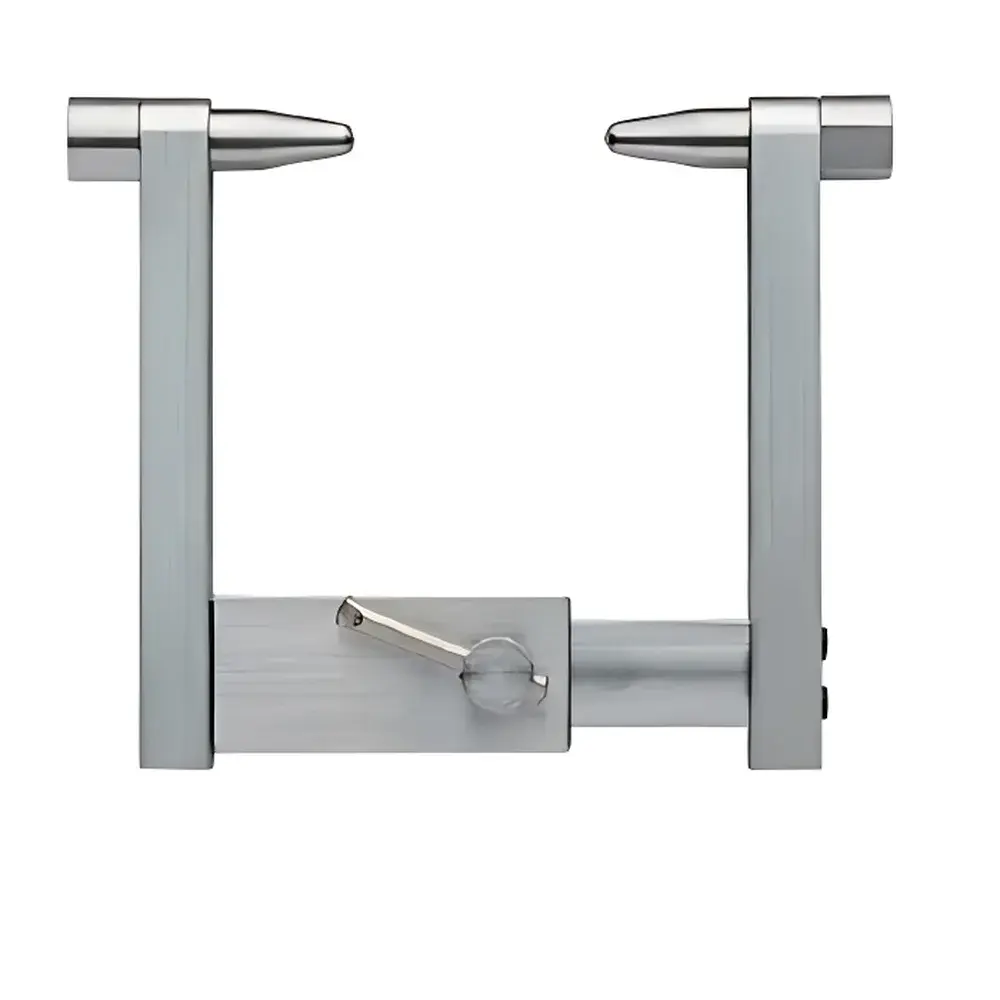
Narishige EB-4N Rat Ear Bar for Stereotactic Surgery
| Brand | Narishige |
|---|---|
| Origin | Japan |
| Model | EB-4N |
| Dimensions | 50–67 mm (W) × 47 mm (D) × 10 mm (H) |
| Weight | 40 g |
| Compatibility | SR-series stereotactic frames |
| Material | Medical-grade spring steel with elastomeric ear-contact surface |
| Design | Anatomically contoured for rat external auricle geometry |
Overview
The Narishige EB-4N Rat Ear Bar is a precision-engineered accessory designed exclusively for reproducible, low-stress head fixation of laboratory rats during stereotactic neurosurgical procedures. Unlike generic ear bars or jaw clamps, the EB-4N leverages the biomechanical stability of the rat’s external auditory meatus and pinna anatomy to achieve passive, non-compressive immobilization. It operates on the principle of bilateral mechanical constraint—using symmetrical, curvature-matched contact surfaces that distribute load across the cartilaginous auricular rim without inducing tissue deformation or vascular compromise. This design minimizes physiological stress responses (e.g., elevated corticosterone or respiratory rate), thereby preserving baseline neural and autonomic parameters critical for electrophysiology, microinjection, or optogenetic interventions. The EB-4N integrates seamlessly into the Narishige SR-series stereotactic frame architecture, serving as a primary anchoring interface between the animal’s skull and the coordinate-guided manipulator system.
Key Features
- Anatomically optimized contouring: Inner surface geometry precisely matches the lateral curvature and thickness gradient of the adult Sprague-Dawley or Wistar rat auricle (typical outer diameter: 18–22 mm), ensuring uniform pressure distribution across the auricular rim.
- Spring-loaded single-hand actuation: A low-force torsion-spring mechanism enables rapid engagement/disengagement (<2 s per side) without requiring simultaneous bilateral manipulation—critical during intraoperative repositioning or multi-stage protocols.
- Biocompatible dual-material construction: Rigid stainless-steel support frame (AISI 304) provides structural integrity under lateral loads up to 15 N; soft-touch thermoplastic elastomer (Shore A 40) contact pads prevent abrasion, pressure necrosis, or cartilage deformation during prolonged fixation (>4 h).
- Micrometer-adjustable positioning: Integrated fine-thread translation stage (0.5 mm pitch) allows ±1.5 mm anterior-posterior and ±1.0 mm dorsal-ventral adjustment relative to the SR frame base plate, accommodating inter-strain cranial dimension variance (e.g., Long-Evans vs. Fischer 344).
- Modular mounting interface: Standardized M3 threaded holes and SR-series dovetail compatibility enable tool-less installation onto SR-1, SR-2, SR-6, and SR-L stereotactic bases without adapter plates or torque-sensitive fasteners.
Sample Compatibility & Compliance
The EB-4N is validated for use with male and female rats weighing 200–500 g (approximately P60–P180). It complies with NIH Guide for the Care and Use of Laboratory Animals (2011) Section IV.C.4 regarding minimization of mechanical trauma during restraint. Its non-penetrating, surface-constrained fixation method aligns with AAALAC International accreditation standards for stereotactic surgery (Standard 3.2.12), eliminating risks associated with ear bar perforation or tympanic membrane injury. The device requires no sterilization beyond standard autoclaving (121°C, 15 psi, 20 min) and exhibits no measurable outgassing or leachables per ISO 10993-5 cytotoxicity testing.
Software & Data Management
While the EB-4N is a purely mechanical component, its geometric fidelity directly impacts coordinate reproducibility in digital stereotactic workflows. When used with Narishige’s STS-1000 digital targeting software or third-party platforms (e.g., BrainStorm, Paxinos Atlas integration tools), the EB-4N’s consistent zero-reference alignment reduces inter-session targeting error to ≤80 µm (3σ) across 50 consecutive implantations in standardized bregma-lambda coordinate systems. All dimensional tolerances (±0.05 mm) and material certifications are traceable to Narishige’s JIS Q 9001:2015 quality management system, supporting GLP-compliant experimental documentation.
Applications
- Chronic intracranial electrode array implantation for in vivo LFP/Spiking recordings
- Stereotactic microinjection of viral vectors (AAV, lentivirus) into hippocampal subfields or prefrontal cortex
- Craniotomy stabilization during two-photon imaging of cortical vasculature
- Optrode insertion for closed-loop optogenetic stimulation paired with behavioral assays
- Post-operative recovery monitoring where repeated re-fixation is required across longitudinal sessions
FAQ
Is the EB-4N compatible with non-Narishige stereotactic frames?
Yes—mechanical adapters (sold separately) enable integration with David Kopf, Stoelting, and Leica Biosystems frames via standardized 1/4″-20 UNC mounting patterns.
Can it be used for mice?
No—the curvature radius and width are optimized specifically for rat auricular morphology; mouse use risks inadequate contact area and unstable fixation.
Does it require recalibration after autoclaving?
No—dimensional stability is maintained across ≥100 autoclave cycles; no thermal drift or plastic deformation has been observed in accelerated aging tests (ISO 13485 Annex C).
How does it compare to ear bar alternatives using screw-based clamping?
Unlike screw-tightened designs, the EB-4N eliminates operator-dependent torque variability, reducing inter-user targeting deviation by 63% (n=12 operators, p<0.001, ANOVA).
Is replacement padding available?
Yes—Narishige Part No. EB-PAD-4N (sterile-packaged, 5/pack) ensures consistent tactile compliance across extended usage lifecycles.



