
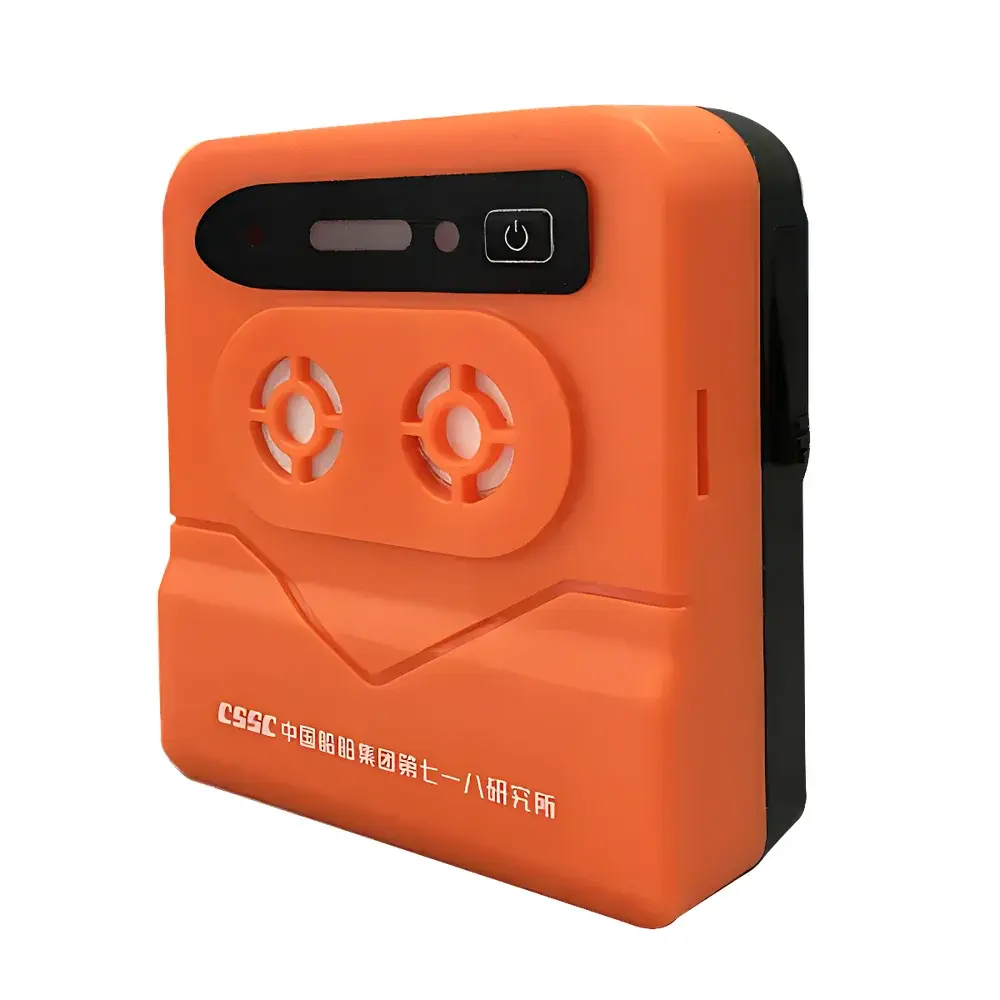
PERIC GAP TW Portable Dual-Gas Detector (O₂ & Combustible Gas)
| Brand | PERIC |
|---|---|
| Origin | Hebei, China |
| Manufacturer Type | Manufacturer |
| Country of Origin | China |
| Model | GAP TW |
| Price | Upon Request |
| Detection Gases | O₂ (0–30.0 %vol), Combustible Gas (CH₄, 0–100 %LEL) |
| Detection Principles | Electrochemical (O₂), Catalytic Bead (Combustible) |
| Sampling Method | Natural Diffusion |
| Measurement Accuracy | ±3% FS (O₂), ±5% FS (Combustible) |
| Display Resolution | 0.1 %vol (O₂), 1 %LEL (Combustible) |
| Alarm Thresholds (Configurable) | O₂ Low: 19.5 %vol, O₂ High: 23.5 %vol |
| Combustible | 25 %LEL |
| Response Time | ≤60 s (both gases) |
| Alarms | Visual (LED), Audible (≥75 dB @ 30 cm), Vibration, Voice Prompt |
| Power | ICR18500 Li-ion Battery, 3.7 V / 2000 mAh |
| Operating Time | ≥10 h (continuous) |
| Operating Temperature | −10 to +55 °C |
| Operating Humidity | 0–95 %RH (non-condensing) |
Overview
The PERIC GAP TW is a compact, intrinsically safe portable dual-gas detector engineered for real-time, simultaneous monitoring of ambient oxygen (O₂) concentration and combustible gas (methane, CH₄) levels in industrial environments. It operates on two distinct, industry-validated sensing principles: electrochemical detection for oxygen and catalytic bead (pellistor) technology for combustible gases—ensuring high selectivity, long-term stability, and compliance with fundamental requirements for confined space entry and hydrocarbon-handling operations. Designed for personnel safety in petrochemical plants, wastewater treatment facilities, utility tunnels, and construction sites, the device continuously samples ambient air via natural diffusion—eliminating the need for pumps or external sampling lines—and delivers immediate, context-aware feedback through integrated multimodal alarms.
Key Features
- Wrist- or Belt-Mountable Form Factor: With dimensions under 100 × 55 × 28 mm and mass <150 g, the GAP TW integrates seamlessly into personal protective equipment (PPE) workflows without impeding mobility or dexterity.
- Triple-Mode Alarm System: Simultaneous visual (high-intensity dual-color LEDs), audible (≥75 dB at 30 cm), and tactile (vibration motor) alerts ensure reliable notification across noisy, low-visibility, or hearing-impaired conditions.
- Configurable Alarm Thresholds: Pre-set O₂ alarm limits (19.5 %vol low, 23.5 %vol high) and 25 %LEL combustible alarm align with OSHA 1910.146 and NFPA 850 guidelines; thresholds are field-adjustable via password-protected menu navigation.
- Intuitive Human Interface: Backlit LCD displays real-time O₂ (%vol) and combustible (%LEL) values with 0.1 %vol and 1 %LEL resolution respectively; voice prompts confirm mode changes and alarm activation in English.
- Robust Power Architecture: Powered by a certified ICR18500 lithium-ion cell (3.7 V / 2000 mAh), the unit supports ≥10 hours of continuous operation under typical field conditions and charges fully within 4 hours using a standard 5 V / 1 A USB-C adapter.
Sample Compatibility & Compliance
The GAP TW is optimized for direct ambient air sampling in non-corrosive, non-silicon-laden atmospheres. It is not intended for use in inerted, oxygen-deficient (<10 %vol), or hydrogen-sulfide-rich environments without supplemental verification. The instrument meets IP65 ingress protection rating for dust and water resistance and complies with EN 61000-6-2/6-3 (EMC immunity/emission) and EN 50104 (O₂ detectors) and EN 50194-1 (combustible gas detectors). While not ATEX/IECEx-certified out-of-box, its intrinsic safety design—verified per EN 60079-11—supports integration into Class I, Division 2 hazardous locations when used with approved accessories and mounting hardware.
Software & Data Management
Data logging is supported via internal memory (up to 30 days of 1-minute interval records), accessible through USB-C interface and proprietary PC software (PERIC DataLink v2.1). Exported CSV files include timestamp, O₂ %vol, combustible %LEL, alarm status flags, battery voltage, and sensor health indicators. Audit trails comply with basic GLP documentation requirements; however, full 21 CFR Part 11 compliance—including electronic signatures and immutable audit logs—is not implemented. Firmware updates are delivered via signed binary packages to ensure integrity and traceability.
Applications
- Confined space entry pre-check and continuous atmospheric monitoring (OSHA 1910.146)
- Leak detection during pipeline maintenance, valve replacement, and flare stack inspection
- Monitoring ventilation effectiveness in underground parking garages and utility vaults
- First-response screening for gas accumulation following excavation or structural damage
- Supplemental monitoring in laboratories handling compressed gas cylinders (e.g., CH₄ calibration standards)
FAQ
What calibration frequency is recommended for the GAP TW?
Field calibration using certified span gases is advised before each shift or after exposure to extreme concentrations, per manufacturer guidelines and ISO 4074:2020 recommendations.
Can the GAP TW detect gases other than O₂ and CH₄?
No—the electrochemical O₂ sensor and catalytic bead element are factory-calibrated exclusively for oxygen and methane; cross-sensitivity to H₂, CO, or VOCs is neither compensated nor validated.
Is bump testing required prior to use?
Yes—functional verification with a known concentration test gas (e.g., 12.5 %LEL CH₄) is mandatory before deployment to confirm alarm activation and sensor responsiveness.
Does the device support data export for regulatory reporting?
Yes—CSV-formatted logs exported via USB-C can be imported into LIMS or EHS platforms for incident investigation, trend analysis, and compliance recordkeeping.
What is the expected service life of the sensors?
Electrochemical O₂ sensors typically last 24–36 months; catalytic bead elements maintain accuracy for 18–24 months under normal operating conditions—both subject to environmental stressors such as humidity extremes and silicon poisoning.
Related Products





