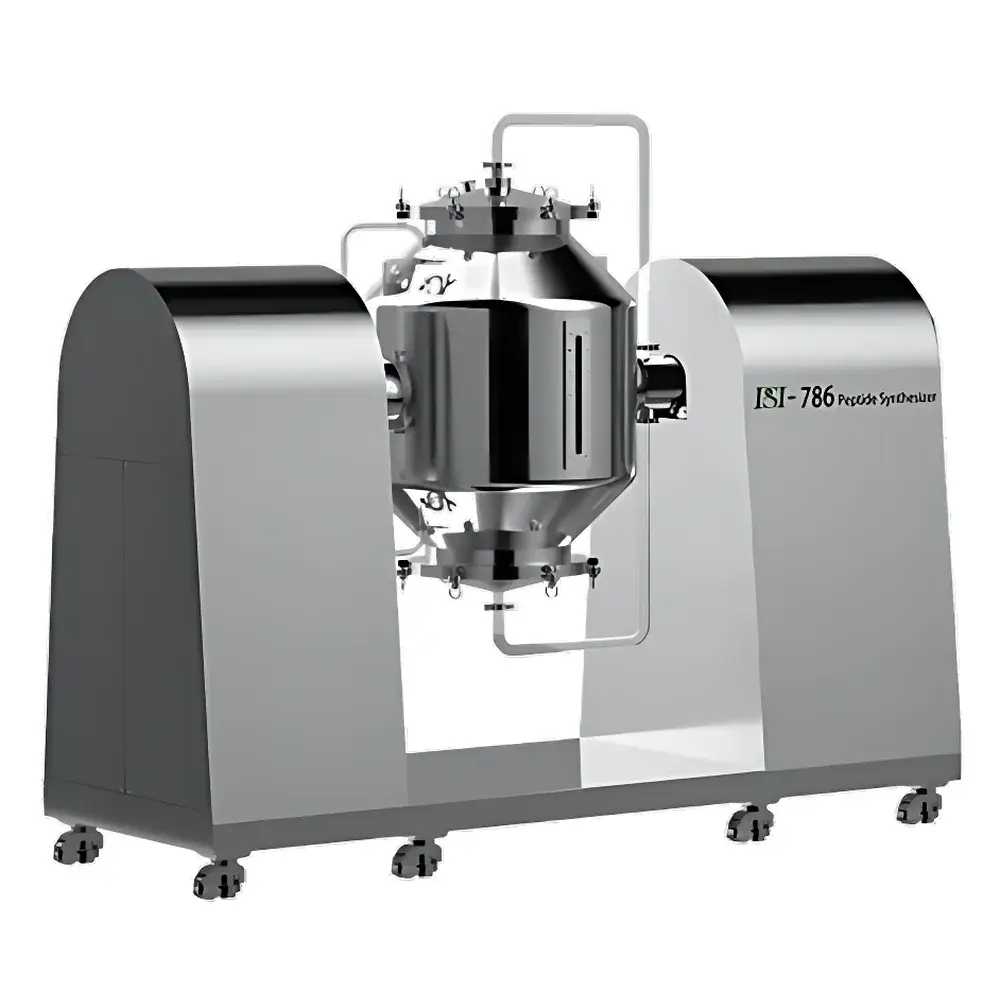
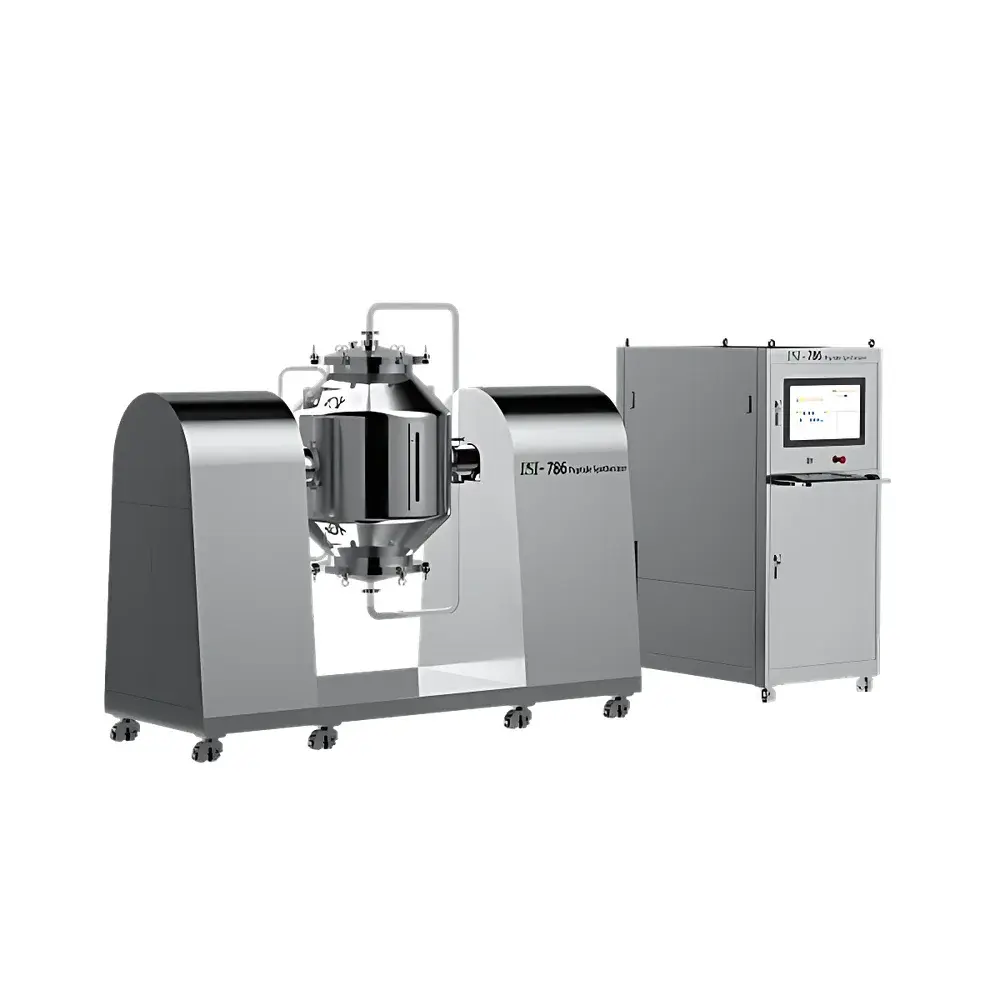
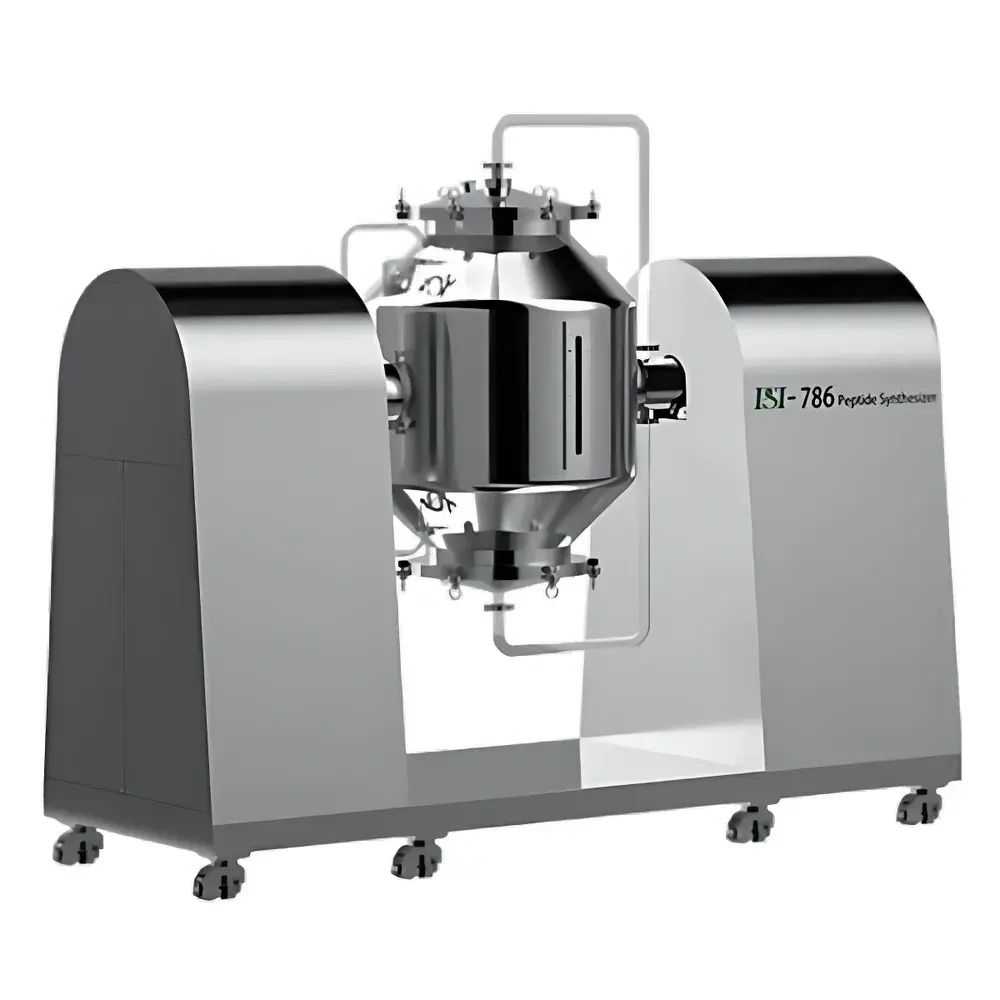
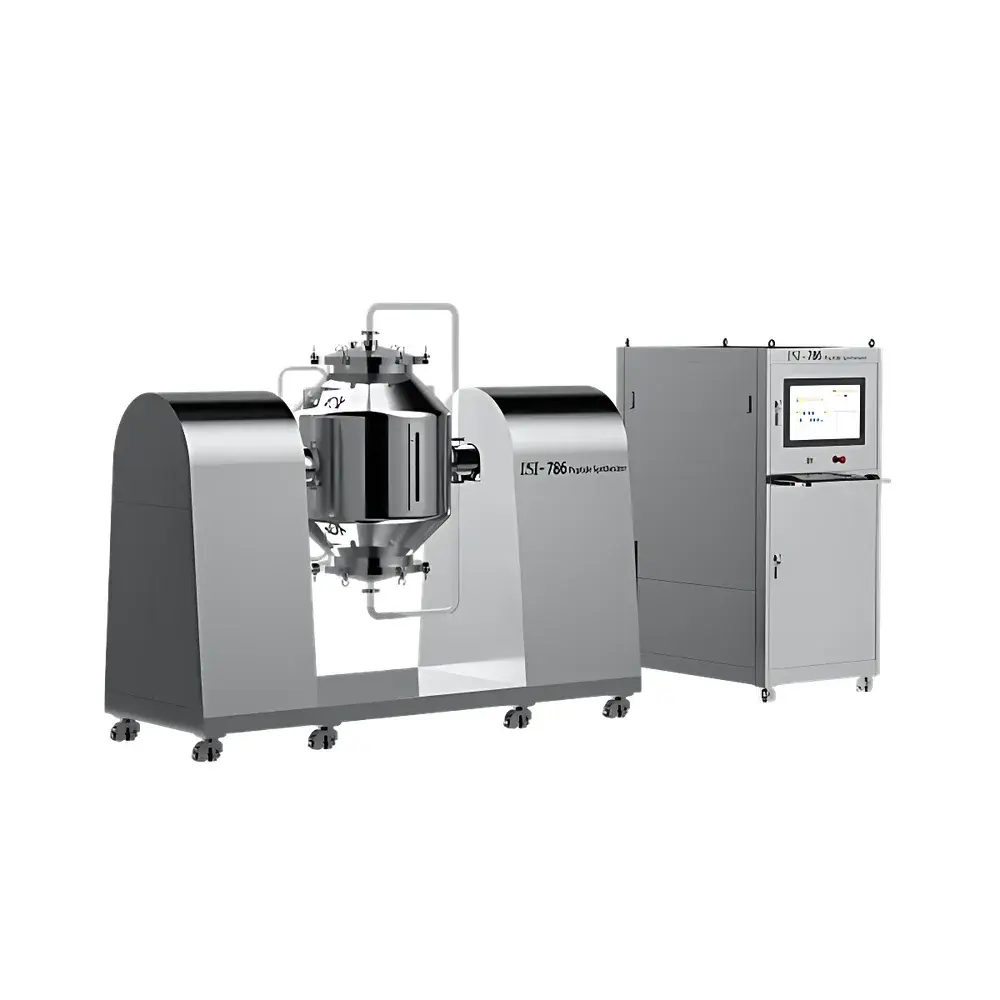
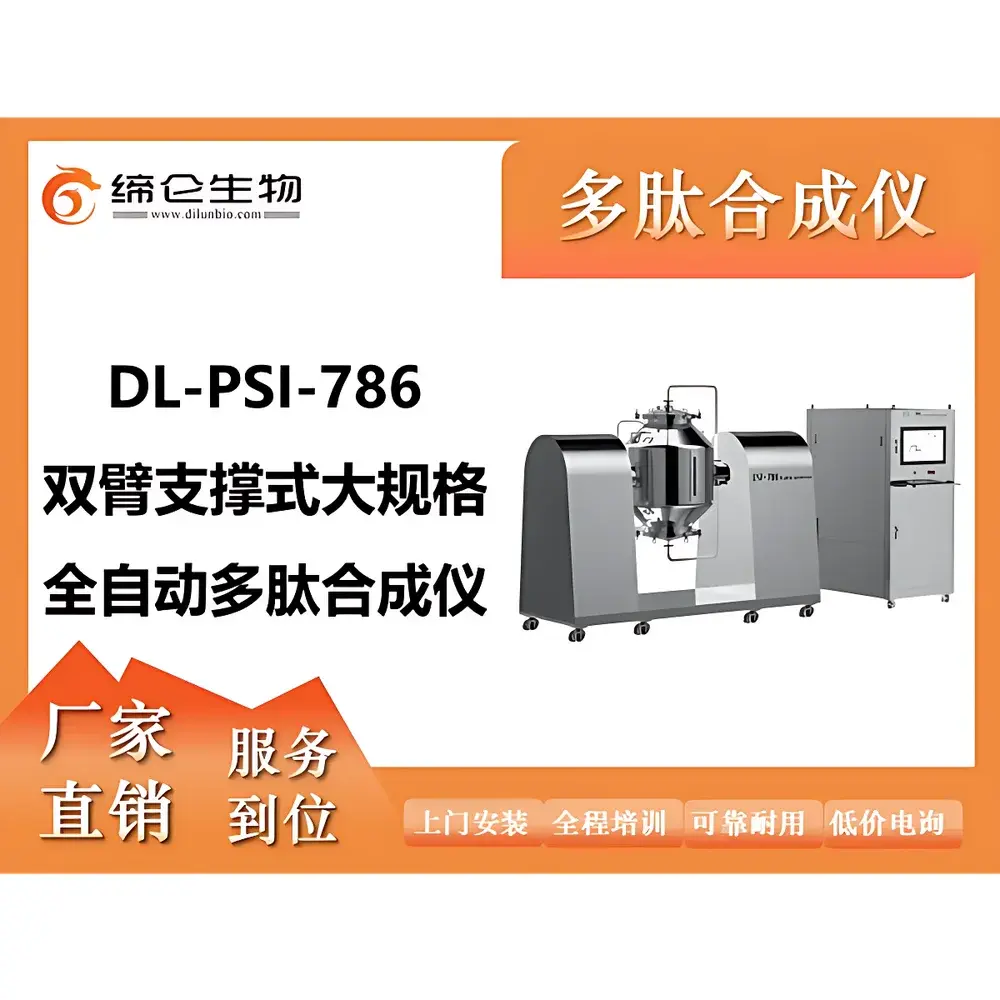
PSI DL-PSI786 Fully Automated Dual-Arm Support Large-Scale Peptide Synthesizer
| Brand | PSI |
|---|---|
| Origin | USA |
| Manufacturer Type | Authorized Distributor |
| Origin Category | Imported |
| Model | DL-PSI786 |
| Amino Acid Delivery | Automated |
| Reagent Delivery | Automated |
| Synthesis Scale | 2–3 mol |
| Reactor Quantity | 1 |
| Reactor Volume Range | 200 L / 300 L |
| Syringe Pump Accuracy | ±1 mL |
| Synthesis Purity | ≥99.5% |
| Flow Rate | 10–20 L/min |
Overview
The PSI DL-PSI786 is a fully automated, dual-arm support large-scale peptide synthesizer engineered for GMP-compliant production environments in pharmaceutical CDMO facilities and industrial biomanufacturing centers. It implements solid-phase peptide synthesis (SPPS) using Fmoc/t-Bu chemistry with precise reagent delivery, inert atmosphere control (N₂/Ar), and real-time process monitoring. Unlike conventional stirred-tank reactors, the DL-PSI786 employs PSI’s proprietary 180° full-reactor inversion mixing technology—eliminating mechanical agitators and minimizing resin shear, particle attrition, and localized overheating. This design ensures uniform coupling kinetics across multi-kilogram resin beds, enabling reproducible synthesis of long, complex, or sterically hindered peptides at 2–3 mol scale. The system integrates modular fluidic architecture, corrosion-resistant wetted materials (Hastelloy C-276, PFA, and electropolished 316L SS), and redundant pressure/temperature/flow sensors compliant with IEC 61508 functional safety requirements.
Key Features
- Dual-arm robotic support structure with synchronized motion control for simultaneous reagent dispensing, solvent washing, and resin handling across extended cycle durations
- Single-reactor configuration with selectable 200 L or 300 L jacketed glass-lined reactor vessels, rated for ≤6 bar operating pressure and −20 °C to +80 °C temperature range
- High-precision syringe pump system with ±1 mL volumetric accuracy per dispense, calibrated traceable to NIST standards; supports programmable pulse-width modulation for controlled addition kinetics
- Integrated inert gas manifold with mass flow controllers (MFCs) and O₂/H₂O sensors (<1 ppm detection limit) maintaining <10 ppm residual O₂ during coupling and deprotection steps
- Onboard UV-Vis spectrophotometer (190–800 nm) for real-time ninhydrin-based coupling efficiency monitoring and endpoint determination
- Fail-safe interlock system including overpressure relief, thermal runaway detection, leak detection via helium sniffer integration, and emergency reactor isolation valves
Sample Compatibility & Compliance
The DL-PSI786 accommodates standard SPPS resins (e.g., Wang, Rink amide MBHA, Sieber amide) and supports diverse amino acid derivatives—including phospho-, glyco-, D-, β-, and N-methylated building blocks—as well as specialty linkers for cyclization, biotinylation, or fluorescent tagging. All fluid-contact surfaces comply with USP Class VI and FDA 21 CFR Part 11 requirements for material biocompatibility and data integrity. The system meets ISO 13485:2016 for medical device manufacturing processes and supports audit-ready documentation packages aligned with EMA Annex 11 and PIC/S PI 006-3 for computerized system validation (CSV). Full 21 CFR Part 11 compliance is enabled via electronic signatures, role-based access control, and immutable audit trails with SHA-256 hashing of all critical events.
Software & Data Management
Controlled by PSI SynthOS v4.2—a deterministic real-time operating system—this synthesizer delivers deterministic cycle timing, deterministic memory allocation, and deterministic I/O response within ≤10 ms latency. The software includes validated method templates for common therapeutic peptides (e.g., leuprolide, octreotide, liraglutide analogs), customizable step logic (conditional branching based on UV absorbance thresholds), and integrated batch record generation conforming to ASTM E2500-13. All operational data—including pump actuations, sensor logs, environmental parameters, and user actions—are timestamped, digitally signed, and stored in encrypted SQLite databases with optional synchronization to enterprise LIMS or MES platforms via OPC UA 1.04 interface. Backup retention policies support ≥30-day local history and cloud archival with AES-256 encryption.
Applications
- GMP production of therapeutic peptides up to 50 residues, including GLP-1 analogs, antimicrobial peptides, and constrained macrocycles
- Process development and tech transfer from lab-scale (0.1 mmol) to commercial scale (≥2 mol) under identical kinetic and thermodynamic constraints
- Support for convergent synthesis strategies requiring segment condensation, native chemical ligation (NCL), or desulfurization workflows
- Automated post-synthesis operations including on-resin cleavage, scavenger addition, and inline pH-controlled quenching prior to filtration
- Regulatory submission support: generates IQ/OQ/PQ protocols, raw data archives, and electronic batch records compliant with FDA eCTD Module 3 requirements
FAQ
Does the DL-PSI786 support both Fmoc and Boc chemistries?
Yes—the system is configurable for either Fmoc/t-Bu or Boc/Bzl strategies via solvent selection, deprotection reagent modules, and temperature-controlled cleavage protocols.
Can reactor volume be changed between batches without hardware modification?
No—reactor vessel size (200 L or 300 L) is selected at time of order and requires mechanical replacement; however, synthesis scale within that vessel is adjustable from 2 to 3 mol via resin loading and reagent stoichiometry.
Is remote diagnostics and firmware update capability available?
Yes—via TLS 1.3-secured SSH tunnel and authenticated web interface; all updates undergo cryptographic signature verification prior to installation.
What validation documentation is provided with the system?
Full GxP validation package including URS, FS, DS, IQ/OQ protocols with executed reports, calibration certificates, and 21 CFR Part 11 readiness assessment.
How is resin settling managed during prolonged coupling cycles?
Through periodic 180° inversion cycles synchronized with nitrogen sparging, ensuring continuous homogenization without mechanical agitation-induced fragmentation.