Stoelting 57800 Constant-Current Electroconvulsive Stimulator
| Origin | USA |
|---|---|
| Supplier Type | Authorized Distributor |
| Import Status | Imported |
| Model | 57800 |
| Quotation | Upon Request |
| Pulse Width | 0.1–0.9 ms (0.1 ms steps, ±1%) |
| Current Range | 10–99 mA (1 mA steps, ±2%) |
| Output Impedance Range | 0–25 kΩ (at max. current) |
| Displayed Impedance Range | 0–199 kΩ (1 kΩ resolution) |
| Stimulation Duration | 0.1–9.9 s (0.1 s steps, ±1%) |
| Pulse Frequency | 1–299 Hz (1 Hz steps, ±1%) |
| Peak Pulse Voltage | ≤2.5 kV |
| Rise/Fall Time | ≤20 µs |
| Power Supply | 115/230 V AC, 50/60 Hz, ≤70 VA |
| Analog Output | Optional, BNC connector for oscilloscope integration |
Overview
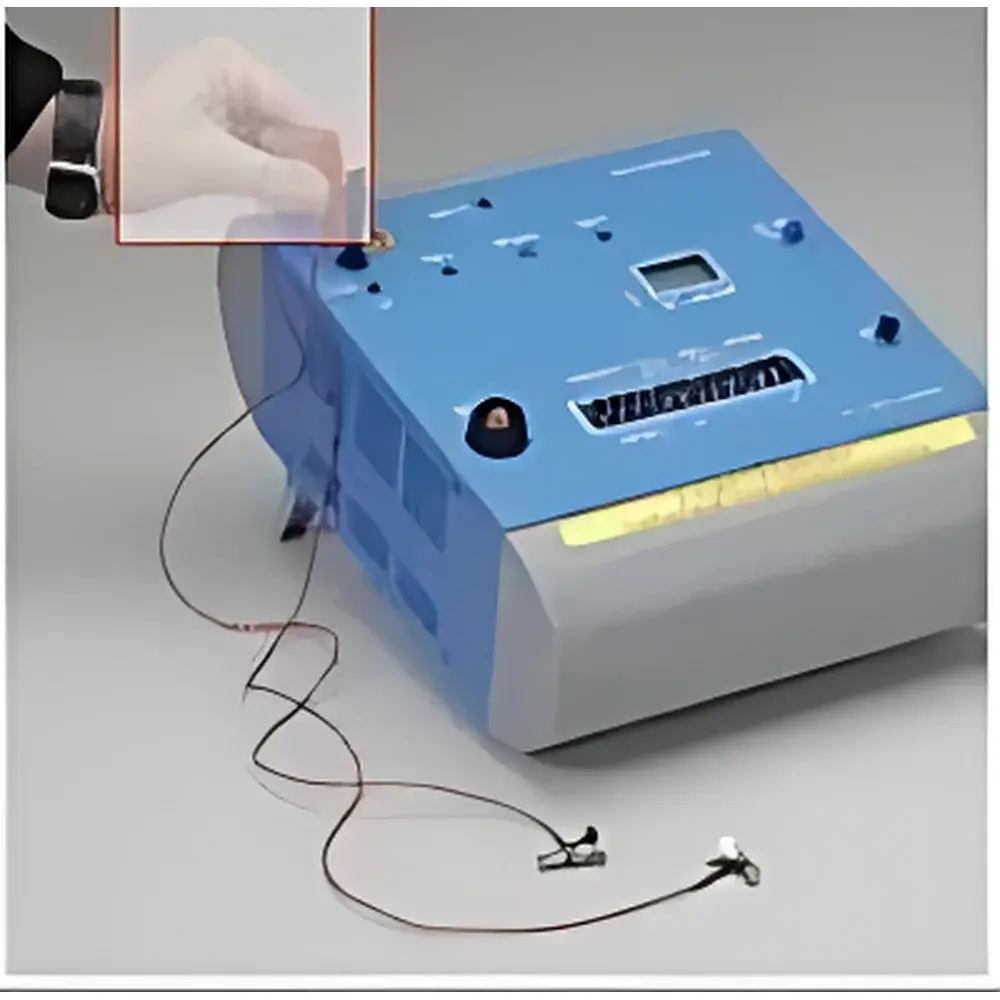
The Stoelting 57800 Constant-Current Electroconvulsive Stimulator is a precision-engineered instrument designed for preclinical neuroscience research, specifically in neuropharmacology and behavioral neurobiology. It delivers calibrated, rectangular monophasic high-voltage pulses under tightly regulated constant-current conditions—ensuring stimulus fidelity across variable biological impedances encountered during in vivo rodent or non-human primate studies. Unlike voltage-controlled stimulators, the 57800 employs real-time closed-loop feedback circuitry to maintain output current within ±2% tolerance regardless of inter-animal or intra-session impedance fluctuations (e.g., due to electrode-skin contact variability, corneal hydration, or tissue conductivity differences). This capability is critical for generating reproducible seizure thresholds, quantifying anticonvulsant drug efficacy, and standardizing electroconvulsive therapy (ECT) modeling protocols in compliance with NIH and AAALAC-recommended experimental rigor.
Key Features
- True constant-current architecture with dynamic impedance compensation via analog feedback loop
- Adjustable stimulation parameters with digital precision: pulse width (0.1–0.9 ms), frequency (1–299 Hz), duration (0.1–9.9 s), and current amplitude (10–99 mA)
- Real-time impedance monitoring (0–199 kΩ, 1 kΩ resolution) with audible/visual alert when impedance exceeds safe operational limits
- High-voltage pulse generation via custom-wound transformer; peak output ≤2.5 kV with ≤20 µs rise/fall time for minimal temporal dispersion
- Optional analog output (BNC) for simultaneous waveform capture on oscilloscopes or data acquisition systems
- Modular electrode compatibility: supports standardized corneal and auricular electrodes; custom electrode interfaces available per IACUC-approved configurations
- Configurable stimulation modes: selectable inverter, biphasic unit, or bipolar inverter modules for protocol-specific waveform requirements
Sample Compatibility & Compliance
The 57800 is validated for use with common laboratory species including mice, rats, guinea pigs, and rabbits. Its low-latency, high-fidelity current delivery enables consistent induction of generalized tonic-clonic seizures across strain- and age-matched cohorts—essential for longitudinal pharmacodynamic studies. The device conforms to IEC 61000-4-2 (ESD immunity) and IEC 61000-4-3 (radiated RF immunity) standards. While not a medical device, its operational traceability, parameter logging capability (via external DAQ), and deterministic timing align with GLP-compliant preclinical study conduct. All settings are manually controlled without software dependency—minimizing validation burden for regulated environments requiring audit-ready hardware-based protocols.
Software & Data Management
The Stoelting 57800 operates as a stand-alone hardware stimulator with no embedded firmware or network interface. Parameter selection is performed via front-panel rotary encoders and LED indicators—ensuring deterministic, latency-free operation without OS-level interruptions. For documentation integrity, users may integrate the optional analog output with third-party data acquisition systems (e.g., National Instruments DAQmx, Spike2, or Axograph) to timestamp-stimulus waveforms alongside behavioral or electrophysiological recordings. All parameter values—including real-time impedance readouts—are visually confirmed prior to stimulation initiation, supporting ALARA (As Low As Reasonably Achievable) principles and facilitating SOP-driven execution per institutional animal care guidelines.
Applications
- Quantitative assessment of antiepileptic drug potency using maximal electroshock (MES) and subcutaneous pentylenetetrazol (scPTZ) seizure threshold models
- Neurodevelopmental studies evaluating seizure susceptibility across postnatal ages or genetic models (e.g., Scn1a+/− mice)
- Investigation of neuromodulatory mechanisms in depression/anxiety models via repeated ECT-like stimulation paradigms
- Validation of novel electrode materials and placement geometries for optimized current density distribution in cortical/subcortical targets
- Calibration reference for validating closed-loop seizure detection algorithms in ambulatory EEG telemetry systems
FAQ
Is the 57800 suitable for chronic implantation studies?
No—the device is intended for acute, terminal, or non-invasive surface-electrode applications. It does not support wireless or implanted pulse generator integration.
Can impedance be measured without delivering stimulation?
Yes—pre-stimulation impedance test mode activates the measurement circuit independently of pulse output, displaying resistance prior to trigger engagement.
Does the unit comply with FDA 21 CFR Part 11 for electronic records?
Not directly—the 57800 lacks audit-trail functionality or user authentication. However, when paired with compliant DAQ systems, full traceability of stimulation parameters and timestamps can be achieved.
What safety interlocks are implemented?
A hardware-based impedance lockout prevents stimulation if measured load exceeds 25 kΩ, and an overcurrent shutdown engages if feedback loop deviation exceeds ±5% for >100 ms.
Is calibration certification provided with shipment?
Each unit ships with NIST-traceable factory calibration documentation covering current accuracy, pulse timing, and impedance measurement linearity across the full operating range.