
PULUODY 0201 Optical Particle Counter for Fluid Contamination Analysis
| Brand | PULUODY |
|---|---|
| Origin | Shaanxi, China |
| Manufacturer Type | OEM Manufacturer |
| Instrument Type | Optical Particle Counter |
| Measurement Principle | Light Obscuration (LO) |
| Standards Compliance | ISO 4406:1999, NAS 1638, GJB 420B, GJB 380, GB/T 14039–2002, GB/T 18854–2002 (ISO 11171:1999), JJG 066–95 |
| Detection Range | 1 µm to 450 µm |
| Sensitivity | 1 µm (per ISO 4402), 4 µm(c) (per ISO 11171 & GB/T 18854) |
| Channel Configuration | 8 user-definable size channels |
| Sample Volume Accuracy | ±1% |
| Flow Rate Control | 5–60 mL/min (electromagnetically regulated piston pump) |
| Sampling Volume | 1 mL to unlimited (programmable) |
| Coincidence Limit | ≤5% error at 10,000 particles/mL |
| Pressure Range | –0.6 to +0.7 MPa (integrated positive/negative pressure pretreatment system) |
| Max. Fluid Viscosity | ≤350 cSt |
| Operating Temperature | Ambient to 65 °C |
| Ambient Temperature Range | 0–50 °C |
| Power Supply | 220 V AC, 50 Hz, <80 W |
| Data Output | Onboard thermal printer, RS232 interface, histogram & distribution curve generation |
| Calibration Traceability | Certified by CALIBRATION STATION NO. 116, National Defense Science & Technology Industry Particle Metrology Level-1 Station (Aviation Industry Particle Metrology Center) |
Overview
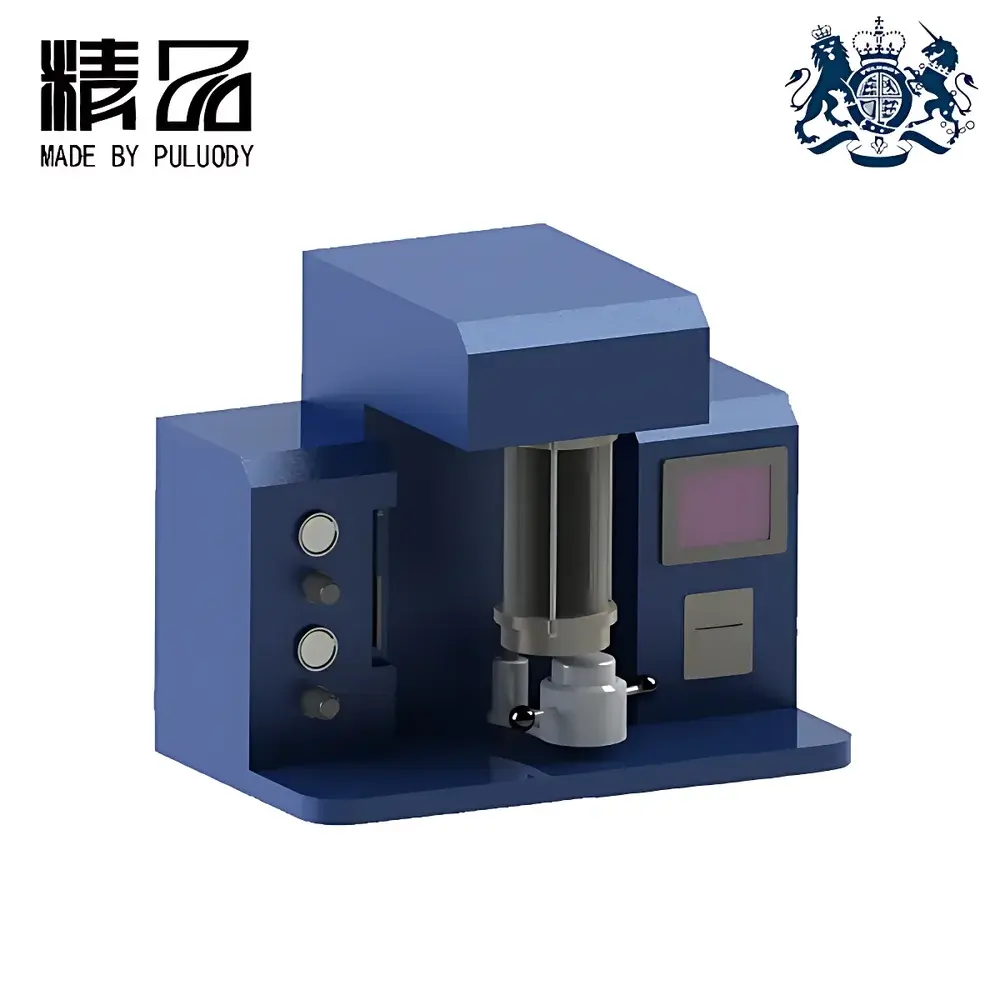
The PULUODY 0201 Optical Particle Counter is a laboratory-grade fluid contamination analyzer engineered for high-precision, repeatable particle counting and sizing in liquid media using the light obscuration (LO) principle—also known as the photoelectric blocking or shadow-casting method. In this technique, particles suspended in a flowing liquid stream pass through a focused laser beam; each particle generates a transient reduction in detected light intensity proportional to its cross-sectional area. The instrument converts these pulse signals into calibrated size distributions and concentration data per unit volume, enabling quantitative assessment of particulate contamination according to internationally recognized standards including ISO 4406:1999, NAS 1638, GJB 420B, and GB/T 14039–2002. Designed specifically for hydraulic oils, lubricants, turbine oils, transformer (insulating) oils, aviation fuels, and other industrial fluids—as well as organic solvents and polymer solutions—the 0201 delivers robust performance across demanding operational environments from aerospace maintenance depots to power generation facilities and R&D laboratories.
Key Features
- Light obscuration detection with sixth-generation narrow-beam laser sensor optimized for stability, signal-to-noise ratio, and long-term calibration retention
- Electromagnetically controlled piston pump ensuring constant flow rate (5–60 mL/min) and volumetric accuracy better than ±1% over programmable sampling volumes (1 mL to unlimited)
- Integrated dual-mode pressure conditioning system supporting both vacuum-assisted degassing and pressurized delivery for high-viscosity or volatile samples (up to 350 cSt; operating pressure range: –0.6 to +0.7 MPa)
- Eight fully configurable particle size channels, with user-defined thresholds based on standardized calibration curves (e.g., ISO 11171:1999 reference materials)
- Onboard embedded industrial control system with 7-inch capacitive touchscreen, dual-input support (touch + physical keypad), and real-time visualization of histograms, cumulative distributions, and raw pulse data
- Self-contained thermal printer and RS232 serial interface for local reporting and external database integration; no PC dependency required for routine operation
- Automatic post-test rinse cycle using integrated solvent reservoirs to minimize carryover and ensure inter-sample integrity
Sample Compatibility & Compliance
The PULUODY 0201 is validated for direct analysis of undiluted and unfiltered samples—including mineral oils, synthetic esters, phosphate esters, water-glycol fluids, hydrocarbon-based aviation fuels, and non-aqueous polymer solutions—without pre-filtration or dilution. Its optical design and fluidic architecture meet the metrological requirements of ISO 11171:1999 for sensor calibration and GB/T 18854–2002 for verification traceability. Calibration is supported by certified reference materials and optional certification reports issued by CALIBRATION STATION NO. 116—the National Defense Science & Technology Industry Particle Metrology Level-1 Station, accredited under China’s national defense metrology system. The instrument complies with GLP-relevant data integrity provisions, including audit-trail-capable event logging (power-on, calibration, sample run, error flags), time-stamped result export, and non-modifiable internal storage of measurement parameters.
Software & Data Management
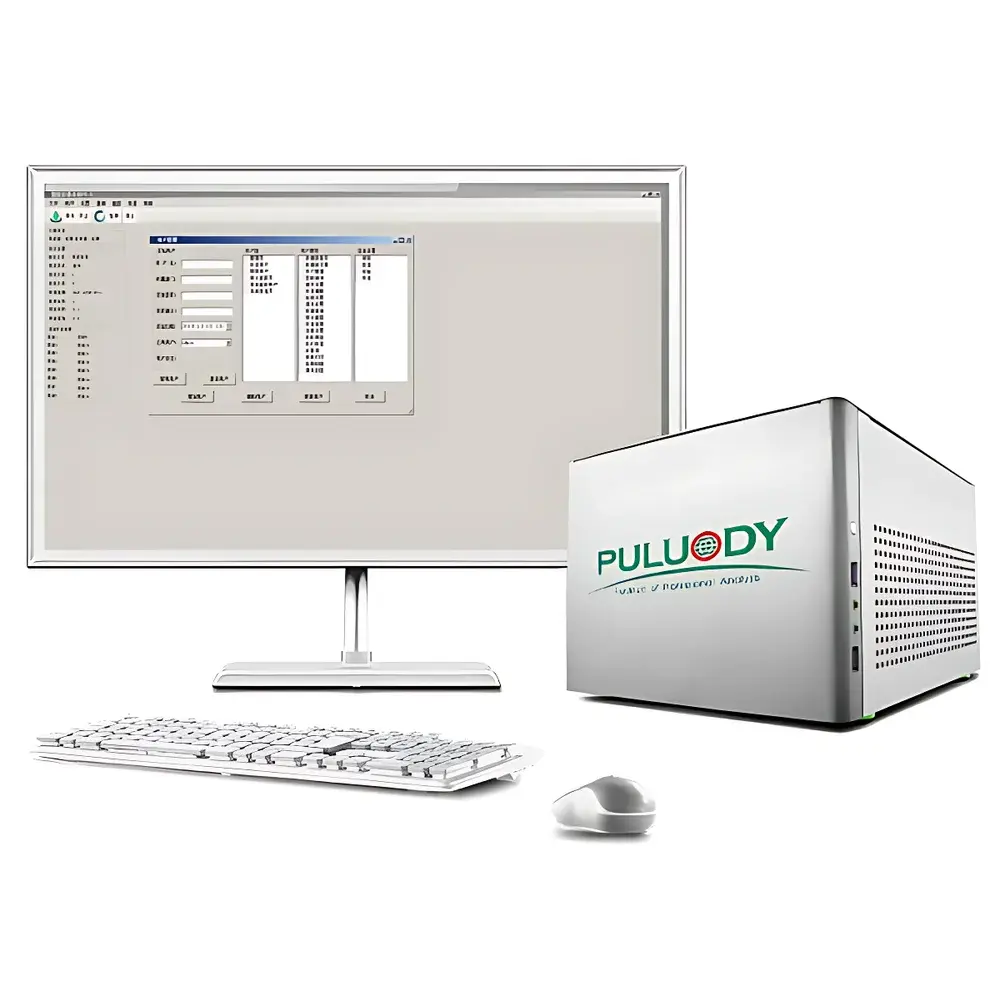
The embedded P6.4 analytical firmware provides full compliance-driven reporting functionality: automatic assignment of ISO 4406 or NAS 1638 cleanliness codes based on counted particles per milliliter across specified size thresholds; generation of particle size distribution histograms and cumulative frequency plots; and export of tabular results via RS232 to LIMS or Excel-compatible databases. Optional PC-hosted P6.4 software extends capabilities with multi-instrument fleet management, statistical process control (SPC) charting, trend analysis across historical batches, and customizable report templates aligned with internal QA protocols or regulatory submissions (e.g., FDA 21 CFR Part 11–compliant electronic records when paired with validated IT infrastructure). All calibration events, user logins, and test configurations are timestamped and retained in immutable system logs.
Applications
This instrument serves critical roles in condition monitoring programs across multiple sectors: evaluating hydraulic system cleanliness prior to commissioning or after maintenance (per SAE AS4059F); verifying filtration efficiency in oil reclamation systems; certifying batch release of turbine oils in power plants; assessing particulate ingress in aircraft engine lubricants (per MIL-STD-3007 or DEF STAN 91-91); and conducting root-cause failure analysis of bearing wear debris in gearboxes. It is also deployed in pharmaceutical manufacturing for monitoring particulate levels in non-aqueous parenteral excipients and in academic research labs studying colloidal stability, emulsion breakdown, or nanoparticle dispersion kinetics in viscous media.
FAQ
What particle size standards does the PULUODY 0201 support out-of-the-box?
It includes built-in implementations of ISO 4406:1999, NAS 1638, GJB 420B, and GB/T 14039–2002. Additional standards—including customer-specific thresholds—can be loaded via firmware update.
Can the instrument measure particles smaller than 1 µm?
No. Its verified lower detection limit is 1 µm per ISO 4402 or 4 µm(c) per ISO 11171/GB/T 18854, depending on calibration protocol and fluid refractive index.
Is external computer hardware required for daily operation?
No. All core functions—including measurement, data processing, printing, and calibration—are fully autonomous via the onboard controller and touchscreen interface.
How is calibration traceability maintained?
Calibration follows GB/T 18854–2002 (equivalent to ISO 11171:1999) using NIST-traceable latex sphere suspensions. Optional certification reports are available from the Aviation Industry Particle Metrology Center (Station No. 116).
Does the system support Good Manufacturing Practice (GMP) documentation requirements?
Yes—when operated with validated P6.4 PC software and compliant IT infrastructure, it supports 21 CFR Part 11–aligned electronic signatures, audit trails, and secure user access controls.



