
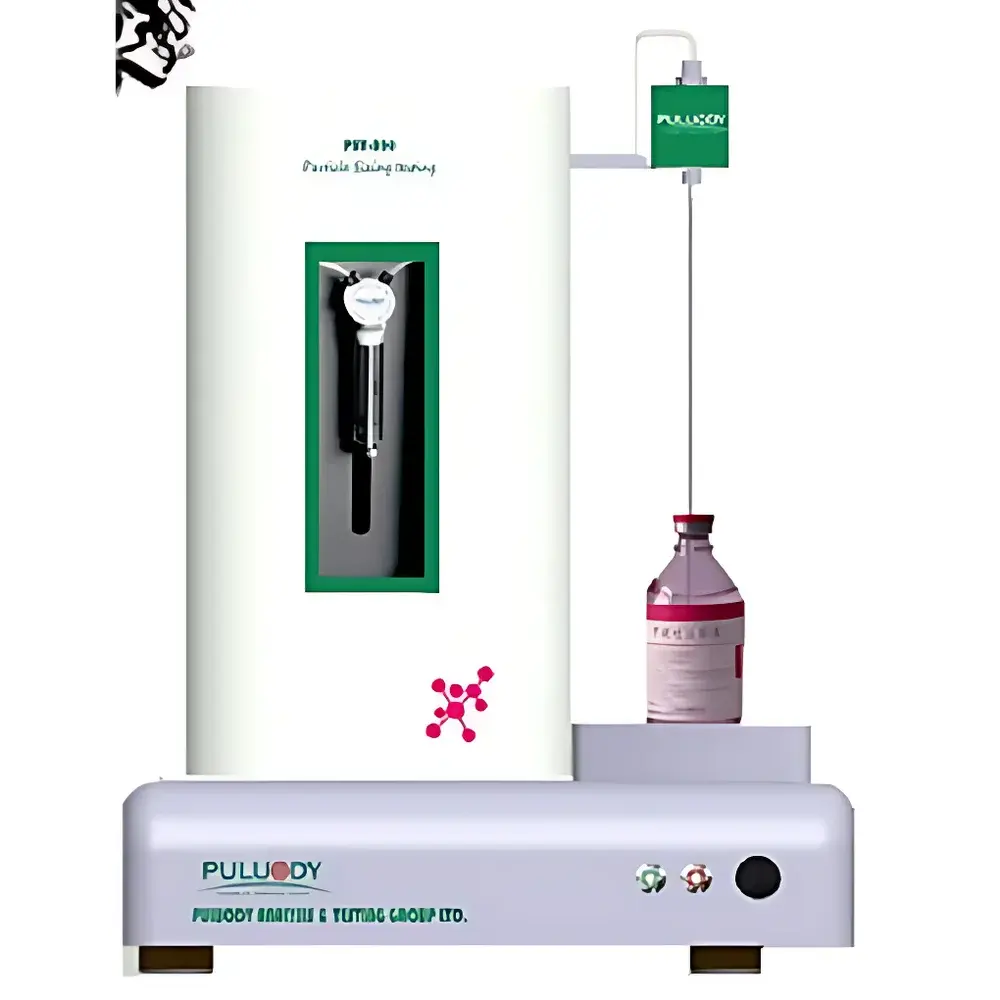
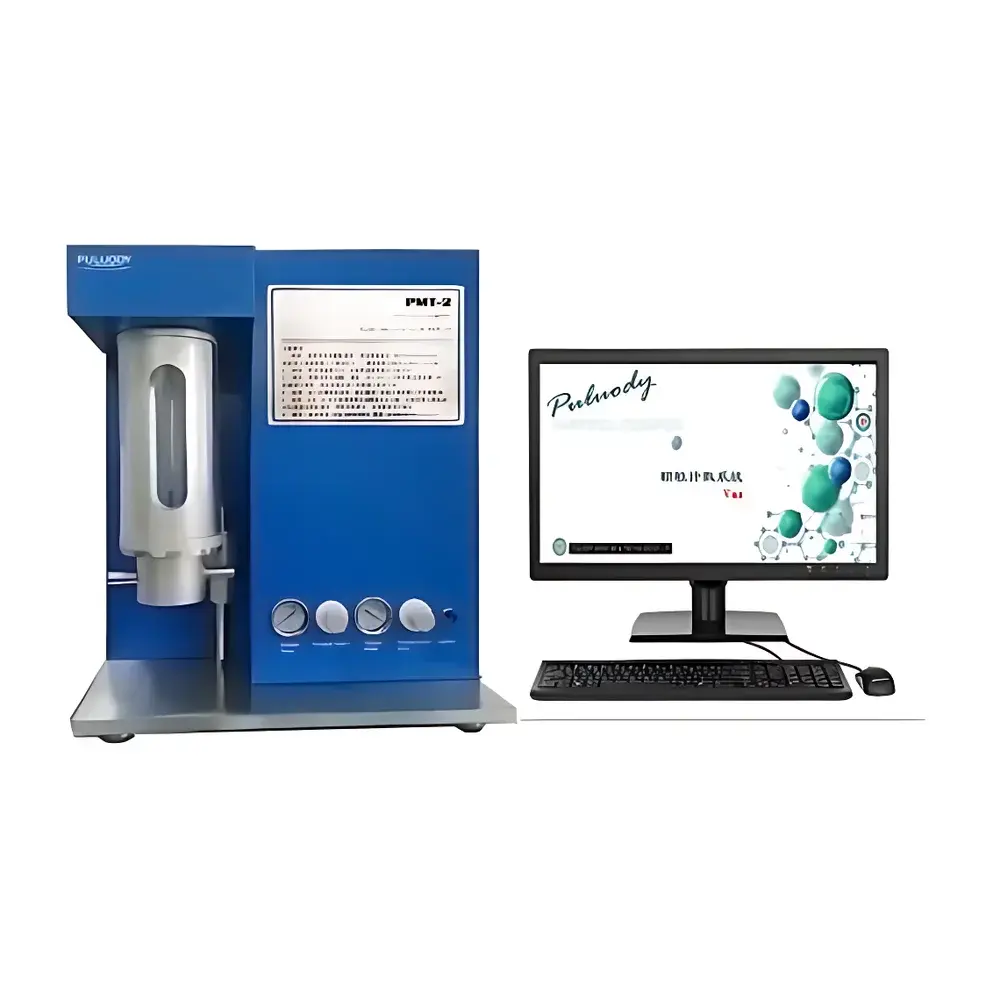
PULUODY PMT-2 Optical Liquid Particle Counter for Organic Solvents
| Brand | PULUODY |
|---|---|
| Origin | Shaanxi, China |
| Manufacturer Type | Authorized Distributor |
| Product Category | Domestic |
| Model | PMT-2 |
| Instrument Type | Optical Particle Counter |
| Detection Principle | Dual-Laser Narrow-Beam Light Scattering |
| Sensor Generation | 8th-Generation Dual-Laser Sensor |
| Flow Control | Precision Piston Pump + Electromagnetic Flow Regulation |
| Measurement Range | 0.5–5.0 µm (standard) |
| Customizable | 1–100 µm or 4–70 µm(c) |
| Extended Sensitivity | Down to 0.1 µm(c) |
| Accuracy | ±3% typical |
| Sampling Precision | <±1% |
| Coincidence Limit | 1000 particles/mL (2.5% coincidence error) |
| Calibration Standards | ISO 21501, JJG 1061, Polystyrene Latex (PSL) Spheres |
| Compliance | Chinese Pharmacopoeia 2015/2020, USP <788>, EP 2.9.19, BP, GB 8368 |
| Data Output | IPAD-based acquisition system, 4–20 mA analog interface with configurable alarm triggers |
| Reporting | Particles per mL and ISO 4406 / NAS 1638 contamination codes |
| Power Input | 100–265 VAC, 50–60 Hz |
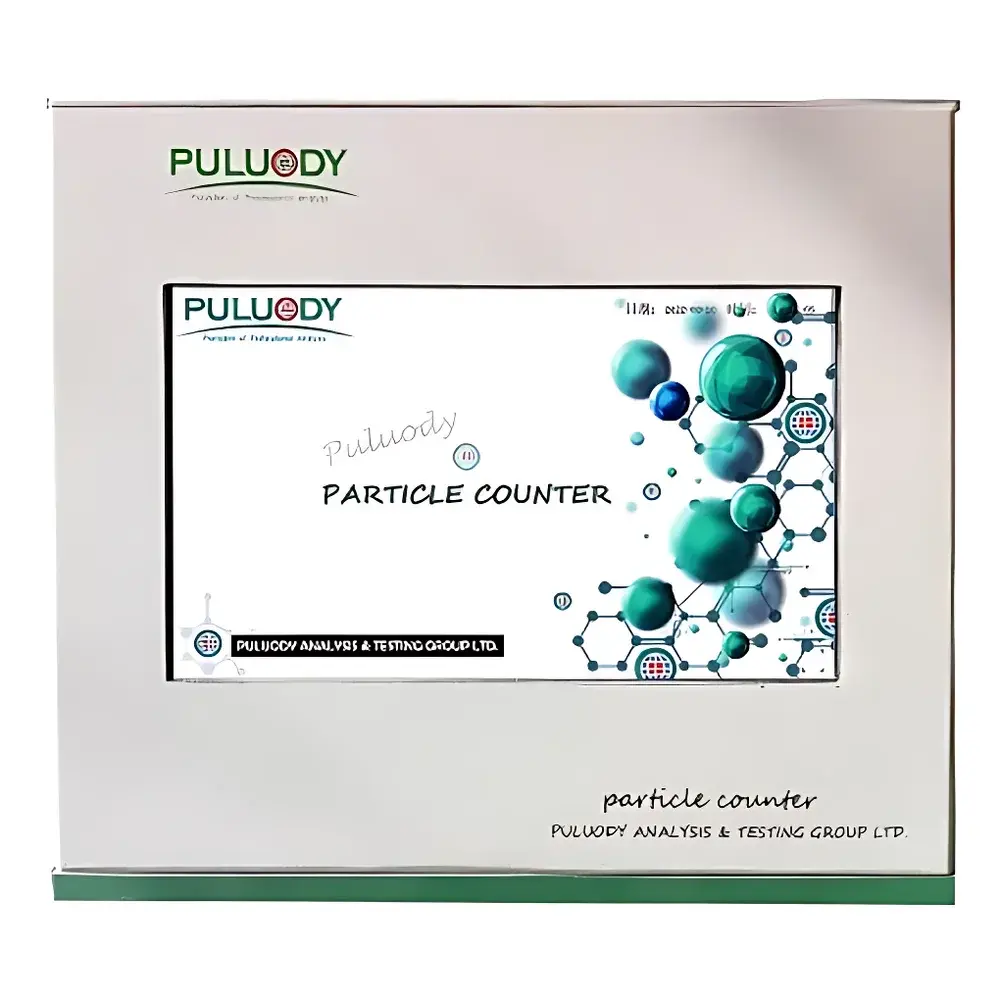
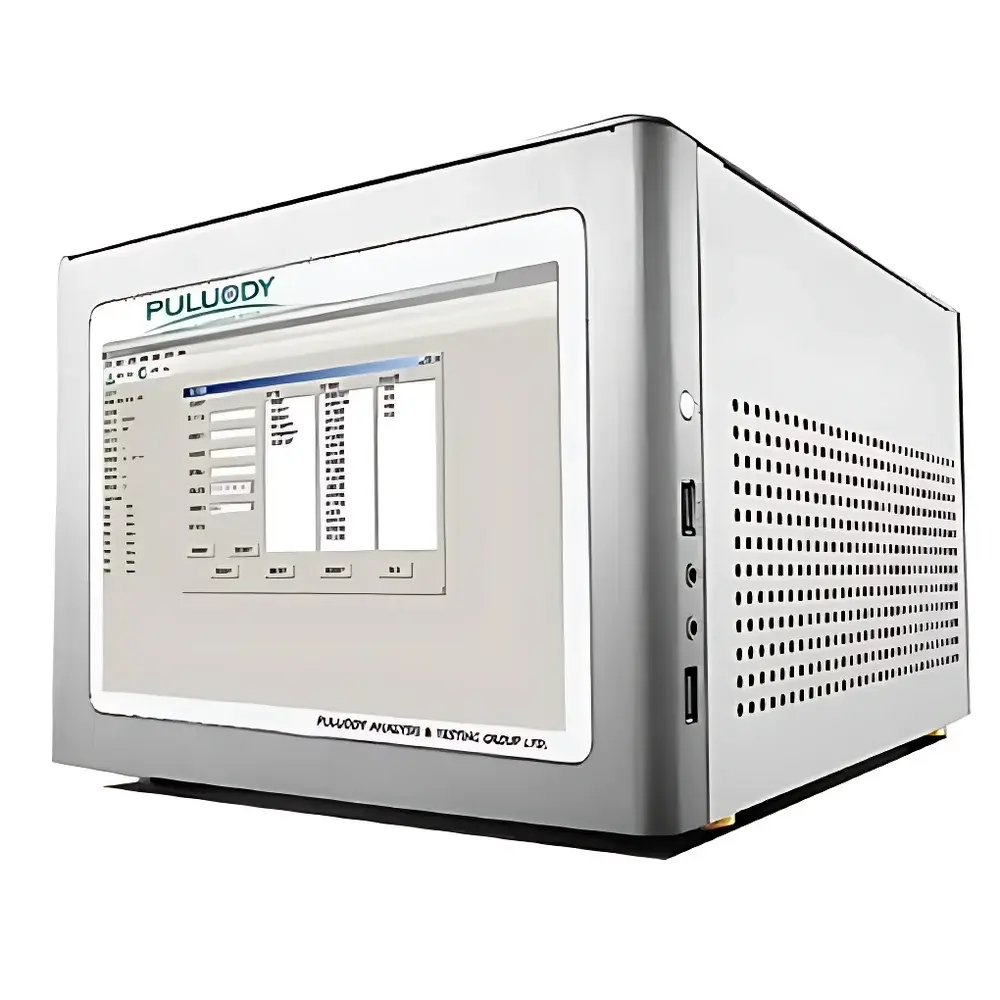
| Operation Interface | Color LCD touchscreen + optional wireless keyboard/mouse |
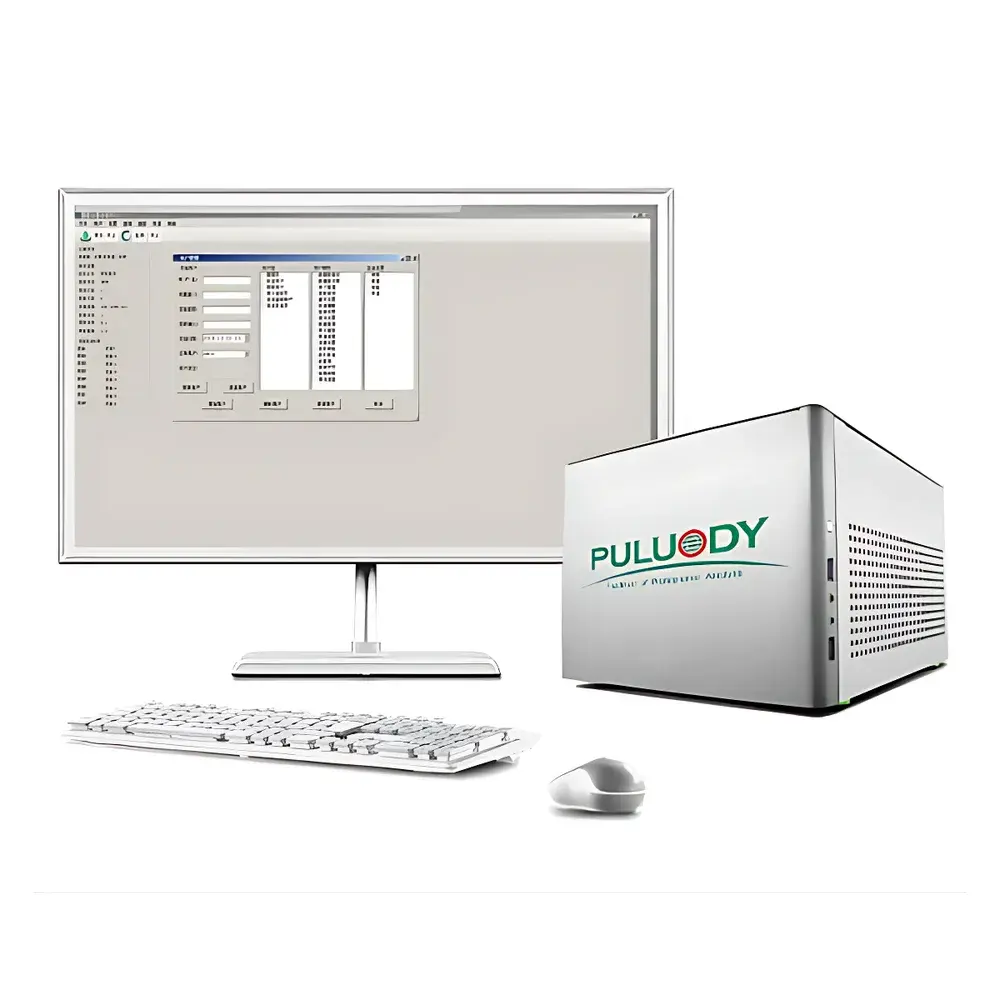
| Software | PULUODY V8.3 Integrated Analysis & Calibration Suite (PC & embedded) |
Overview
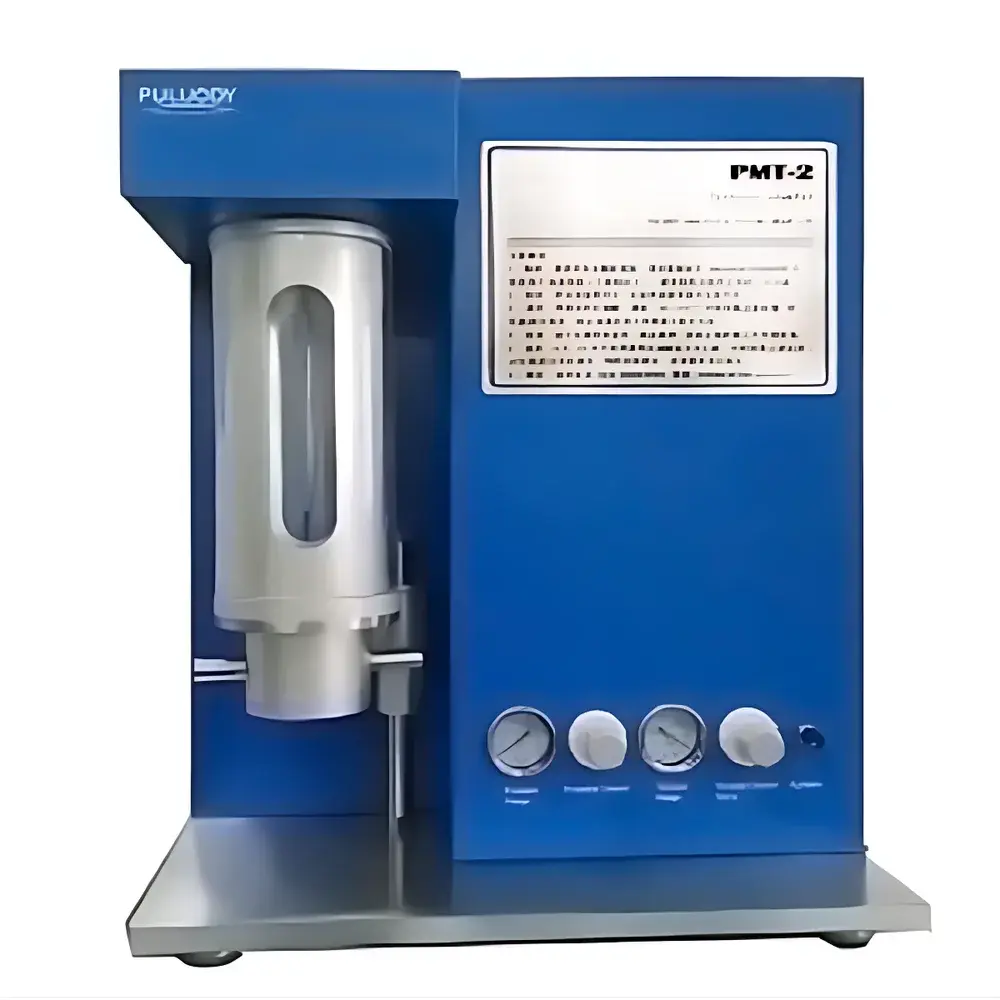
The PULUODY PMT-2 Optical Liquid Particle Counter is an advanced, dual-laser narrow-beam light scattering instrument engineered for high-fidelity particulate contamination monitoring in low-conductivity and chemically aggressive organic solvents—such as acetone, isopropanol, NMP, DMF, and photoresist carriers—as well as ultrapure water, semiconductor process chemicals, and polymer solutions. Unlike conventional single-wavelength optical counters, the PMT-2 employs an 8th-generation dual-laser sensor architecture that enables simultaneous detection across two distinct scattering intensity thresholds, significantly improving resolution for sub-micron particles and reducing misclassification due to refractive index variability. Its core measurement principle adheres to ISO 21501-4 (Light Scattering Liquid-Borne Particle Counters), with validation traceable to NIST-traceable PSL standards and certified calibration per JJG 1061. Designed for both online integration and offline mobility, the PMT-2 delivers real-time, continuous particle concentration data (particles/mL) and standardized contamination grading (ISO 4406, NAS 1638), making it suitable for GMP-compliant cleanroom monitoring, QC release testing of excipients and active pharmaceutical ingredients (APIs), and process fluid integrity verification in microelectronics fabrication.
Key Features
- Dual-laser narrow-beam optical detection system optimized for low-refractive-index organic solvents and aqueous systems—minimizing Mie scattering artifacts and enhancing signal-to-noise ratio for particles ≥0.1 µm(c)
- High-precision volumetric sampling via dual-stage flow control: a calibrated piston pump ensures repeatable draw volume, while an electromagnetic flow regulator maintains stable laminar flow (<±1% volumetric precision)
- V8.3 integrated software platform with physically separated analysis and calibration modules—eliminating software-induced bias during regulatory audits and supporting 21 CFR Part 11-compliant user access control and audit trail generation
- Modular hardware design enabling seamless transition between inline process monitoring (via ¼” Swagelok or VCR fittings) and portable offline analysis (battery-supported operation optional)
- Configurable detection thresholds: standard 0.5–5.0 µm range; extended modes support custom bins from 1–100 µm or 4–70 µm(c), including critical 0.1 µm(c) sensitivity for nanofiltration validation
- Real-time alarm logic with programmable threshold triggers (e.g., >500 particles/mL at 0.5 µm), relay outputs, and 4–20 mA analog interface compatible with DCS/SCADA systems
Sample Compatibility & Compliance
The PMT-2 is validated for use with a broad spectrum of non-aqueous and low-conductivity liquids—including hydrocarbon solvents, polar aprotic solvents, fluorinated fluids, and viscous polymer solutions up to 50 cP—without requiring dilution or solvent exchange. Its wetted path features chemically inert sapphire flow cells and PTFE/PFA fluidic components, ensuring compatibility with aggressive cleaning agents (e.g., piranha, SC-1, BOE) and photoresist developers. Regulatory alignment includes full support for pharmacopeial testing per USP , EP 2.9.19, JP XVII, and Chinese Pharmacopoeia 2020 Edition (General Chapter 0903), as well as medical device standards GB 8368 and ISO 8536-4. All calibration and verification procedures comply with ISO/IEC 17025 requirements when performed by accredited laboratories such as Zhongte Metrology & Testing Institute.
Software & Data Management
The embedded V8.3 software provides dual-mode operation: standalone touchscreen control (with multi-language UI) and PC-hosted advanced analysis. Critical functions include automated baseline correction, dynamic coincidence error compensation (validated up to 1000 p/mL), and batch-level statistical reporting (mean, SD, CV%, trend charts). Data export supports CSV, PDF, and XML formats—with metadata tagging for sample ID, operator, timestamp, and environmental conditions. For regulated environments, the system supports electronic signatures, role-based permissions, and immutable audit logs meeting FDA 21 CFR Part 11 and EU Annex 11 expectations. Optional cloud synchronization enables centralized fleet monitoring across multiple production lines or QC labs.
Applications
- Real-time monitoring of rinse baths and etch solutions in semiconductor wafer fabs (e.g., post-CMP slurry residue tracking)
- Quality control of injectable drug formulations and ophthalmic solutions per USP and Ph. Eur. 2.9.19
- In-process verification of nano/microfiltration membrane integrity in biopharmaceutical buffer preparation
- Contamination trending in display manufacturing—monitoring ITO sputtering targets, color filter solvents, and OLED ink carriers
- Validation of cleaning efficacy for surgical instruments, endoscopes, and implant-grade components per ISO 15883 and AAMI ST98
- Research-grade particle shedding analysis in lithium-ion battery electrolyte formulations and solid-state electrolyte slurries
FAQ
Does the PMT-2 require solvent-specific calibration?
No—its dual-laser optical design and refractive index compensation algorithm eliminate the need for separate calibrations per solvent type. Calibration is performed once using NIST-traceable PSL standards in water or IPA, and remains valid across all supported media.
Can the PMT-2 be integrated into a PLC-controlled production line?
Yes—it provides native 4–20 mA analog output, dry-contact alarm relays, and Modbus RTU over RS-485 for direct integration with industrial automation systems.
Is the instrument compliant with GLP/GMP documentation requirements?
Yes—V8.3 software includes full 21 CFR Part 11 compliance features: electronic signatures, audit trails, data integrity controls, and IQ/OQ protocol templates for installation and operational qualification.
What is the minimum detectable particle size in acetone or THF?
The system achieves reliable detection down to 0.1 µm(c) in low-viscosity organic solvents, verified per ISO 21501-4 using calibrated PSL suspensions dispersed in matched refractive index carrier fluids.
How is sample carryover mitigated during sequential measurements?
The fluidic path incorporates automated purge cycles (≥3x system volume) with programmable dwell time, validated to reduce residual carryover to <0.05% between samples per ASTM D7622.



