
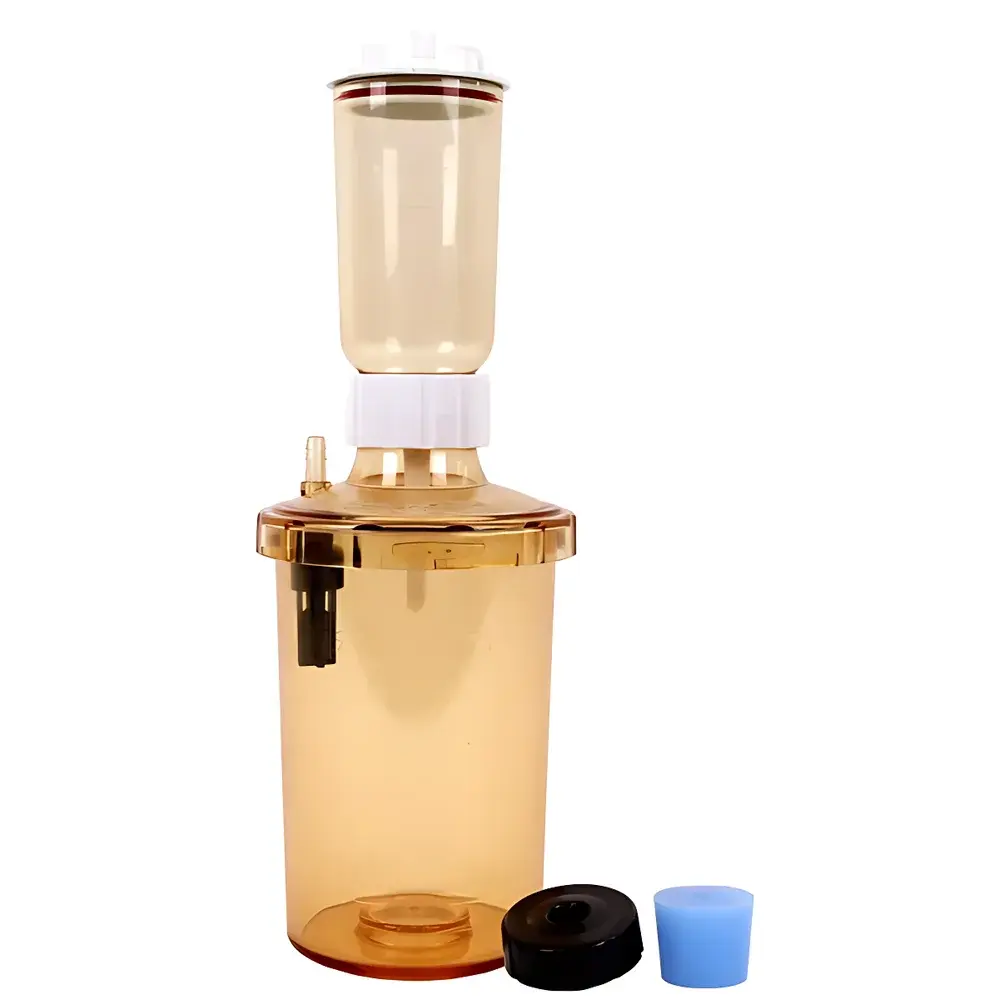
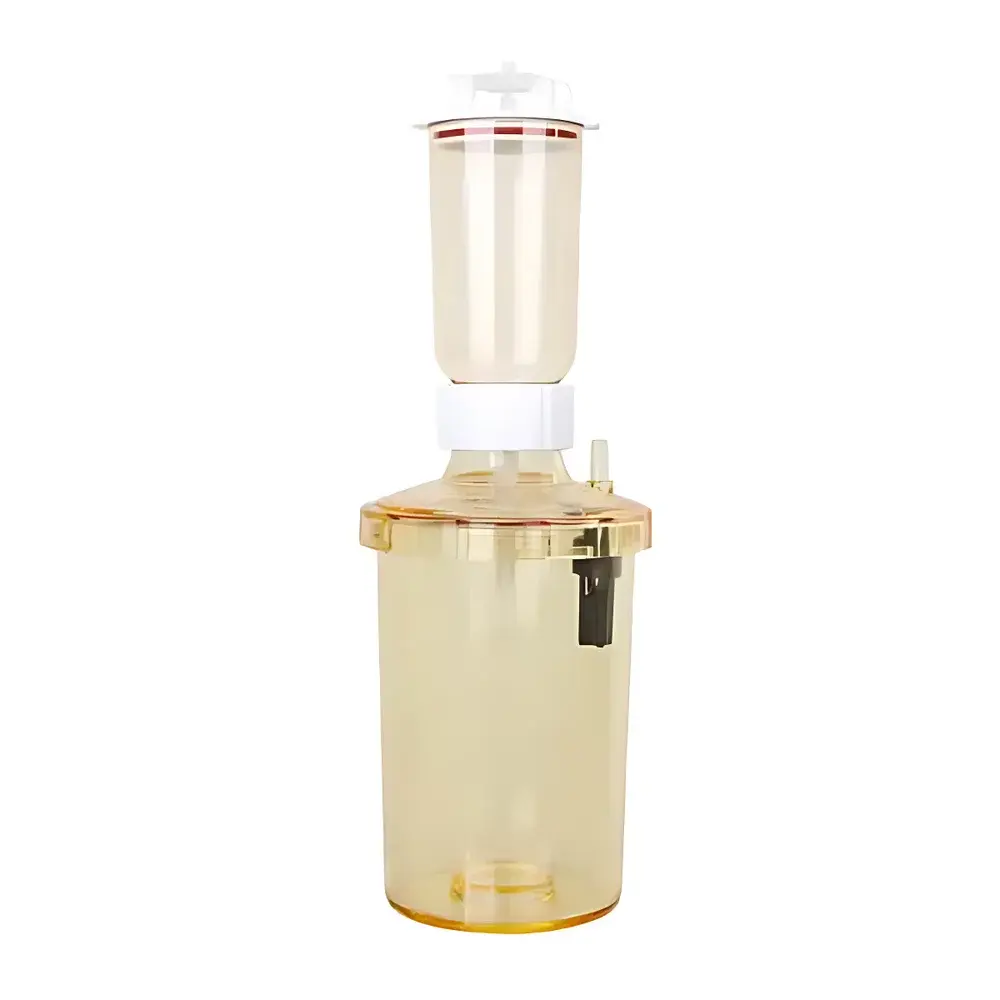
ROCKER LF30 Vacuum Filtration Bottle Assembly
| Brand | ROCKER |
|---|---|
| Origin | Taiwan |
| Manufacturer Authorization | Authorized Distributor |
| Product Origin Classification | Domestic (Taiwan) |
| Model | LF30 |
| Price | USD 255 (approx. based on ¥1800 at 7.06 CNY/USD) |
| Filtration Cup Capacity | 300 mL |
| Receiver Bottle Capacity | 1200 mL |
| Compatible Membrane Diameter | 47 mm / 50 mm |
| Tubing ID | 5/16 in. (8 mm) |
| Effective Filtration Area | 12.5 cm² |
| Included Syringe Filter | 25 mm, 0.2 µm |
| Materials | Funnel Upper Cup – Polyethersulfone (PES) |
| Sterilization Compatibility | Autoclavable at 121°C, 20 min (PES & PC components rated to 180°C short-term thermal stability) |
| Sealing Mechanism | ROCKER M381450 Twist-Lock Coupling System |
| Overflow Protection | Integrated float-valve mechanism in receiver bottle |
| Accessories Included | Standard funnel lid, waste extraction adapter cap, syringe filter |
Overview
The ROCKER LF30 Vacuum Filtration Bottle Assembly is an engineered laboratory filtration system designed for reliable, high-throughput liquid clarification, sterile filtration, and waste aspiration in bioscience and pharmaceutical research environments. Built upon a dual-chamber vacuum-driven architecture, the LF30 operates via negative pressure applied through standard lab vacuum sources (e.g., diaphragm or water aspirator pumps), enabling rapid separation of particulates, microorganisms, or precipitates from aqueous or organic solvents. Its core design integrates material science rigor with ergonomic process optimization—featuring polyethersulfone (PES) for the upper funnel cup, selected for its exceptional chemical resistance, low protein binding, and validated compatibility with autoclaving (121°C, 20 min per ISO 17665-1). The system adheres to fundamental principles of dead-end filtration, where fluid passes perpendicularly through a supported membrane under controlled vacuum differential, minimizing channeling and maximizing retention consistency across batch-to-batch operations.
Key Features
- Autoclavable PES Funnel Construction: The 300 mL upper filtration cup is injection-molded from medical-grade PES, offering mechanical robustness, thermal stability up to 180°C (short-term), and intrinsic hydrophilicity—eliminating pre-wetting steps for aqueous applications.
- M381450 Twist-Lock Coupling System: A proprietary rotary sealing interface between funnel base and receiver bottle ensures leak-tight integrity without auxiliary clamps or O-rings prone to compression set; installation and disassembly require <3 seconds per assembly cycle.
- Integrated Overflow Protection: A precision-machined float valve within the 1200 mL polycarbonate receiver bottle halts vacuum draw automatically upon reaching 95% fill volume—preventing cross-contamination, pump damage, or lab safety incidents.
- Modular Waste Extraction Functionality: The PP waste extraction adapter cap converts the receiver bottle into a dedicated waste reservoir compatible with standard 8 mm (5/16 in.) tubing—enabling seamless transition between filtration and active aspiration workflows without equipment reconfiguration.
- Optimized Membrane Support Geometry: The polypropylene support plate features radial flow-channel patterning that reduces boundary layer resistance, increasing effective filtration velocity by up to 22% (vs. flat-plate supports) under identical vacuum conditions (tested with 0.2 µm PES membranes).
- Comprehensive Accessory Set: Includes a threaded funnel lid for closed-system microbial testing (ISO 8573-1 compliant handling), a pre-sterilized 25 mm × 0.2 µm syringe filter for final polishing, and silicone stoppers rated for repeated sterilization cycles.
Sample Compatibility & Compliance
The LF30 accommodates 47 mm and 50 mm diameter membranes—including nitrocellulose, PVDF, nylon, and mixed cellulose ester—supporting applications ranging from cell culture supernatant clarification (USP ) to endotoxin-free buffer preparation (EP 2.6.14). All wetted components comply with USP Class VI biological reactivity standards and EU Regulation (EC) No 1935/2004 for food-contact materials. The system meets ISO 9001 manufacturing controls and is routinely deployed in GLP-compliant laboratories conducting ASTM D2974 (moisture content in biomass) and ISO 7218 (microbiology of food and animal feeding stuffs) procedures. Autoclave validation reports (IQ/OQ/PQ templates available upon request) align with FDA 21 CFR Part 11 data integrity expectations when paired with ROCKER’s optional digital vacuum controllers.
Software & Data Management
While the LF30 is a manually operated, non-electronic filtration platform, its mechanical design enables full integration into digitally governed workflows. When used with ROCKER’s SmartVac series vacuum controllers (sold separately), real-time pressure logging, programmable ramp profiles, and audit-trail generation are achievable—meeting ALCOA+ data integrity criteria. All accessories—including the included 0.2 µm syringe filter—are supplied with lot-specific CoA documentation traceable to ISO/IEC 17025-accredited testing. Sterilization logs generated during autoclaving may be recorded in electronic lab notebooks (ELNs) such as LabArchives or Benchling using standardized metadata fields (equipment ID, cycle parameters, operator ID).
Applications
- Sterile filtration of cell culture media, antibiotics, and recombinant protein solutions prior to aseptic processing
- Routine removal of particulates from HPLC mobile phases and LC-MS sample extracts
- Microbial recovery and enumeration in environmental water testing (EPA Method 1603)
- Clarification of fermentation broths and lysates in upstream bioprocessing
- Waste aspiration during electrophoresis, blotting, and ELISA plate washing protocols
- Pre-filtration of solvents for Karl Fischer titration and GC analysis
FAQ
Can the LF30 be used with aggressive organic solvents such as chloroform or THF?
Yes—the PES funnel cup and PC receiver bottle demonstrate verified compatibility with acetone, ethanol, isopropanol, and ethyl acetate; however, prolonged exposure to chloroform, THF, or DMF is not recommended due to potential stress cracking. Solvent compatibility charts are available in the technical manual (Section 4.2).
Is the 0.2 µm syringe filter certified for sterility assurance?
The included 25 mm × 0.2 µm filter is gamma-irradiated (25 kGy) and supplied with a Certificate of Sterility per ISO 11137-3, valid for 24 months when stored unopened under ambient conditions.
How often should the silicone stopper be replaced?
Under standard autoclaving frequency (≤5 cycles/week), the stopper maintains seal integrity for ≥12 months; visual inspection for surface crazing or loss of elasticity is recommended prior to each use.
Does the overflow protection mechanism require maintenance or recalibration?
No—the float-valve assembly contains no moving parts subject to wear; it functions passively via buoyancy and requires only periodic rinsing with deionized water after viscous sample use.
Can the LF30 be adapted for pressure-driven filtration?
No—it is engineered exclusively for vacuum operation; application of positive pressure may compromise the twist-lock seal and void warranty coverage.




