
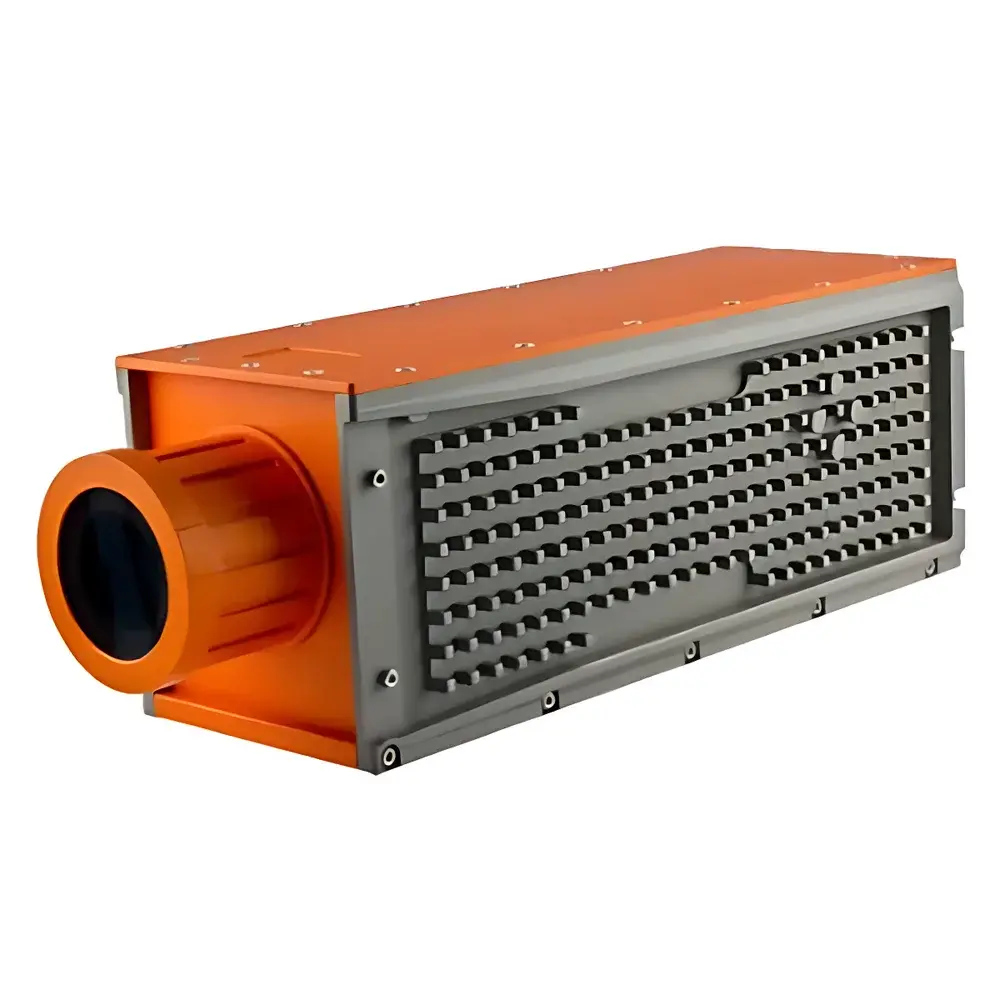
Specim SWIR High-Speed Hyperspectral Imaging Camera
| Brand | Specim |
|---|---|
| Origin | Japan |
| Manufacturer Type | Authorized Distributor |
| Product Origin | Imported |
| Model | Specim SWIR |
| Pricing | Upon Request |
| Operating Principle | Push-broom |
| Imaging Mode | 3D (hyperspectral data cube) |
| Deployment | Ground-based |
| Spectral Range | 1000–2500 nm |
| Spectral Resolution | 10 nm (with 30 µm slit) |
Overview
The Specim SWIR High-Speed Hyperspectral Imaging Camera is a precision-engineered push-broom imaging spectrometer optimized for the short-wave infrared (SWIR) spectral region (1000–2500 nm). Designed and manufactured in Finland by Specim—now part of Konica Minolta—the system leverages monolithic InGaAs focal plane array (FPA) technology with thermoelectric cooling to deliver high-fidelity spectral data under variable environmental conditions. Unlike scanning or snapshot architectures, the push-broom method acquires spatial-spectral data line-by-line as the camera moves relative to the target (or vice versa), enabling full hyperspectral data cube generation (x, y, λ) with inherent pixel co-registration and minimal motion artifacts. Its operational design targets laboratory-grade accuracy while supporting industrial throughput requirements—making it suitable for both R&D validation and inline process monitoring applications where chemical contrast in the SWIR band is critical.
Key Features
- High-speed acquisition at up to 450 frames per second (fps), supporting real-time data streaming and rapid scanning of dynamic or conveyor-based samples.
- 384-pixel spatial resolution across the line sensor, ensuring fine spatial detail without compromising spectral fidelity.
- Integrated thermoelectric (TEC) detector stabilization maintains detector temperature within ±0.1 °C, minimizing dark current drift and ensuring long-term radiometric stability—essential for quantitative reflectance and absorbance modeling.
- Ruggedized IP54-rated enclosure provides protection against dust ingress and water splashing, enabling reliable operation in non-climate-controlled labs, production floors, or field-deployed mobile platforms.
- Low power consumption of only 50 W—optimized for integration into portable systems, UAV-mounted payloads, or energy-constrained environments—without sacrificing SNR or frame rate.
- Standard GigE Vision interface ensures plug-and-play compatibility with industrial frame grabbers and supports GenICam-compliant software control for automated triggering, ROI selection, and metadata embedding.
Sample Compatibility & Compliance
The Specim SWIR is compatible with solid, semi-solid, and particulate samples across diverse physical forms—including tablets, powders, granules, packaged goods, agricultural produce, geological cores, and cultural heritage artifacts. Its 1000–2500 nm spectral coverage aligns with fundamental overtones and combination bands of C–H, O–H, and N–H bonds, enabling robust identification and quantification of moisture content, starch, cellulose, lipids, proteins, and active pharmaceutical ingredients (APIs). The system supports compliance workflows aligned with ISO 17025 (for testing laboratories), ASTM E171 (standard practice for calibration of spectroscopic instruments), and USP (spectroscopic identification). When integrated with validated software protocols and audit-trail-enabled acquisition tools, it meets GLP and GMP documentation requirements for regulated pharmaceutical and food safety applications.
Software & Data Management
The camera operates natively with Specim’s proprietary INSIGHT software suite, which provides real-time preview, spectral library matching, PCA-based anomaly detection, and ENVI-compatible data export (.bil/.hdr). For enterprise deployment, it integrates seamlessly with third-party platforms including MATLAB, Python (via PySpecim SDK), and LabVIEW. All acquired hyperspectral cubes include embedded metadata (wavelength calibration, exposure time, TEC setpoint, lens ID), supporting traceable data lineage. Optional modules enable FDA 21 CFR Part 11–compliant user authentication, electronic signatures, and immutable audit trails—critical for quality control laboratories subject to regulatory inspection.
Applications
- Pharmaceutical Quality Control: Non-destructive assay of tablet coating uniformity, API distribution, and counterfeit detection via spectral fingerprinting.
- Food & Agricultural Analysis: Quantitative mapping of moisture, sugar, fat, and adulterants in grains, fruits, dairy, and processed foods.
- Recycling & Waste Sorting: Material identification of plastics (e.g., PET vs. PVC), rubber compounds, and composite polymers based on SWIR absorption features.
- Mineralogical Mapping: Discrimination of clay species, carbonates, sulfates, and hydroxides in drill core or outcrop imaging.
- Cultural Heritage Science: Pigment identification, underdrawing visualization, and varnish layer differentiation in paintings and manuscripts.
- Biomedical Research: Ex vivo tissue characterization, burn depth assessment, and surgical margin delineation using endogenous chromophore contrast.
FAQ
What spectral calibration standards are supported?
The system ships with NIST-traceable reflectance and wavelength calibration certificates; users may perform routine verification using certified ceramic tiles or tungsten-halogen reference sources.
Is the camera compatible with external lighting systems?
Yes—it supports synchronization with pulsed or continuous SWIR-optimized illumination (e.g., halogen, LED, or laser sources) via TTL trigger input and programmable exposure timing.
Can raw data be exported for custom algorithm development?
Absolutely—all hyperspectral data cubes are stored in standard binary formats with ASCII header files, fully accessible via open APIs for MATLAB, Python, or C++ integration.
Does the system require liquid nitrogen or external chillers?
No—the integrated thermoelectric cooler operates autonomously; no cryogens or auxiliary cooling infrastructure is needed.
What lens options are available for different working distances?
Specim offers a range of f/2.0 SWIR-optimized lenses—from 12 mm wide-angle to 100 mm telecentric—with motorized focus and calibrated distortion correction profiles included.




