
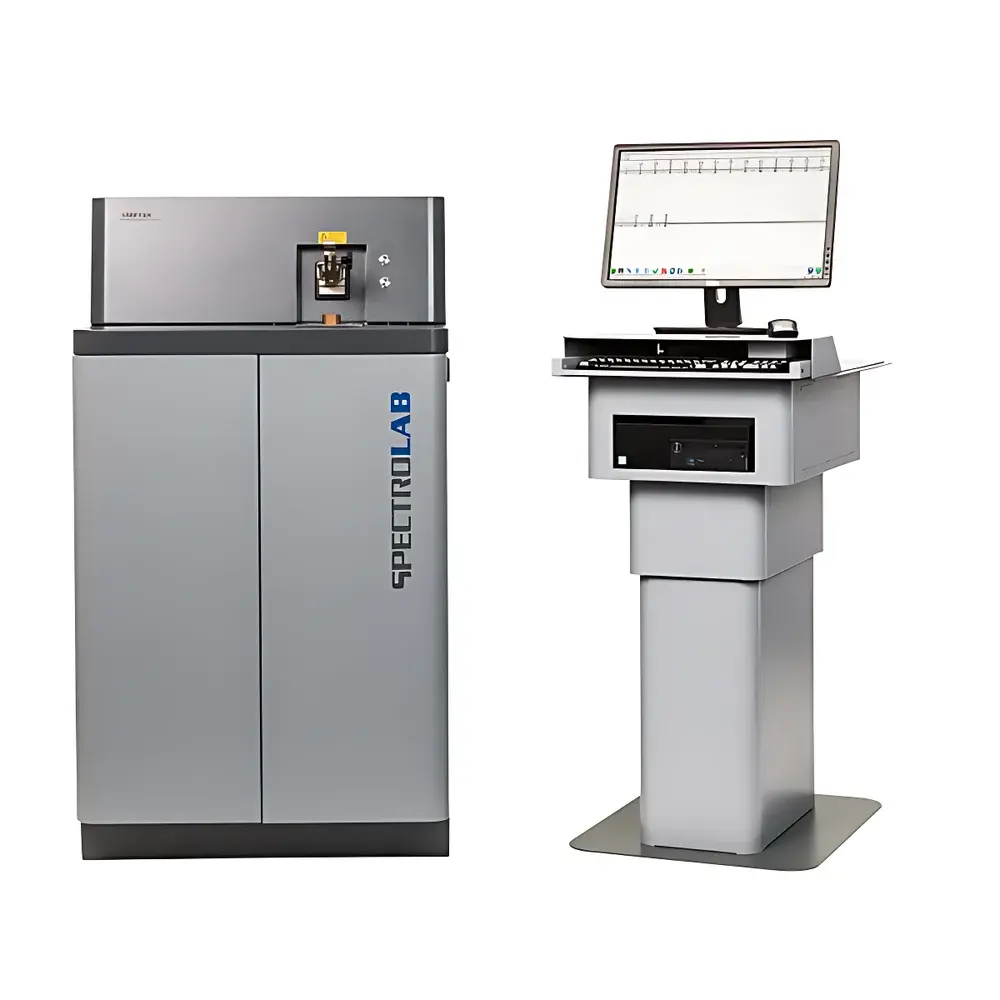
SPECTRO SPECTROLAB S Benchtop Direct-Reading Optical Emission Spectrometer
| Brand | SPECTRO |
|---|---|
| Origin | Germany |
| Model | SPECTROLAB S |
| Instrument Type | Floor-Standing |
| Excitation Method | Spark |
| Detector Type | CMOS |
| Focal Length | 750 mm |
| Grating Groove Density | 3600 lines/mm |
| Wavelength Range | 120–800 nm |
Overview
The SPECTRO SPECTROLAB S is a high-performance benchtop direct-reading optical emission spectrometer (OES) engineered for precision elemental analysis of metallic materials. Utilizing spark source optical emission spectroscopy (Spark-OES), the instrument excites sample surfaces with controlled high-voltage discharges, generating characteristic atomic emission spectra that are dispersed via a high-resolution Czerny-Turner optical system and detected by a state-of-the-art back-thinned CMOS detector array. With a 750 mm focal length and 3600 lines/mm holographic grating, the SPECTROLAB S delivers exceptional spectral resolution and signal-to-noise ratio across its full wavelength range of 120–800 nm—enabling reliable detection of both major constituents (e.g., Fe, Al, Cu) and trace elements (e.g., As, Sn, Pb, B, Ca) in conductive solid metals. Designed and manufactured in Germany, the system meets stringent requirements for metallurgical QA/QC, incoming material inspection, and process control in high-regulation environments.
Key Features
- CMOS-based detection architecture: Offers superior quantum efficiency, dynamic range, and pixel-level stability compared to traditional CCD or PMT systems—enabling faster readout, reduced dark current drift, and improved long-term reproducibility.
- Optimized spark source design: Delivers stable, low-noise plasma generation with adaptive energy control, minimizing electrode wear and reducing spark stand cleaning frequency by up to 8× versus legacy systems.
- Enhanced detection limits: Achieves average LOD improvements of 2× in low-alloy steels and 5× in high-purity aluminum matrices—critical for compliance with ASTM E415, ISO 11577, and EN 10027 specifications.
- Compact footprint: Reduced instrument volume by 27% without compromising optical path length or detector performance—ideal for space-constrained laboratories while maintaining full-floor-standing mechanical rigidity.
- Single-standard calibration protocol: Enables complete system standardization using one certified reference material per matrix, eliminating multi-point recalibration routines and saving ≥30 minutes daily in routine operation.
- Robust thermal and mechanical architecture: Precision-machined cast iron base, temperature-stabilized optics housing, and vibration-damped optical bench ensure metrological stability under continuous 24/7 operation.
Sample Compatibility & Compliance
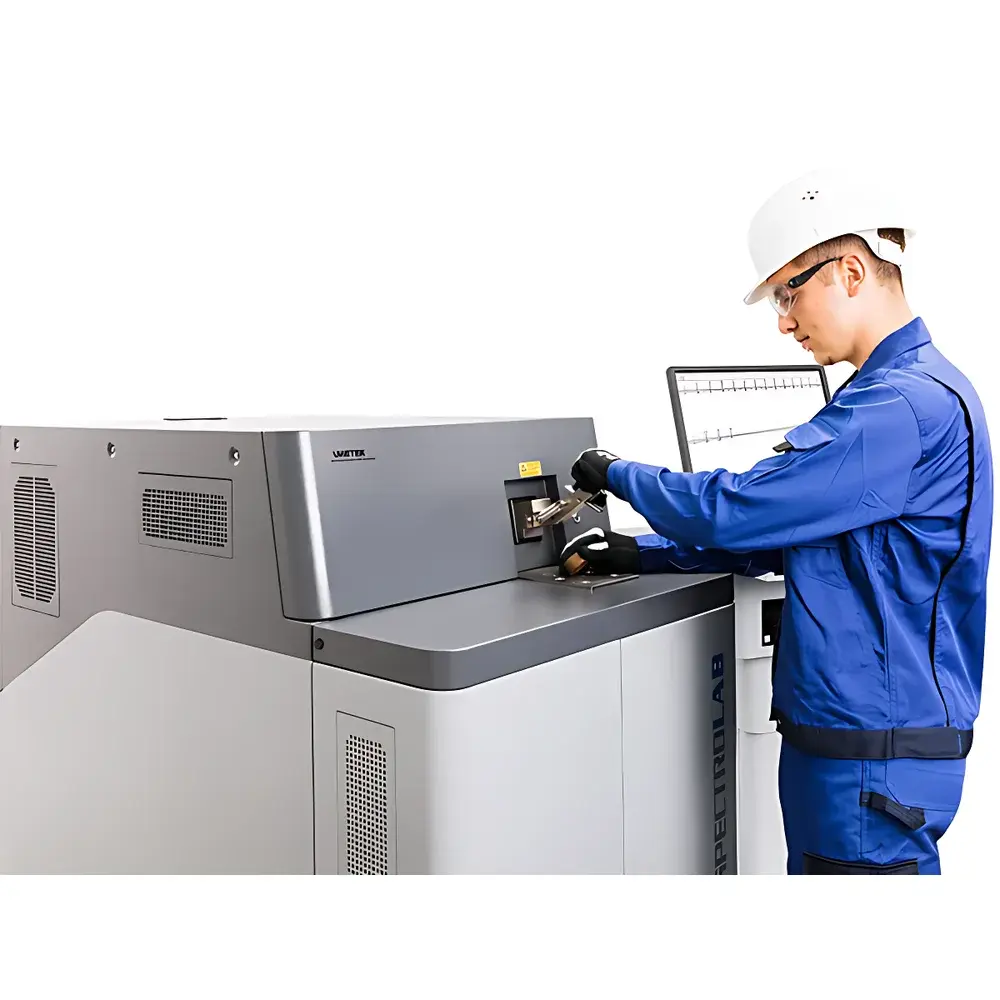
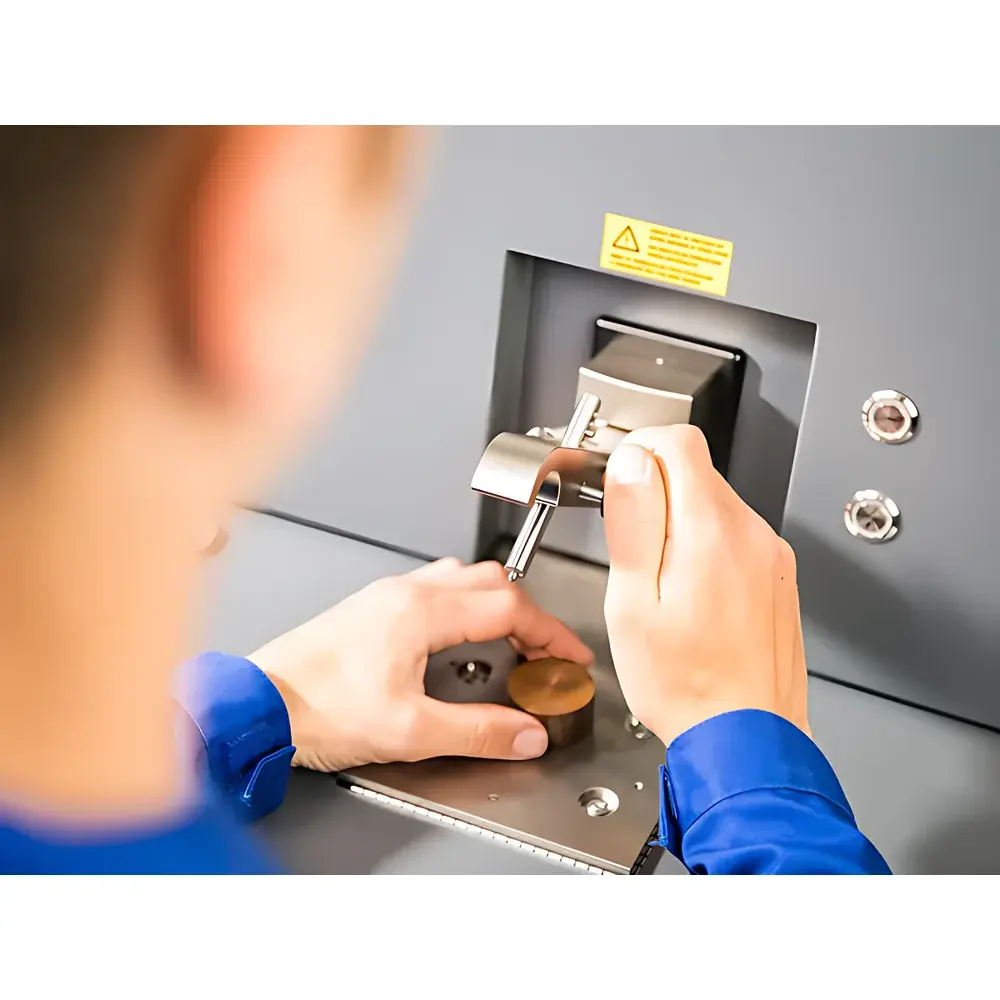
The SPECTROLAB S supports solid, electrically conductive metallic samples—including ferrous alloys (carbon, stainless, tool steels), non-ferrous metals (Al, Mg, Cu, Zn, Ti, Ni-based superalloys), and specialty materials (electronic-grade aluminum, aerospace-grade titanium). Sample preparation follows standardized grinding protocols per ASTM E1019 and ISO 11084. The system complies with IEC 61000-6-3 (EMC), CE Machinery Directive 2006/42/EC, and RoHS 2011/65/EU. Its analytical output supports GLP/GMP documentation workflows and is compatible with FDA 21 CFR Part 11-compliant LIMS integration through optional audit-trail-enabled software modules.
Software & Data Management
Controlled by SPECTRO’s proprietary WinSpark software, the SPECTROLAB S provides intuitive method setup, real-time spectral visualization, multivariate calibration management (including inverse regression and neural network options), and automated outlier detection. All measurement data—including raw spectra, background-corrected intensities, and uncertainty estimates—is stored in a structured SQLite database with timestamped operator ID, sample ID, and environmental metadata (ambient temperature, argon purity, spark gap status). Export formats include CSV, XML, and ASTM E135-compliant .spc files. Optional SPECTRO LabLink module enables secure, encrypted synchronization with enterprise LIMS and ERP platforms via HTTPS REST API.
Applications
- Primary metal production: Rapid grade identification and melt composition verification in steelmaking, aluminum smelting, and foundry operations.
- Automotive and aerospace supply chains: Incoming inspection of forged crankshafts, turbine disks, and extruded structural profiles per AMS 2301 and VDA 241.
- Recycling and scrap sorting: High-speed discrimination of alloy families (e.g., 300 vs. 400 series stainless; 6xxx vs. 7xxx Al alloys) with <2 s decision latency.
- Electronics and semiconductor packaging: Trace element screening (e.g., Na, K, Cl, S) in leadframes and solder preforms to prevent corrosion and wire-bond failure.
- Research and development labs: Multi-matrix method development for novel alloys, additive manufacturing powders, and coated substrates.
FAQ
What types of samples can be analyzed on the SPECTROLAB S?
Solid, electrically conductive metallic samples—typically discs or machined blocks with flat, clean surfaces. Non-conductive or powdered samples require specialized electrodes or alternative techniques (e.g., laser ablation OES).
Is argon purging required for all analyses?
Yes. Continuous high-purity argon (≥99.996%) is mandatory to maintain UV transmission below 190 nm and ensure stable plasma conditions for elements such as C, P, S, and N.
How often does the spark stand require maintenance?
Under typical usage (50–100 sparks/day), the spark stand requires cleaning every 200–300 sparks—approximately once per week—due to optimized electrode geometry and purge dynamics.
Can the instrument be upgraded for new elements or matrices post-purchase?
Yes. Software-based method expansion is supported without hardware modification. Additional calibration curves and spectral line selections can be added via licensed application packages.
Does the system support remote diagnostics or service access?
Yes. Integrated Ethernet connectivity enables secure remote support via SPECTRO’s ServiceConnect platform, including real-time log analysis, firmware updates, and guided troubleshooting—all compliant with ISO/IEC 27001 information security standards.




