
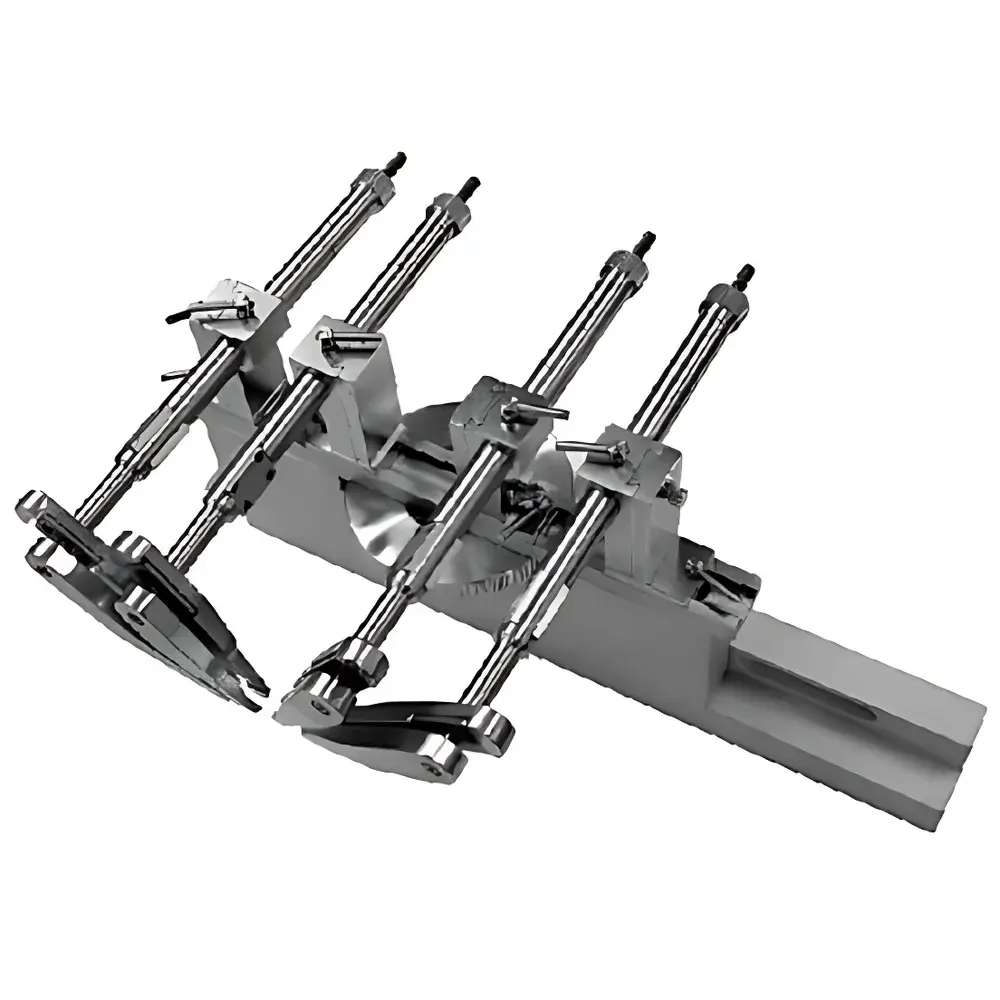
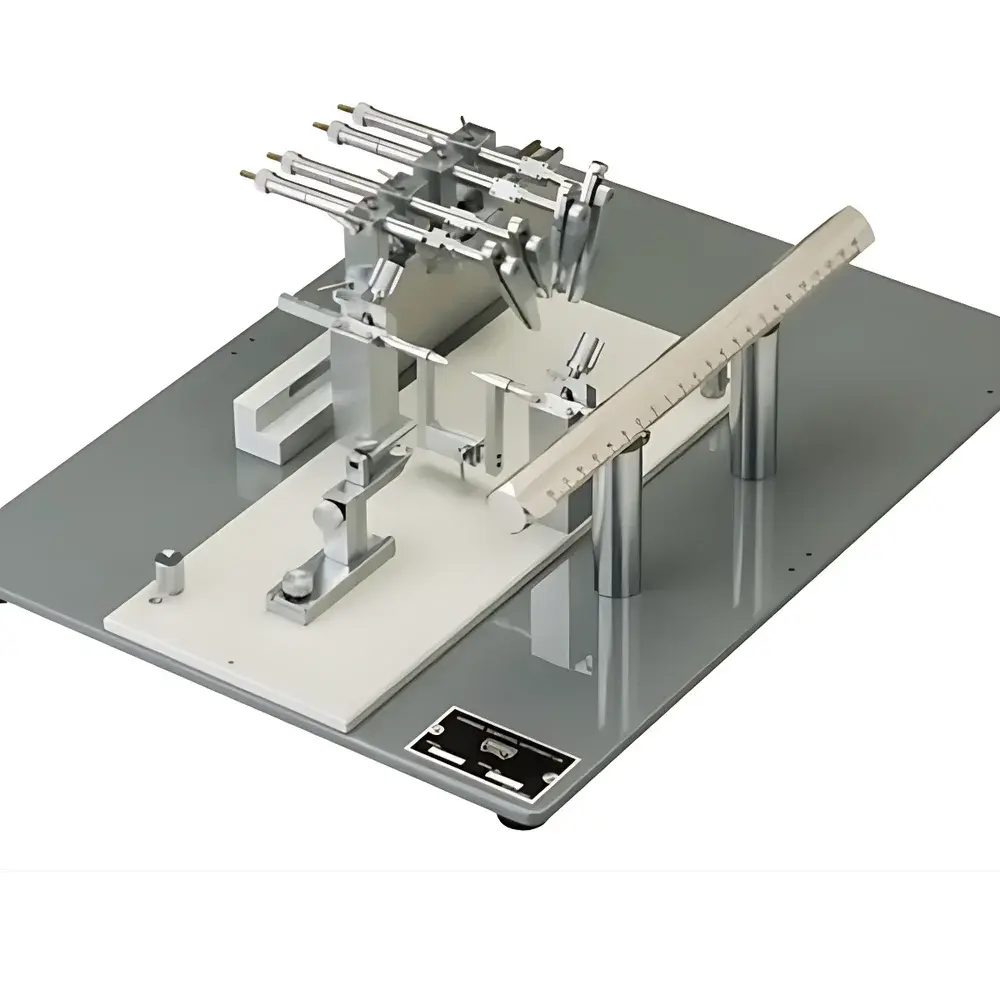
STS-B Rat Spinal Cord Clamp by NARISHIGE
| Brand | NARISHIGE |
|---|---|
| Origin | Japan |
| Model | STS-B |
| Dimensions (Clamp Body) | W170 × D115 × H82–112 mm |
| Weight | 860 g |
| Dimensions (with Accessories Kit) | W205 × D140 × H95–125 mm |
| Weight (with Accessories Kit) | 1.18 kg |
| Compatibility | Designed for integration with NARISHIGE SR-series stereotaxic frames equipped with AP-axis support rods |
| Accessories Included | Mounting ring, M4 screws, 2.0 mm hex key |
Overview
The STS-B Rat Spinal Cord Clamp is a precision mechanical fixation device engineered by NARISHIGE (Japan) for acute in vivo spinal cord experiments in adult rats. It operates on a calibrated manual compression principle—leveraging a dual-spring balanced mechanism and tactile-force feedback to deliver reproducible, non-crushing immobilization of the exposed thoracolumbar or cervical spinal cord segment. Unlike generic clamps, the STS-B integrates directly into the AP (anterior–posterior) rod system of NARISHIGE’s SR-series stereotaxic instruments, enabling rigid, three-dimensional positional stability during microsurgical procedures such as dorsal column lesioning, intraspinal electrode implantation, or real-time optical imaging. Its design adheres to established neurosurgical ergonomics for rodent models: minimal tissue displacement (<0.1 mm axial shift under nominal load), low-profile footprint to avoid obstructing surgical access, and corrosion-resistant stainless-steel construction compliant with ISO 13485–aligned manufacturing protocols for laboratory-grade instrumentation.
Key Features
- Calibrated tactile-force feedback system—operator perceives resistance progression across three defined zones: initial contact, physiological engagement, and mechanical stop—enabling consistent sub-damaging compression (typical applied force range: 0.15–0.35 N, empirically validated across Sprague-Dawley and Wistar rats)
- Modular mounting architecture compatible with SR-1, SR-2, SR-L, and SR-LE stereotaxic frames via standardized M4 threaded interface on AP support rods
- Height-adjustable base (82–112 mm vertical range) accommodates variable vertebral exposure depths without repositioning the animal or frame
- Integrated mounting ring with 360° rotational locking allows rapid angular alignment relative to spinal axis (±0.5° repeatability)
- All structural components manufactured from medical-grade AISI 316 stainless steel; surfaces electropolished to Ra < 0.4 µm for autoclave compatibility (134°C, 3 bar, 18 min per cycle)
- Tool-free accessory attachment: M4 cap screws secured with included 2.0 mm hex key; no adhesives or permanent fasteners required
Sample Compatibility & Compliance
The STS-B is validated for use in adult rats (250–450 g body weight) undergoing terminal or survival spinal cord procedures requiring stable dural exposure. It supports both laminectomy-based access (T9–L2, C1–C4) and minimally invasive transcutaneous approaches when paired with NARISHIGE’s SM-15 micromanipulator. The clamp conforms to ISO 10993-1 (biological evaluation of medical devices) for short-term tissue contact and meets JIS T 0601-1 (Japanese standard equivalent to IEC 61000-4-2) for electrostatic discharge resilience in controlled lab environments. While not a regulated medical device, its mechanical performance aligns with GLP-compliant experimental reporting requirements for preclinical neuroscience studies, including traceable setup documentation and inter-operator consistency validation.
Software & Data Management
The STS-B is a purely mechanical, non-electronic instrument and requires no firmware, drivers, or software integration. However, it is routinely documented within electronic lab notebooks (ELNs) such as LabArchives or Benchling using standardized metadata templates—including frame model, AP rod position (mm), clamp height setting, operator ID, and time-stamped photo documentation of spinal fixation state. For audit readiness, users are advised to record tactile feedback descriptors (“Zone 2 engagement confirmed”) alongside procedural timestamps—supporting 21 CFR Part 11–compliant data integrity where applicable.
Applications
- Intraspinal microinjection of viral vectors or pharmacologic agents with concurrent real-time two-photon calcium imaging
- Chronic implantation of flexible microelectrode arrays targeting dorsal horn or ventral horn laminae
- Controlled mechanical injury modeling (e.g., NYU impactor calibration reference point stabilization)
- Ex vivo spinal cord slice preparation—used to secure intact segments during vibratome sectioning at 200–300 µm thickness
- Functional connectivity mapping via intraoperative fMRI-compatible coil positioning (non-magnetic variant available upon request)
FAQ
Is the STS-B compatible with non-NARISHIGE stereotaxic frames?
Yes—provided the frame features a 12 mm diameter AP support rod with M4 internal threading at standard 25 mm pitch spacing; adapter sleeves (part #SR-ADP-M4/12) are available separately.
Can the clamp be sterilized between uses?
Yes—autoclavable at 134°C for 18 minutes; avoid prolonged exposure to chlorine-based disinfectants to preserve spring elasticity.
What is the recommended maintenance interval?
Inspect spring tension and thread integrity every 50 uses; replace M4 screws annually or after 200 cycles; retain calibration log per institutional GLP policy.
Does NARISHIGE provide application-specific SOPs for spinal cord clamping?
Yes—downloadable protocols (NARISHIGE Technical Bulletin TB-STS-03) cover rat strain–specific vertebral landmarking, force calibration verification, and post-clamp histological assessment guidelines.



